The Whispering Gardens of Ancient Carthage: The Forgotten Aromatic Sanctuaries Where Phoenician Healers Restored the Soul
The Phoenician word 'ganna' — meaning 'enclosed garden' — is believed to be the linguistic ancestor of the Hebrew 'Gan Eden,' or Garden of Eden, suggesting that paradise itself may have been inspired by the real healing gardens of the ancient Levantine coast.
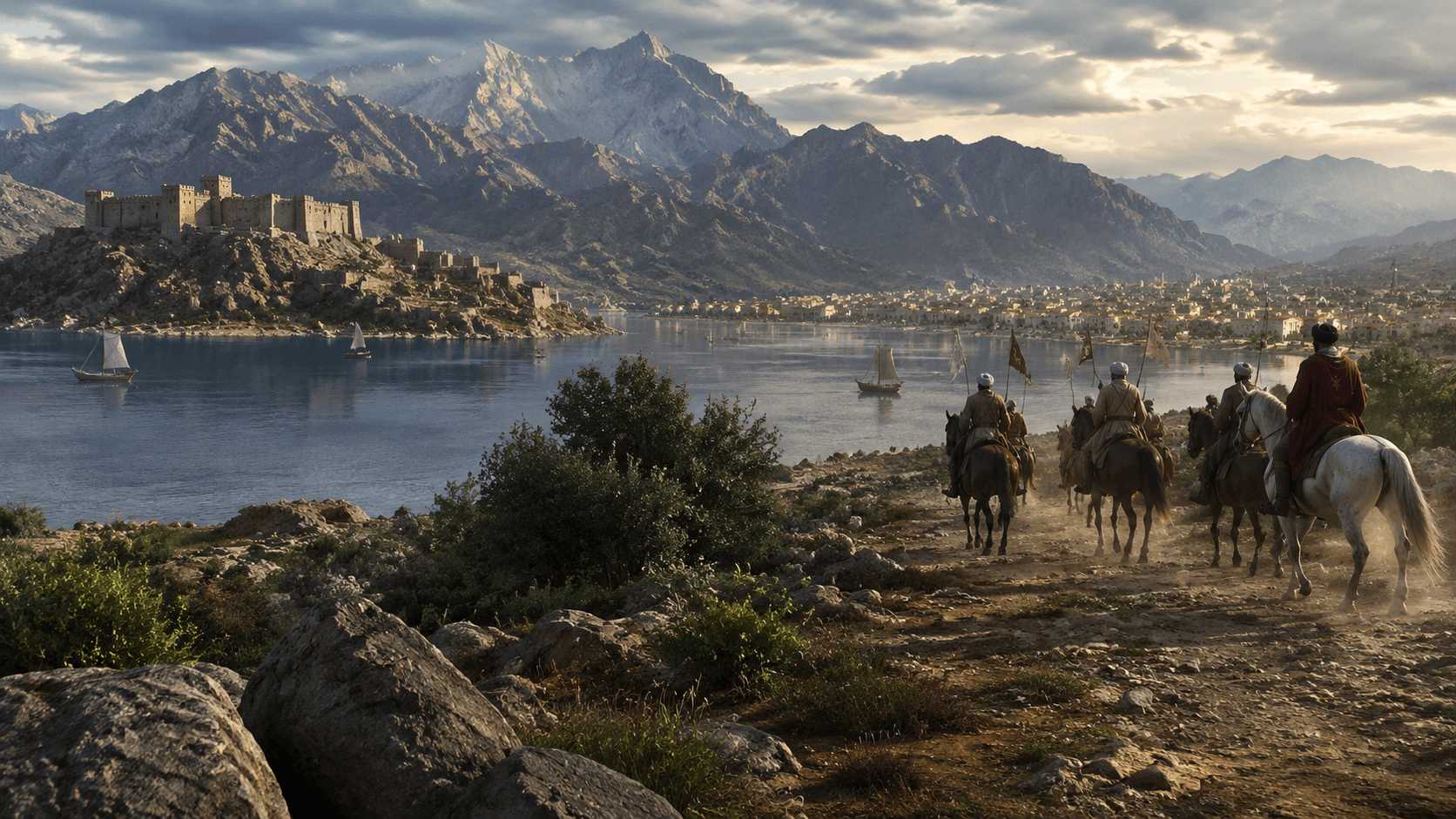
Close your eyes for a moment and imagine the Mediterranean coast at dawn. The sea breeze carries something extraordinary — not salt alone, but the deep, resinous warmth of frankincense mingling with the cool green breath of Syrian myrtle, the sweetness of lotus floating up from still garden pools. You are standing at the entrance to one of the most remarkable and most forgotten healing spaces ever engineered by human hands: the aromatic garden sanctuaries of ancient Carthage.
For centuries, historians focused their attention on Carthage as a maritime power — a civilization of extraordinary traders, navigators, and engineers who built an empire spanning the length of the North African coast. What those same historians largely overlooked was the extraordinary inner life of Carthaginian culture: its deeply sophisticated understanding of the human nervous system, the healing power of fragrance, and the therapeutic architecture of sacred outdoor space.
The Phoenicians who founded Carthage carried with them from the Levantine coast an ancient body of botanical knowledge — a living pharmacopoeia encoded not in scrolls but in garden design itself. Their healers, known as the Hôrîm, understood something profound: that the human soul was not restored through words or rituals alone, but through immersion in a carefully orchestrated landscape of scent, sound, texture, and living form. The silent gardens of the ancient world offered stillness — but the gardens of Carthage offered something more: a living, breathing, aromatic conversation between the plant world and the human spirit.
This is the story of those gardens. How they were built, how they worked, and why the wisdom encoded in their terraced stone walls and fragrant corridors deserves to be remembered — and perhaps, in some small way, lived again.
Key Facts About the Whispering Gardens of Carthage
- •Location: Coastal hillside terraces surrounding the ancient city of Carthage, in present-day northern Tunisia.
- •Civilization: Phoenician-Carthaginian, approximately 800–146 BCE.
- •Primary Purpose: Aromatic healing, meditative restoration, and ceremonial guidance for emotional and spiritual wellbeing.
- •Key Plants Used: Frankincense, cedarwood, Syrian myrtle, lotus blossom, lavender, and Phoenician juniper.
- •Modern Relevance: The principles underlying these sanctuaries anticipate contemporary aromatherapy, horticultural therapy, and biophilic design by over two millennia.
Quick Answer
The aromatic garden sanctuaries of ancient Carthage were carefully engineered open-air healing spaces where Phoenician physicians used the concentrated fragrance of specific plants — including frankincense, cedarwood, myrtle, and lotus — to treat emotional imbalance, restore mental clarity, and guide the spirit through ceremonial transitions. These gardens combined precise landscape architecture, flowing water acoustics, and sacred geometry to create a total sensory healing environment unlike anything else in the ancient world.
The Architecture of Fragrance: How the Phoenicians Designed a Garden to Heal
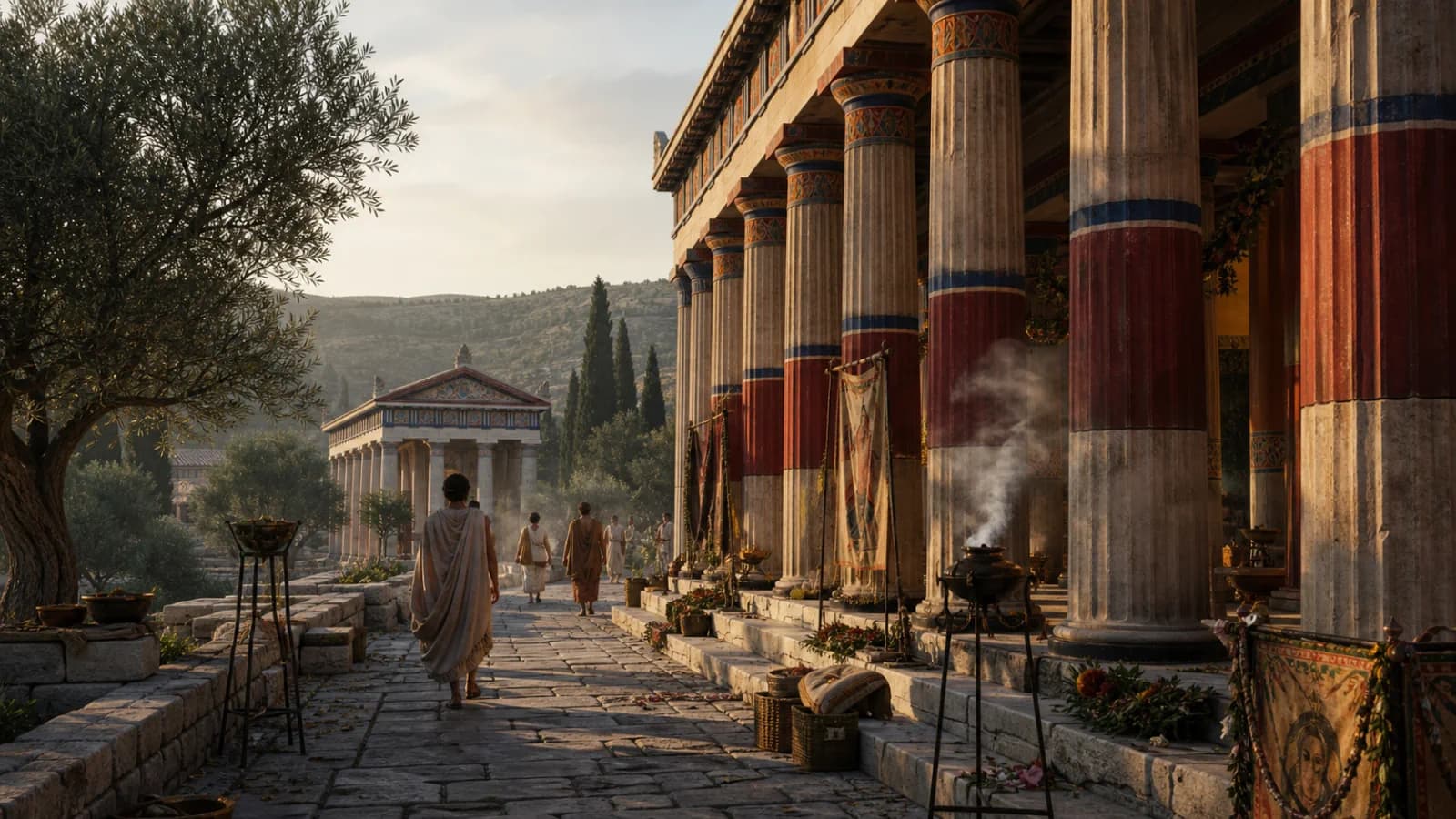
To understand the Carthaginian healing garden, you must first abandon the modern idea of a garden as decoration. For the Phoenician healer, a garden was a precision instrument — a technology as sophisticated as any aqueduct or harbor wall. Every plant was chosen not merely for beauty but for its specific aromatic chemistry, its relationship to the prevailing coastal winds, its capacity to release fragrance at particular times of day. The garden was, in essence, a living pharmacy that visitors moved through with their entire body.
The sanctuaries were built on the terraced hillsides overlooking the Bay of Tunis, where the land rises gently from the harbor. This placement was not accidental. The prevailing afternoon breeze — the imbat — blew reliably from the north, carrying sea air inland across the garden terraces. The Hôrîm planted their most potent aromatic species on the upper terraces, allowing the wind to carry their fragrance downward through the entire landscape. A visitor entering at the lower gate would be enveloped in a slowly intensifying aromatic gradient — gentle lavender at the threshold, deepening into myrtle and cedarwood in the middle zones, and finally arriving at the upper sanctum where the heavy, sacred resin of frankincense hung in the warm afternoon air like a living veil.
The Gradient Principle
Carthaginian healers designed their gardens as aromatic journeys, not destinations. The intentional fragrance gradient — from light and fresh at the entrance to deep and resinous at the inner sanctum — was engineered to shift the visitor's nervous system through progressive stages of relaxation, moving from alertness through calm, and finally into a state of profound stillness the Hôrîm called 'naphesh shaqat' — 'the quieted soul.'
Water was the second great architectural element. The Carthaginians were extraordinary hydraulic engineers — a skill they developed first for their famous harbors and later applied, with equal genius, to their healing spaces. Each garden terrace featured at least one shallow reflecting pool or a narrow channel of flowing water. These were not merely aesthetic features. The sound of water — specifically the gentle, irregular murmur of a shallow stream over smooth stone — was understood by the Hôrîm to have a measurable calming effect on the breath and heartbeat. Modern neuroscience has since confirmed what they knew intuitively: the sound of natural flowing water reliably activates the parasympathetic nervous system, slowing respiration and reducing cortisol levels.
The pools also served a second, subtler function. Water amplifies and carries fragrance molecules. A shallow basin filled with floating lotus blossoms did not merely perfume the immediate air — it dispersed its scent in a fine aromatic mist that clung to the skin and linen robes of visitors, extending the therapeutic encounter long after they had left the garden and returned to the city below. The healers of Carthage understood, millennia before the science existed to explain it, that olfactory memory is the most persistent and emotionally resonant of all the senses. They were not just treating the body in the garden — they were encoding the experience of peace into the very fabric of memory itself.
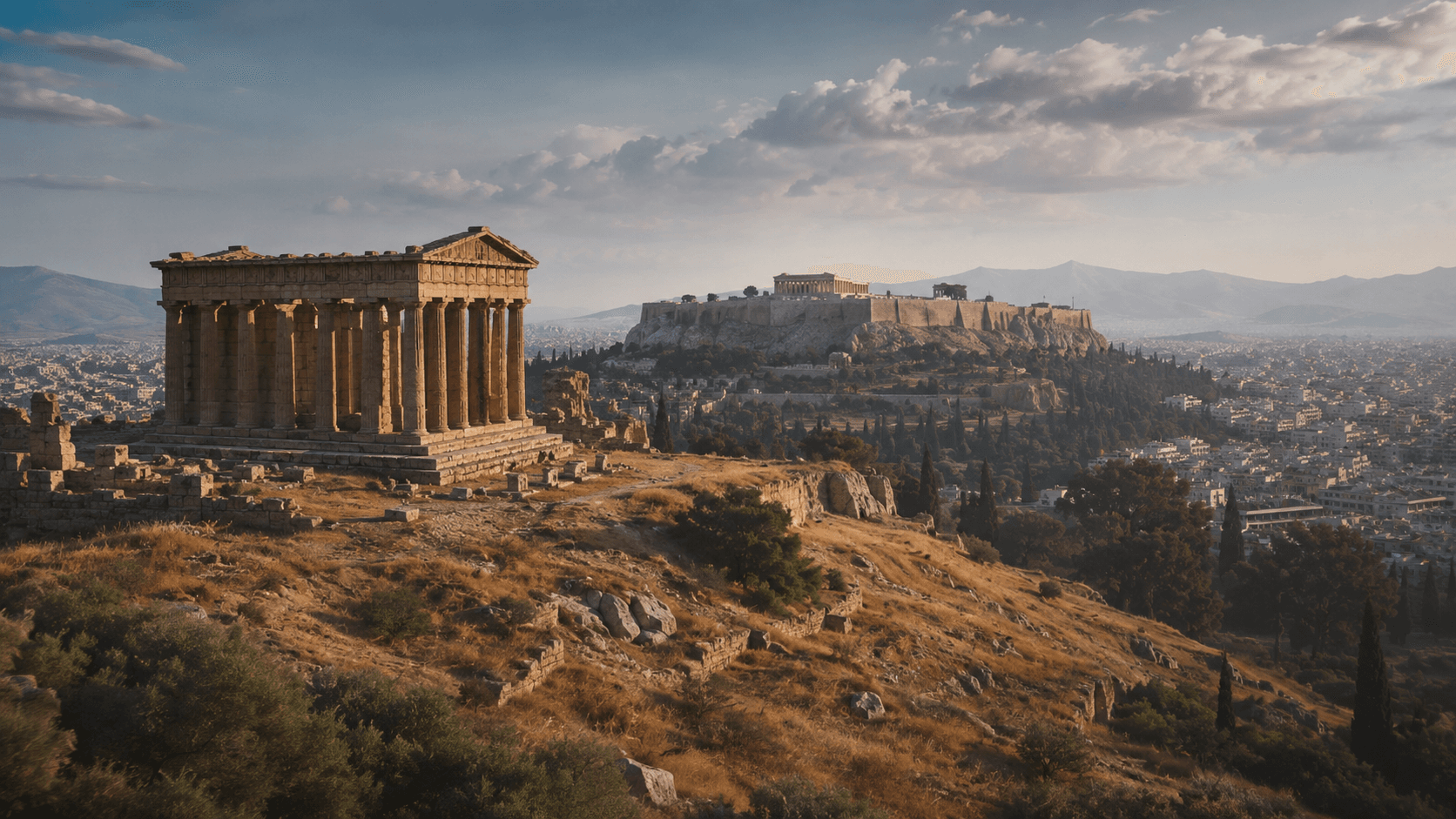
Stone pathways wound through the garden in deliberate curves — never straight lines. This was another conscious design choice. A straight path encourages hurried movement, the natural human impulse to arrive. A curved path invites presence. The Hôrîm understood that the healing of the garden could only occur when the visitor surrendered the urgency of destination and settled into the rhythm of the journey. The paths were wide enough for two people to walk side by side, smooth enough underfoot to allow eyes to rest on the surrounding plant life, and bordered with low plantings of thyme and pennyroyal that released their oils when brushed by passing feet or robes — so that even the act of walking became an aromatic event.
Reconnect With the Ancient Art of Sensory Healing
Visionaria brings the wisdom of history's greatest healing traditions into your daily life. Explore guided meditations inspired by the world's forgotten sanctuaries.

Why did the Phoenician healer bring a map to the garden? Because even a garden of curves has a point — it just takes you the long, beautiful way around to find it. 🌿
The Sacred Botanicals: A Living Pharmacopoeia in Stone and Soil
No aspect of the Carthaginian garden was more precisely considered than its plant selection. The Hôrîm were not gardeners in any casual sense — they were trained over years, often decades, in a botanical knowledge system that recognized the individual aromatic chemistry of hundreds of Mediterranean and imported Levantine plant species. Their selection for the healing sanctuaries was the result of careful observation, transmitted across generations in an oral tradition that modern scholars have only partially reconstructed from surviving Punic agricultural texts and archaeological pollen records.
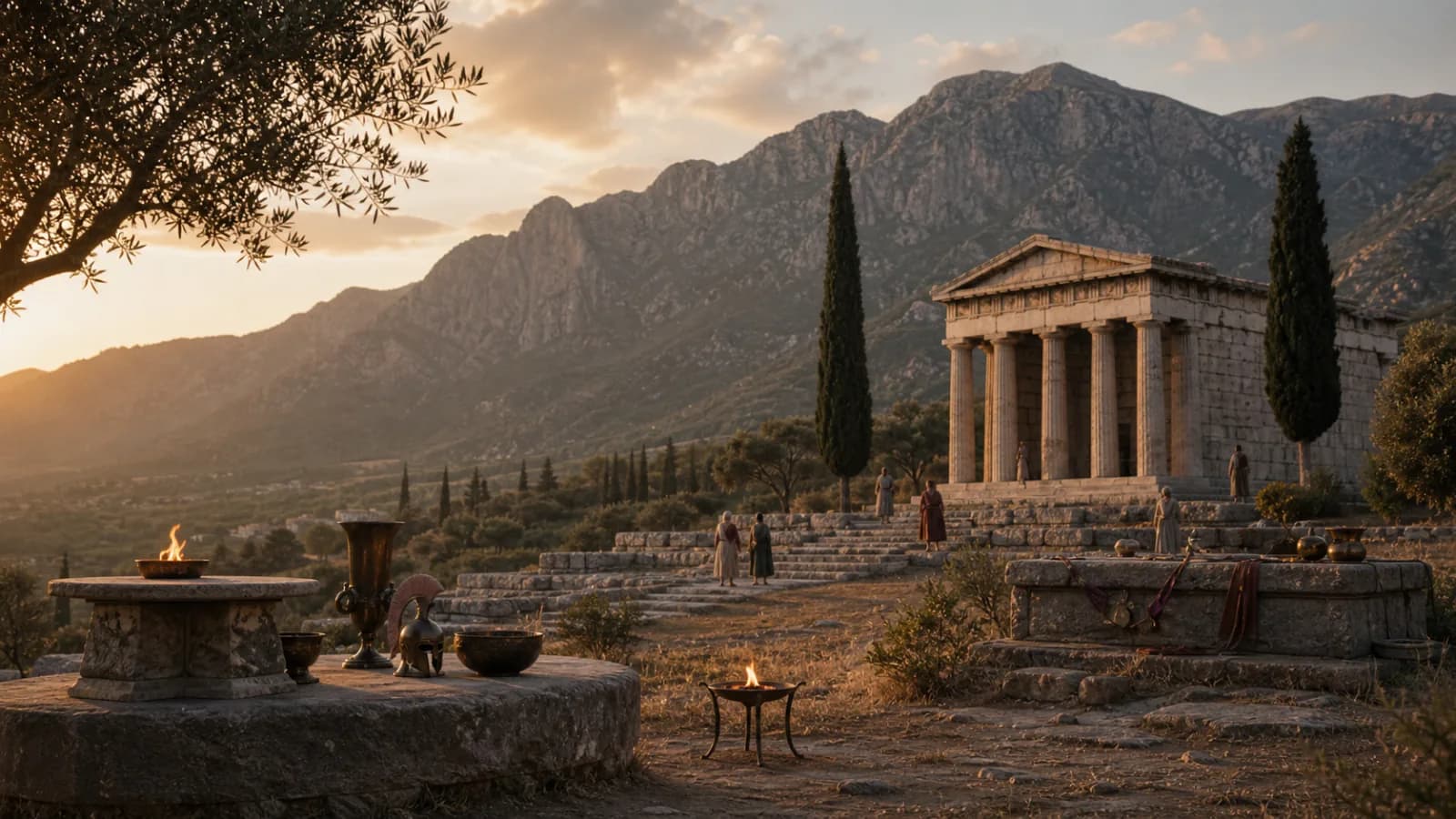
Frankincense — Boswellia sacra — held the highest place in the botanical hierarchy. The Phoenicians had traded frankincense along the Arabian incense routes for centuries, and their healers understood its properties with extraordinary precision. Burned in small clay braziers set into carved stone niches along the upper terraces, frankincense resin releases a compound called incensole acetate, which modern research has confirmed activates ion channels in the brain associated with reduced anxiety and heightened emotional warmth. The Hôrîm did not have this biochemical vocabulary — but they had millennia of careful observation, and they knew that frankincense smoke transformed the quality of awareness in a space. They called it 'the breath of the sky touching the breath of the earth.'
The Sacred Botanicals of the Carthaginian Healing Garden
Frankincense (Boswellia sacra)
Burned in upper-terrace niches to produce incensole acetate, calming deep anxiety and cultivating sacred awareness. Called 'the breath of the sky.'
Syrian Myrtle (Myrtus communis)
Planted along mid-level pathways, its crushed leaves were rubbed on wrists and temples. Associated with Astarte, the Phoenician goddess of renewal, it symbolized the transition between grief and joy.
Phoenician Juniper (Juniperus phoenicea)
Placed at garden entrances as a purifying threshold plant. Its sharp, clean resin was believed to clear the mind of intrusive thought, preparing the visitor for inner stillness.
Lotus Blossom (Nymphaea caerulea)
Floated in garden pools to release a subtle psychoactive aromatic compound. Ancient Egyptians and Phoenicians alike used blue lotus as a gentle ally for dream-like meditative states.
Cedarwood (Cedrus libani)
The beloved cedar of Lebanon, traded across the ancient world, was used in carved garden structures that slowly released their oil into the surrounding air over decades. A living, architectural aromatherapy diffuser.
Lavender (Lavandula stoechas)
Grown in low borders at garden thresholds, lavender was the first scent to greet arriving visitors — a gentle neurological signal that the world of urgency was being left behind.
Syrian myrtle occupied a uniquely important place in the emotional architecture of the garden. The Phoenicians associated myrtle with Astarte — their great goddess of love, renewal, and the cyclical transformation of all living things. Myrtle branches were woven into wreaths worn during ceremonies of grief, transition, and celebration alike, because the Hôrîm understood that these profound emotional states are not opposites but neighbors, sharing the same threshold. In the healing garden, myrtle was planted along the mid-level pathways, where visitors were invited to stop, crush a leaf between their fingers, and inhale. The act was at once botanical and ceremonial — a conscious invitation to soften, to feel, to allow whatever needed to move through the heart to do so.
The Emotional Language of Scent
The Phoenician healers categorized their botanical medicines not by physical ailment but by emotional state. Frankincense for sacred awe. Myrtle for grief and joy. Juniper for mental clarity. Lotus for the liminal spaces between waking and dreaming. This emotional taxonomy of fragrance anticipated modern aromatherapy's own classification systems by roughly 2,500 years — and it was encoded not in any text, but in the physical layout of the garden itself.
The blue lotus — Nymphaea caerulea — deserves particular attention. This extraordinary flower, traded from Egypt along the same maritime routes that carried Phoenician glass and purple-dyed linen, was understood by both Egyptian and Carthaginian healers to produce a subtle shift in consciousness when its fragrance was inhaled over time. Modern pharmacological research has confirmed that blue lotus contains aporphine and nuciferine — compounds with mild dopaminergic and serotonergic activity. The garden pools planted with floating lotus blossoms were, in the most literal sense, neurochemical environments. Visitors who spent time sitting beside these pools in the warm afternoon were being gently, safely, intentionally guided toward a more receptive and open state of awareness.
A Garden Built for the Nervous System
Long before the term 'biophilic design' existed, the Hôrîm of Carthage were practicing it with mastery. Their gardens engaged every sensory pathway simultaneously: fragrance for the olfactory system, water sound for the auditory, curved stone paths for the proprioceptive, plant textures for the tactile, and the visual sweep of terraced greenery against blue Mediterranean sky for the visual cortex. The result was a total-immersion therapeutic environment that modern wellness architecture is only now beginning to rediscover.
Cedarwood from the forests of Lebanon — the legendary cedar that built the palaces of Nineveh and the temples of the Levant — was incorporated into the garden's architectural elements: carved benches, pergola posts, and the latticed screens that filtered the afternoon light into patterned shade. Unlike burned incense, cedarwood structures did not release their aromatic compounds in a single event — they diffused them slowly and continuously over years, even decades. A garden bench carved from Lebanese cedar was still releasing its calming, grounding sesquiterpene oils a generation after it was built. The Hôrîm designed their gardens to outlast any single practitioner's lifetime, building an aromatic legacy into the very bones of the architecture.

The Hanging Gardens of Nineveh: The Forgotten Paradise That Redefined What It Means to Live in Harmony With Nature
Long before Carthage, another civilization engineered an impossible garden in the sky — a paradise of cedar and water that transformed an entire empire's relationship with the natural world.
A Phoenician healer once told a student: 'The garden teaches faster than I do.' The student asked how that was possible. The healer smiled: 'The garden never talks.' 🌸
The Ceremonies of the Garden: How Carthage Taught the Ancient World to Rest
The aromatic gardens of Carthage were not passive environments. They were the setting for a rich and carefully structured ceremonial practice — a sequence of healing rituals that the Hôrîm guided their visitors through over the course of a full day or, in cases of deep emotional difficulty, across multiple visits spanning weeks. The design of the garden itself was the curriculum, and the healer was less a physician in the modern sense than a guide — someone who knew the landscape intimately and could read, in the posture and breathing of a visitor, exactly where in the aromatic journey they most needed to pause.
The ceremonial day began at the garden's lower threshold in the early morning, when the dew still clung to the lavender borders and the air carried the clean, sharp clarity of Phoenician juniper. This was the time of tahara — purification. Visitors were invited to stand at the garden entrance with eyes closed, breathing slowly through the nose, allowing the juniper and lavender to clear what the Hôrîm called 'the noise of the city' from the mind. This was not metaphor. The healers understood that the nervous system carries the residue of a busy day — a heightened state of arousal, fragmented attention, shallow breathing — into any new environment, and that this residue must be consciously released before deeper healing can begin. The entrance ritual was, in effect, a neurological reset.
From the threshold, the ceremonial path moved upward through the middle terraces during the warmth of late morning, where myrtle and Syrian rose created what the Hôrîm called the 'heart corridor.' This section of the garden was the emotional center — the place where grief could be honored, where joy could be felt without guilt, where the complex feelings that city life required visitors to suppress could be quietly, safely acknowledged. The Hôrîm did not intervene in this space with words. They walked alongside in silence, or sat nearby on cedar benches, their presence a steady, unhurried anchor while the visitor moved through whatever emotional weather the garden's fragrance had unlocked.
The Three Stages of the Garden Journey
Tahara (Morning Purification): Juniper and lavender threshold ritual to clear mental noise and reset the breath. Lev (Heart Corridor): Mid-terrace immersion in myrtle and rose, allowing emotional acknowledgment in silence. Naphesh Shaqat (The Quieted Soul): Upper-terrace arrival at the frankincense sanctum, where the healed visitor simply rested in stillness, breathing the sacred resin as the afternoon sun warmed the stone.
The final stage — naphesh shaqat, the 'quieted soul' — took place at the summit of the garden in the fullness of the afternoon, when the frankincense smoke from the upper braziers hung thickest in the warm, still air. The visitor who reached this terrace was invited to sit on a cedarwood bench and do nothing. Simply breathe. Look out across the Mediterranean, its surface broken only by the distant white specks of Phoenician trading ships. Feel the warm stone beneath them. Let the frankincense do its ancient, patient work.
What the Hôrîm had engineered was, in the most modern terms, a full-spectrum sensory therapeutic protocol — one that moved a visitor deliberately and gently from sympathetic nervous system activation (the 'noise of the city') through a sequence of calibrated aromatic and environmental cues, arriving finally at a state of deep parasympathetic rest. The garden did not require the visitor to understand this process, any more than a river requires a swimmer to understand hydrology. It simply carried them, if they were willing to be carried.
The legacy of these gardens is more alive than most people realize. Every time a Balinese water temple is designed to carry water sound through a ceremonial space, every time a modern wellness architect plants aromatic herbs along a pathway to engage the olfactory system, every time a Himalayan monastery garden uses elevation and altitude to create a distinct shift in sensory experience — the echo of Carthage is present. The Hôrîm were among the earliest architects of what we now call biophilic design, and their insight remains luminously, urgently relevant in a world where the 'noise of the city' has never been louder.
Perhaps the most extraordinary thing about the Whispering Gardens of Carthage is not their sophistication — though that is remarkable enough. It is the humility of their premise. In a civilization known for its engineering ambition, its vast harbor works and towering citadels, the Hôrîm built their most important structures from soil and living plants and moving water. They understood, in a way that resonates across twenty-five centuries, that the greatest technology for healing the human soul was not built of stone — it grew from it, slowly, season by season, carrying its medicine upward on the Mediterranean breeze.
Read more: Silent Gardens of the Ancient World: The Healing Sanctuaries That Restored the Human Spirit
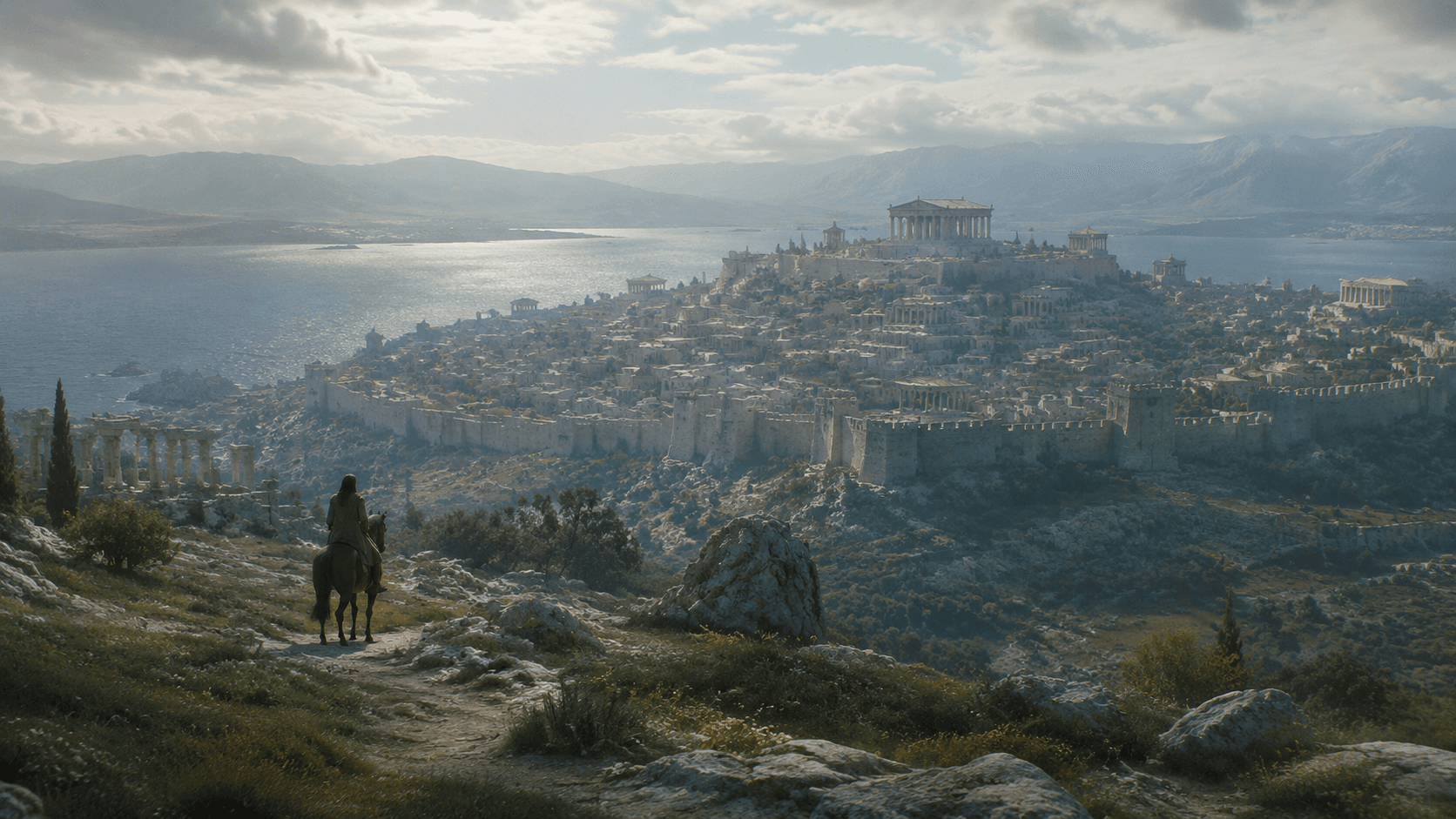
When the Roman general Scipio Aemilianus stood at the transformed site of Carthage in 146 BCE and reportedly wept — reciting Homer, contemplating the impermanence of all great cities — it is a curious historical footnote that he chose to do so, by several accounts, in the green terraces above the harbor. Whether those terraces were still the remnants of the healing gardens, history cannot say with certainty. But something about the living landscape of that hillside, with its ancient cedar structures and the wild descendants of once-cultivated herbs still releasing their fragrance into the warm afternoon air, clearly moved something deep in a man who had just witnessed one of history's most profound civilizational transitions. Perhaps the Whispering Gardens had one last visitor. And perhaps, even then, they were still doing their ancient, patient work.
Why did the Hôrîm never write down their healing methods? Simple — they figured anyone who couldn't read a garden wasn't ready for the prescription. 🌿😄
The Legacy of the Healing Garden: What Carthage Left to the World
When the great city of Carthage underwent its profound transformation in 146 BCE, the physical structures of its legendary aromatic gardens were scattered and reclaimed by the earth. Yet the knowledge encoded within those terraced sanctuaries — the precise layering of calming herbs, the deliberate channeling of fragrant breezes, the sacred geometry of paths designed to slow the human heartbeat — did not simply vanish. It migrated. It traveled in the memory of scholars, in the satchels of Punic physicians, and in the root systems of transplanted botanicals that found new soil across the Mediterranean world. The Phoenician understanding of the garden as a therapeutic instrument rather than a mere ornamental feature quietly seeded the great healing traditions of Rome, Alexandria, and the early Islamic garden-hospital complexes that would emerge centuries later.
Modern archaeobotanists working in the ruins of the Tophet and the residential districts of ancient Carthage have recovered pollen evidence of lavender, myrtle, Syrian rue, and blue lotus — plants whose neurological and anxiolytic properties are now confirmed by contemporary neuroscience. What the Phoenician garden architects understood intuitively, through generations of careful observation and a philosophy that treated the human body as continuous with the living landscape, researchers today are painstakingly rediscovering in laboratories. The ancient Carthaginian healer and the modern mindfulness practitioner are, in many profound ways, reaching toward the same understanding: that intentional immersion in living fragrance fundamentally restructures our relationship with stress, sound, and inner stillness.
The most enduring legacy of the Phoenician aromatic garden is perhaps the simplest: the revolutionary idea that a civilization's highest engineering achievement need not be a monument to power, but a sanctuary for healing. While other ancient cultures poured their genius into fortifications and imperial plazas, the Phoenicians of Carthage designed neighborhoods around the premise that every resident deserved access to a restorative landscape — a space where the senses could be recalibrated, the nervous system gentled, and the inner life replenished. In this, they were not merely ahead of their time. They were speaking directly to ours. Across the ancient world, from the sleep forests of ancient Japan to the water temples of Bali, humanity has repeatedly arrived at the same sacred conclusion: that nature, consciously arranged, is the oldest and most reliable medicine we have ever known.
Rediscover Your Inner Garden
Visionaria guides you through immersive, nature-inspired meditations rooted in the healing wisdom of ancient civilizations. Begin your sensory journey today.
A Carthaginian merchant once told a Roman senator that his city's greatest export was not purple dye or silver — it was the art of smelling expensive while completely relaxing. The senator promptly commissioned a Punic garden for his villa and never attended the Senate on Mondays again.