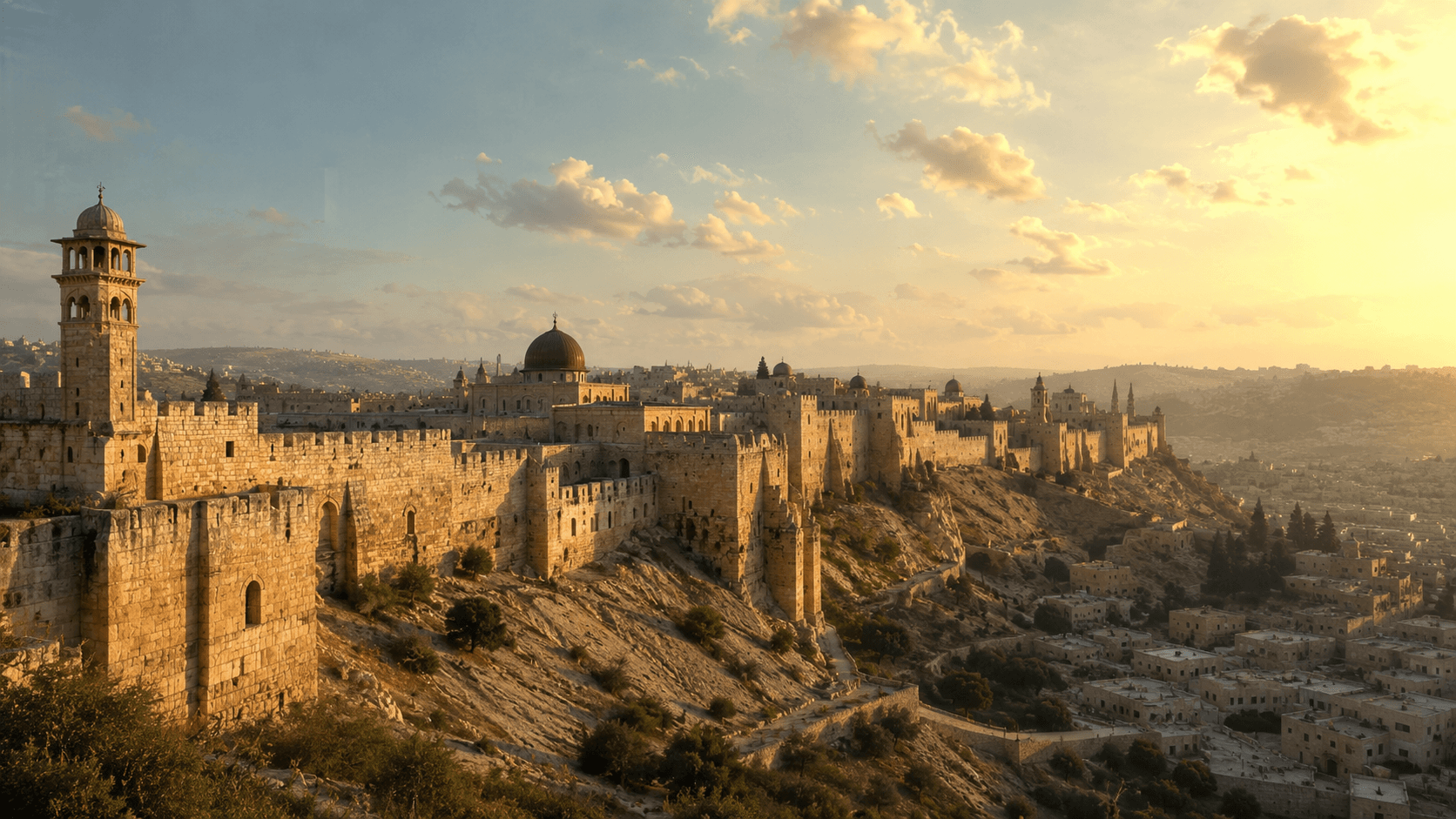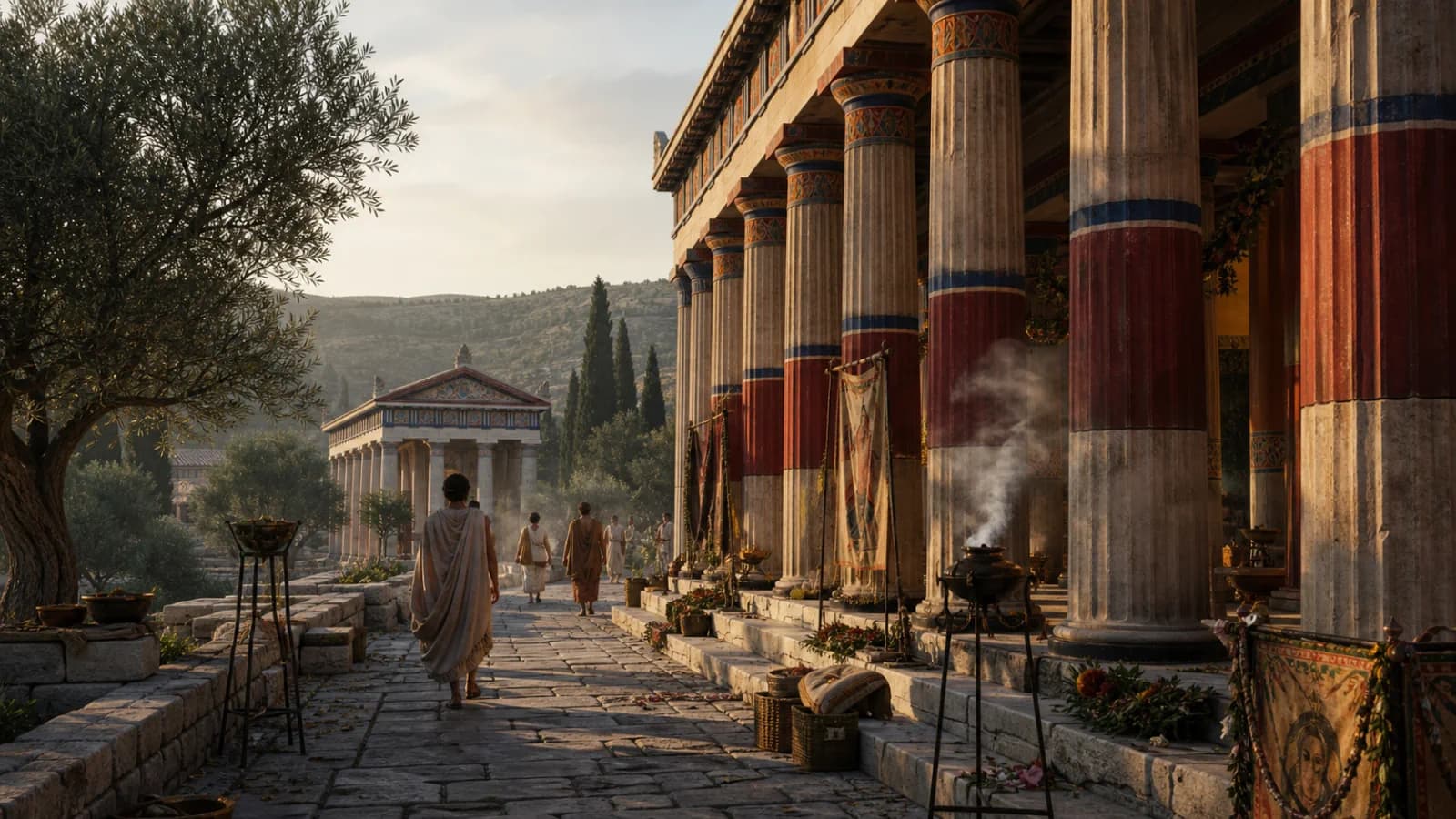
The Rise and Transformation of History's Most Legendary Metropolises
At its peak, the city of Rome housed over one million people — a population density not seen again in Europe until the 19th century.
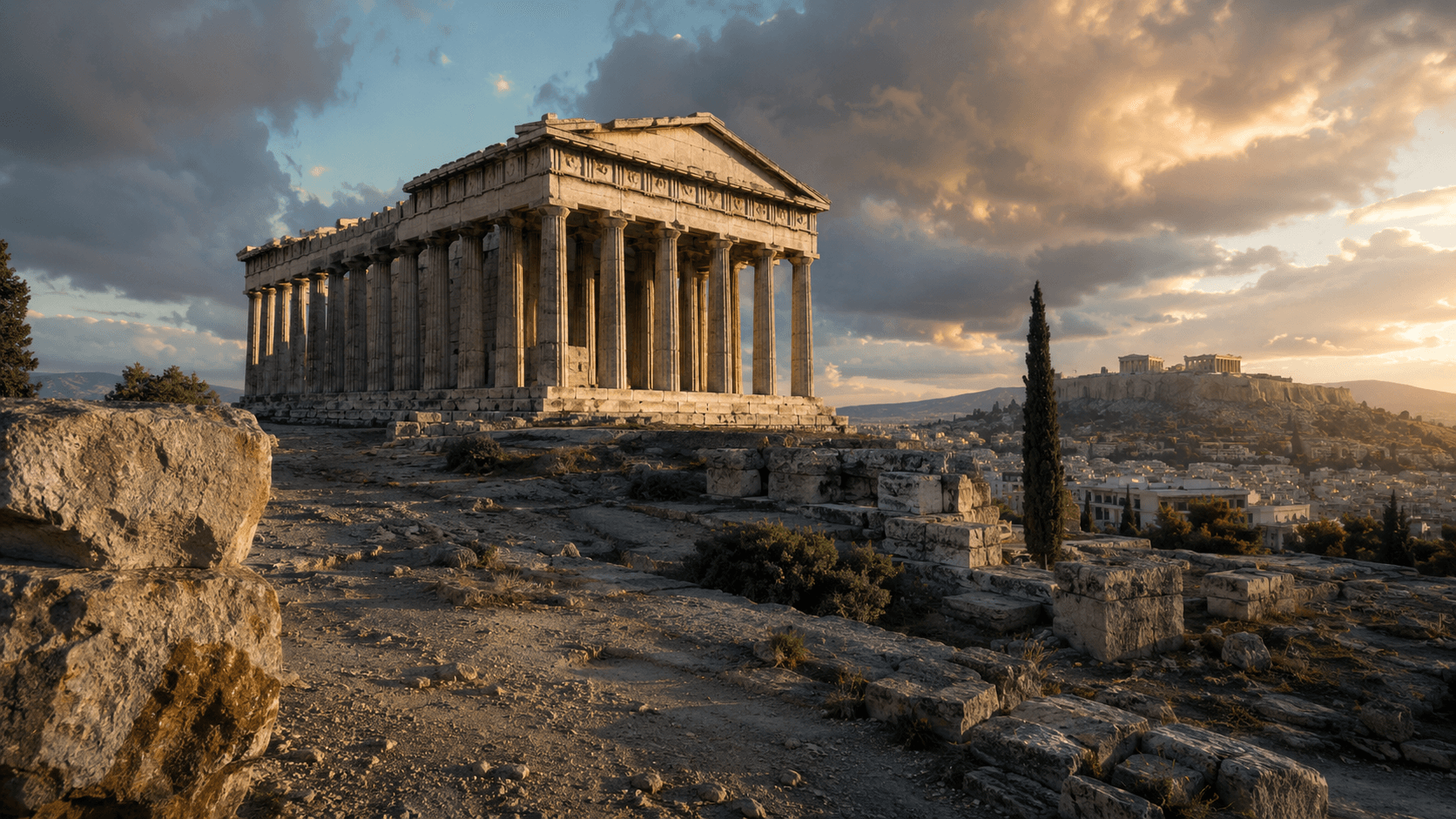
Close your eyes and listen. Beneath the hum of the modern world, beneath the concrete and glass, you can almost hear it — the pulse of something older. The roar of crowds in a Roman forum. The chanting of priests ascending a Babylonian ziggurat. The splash of canoes navigating the gleaming canals of Tenochtitlan at dawn.
The great cities of the ancient world were not merely places where people lived. They were living arguments about what humanity could become. Each one was a radical experiment — in governance, in engineering, in spiritual vision. And each one, in its own time, rewrote the rules of what civilization meant.
This is not a story about ruins. It is a story about resonance. About how certain places concentrate so much human energy, ingenuity, and longing that their echo never fully fades. Let's walk through the gates of history's most legendary metropolises — and feel what they still have to teach us.
What Makes a City Legendary?
Visionary Scale
Legendary cities were always bigger and bolder than what came before — pushing the boundaries of what was thought possible.
Cultural Gravity
They pulled in merchants, scholars, artists, and pilgrims from thousands of miles away, becoming crossroads of the known world.
Engineering Ambition
From aqueducts to canals to grid-planned streets, these cities solved problems that no civilization had faced before.
Enduring Legacy
Long after their transformation, their ideas lived on in law, language, architecture, and the collective human imagination.
Key Facts About History's Legendary Metropolises
- •Babylon's Peak Population: Est. 200,000–250,000 inhabitants circa 600 BCE
- •Rome at Its Zenith: Over 1 million residents during the 1st–2nd century CE
- •Chang'an (Tang Dynasty): World's largest city around 700 CE with ~1 million urban residents
- •Tenochtitlan's Scale: Home to 200,000–300,000 people — larger than any contemporary European city
- •Great Eras Covered: From circa 2000 BCE (Babylon's foundations) to 1500 CE (Aztec empire)
Quick Answer
History's greatest metropolises — Babylon, Rome, Chang'an, and Tenochtitlan — rose through visionary engineering, cultural ambition, and adaptive resilience. Each city left a legacy that permanently reshaped human civilization, proving that great cities are never truly lost — they simply transform.
Babylon: Where the World First Dreamed in Stone
Stand at the gates of Babylon — the Ishtar Gate, blazing with cobalt-blue glazed tiles and golden reliefs of dragons and bulls — and you understand immediately that you are in the presence of a city that wanted to speak to eternity. Founded on the banks of the Euphrates in what is now modern Iraq, Babylon rose to become the first true megalopolis in human history, a city so large and complex that it seemed to defy the natural world.
Under Nebuchadnezzar II in the 6th century BCE, Babylon was reimagined on a staggering scale. The city's processional avenue stretched for kilometers, flanked by walls embedded with thousands of glazed bricks. The ziggurat of Marduk — likely the inspiration for the biblical Tower of Babel — rose in stepped terraces toward the heavens, a physical declaration that this city communed with the divine. Scholars, astronomers, and mathematicians filled its temples, mapping the stars and inventing algebraic systems that would echo into modern mathematics.
When Babylon eventually transitioned through Persian, Macedonian, and Parthian stewardship, its knowledge did not vanish — it traveled. Astronomical records preserved by Babylonian scholars were later absorbed by Greek thinkers. Its legal frameworks, codified centuries earlier by Hammurabi, rippled forward through every civilization that followed. Babylon's grandest achievement was not any single monument. It was the idea that a city could be a center of everything — commerce, faith, learning, and power, all in one pulsing, living place.
Rome: An Empire Built One Stone at a Time
There is a reason we still call Rome the Eternal City. At its height during the 1st and 2nd centuries CE, Rome housed over a million people — a staggering achievement in an era before modern sanitation, electricity, or supply chains. The city's engineers solved problems that no civilization had ever encountered: how do you feed a million mouths? How do you move clean water across mountains and valleys? How do you build structures tall enough, strong enough, to house an empire?
"Rome was not built in a day" — but it was rebuilt, reimagined, and reinvented across centuries. Every emperor who touched it left a layer of ambition in stone.
The Pantheon still stands, its unreinforced concrete dome — a feat not surpassed for 1,300 years — a testament to Roman structural genius. The aqueduct system delivered 300 million gallons of fresh water daily. The Colosseum seated 50,000 spectators with a crowd management system so efficient that modern stadium architects still study it. These were not acts of brute force. They were acts of radical organizational intelligence.
As Rome transitioned through late antiquity and the medieval era, its physical form changed — temples became churches, forums became marketplaces, aqueducts fell silent. But its intellectual and legal DNA proved virtually indestructible. Roman law underpins most of the Western legal tradition. The Latin language evolved into French, Spanish, Italian, Portuguese, and Romanian. The city that had once commanded an empire quietly became the spiritual center of a new world order. Rome did not fade. It transformed.
Chang'an: The Golden Crossroads of the Known World
In the year 700 CE, if you wanted to find the most cosmopolitan city on Earth, you would travel east — far east — to the Tang Dynasty capital of Chang'an, in what is now Xi'an, China. With approximately one million residents, Chang'an was the world's largest city, a meticulously planned metropolis laid out on a grid of breathtaking precision. Its outer walls enclosed an area larger than any city in Europe or the Middle East at that time.
Chang'an was the eastern terminus of the Silk Road, and the city wore that identity proudly. Persian merchants traded saffron and silver in its western markets. Sogdian caravaneers brought glass and lapis lazuli. Japanese and Korean students arrived to study at the Imperial Academy. Buddhist monks from India and Central Asia established monasteries alongside Nestorian Christian churches and Zoroastrian temples. For a brief, luminous moment in Tang Dynasty history, Chang'an was the world in miniature — a city that proved cosmopolitanism was not a modern invention.
Chang'an by the Numbers
84 km² of Urban Area
Chang'an's walled perimeter enclosed a planned grid larger than any contemporary world capital.
110 Planned Wards
The city was divided into distinct administrative and residential wards, each with its own markets and gates.
Model for East Asia
Chang'an's grid layout directly inspired the design of Nara (Japan), Gyeongju (Korea), and Hanoi (Vietnam).
The Tang Dynasty's eventual transition brought changes to Chang'an's global role, but the city's urban blueprint became one of the most influential in East Asian history. Nara, Kyoto, and the ancient Korean capital of Gyeongju were all modeled on Chang'an's grid. The city's poetry, its aesthetic principles, and its cosmopolitan spirit became the standard against which later Chinese dynasties measured themselves. To have lived in Chang'an at its peak was to have lived at the center of the world.
Tenochtitlan: The Island City That Stunned the World
When Spanish explorers first glimpsed Tenochtitlan in 1519, the soldiers in the company reportedly wept — not from sorrow, but from pure, overwhelming awe. Rising from the middle of Lake Texcoco on an artificial island in what is now Mexico City, Tenochtitlan was a city unlike anything they had ever imagined. White pyramids gleamed in the high-altitude sun. Causeways wide enough for ten horses abreast connected the island to the mainland. Canals threaded through the city like arteries, carrying goods in flat-bottomed canoes from the famous floating gardens — the chinampas — that fed a population of over 200,000.
The engineering ambition behind Tenochtitlan is difficult to overstate. The Aztec engineers built a 16-kilometer aqueduct to carry fresh spring water to the island. They constructed an elaborate dike system to manage flooding and maintain the salinity of the lake. The chinampas — artificial agricultural platforms woven from reeds and anchored by willow trees — were a form of sustainable urban agriculture so effective that modern permaculture designers still study them. This was a civilization that had mastered the art of living with water rather than fighting it.
The profound transition that overtook Tenochtitlan in the 16th century reshaped the entire Western Hemisphere. Yet the city's legacy refused to disappear. Modern Mexico City is built directly on the foundations of Tenochtitlan — its streets follow ancient causeways, its neighborhoods echo pre-Columbian districts. The Aztec calendar stone, unearthed beneath the central plaza, now stands as one of the most recognized symbols of indigenous American civilization. Tenochtitlan's story is one of the most powerful reminders that cities, even when profoundly transformed, leave an indelible mark on everything that comes after them.