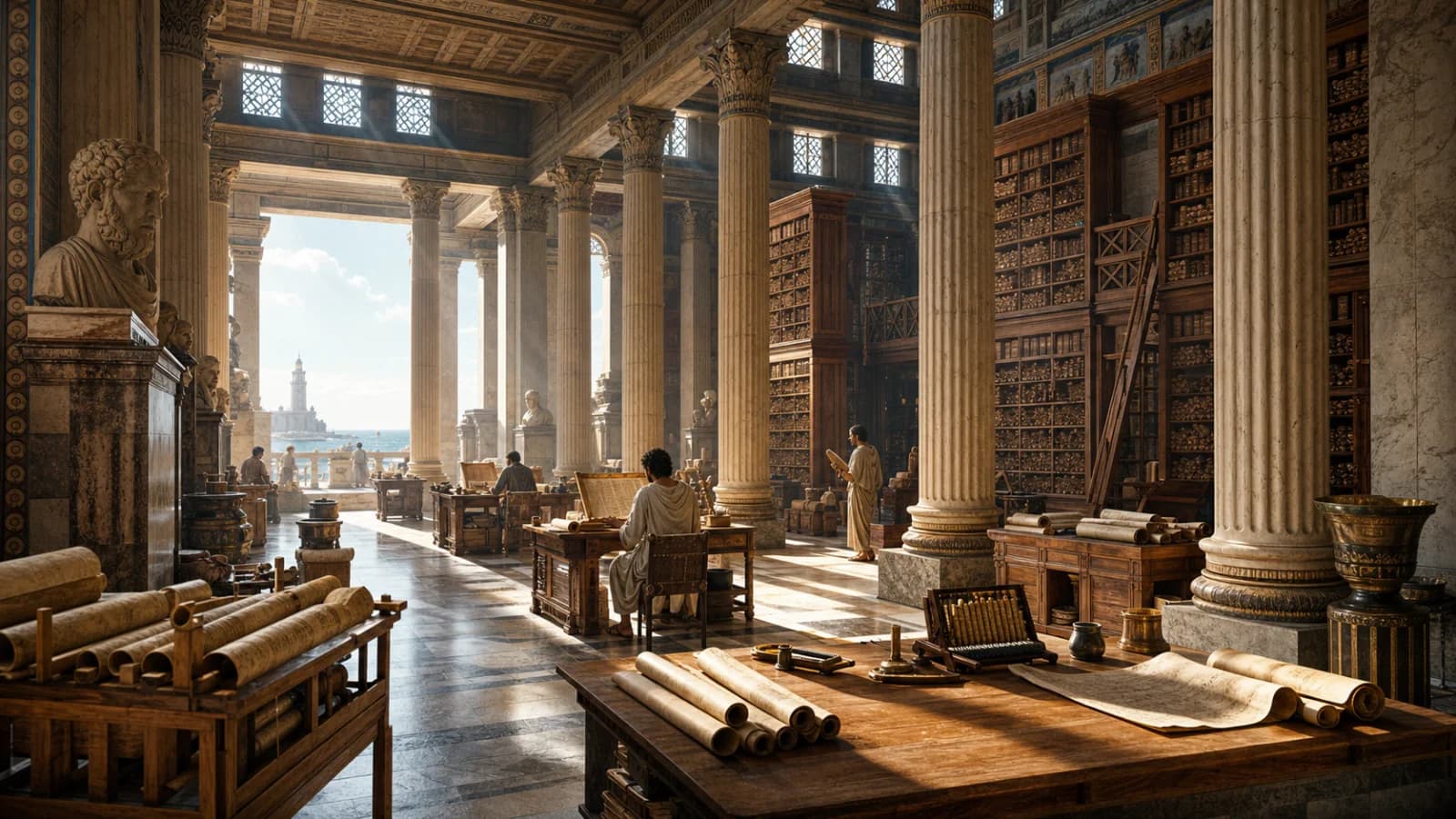
The Rise and Fall of History's Most Legendary Metropolises
At its height, ancient Rome housed over one million inhabitants — a population density that would not be matched by any European city for more than a thousand years after its fall.
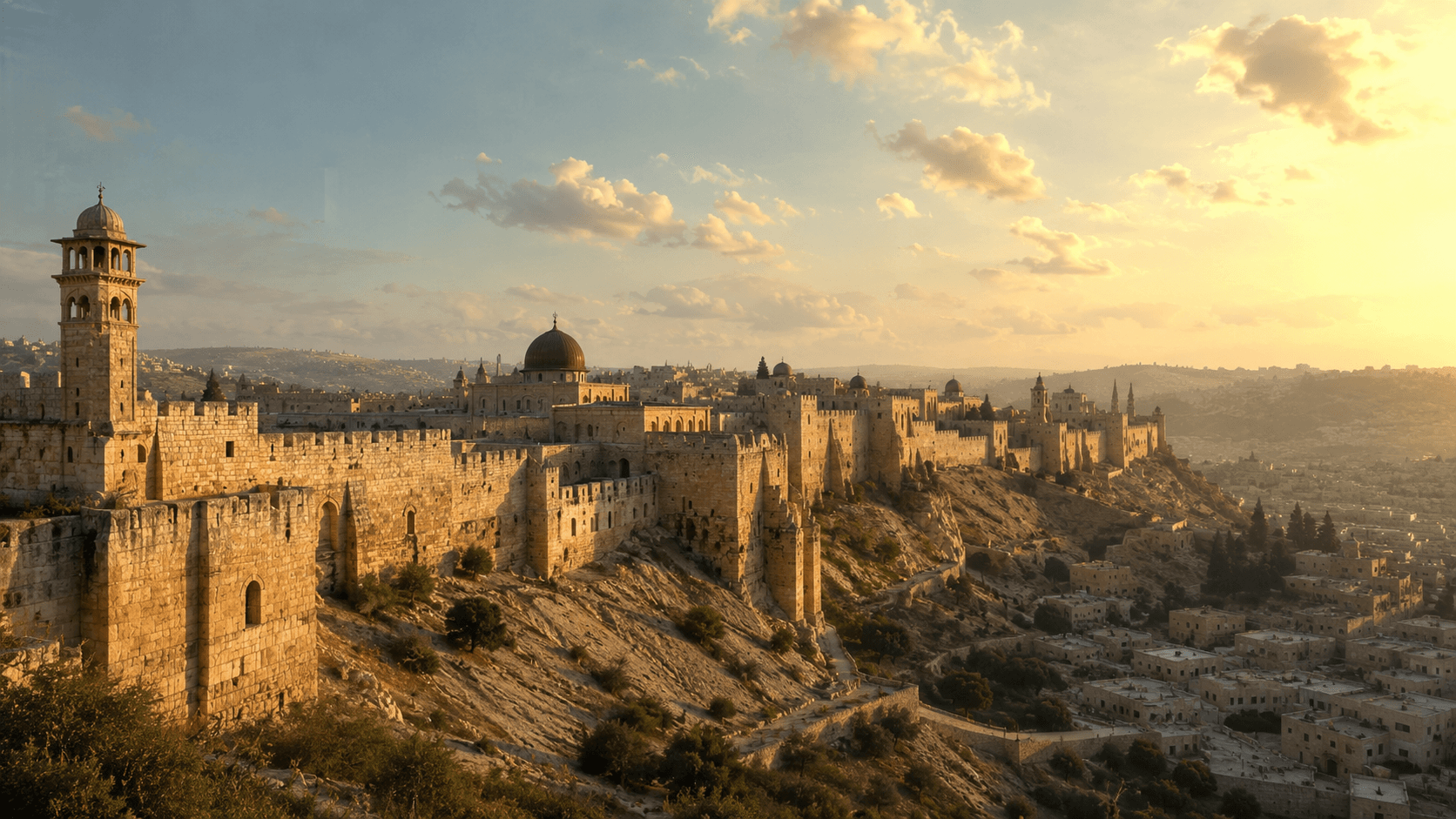
There is a particular silence that haunts ruined cities. It is not the absence of sound — wind still moves through broken columns, birds still nest in crumbled arches — but the absence of the roar that once was there. The market cries, the temple bells, the groan of laden carts on paved roads, the arguments of senators and the laughter of children in shadowed courtyards. All of it, gone. What remains is stone and the imagination of those willing to listen.
Across six thousand years of recorded history, humanity has built cities of staggering ambition. We have raised ziggurats toward indifferent skies, paved roads across continents, engineered aqueducts that carried mountain water to million-person populations, and wrapped islands in walls that defied armies for centuries. The great metropolises of history were not merely places to live. They were statements — declarations, carved in limestone and fired brick, that human beings could impose order upon a chaotic world.
"Cities are the crucibles of civilization. When they fall, something irreplaceable is extinguished — not just buildings, but the accumulated memory of a people." — Lewis Mumford, The City in History
And yet every one of them fell. Some collapsed over centuries, their populations drifting away as trade routes shifted or aquifers dried up. Others were erased in single cataclysmic moments — consumed by fire, shattered by earthquake, overwhelmed by armies that showed no mercy. The story of the rise and fall of history's most legendary metropolises is ultimately the story of human civilization itself: brilliant, fragile, and achingly mortal.
Key Facts About History's Legendary Metropolises
- •Largest Ancient City: Rome, with an estimated population of 1–1.2 million at its 2nd-century CE peak.
- •Oldest Recorded Metropolis: Uruk in Mesopotamia, founded circa 4500 BCE and home to some of humanity's first writing.
- •Most Dramatic Siege: The fall of Carthage (146 BCE), after which Roman forces salted the earth — or so the legend claims.
- •Longest-Surviving Empire Capital: Constantinople, the Eastern Roman capital, endured for over 1,000 years before falling in 1453 CE.
- •Swiftest Urban Abandonment: Mohenjo-daro in the Indus Valley was deserted around 1900 BCE, apparently without conquest — its collapse still unexplained.
Quick Answer
History's greatest metropolises — from Babylon and Carthage to Rome and Constantinople — rose through extraordinary feats of engineering and governance, then collapsed under the weight of siege, climate collapse, economic ruin, or catastrophic invasion. Their stories reveal an eternal cycle: ambition builds cities, and time — or violence — destroys them.
Babylon: Crown of the Ancient World
No city in the ancient world carried more mythological weight than Babylon. Rising from the flat alluvial plains of Mesopotamia — modern-day Iraq — it was, for much of the first millennium BCE, the largest and most powerful city on Earth. Under Nebuchadnezzar II, who ruled from 605 to 562 BCE, the city was rebuilt on a scale that beggared comprehension. Its walls were so thick, according to Herodotus, that a four-horse chariot could turn around on their summit. The Ishtar Gate, glazed in brilliant lapis blue and decorated with golden dragons and bulls, was one of the most breathtaking architectural achievements of antiquity.
Babylon was also a city of ideas. Its astronomers mapped the stars with a precision that would influence Greek science for centuries. Its legal tradition, encoded in Hammurabi's Code centuries earlier, laid intellectual groundwork for concepts of justice still echoing today. And at its center rose the great ziggurat of Etemenanki — the physical inspiration, many scholars believe, for the biblical Tower of Babel — a stepped pyramid of mud brick stretching perhaps ninety meters into the sky.
The legendary Hanging Gardens of Babylon, one of the Seven Wonders of the Ancient World, allegedly cascaded from terraced heights above the Euphrates — an engineering miracle of irrigation and ambition built, tradition holds, by Nebuchadnezzar to console his homesick queen. Whether they truly existed remains one of history's most debated mysteries. No Babylonian text has ever confirmed them. Yet their legend has never died.
The Fall of Babylon
In 539 BCE, Cyrus the Great of Persia entered Babylon almost without a fight. The city's last Babylonian king, Nabonidus, had alienated the priesthood and population. Persian forces famously diverted the Euphrates to march under the city walls. The greatest metropolis of the ancient Near East fell in a single night — not to fire and slaughter, but to political collapse and divine abandonment. It was a lesson history would repeat, with variations, many times over.
Carthage: The City Rome Had to Destroy
Founded by Phoenician settlers from Tyre around 814 BCE on the shores of what is now Tunisia, Carthage grew into the dominant commercial empire of the western Mediterranean. At its height it controlled a maritime network stretching from Spain to Sicily, its navy the most feared in the ancient sea. The city itself was a marvel of planning: a double harbor — one commercial, one military — constructed with such geometric precision that ancient writers described it in tones of awe. The military harbor, the Cothon, could shelter up to 220 warships simultaneously, concealed from outside observers by a circular island and covered slipways.
Carthage's greatness, however, made it Rome's existential rival. Three Punic Wars across more than a century tested both civilizations to their absolute limits. Hannibal Barca's audacious crossing of the Alps with elephants and his crushing victories at Trebia, Lake Trasimene, and Cannae brought Rome to the edge of annihilation. And yet Rome endured. Carthage did not.
"Carthago delenda est" — Carthage must be destroyed. So ended every speech by the Roman senator Cato the Elder, regardless of subject, for years before the Third Punic War. It was not policy. It was obsession. It was fear.
In 146 BCE, Roman legions under Scipio Aemilianus besieged the city for three years. When the walls finally broke, house-to-house fighting consumed entire neighborhoods for six days. The historian Polybius records that Scipio wept as Carthage burned, reciting lines from Homer about the fall of Troy — aware, perhaps, that all great cities share the same ultimate fate. When the fires died, Rome declared that the site of Carthage would be cursed and uninhabitable. Whether the Romans actually sowed the earth with salt, as later legend insists, is disputed by scholars. What is not disputed is the totality of the destruction. A civilization that had endured for nearly seven centuries was erased in a week.
Rome: The Eternal City and the Mortal Empire
No city in Western history casts a longer shadow than Rome. From a collection of Iron Age villages on the banks of the Tiber, it grew across eight centuries into the capital of an empire encompassing forty-five modern nations, governing fifty million people, connected by eighty thousand kilometers of paved road. Roman engineers solved problems that would not be revisited for a thousand years after their civilization's collapse. Their concrete — incorporating volcanic pozzolana ash — has proven more durable than modern Portland cement. Their aqueducts brought eleven distinct water sources into the city, supplying a population with water per capita that rivaled industrial-era cities.
The Colosseum alone, completed in 80 CE, could seat fifty thousand spectators and be evacuated in under fifteen minutes through its ingenious system of numbered vaults and corridors — a crowd-management solution that modern stadium architects still study. The Pantheon, built under Hadrian, features a concrete dome that remained the world's largest for thirteen centuries. These were not accidents of genius. They were products of a civilization that had systematized engineering, logistics, and governance at a scale never before attempted.
The Long Unraveling
Rome did not fall in a day, or even a decade. Historians now speak of a 'transformation' rather than a 'collapse,' noting that the Eastern Roman Empire continued for another thousand years from Constantinople. But for the Western city itself, the 5th century CE brought catastrophe: Alaric's Visigoths sacked Rome in 410 CE — the first time in eight centuries the city had been breached. Attila's Huns threatened. Vandals plundered in 455 CE. By 476 CE, the last Western emperor, the teenage Romulus Augustulus, was deposed without ceremony. The city that had once held one million shrank, by the 6th century, to perhaps thirty thousand souls wandering among monuments they could no longer maintain.
What killed Rome? Historians have proposed over two hundred theories: lead poisoning in the water pipes, pandemic disease, climate shifts, debasement of the currency, over-extension of military frontiers, political corruption, the destabilizing influence of Christianity on civic virtue, the sheer entropy of governing too much territory across too little communication infrastructure. The honest answer is that all of these forces played roles, compounding one another across generations until the system simply could no longer hold. Rome was not murdered. It was exhausted.
Constantinople: The Wall That Held a Thousand Years
When Constantine the Great dedicated his new eastern capital in 330 CE, he was making a calculated bet: that the future of Rome lay not in the exhausted, plague-struck West, but in the wealthy, strategically vital East. He was right. Constantinople — built on a triangular peninsula where Europe meets Asia, surrounded on three sides by water and defended on the fourth by the most formidable defensive walls ever constructed — became the richest city in the medieval world. For a thousand years, it was the beating heart of Byzantine civilization: a city of half a million people, of golden mosaics and theological debates, of silk markets and Greek fire.
The Theodosian Walls, completed in 413 CE, were an engineering masterpiece: a triple line of moat, outer wall, and inner wall stretching nearly six kilometers across the peninsula's landward approach. Arab armies besieged the city twice in the 7th and 8th centuries and failed. The Bulgars came and retreated. The Rus sailed up the Bosphorus and were turned back. The Crusaders — Christian armies nominally allied with Byzantium — shockingly sacked the city in 1204, establishing a Latin Empire that lasted fifty-seven years before Byzantine rulers reclaimed their capital. Still the walls stood.
The end, when it came, arrived not because the walls had weakened but because the technology of war had finally outpaced them. The last day of Constantinople in 1453 was decided by Ottoman cannons — specifically the enormous bombards of the Hungarian engineer Urban, which fired stone balls weighing half a ton and could be heard, witnesses reported, from forty kilometers away. Sultan Mehmed II, just twenty-one years old, had commissioned the largest cannon ever built specifically to breach walls that had seemed eternal. On May 29, 1453, after fifty-three days of siege, Ottoman forces poured through a breach near the Blachernae palace. Emperor Constantine XI Palaiologos, last of the Roman emperors, tore off his imperial insignia and charged into the melee. His body was never identified.
"The city is fallen and I am still alive." — The last words attributed to Emperor Constantine XI Palaiologos, before he led a final cavalry charge into the Ottoman lines.
Tenochtitlan: The Venice of the Americas
When Spanish conquistadors first saw Tenochtitlan in November 1519, several of them — hardened soldiers who had campaigned across Europe and the Caribbean — openly wept. Not from fear, but from astonishment. The Aztec capital, built on an island in the middle of Lake Texcoco and connected to the mainland by three great causeways, was larger than any city in Spain. Its population of perhaps two hundred thousand made it one of the five largest cities on Earth. Bernal Díaz del Castillo, a soldier who accompanied Hernán Cortés, wrote that it resembled "the enchantments they tell of in the legend of Amadís" — a fantasy made real.
Tenochtitlan's engineering was extraordinary by any global standard. Aqueducts of fresh water crossed the salt lake from the mainland. An enormous dike — the Albarradón of Nezahualcoyotl — spanning sixteen kilometers regulated water levels and prevented flooding. Floating gardens called chinampas, anchored in the lake shallows, produced food year-round. The city was clean, organized, and governed by a bureaucracy managing a tributary empire of millions. The great temple pyramid at its center, the Templo Mayor, rose forty-five meters above the city in two tiers — one dedicated to the rain god Tlaloc, one to the war god Huitzilopochtli — painted in brilliant red and white, visible from the shores of the entire lake.
Erasure and Resurrection
The destruction of Tenochtitlan was systematic and total. After the Aztec uprising known as the Noche Triste, Cortés returned with a rebuilt force and hundreds of thousands of indigenous allies who despised Aztec imperial power. The siege of 1521 lasted seventy-five days. When it ended, Cortés ordered every building demolished and the rubble used as fill to drain the lake. Mexico City was built directly on top of Tenochtitlan's ruins. Today, archaeologists excavating beneath the capital's downtown continue to find the Aztec city beneath their feet — a ghost metropolis haunting the living one built above it.
The Pattern Beneath the Ruins
Walk the ruins of enough lost cities — and archaeologists, historians, and curious travelers have walked many — and a pattern emerges beneath the surface of each individual tragedy. Great metropolises tend to collapse not from a single cause but from the compounding of several: an economic disruption that strains the food supply, a plague that kills the skilled workers who maintain infrastructure, a political crisis that fractures the consensus needed to govern complexity, and then — finally — the external shock that the weakened system can no longer absorb. The Hittite capital Hattusa was abandoned around 1180 BCE during the mysterious Bronze Age Collapse. Angkor, the great Khmer capital of Cambodia, was gradually depopulated as climate shifts disrupted its elaborate irrigation system. These were not failures of engineering or even of courage. They were failures of systemic resilience.
The stories of the greatest lost cities of history share another quality: they tend to be remembered not as failures but as glories. We speak of Babylon, Carthage, Rome, Constantinople, and Tenochtitlan with reverence because their ambitions were genuinely magnificent. They pushed the limits of what organized human beings could achieve. That they fell does not diminish what they built. If anything, their impermanence makes them more poignant — proof that beauty and power, however spectacular, are always temporary arrangements of matter and will, subject to the same entropy that governs stars.
There is one final lesson in the ruins, and it is perhaps the most important. Every city that fell was, at some point, considered eternal by the people who lived in it. The Romans called their city the Eternal City. The Byzantines believed Constantinople was divinely protected. The Aztecs built their calendar around cycles of cosmic renewal centered on Tenochtitlan. None of them truly believed, in the daily texture of their lives, that the streets they walked would one day be silent. That gap between the certainty of permanence and the reality of fragility is where all of urban history lives. It is where we live too — in cities that will one day, in some form or another, join the long list of the magnificent and the fallen.
Hear History Come Alive
Explore Visionaria's immersive audio journeys through the world's greatest lost civilizations — narrated, scored, and brought to life.