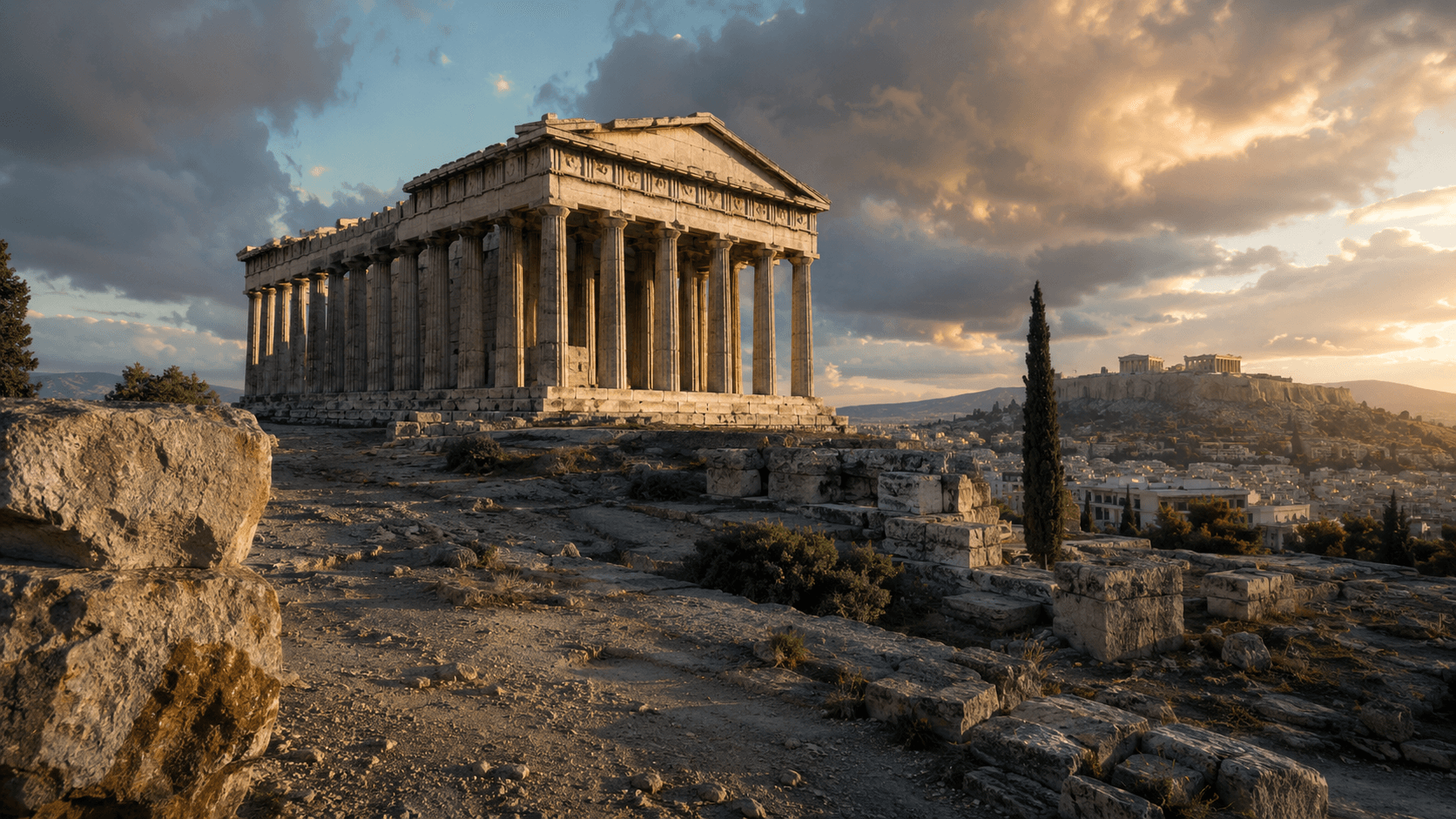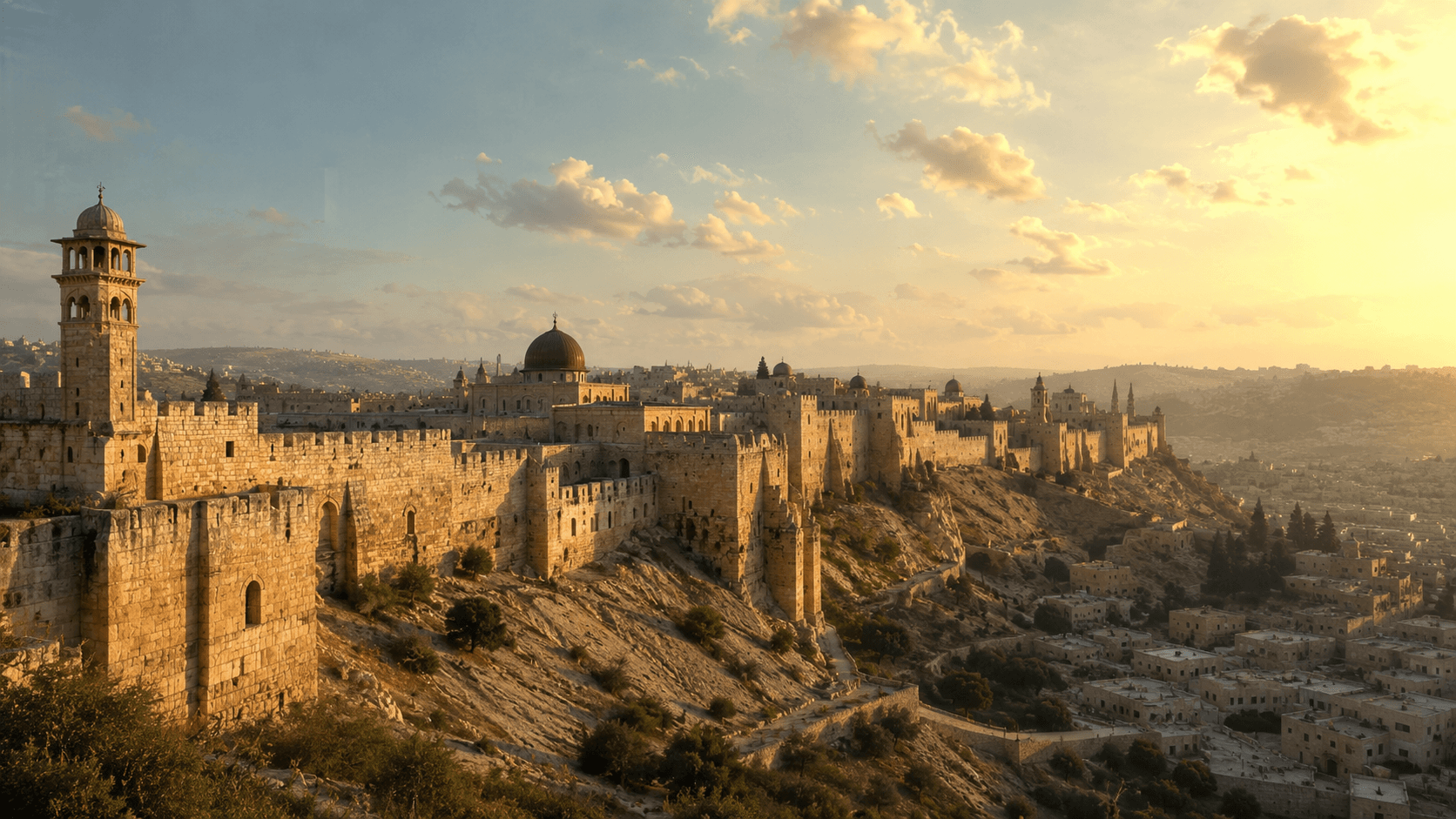
The Rise and Transformation of History's Most Legendary Metropolises
Rome's Pantheon, built nearly 2,000 years ago, still stands as the world's largest unreinforced concrete dome—a testament to engineering that has outlasted empires themselves.
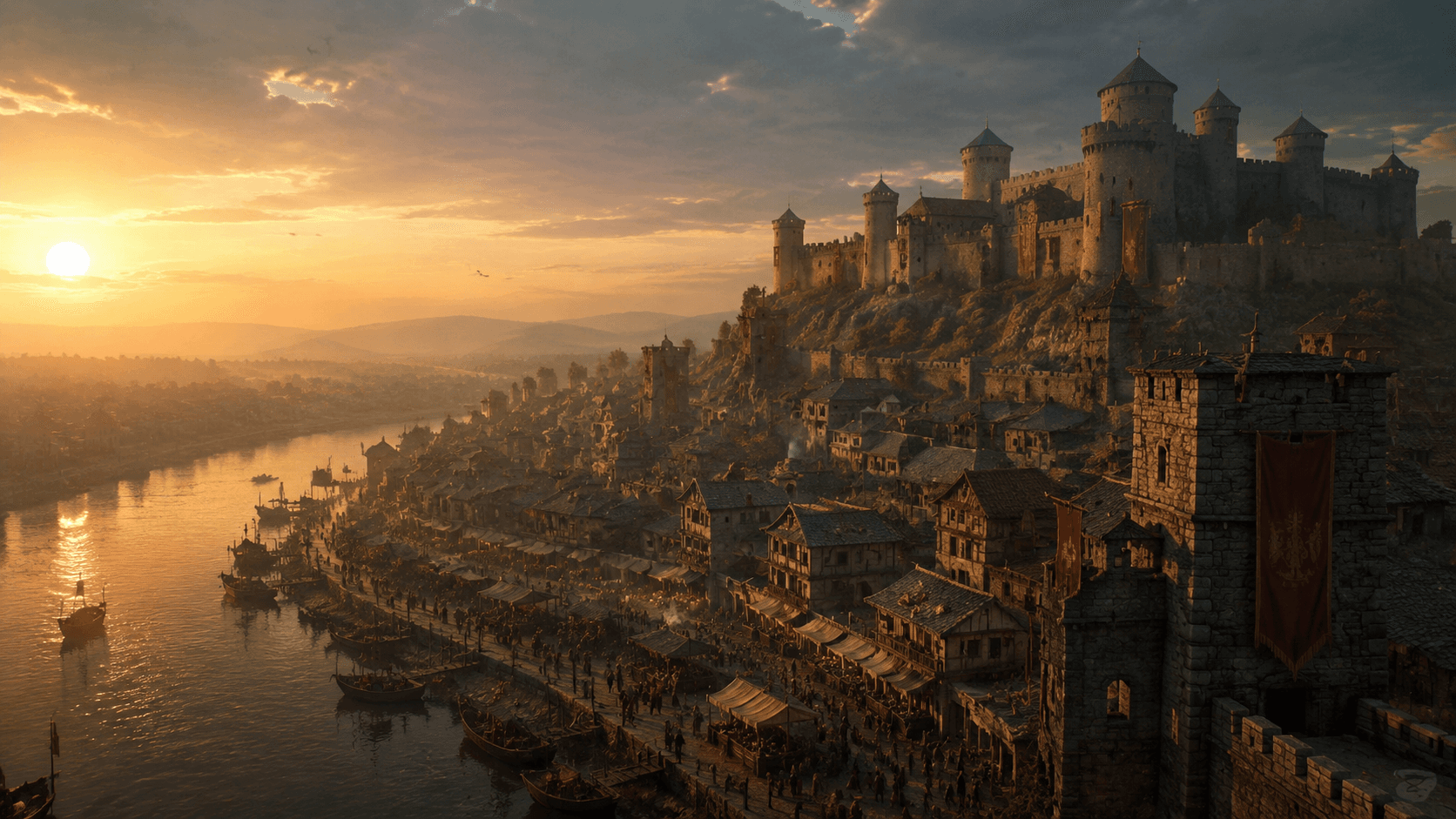
When we speak of history's greatest cities, we're not merely discussing monuments of stone and mortar. We're invoking the essence of human ambition itself—those extraordinary urban centers where civilizations reached their pinnacle, where innovation and culture flourished in unprecedented ways. From the marble forums of Rome to the silk-threaded streets of Chang'an, these metropolises represent the triumphs of human organization, engineering, and vision.
But what makes these cities truly legendary isn't merely what they built—it's how they transformed. History's greatest metropolises didn't exist in static perfection. They evolved. They adapted. They experienced periods of profound transition where cultures shifted, political systems evolved, and new identities emerged. This is the untold story of the ancient world: not the rise and fall of empires, but the continuous dance of transformation that defined human civilization.
The Essence of Great Cities
Strategic Location
Built at crossroads of trade routes and natural resources
Innovation Hub
Centers of technological breakthroughs and architectural daring
Cultural Magnetism
Drew the world's greatest minds and diverse populations
Enduring Legacy
Influenced centuries of urban planning and civilization
Key Facts About the World's Greatest Ancient Cities
- •Engineering MarvelsAqueducts, roads, and structures that revolutionized human civilization
- •Cultural CrossroadsCenters where trade, philosophy, and diverse peoples converged
- •Resilience Through ChangeCities transformed across centuries while maintaining cultural identity
- •Lasting InfluenceUrban planning principles still influence modern city design
Quick Answer
History's legendary metropolises rose through unprecedented engineering achievements and survived through remarkable cultural transformation. Cities like Rome, Alexandria, Babylon, and Chang'an didn't simply exist—they evolved, adapted, and shaped human consciousness across millennia. Their true legacy lies not in their monuments, but in their capacity to reinvent themselves through periods of profound change.
Rome: The Eternal City of Perpetual Transformation
Rome stands as perhaps history's most remarkable urban achievement—not because it never changed, but because it transformed so profoundly while maintaining its essential identity. Built on seven hills overlooking the Tiber River, Rome emerged from modest settlements to become the center of one of history's most ambitious civilizations. The engineering that made this possible was nothing short of revolutionary: aqueducts that carried fresh water from distant mountains, roads that connected continents, and structures designed to last millennia.
The Romans didn't merely build a city—they built a template for civilization itself. Their roads weren't simply pathways; they were arteries of commerce, culture, and governance that unified diverse peoples under shared infrastructure. The Pantheon, with its perfectly proportioned dome and oculus opening to the heavens, represents an engineering achievement so sophisticated that it remained the world's largest unreinforced concrete dome for nearly two thousand years. Yet even as Rome's political systems shifted from kingdom to republic to empire, the city itself adapted, expanded, and reinvented its cultural meaning.
What's profoundly moving about Rome is how the city absorbed waves of transformation. As the center of power shifted, as religions changed, as economic systems evolved, Rome remained a living organism—continuously shedding its old skin while preserving its soul. The Forum that once echoed with political oratory was repurposed for new gatherings. Temples were transformed into churches, yet their architectural spirit endured. This capacity for evolution while maintaining continuity is what truly makes Rome eternal.
Alexandria: The Beacon of Knowledge and Intellectual Transformation
On the Mediterranean coast of Egypt, Alexandria emerged as perhaps history's greatest intellectual crossroads. Founded by Alexander the Great, this city was designed from its inception to be something unprecedented: a cosmopolitan center where Greek, Egyptian, Jewish, and Near Eastern cultures converged not in conflict, but in collaborative pursuit of knowledge. The city's very layout reflected this ambition—wide avenues designed for both commerce and philosophy, harbors designed to welcome traders from every corner of the known world.
The Library of Alexandria became more than a repository of scrolls—it represented humanity's collective memory made tangible. Scholars from across the Mediterranean world were drawn to this city to study mathematics, astronomy, medicine, and philosophy in an environment of unprecedented intellectual freedom. The Lighthouse of Alexandria (the Pharos) guided ships safely to harbor while serving as a symbol of enlightenment itself. Yet Alexandria's genius wasn't merely what it preserved; it was how knowledge continuously transformed there. New ideas emerged from the collision of different worldviews, from the synthesis of Greek reason with Egyptian wisdom, from the marriage of Eastern and Western thought.

As political fortunes shifted and the Mediterranean world transformed, Alexandria continued to evolve. It remained a center of learning, theology, and cultural exchange—adapting its role across centuries while maintaining its essential identity as a place where minds could flourish and ideas could transcend cultural boundaries. This capacity to transform while serving as a constant beacon of knowledge is Alexandria's true immortality.
Babylon: The Gateway City of Architectural Wonder
Babylon, nestled between the Tigris and Euphrates rivers, emerged as the ancient world's most legendary metropolis—a city whose very name became synonymous with human achievement and cosmopolitan grandeur. Under Nebuchadnezzar II, Babylon was redesigned into a city of unprecedented splendor. The Ishtar Gate, glazed in brilliant lapis lazuli blue and adorned with relief figures of dragons and bulls, served as both a practical entrance and a theological statement about humanity's place in the cosmos. The city walls were so monumental that they became the stuff of legend.
The Hanging Gardens Mystery
Whether the legendary Hanging Gardens existed as described or represented the collective memory of Babylon's lush irrigation systems, they symbolize the city's engineering genius—humanity's ability to make the desert bloom through innovation and determination.
Yet Babylon was more than its monumental architecture. It was a profoundly cosmopolitan center where merchants from distant lands gathered, where the Akkadian language served as a lingua franca, where diverse peoples conducted business and shared ideas. The city's greatest achievement wasn't any single structure—it was the creation of an urban environment where human commerce, intellectual exchange, and cultural synthesis could flourish simultaneously. Babylon demonstrated that great cities are defined not merely by what they build, but by the communities they cultivate.
As empires rose and fell around it, Babylon transformed. Its cultural and commercial importance evolved, its architectural emphasis shifted, its population composition changed—yet the city's fundamental identity as a place of exchange and wonder persisted for centuries. This demonstrates a crucial truth about great cities: they endure not through resistance to change, but through their capacity to transform while maintaining their core purpose.
Chang'an: The Eastern Center of Silk Road Splendor
On the far side of the ancient world, in what is now Xi'an, China, the city of Chang'an emerged as the eastern counterpart to Rome—a metropolis of such splendor that it became the envy of distant civilizations. During the Tang Dynasty especially, Chang'an was the world's largest city, with a population exceeding one million. But Chang'an's greatness wasn't measured merely in size; it was the sophistication of its urban planning, the breadth of its cultural synthesis, and its role as the crucial node connecting the Silk Road trade networks that linked continents.
The city's grid layout was a marvel of rational urban design, with broad avenues dividing it into rectangular districts. Chang'an's markets were famous throughout the known world—merchants from Central Asia, India, Persia, and beyond converged in the city's bazaars, bringing not only goods but languages, religions, and ideas. Buddhism, which had journeyed from India, flourished in Chang'an's temples. Nestorian Christianity found a home there. Islamic scholarship was studied alongside Confucian philosophy. The city became a living laboratory where Eastern and Western thought merged into something entirely new.

The Silk Road: Connecting Continents Through Commerce
Explore how the Silk Road connected distant civilizations and transformed global commerce forever.
As dynasties rose and fell, as political systems transformed, Chang'an continued its role as a nexus of cultural exchange. The city didn't merely survive change—it thrived through it. Each new era brought new rulers, new religions, new ideas, and Chang'an absorbed them all, synthesizing them into its evolving identity. This remarkable capacity for transformation while maintaining its essential function as a crossroads of civilizations makes Chang'an a profound testament to human adaptability.
Engineering Marvels: The Infrastructure of Greatness
What truly separated legendary metropolises from ordinary cities was the engineering ingenuity that made them possible. These weren't cities that grew haphazardly; they were deliberately designed, continuously improved, and maintained through sophisticated systems of governance and resource management. The Roman aqueducts, which carried water from mountains and valleys to cities, represented not merely engineering achievement but a profound philosophical statement: that human civilization should be built on systems that serve all inhabitants equally.
Similarly, Rome's road system was engineered with such precision and durability that many still exist today. Chang'an's grid layout demonstrated a mathematical sophistication in urban planning that wouldn't be matched in Europe for centuries. Alexandria's harbor was engineered to handle unprecedented volumes of maritime traffic. These weren't mere achievements of stone and mortar—they were triumphs of human thought made manifest, demonstrations of what organized intelligence could accomplish when directed toward the common good.
The brilliance of these engineering systems was that they weren't static. They were continuously improved, expanded, and adapted to serve changing populations and purposes. The Pantheon's dome was an engineering innovation that seemed impossible until Romans imagined and built it. These cities represented humanity's capacity to extend its reach, to reshape geography, to create environments where larger and more complex communities could flourish. The infrastructure wasn't just functional—it was transformative.
Engineering Achievements of Ancient Metropolises
Roman Aqueducts
Carried fresh water up to 90 kilometers, some structures still functioning today
Chang'an's Grid System
Rational, geometric urban planning that influenced cities for centuries
Babylon's Gates
Monumental entrances serving both practical defense and spiritual purpose
Alexandria's Pharos
Lighthouse standing over 100 meters tall, visible for miles at sea
Cultural Synthesis: Where Worlds Converged
Beyond their physical infrastructure, the world's legendary metropolises shared a crucial characteristic: they were places where different cultures, religions, and worldviews converged and synthesized into something new and vital. Alexandria's greatest intellectual achievement wasn't any single work—it was the environment where Greek mathematics could be studied alongside Egyptian medicine, where Jewish theology could dialogue with Greek philosophy. This cross-cultural pollination was the city's true genius.
Great cities are not monuments to the dominance of one culture, but crucibles where multiple cultures merge, challenge each other, and create something transcendent together.
Rome's genius was its capacity to absorb the gods, ideas, and technologies of conquered peoples, synthesizing them into a coherent imperial culture without erasing their distinctiveness. Chang'an under the Tang became a melting pot where Buddhist monasteries stood near Confucian academies, where Persian merchants lived alongside Chinese scholars, where Zoroastrian priests taught alongside Islamic judges. This wasn't multiculturalism as an ideal—it was multiculturalism as lived reality, driven by commerce, curiosity, and the simple human desire to understand the stranger in one's midst.
These great cities demonstrated a profound truth that remains relevant today: human civilization reaches its highest flowering not through cultural homogeneity or the dominance of a single tradition, but through the dynamic interaction of different perspectives. The greatest cultural achievements of Rome, Alexandria, and Chang'an emerged from these moments of synthesis—when different traditions encountered each other and created something neither could have achieved alone.
Transformation and Legacy: The Eternal City Lives On
What we discover when we study history's legendary metropolises is that their true greatness wasn't found in any single moment of achievement. Rome didn't become eternal through the perfection of any one emperor's reign. Alexandria didn't achieve immortality through any single book in its Library. Babylon didn't become legendary through the completion of its walls. Instead, these cities endured because they possessed something more valuable than perfection: they possessed the capacity to transform.
The legacy of these great cities lies not in the ruins they left behind, though those ruins inspire us. Their true immortality lies in the principles they embodied: that human communities can reach remarkable heights through organized intelligence and shared purpose, that cities are living organisms that must continuously adapt to survive, that the greatest human achievements emerge when different cultures encounter and synthesize with one another, and that the infrastructure we build should serve the flourishing of all inhabitants. These lessons from Rome, Alexandria, Babylon, and Chang'an remain profoundly relevant.
Today, as we face the challenges of building sustainable, inclusive, thriving cities, we might look to these ancient metropolises not as models to copy, but as inspiration for the principles they embody. The greatest cities, both ancient and modern, are defined not by their monuments alone, but by their capacity to create environments where human potential can flourish, where different peoples can coexist and create together, where infrastructure serves the common good, and where change is embraced as a catalyst for growth. This is the eternal legacy of history's legendary metropolises.