
Ancient
Troy
"Where accepting large wooden gifts had consequences."
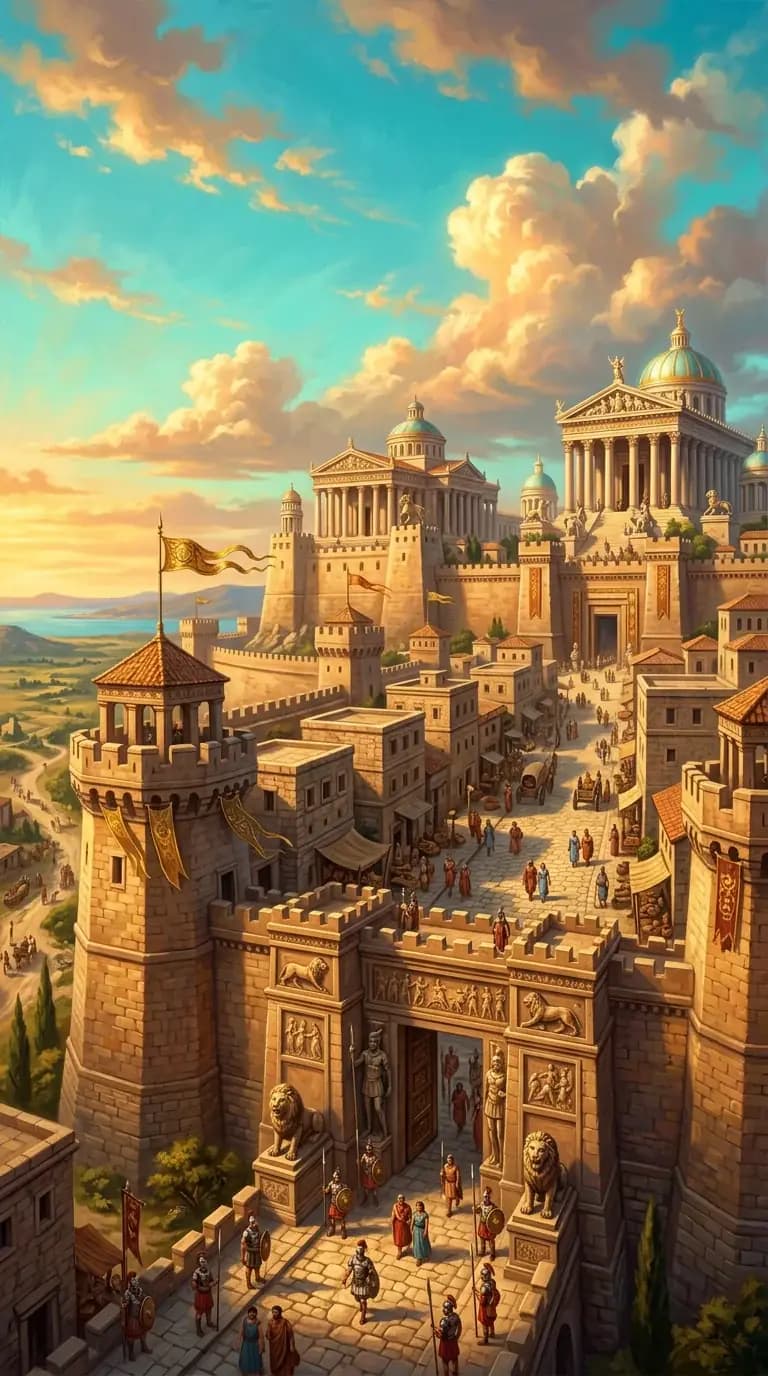
Troy (also known as Ilion or Ilios) was a Bronze Age city located at Hisarlik in northwestern Turkey, near the Dardanelles strait. The archaeological site reveals nine sequential cities built between 3000-500 BCE, with Troy VI (1700-1250 BCE) identified as the city immortalized in Homer's Iliad. As a strategic coastal fortress controlling maritime trade routes between the Aegean and Black Seas, Troy's legendary ten-year siege by the Greeks (circa 1194-1184 BCE) represents one of the most famous conflicts in ancient mythology and inspired centuries of epic poetry and artistic tradition across Western civilization.
Key Facts About Troy
- Location: Hisarlik, northwestern Turkey (near the Dardanelles)
- Period: Bronze Age (3000-500 BCE), Troy VI (1700-1250 BCE)
- Famous For: Legendary Trojan War, Trojan Horse, Homer's Iliad
- Discovery: Excavated by Heinrich Schliemann (1870s)
- UNESCO Status: World Heritage Site since 1998
🏛️ What can I experience in ancient Troy?
Journey through 3 cinematic episodes in the Visionaria app: the Palace of Priam, the Temple of Apollo Smintheus and the Trojan Horse. Each uses 3D spatial audio to bring the legend of Troy to life.
What You'll Experience
Watch the legendary Trojan Horse arrive at the gates, explore King Priam's palace, and enter the temple of Apollo Smintheus, Troy's protector. Experience the legendary city that sparked the greatest war in ancient mythology.
Troy · 25-second preview
Trojan Horse
Why Troy?
Troy isn't just history. It's the birthplace of Western storytelling. Homer's Iliad, composed around 750 BCE, immortalized the ten-year siege that ended with Odysseus's legendary Trojan Horse stratagem. For 3,000 years, Troy existed as myth, until German archaeologist Heinrich Schliemann excavated the actual city at Hisarlik, Turkey, proving Homer's epic had roots in Bronze Age reality.
The Trojan War (circa 1194-1184 BCE) pitted the Greeks against Troy over Helen, "the face that launched a thousand ships." But beneath the romance lies geopolitical reality: Troy controlled the Dardanelles strait, a crucial trade route between Europe and Asia. Its massive walls, over 5 meters thick, testify to the city's strategic importance and wealth during the Late Bronze Age.
The Trojan Horse embodies the most famous deception in history: a hollow wooden horse concealing Greek warriors who opened Troy's gates from within. While scholars debate whether this specific stratagem occurred, the story represents cunning intelligence triumphing over brute force, a theme that echoes through Western literature from Virgil's Aeneid to modern cinema.
Our journeys honor both the archaeological Troy and the mythological Troy. You'll experience the city Homer described (Priam's palace, the temple of Apollo Smintheus, the tower that watched the wooden horse arrive), grounded in Bronze Age architecture yet alive with the legendary characters who made Troy immortal. This is where history meets myth, where meditation meets epic poetry.
Trojan Legacy
Epic Foundation
Homer's Iliad established Troy as Western literature's foundational epic, inspiring 3,000 years of storytelling.
Archaeological Marvel
Heinrich Schliemann's excavations proved Troy was real, bridging mythology and Bronze Age history.
Strategic Power
Controlled the Dardanelles strait, making Troy one of the wealthiest Bronze Age trading hubs.
Timeless Themes
Honor, betrayal, cunning, and tragedy: Troy explores human nature through legendary characters.
History: spoilers included.
Beyond Traditional Meditation
This isn't passive listening. It's active imagination. Spatial audio technology places you inside ancient Troy.
Spatial Audio Immersion
Hear young guards singing beside the wooden horse to your left. Listen to Laocoön’s warning fade into the air behind you. Spatial audio creates a 360-degree soundscape where every sound has direction and depth, so the scene feels like it is around you.
Cinematic Storytelling
Forget "clear your mind" meditation. Our journeys use first-person narration (you are the one entering the palace of Priam) combined with period-authentic ambient sounds, Bronze Age-inspired music, and historical details. Your imagination becomes the meditation tool. The story gives your mind something to follow.
"Close your eyes. Ten seconds later, you're in a Bronze Age siege. The Trojan Horse is a surprisingly effective time machine."
Each Troy journey draws on Homer's Iliad, archaeological evidence from Schliemann's excavations, and modern scholarship on Bronze Age Anatolia, and weaves in legend. When you hear of Troy's massive walls, they echo actual surviving foundations. When you enter the Temple of Apollo Smintheus, ancient accounts and legend recreate this lost sanctuary.
This is education through experience: not lecture, but lived history. One journey of about 14 minutes can bring Bronze Age civilization and Greek mythology to life in a way reading rarely does, because your imagination transforms information into memory. The spatial audio makes it visceral. The storytelling makes it emotional. The history makes it meaningful. Together, they create meditation that expands your mind while centering your spirit.
Featured Trojan Journeys
Discover the most iconic places in the legendary city of Homer's Iliad. Three of them are episodes in the Visionaria app.
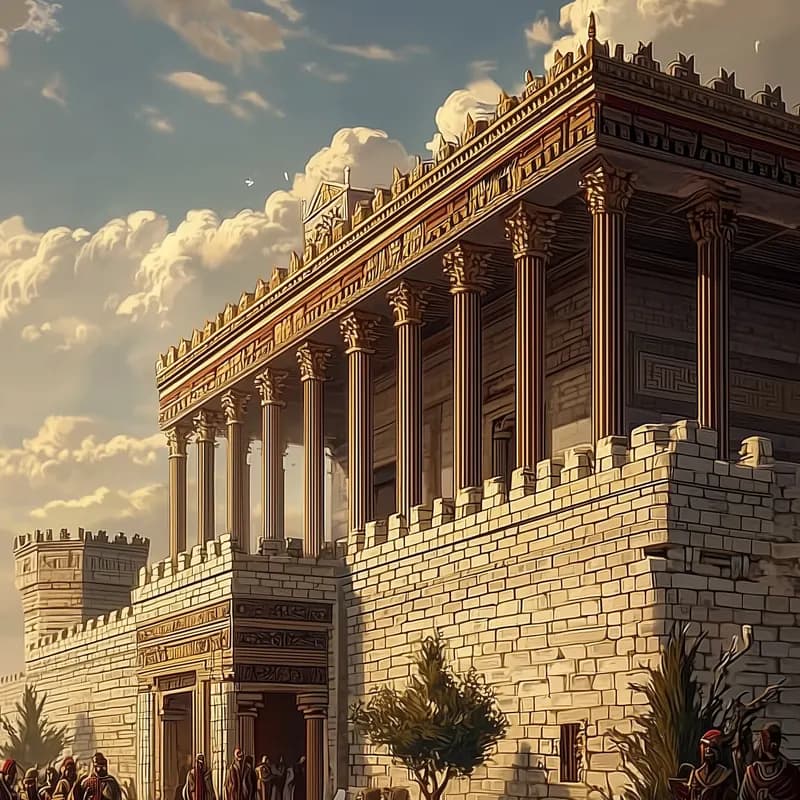
Palace of Priam
Stand in the royal palace of King Priam, where the fate of Troy was decided during the bloodiest night in Greek mythology.
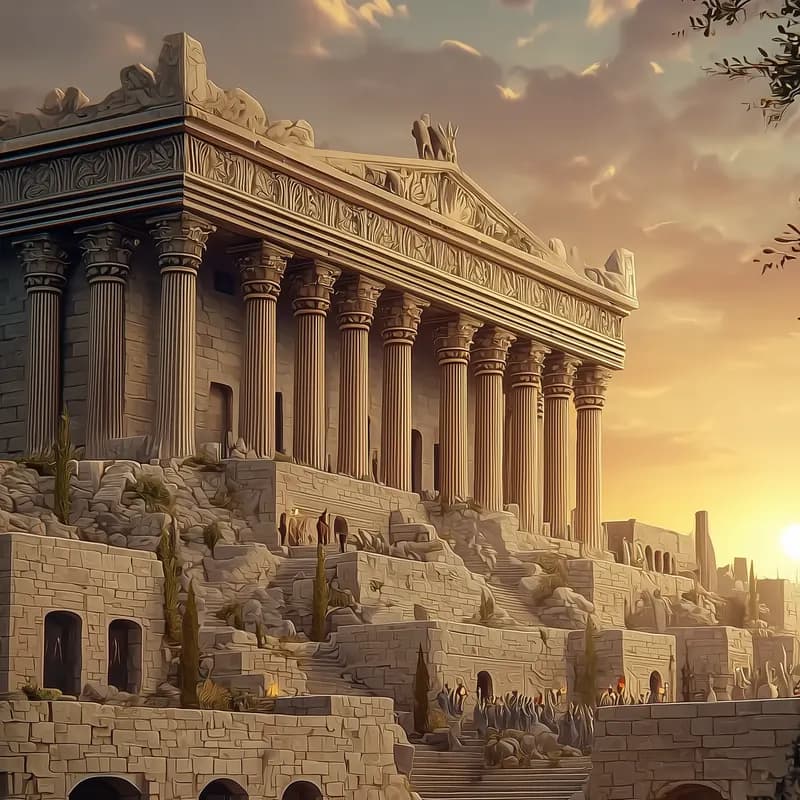
Temple of Apollo Smintheus
Experience Troy's sacred sanctuary to Apollo the Mouse God, divine protector who rained plague arrows upon the Greeks.
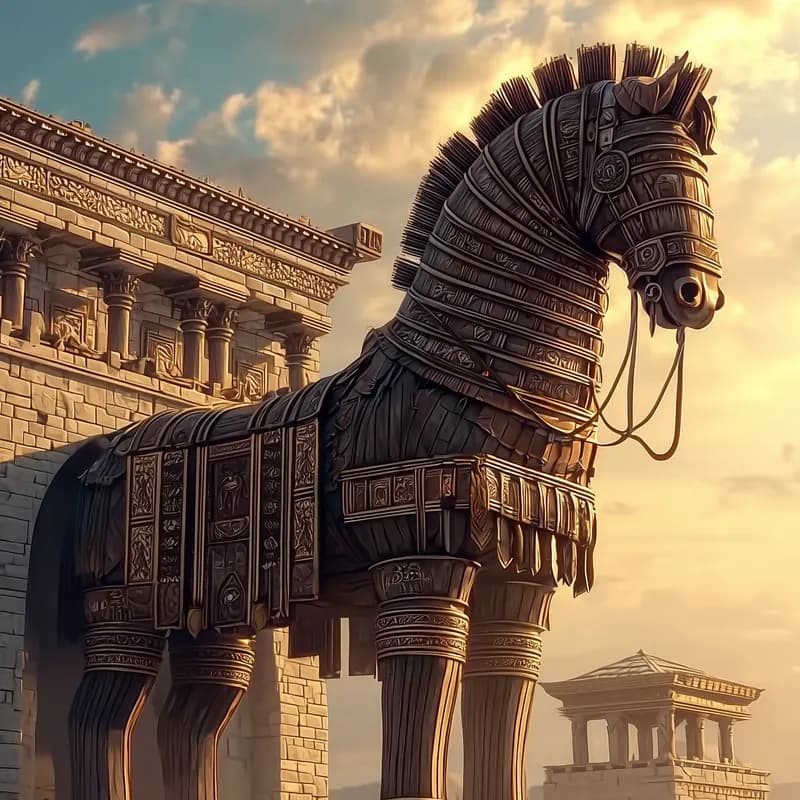
Trojan Horse
Watch from the tower beside the gate as Troy takes in the legendary wooden horse that ended the greatest siege in ancient history.

Cassandra's Watchtower
Stand where Troy's prophetess saw truth no one would believe. Experience prophetic vision and the burden of unheeded warnings.
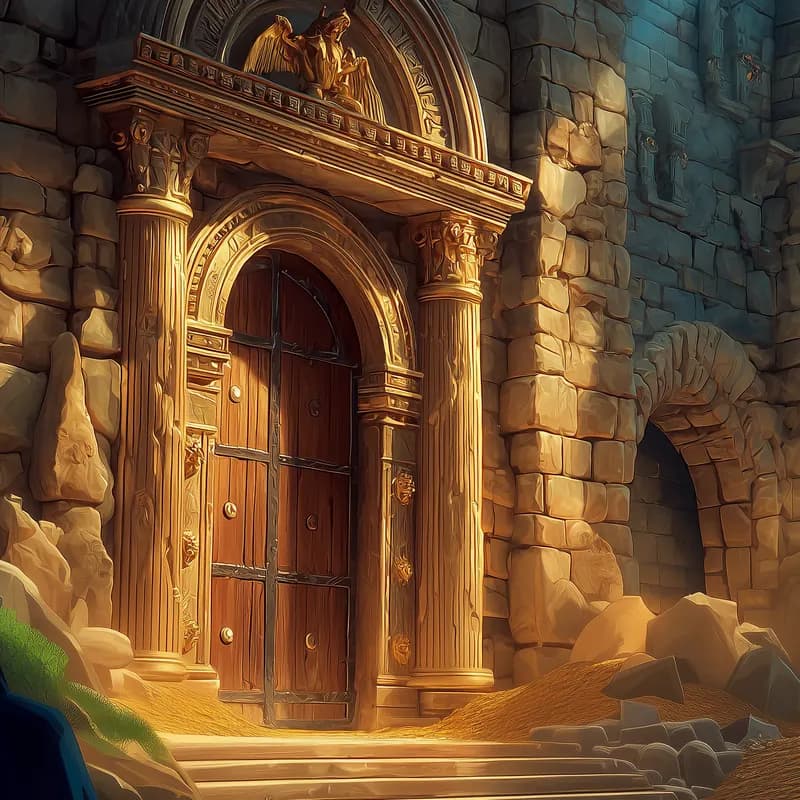
Royal Treasury
Discover Troy's legendary wealth that motivated a decade-long siege. Experience the vault that launched a thousand ships.
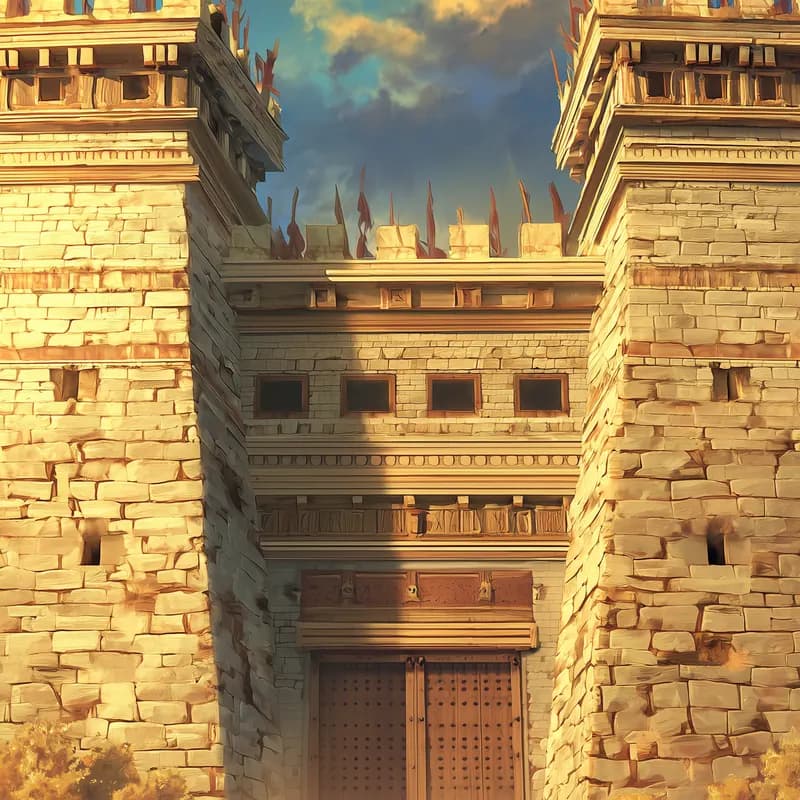
Scaean Gate
Stand at the threshold where Hector faced Achilles and Troy met its fate. Experience the gate that witnessed epic destiny.
"About 41 minutes total. Shorter than the Iliad. Considerably."
Who Will Love Troy?
Mythology Enthusiasts
Experience Greek mythology as if you lived it, not through dry retellings, but as immersive narrative.
History Buffs
Discover Bronze Age archaeology and Homer's epic poetry in an engaging, memorable format.
Story Lovers
Lose yourself in legendary tales of heroes, betrayal, cunning, and warfare from 3,000 years ago.
Meditation Seekers
Find focus through guided imagination rather than forcing your mind to be blank.
Classical Scholars
Explore Troy with details grounded in archaeology and ancient texts.
Curious Learners
Understand why Troy captivates us 3,000 years later, through experience, not lecture.
Palace of Priam
The Palace of Priam stood as the beating heart of Bronze Age Troy, a magnificent complex that housed the royal family and served as the administrative center of one of Anatolia's most powerful kingdoms. Archaeological evidence from Troy VI reveals massive stone foundations of palatial structures with multiple rooms, courtyards, and defensive towers, confirming Homer's descriptions of a grand residence worthy of a king who ruled the Dardanelles.
King Priam, father of fifty sons including the legendary Hector, presided over this sprawling royal household. Homer describes richly decorated chambers with bronze-studded doors, polished stone floors, and storage rooms filled with treasures from Troy's lucrative trade networks. The palace wasn't merely a home. It was a political statement, demonstrating Trojan wealth and sophistication to visiting dignitaries and potential enemies alike.
On the bloodiest night in Greek mythology, this palace became the stage for Troy's fall. Greek warriors who emerged from the Trojan Horse stormed through its corridors. Here, in the throne room and inner chambers, the elderly Priam met his tragic end at the hands of Achilles's son Neoptolemus. The Palace of Priam episode places you inside these rooms before the fall, experiencing both the grandeur of Bronze Age royal architecture and the shadow of the war to come.
The palace journey reveals Bronze Age domestic life at its most sophisticated level. You'll hear of the fifty chambers of the king's sons, Andromache's woven fabrics and night-blue tiles, and the sacred hearth of the council hall. The spatial audio places you in the palace (its council hall, its chambers, its windows onto the sea), each with environmental sounds that bring the architecture to life.
This isn't just about kings and warfare. It's about experiencing historical authenticity. When you stand in Priam's palace through our journey, you're absorbing details about Bronze Age governance, family structures, religious practices, and material culture. The meditation becomes education. The imagination becomes time travel. The palace becomes a window into a lost world that archaeology has only partially recovered.
"Fifty sons. Priam's palace needed more bedrooms than a modern university dorm."
Spatial Audio Immersion
Hear young guards singing beside the wooden horse to your left. Listen to Laocoön’s warning fade into the air behind you. Spatial audio creates a 360-degree soundscape where every sound has direction and depth, so the scene feels like it is around you.
Cinematic Storytelling
Forget "clear your mind" meditation. Our journeys use first-person narration (you are the one entering the palace of Priam) combined with period-authentic ambient sounds, Bronze Age-inspired music, and historical details. Your imagination becomes the meditation tool. The story gives your mind something to follow.
Each Troy journey draws on Homer's Iliad, archaeological evidence from Schliemann's excavations, and modern scholarship on Bronze Age Anatolia, and weaves in legend. When you hear of Troy's massive walls, they echo actual surviving foundations. When you enter the Temple of Apollo Smintheus, ancient accounts and legend recreate this lost sanctuary.
This is education through experience: not lecture, but lived history. One journey of about 14 minutes can bring Bronze Age civilization and Greek mythology to life in a way reading rarely does, because your imagination transforms information into memory. The spatial audio makes it visceral. The storytelling makes it emotional. The history makes it meaningful. Together, they create meditation that expands your mind while centering your spirit.
Who Will Love Troy?
Mythology Enthusiasts
Experience Greek mythology as if you lived it, not through dry retellings, but as immersive narrative.
History Buffs
Discover Bronze Age archaeology and Homer's epic poetry in an engaging, memorable format.
Story Lovers
Lose yourself in legendary tales of heroes, betrayal, cunning, and warfare from 3,000 years ago.
Meditation Seekers
Find focus through guided imagination rather than forcing your mind to be blank.
Classical Scholars
Explore Troy with details grounded in archaeology and ancient texts.
Curious Learners
Understand why Troy captivates us 3,000 years later, through experience, not lecture.
The Fates approve this scroll.
Your Questions Answered
Everything you need to know about exploring ancient Troy
From the blog
Ready to Experience
Ancient Troy?
Download Visionaria and step into the legendary city from Homer's Iliad.
"Where walls stood for ten years, but one night changed everything."