
Ancient
Babylon
"Where hanging gardens weren't just ambitious. They were legendary."
Step through the legendary Ishtar Gate into humanity's first great metropolis. Experience the Hanging Gardens, Tower of Babel, and sacred temples through immersive spatial audio journeys that transport you 2,600 years into the past.
🏛️ What can I experience in ancient Babylon?
Journey through 6 cinematic experiences including the Ishtar Gate, Hanging Gardens, Tower of Babel, Palace of Nebuchadnezzar, and temples of Marduk and Nabu. Each uses 3D spatial audio for complete immersion.
What You'll Experience
Walk through the blue-tiled Ishtar Gate, explore the Hanging Gardens (one of the Seven Wonders), ascend the Tower of Babel, and visit the palaces and temples that made Babylon the crown jewel of Mesopotamia.
Babylon · 22-second preview
Ishtar Gate
Explore Ancient Babylon
Each journey is a cinematic meditation designed to transport you 2,600 years into the past, to Babylon's golden age under Nebuchadnezzar II. Experience the crown jewel of Mesopotamia through spatial audio, where architecture, spirituality, and human ambition reached unprecedented heights.
"Six wonders in one city. Overachievers since 600 BCE."
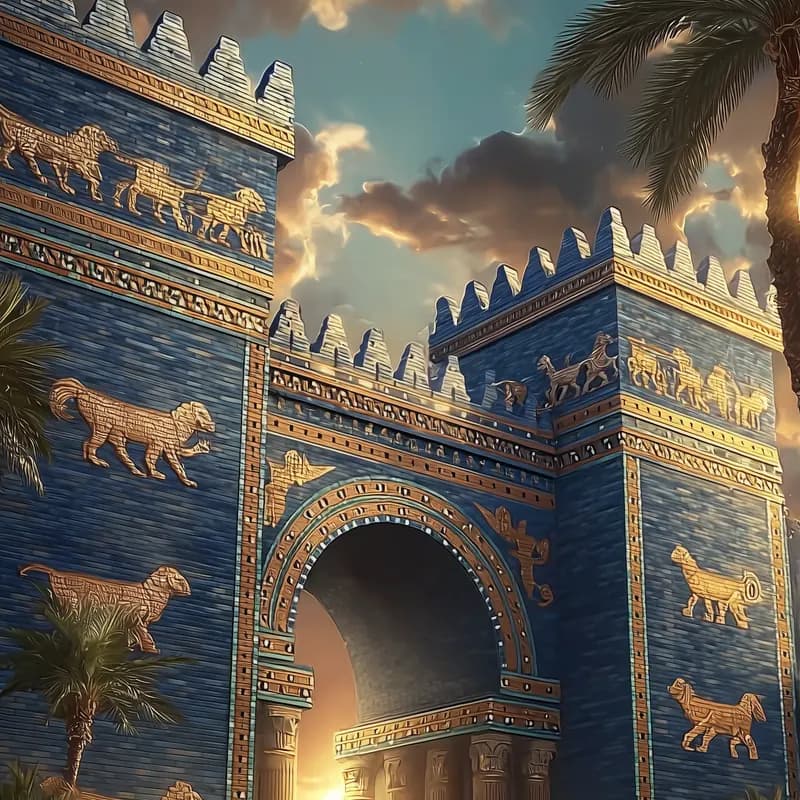
Ishtar Gate
Walk through the legendary blue-tiled gateway dedicated to the goddess Ishtar, eighth gate to the inner city.
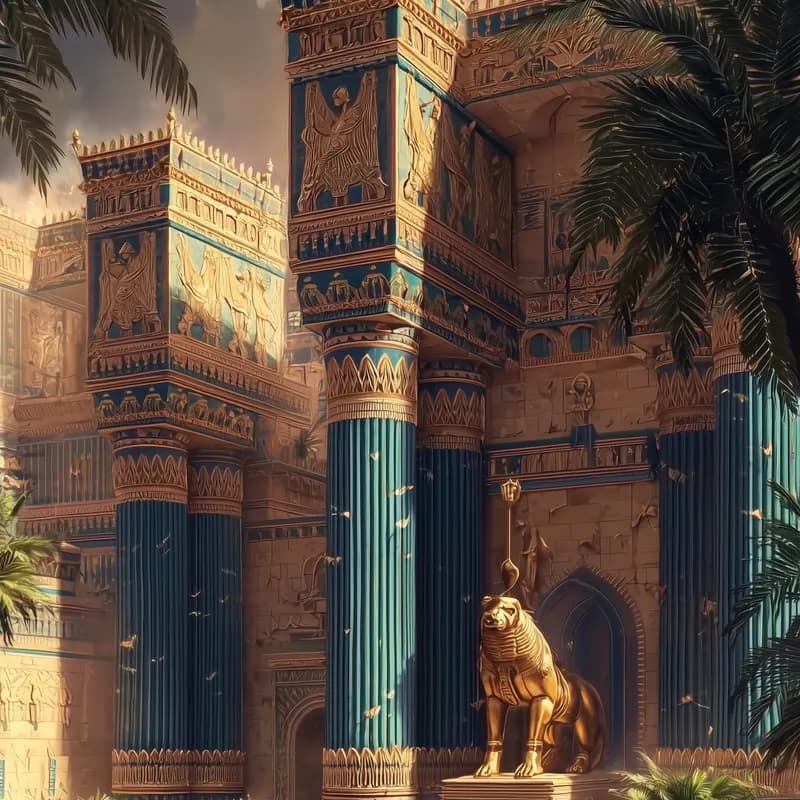
Temple of Marduk
Stand within the sacred sanctuary of Babylon's patron deity, where priests performed ancient rituals.
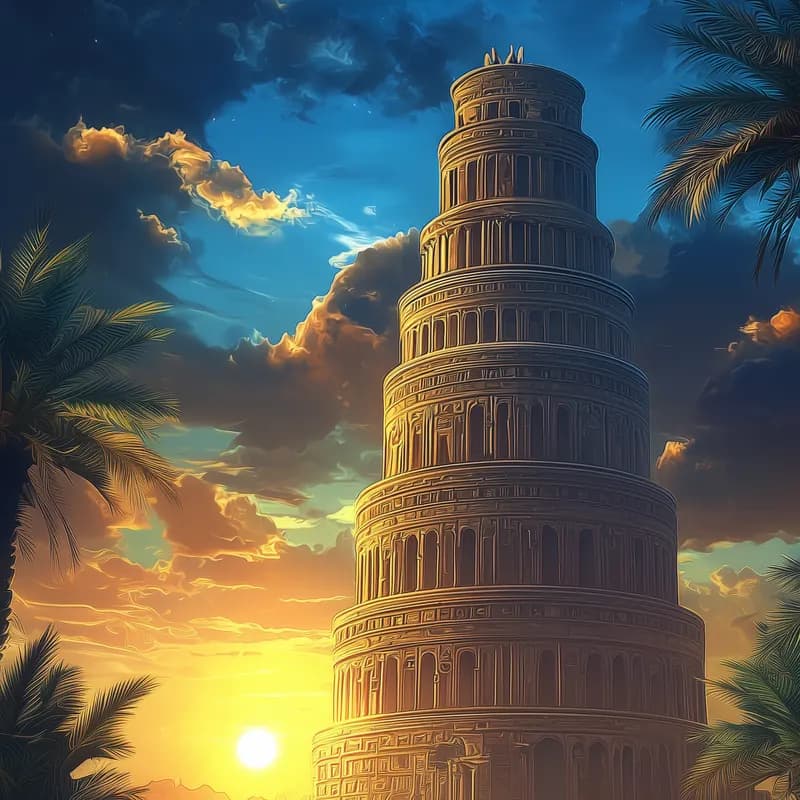
Tower of Babel
Ascend the legendary ziggurat that inspired the biblical story, reaching toward the heavens.
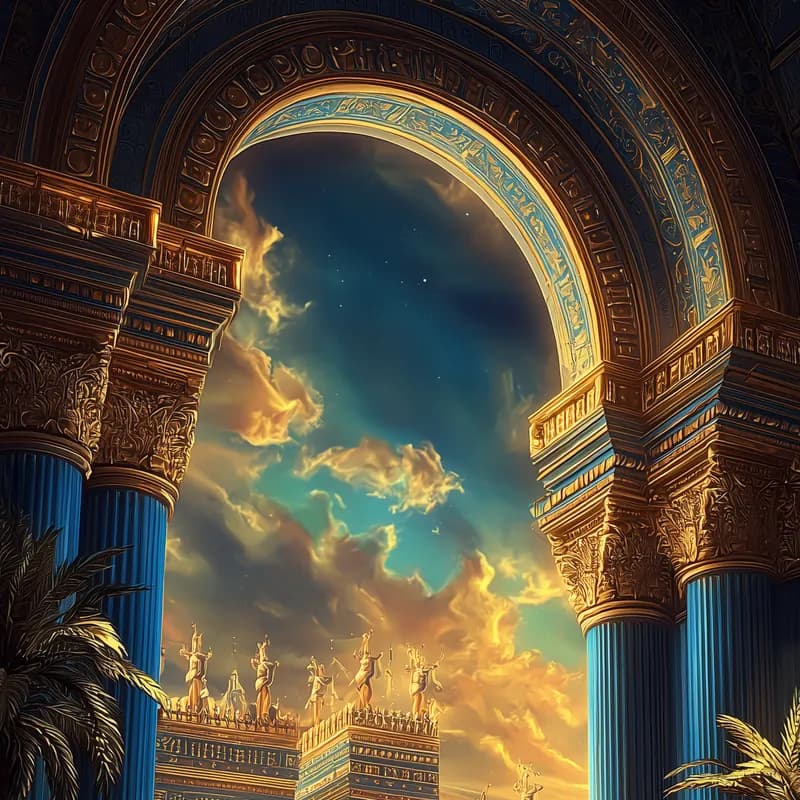
Palace of Nebuchadnezzar
Explore the magnificent palace of Babylon's most powerful king, surrounded by grandeur and splendor.
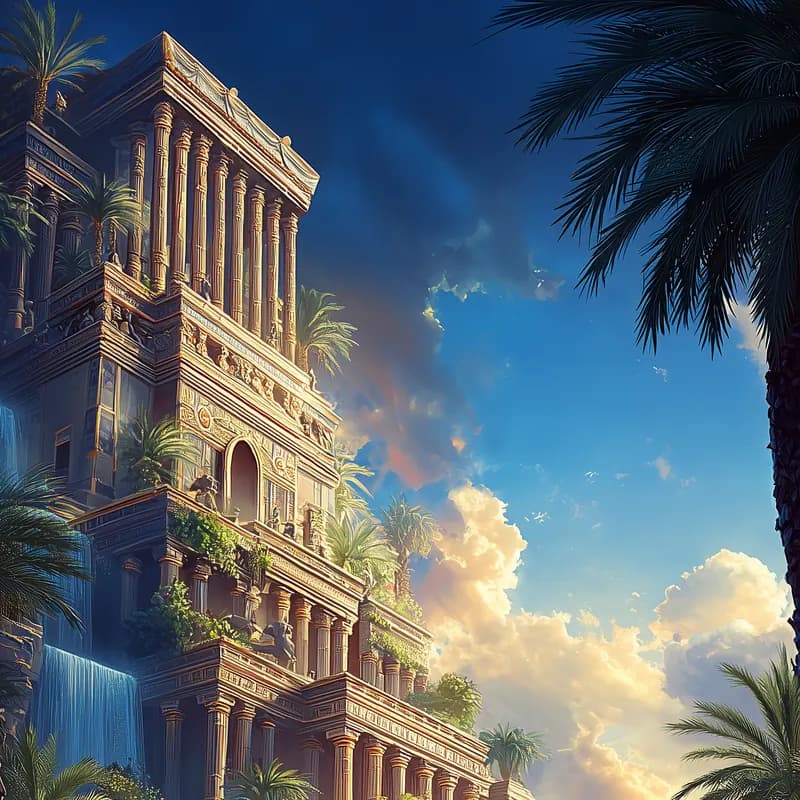
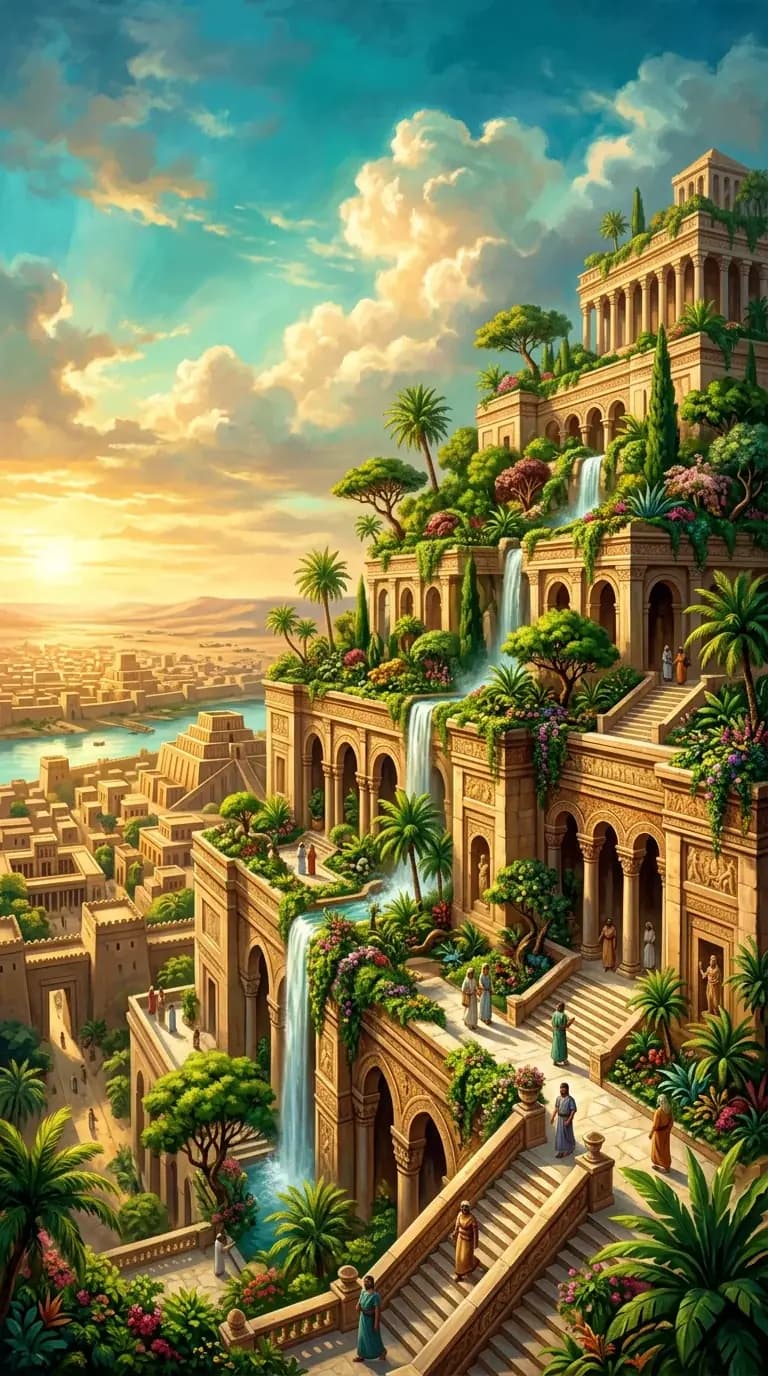
Hanging Gardens of Babylon
Wander through one of the Seven Wonders of the Ancient World, a paradise of cascading greenery.
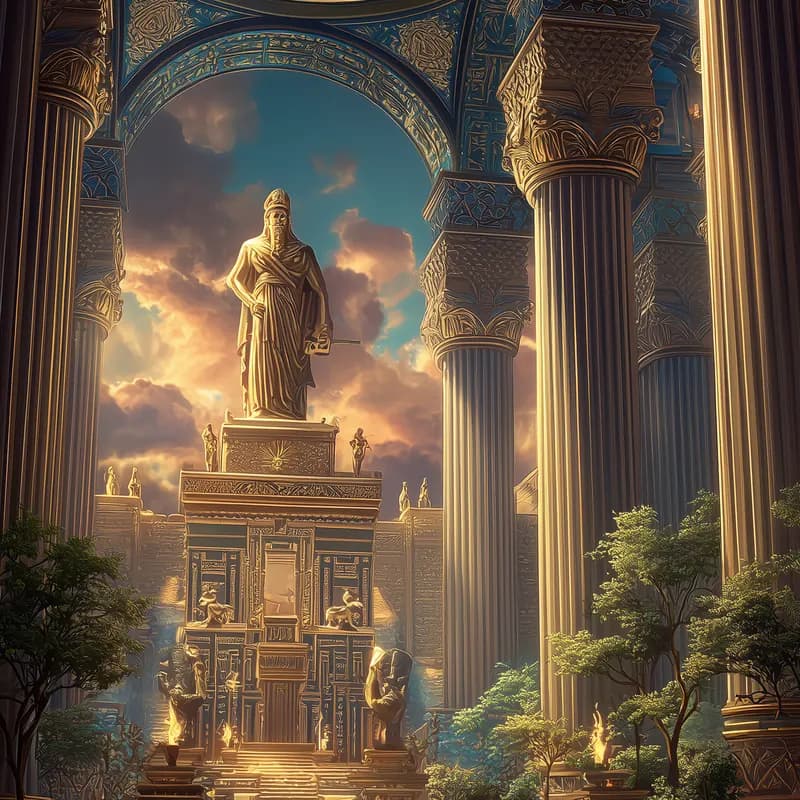
Temple of Nabu
Enter the sacred temple of Nabu, god of wisdom and writing, where scribes mastered cuneiform.
Why Babylon?
Babylon was a powerful ancient Mesopotamian city on the Euphrates River, 85 km south of modern Baghdad, reaching its zenith during Nebuchadnezzar II's reign (605-562 BCE). The city featured the magnificent Ishtar Gate with blue glazed bricks, the towering Etemenanki ziggurat (Tower of Babel), and possibly the legendary Hanging Gardens of Babylon. Earlier ruled by Hammurabi (1792-1750 BCE) who created the famous law code, Babylon remained a major cultural center until Alexander the Great's death there in 323 BCE.
Key Facts
Babylon wasn't just a city. It was humanity's first global metropolis. Under King Nebuchadnezzar II (605-562 BCE), it became the largest, wealthiest, and most magnificent city the ancient world had ever seen. The Hanging Gardens, one of the Seven Wonders, cascaded with exotic plants from across the empire. The Ishtar Gate, adorned with brilliant blue-glazed bricks and golden animals, marked the grand processional way into the inner city.
The Tower of Babel (Etemenanki ziggurat) rose 91 meters toward the heavens, a testament to human ambition and architectural prowess. Babylon's astronomers charted the stars with such precision that their zodiac system is still used today. Their mathematicians developed the base-60 number system that gives us 60 seconds in a minute and 360 degrees in a circle.
"Inventing math, astronomy, and architecture all before lunch. Babylonians didn't believe in work-life balance."
But Babylon was more than engineering and science. It was a spiritual epicenter. The Temple of Marduk housed Babylon's patron deity, where priests performed elaborate rituals. The Temple of Nabu honored the god of wisdom and writing, where scribes mastered cuneiform on clay tablets. These weren't mere buildings; they were portals between the mortal and divine realms, where humanity sought to understand its place in the cosmos.
Our journeys transport you to this pivotal moment in human history, when civilization reached unprecedented heights, when gods walked among mortals in gleaming temples, and when a single city illuminated the ancient world like a beacon of human potential. This is why Babylon endures in our collective imagination: it represents what we can achieve when vision, ambition, and devotion align.
Babylonian Legacy
Mathematical Genius
Invented base-60 mathematics, giving us our time system and angular measurements still used today.
Astronomical Mastery
Created the zodiac, tracked planetary movements, and predicted eclipses with startling accuracy.
Architectural Wonders
Built the Hanging Gardens, Ishtar Gate, and Tower of Babel, monuments that defined an era.
Cultural Foundation
Developed cuneiform writing, the Code of Hammurabi, and literary works like the Epic of Gilgamesh.
Beyond Traditional Meditation
This isn't passive listening. It's active imagination. Spatial audio technology places you inside ancient Babylon, where every sound has direction, distance, and depth.
Spatial Audio Immersion
Hear the processional march approaching from behind you through the Ishtar Gate. Listen to priests chanting in the Temple of Marduk to your left while the Euphrates flows to your right. Spatial audio creates a 360-degree soundscape that transforms listening into presence, so the city feels like it is around you.
Cinematic Storytelling
Forget "clear your mind" meditation. Our journeys use first-person narration combined with ambient environmental sounds, music, and historical details that engage your imagination as the ultimate meditation tool. The story gives your mind something to follow, instead of silence.
"Time travel isn't real. But close your eyes with Visionaria, and 2,600 years disappear in about 12 seconds."
Each Babylon journey is rooted in history. We draw on archaeological evidence, ancient texts (including the writings of Herodotus and Berossus), and Babylon's own legends to bring the city back to life. When you hear the description of glazed-brick decorations on the Ishtar Gate, that's based on actual surviving artifacts now in Berlin's Pergamon Museum. When you experience the Hanging Gardens, we've synthesized ancient accounts to bring this lost wonder back to life.
This is education through experience: not lecture, but living history. A single short journey can make Babylonian culture feel vivid in a way a documentary rarely does, because your imagination transforms information into memory. The spatial audio makes it visceral. The storytelling makes it emotional. The historical detail makes it meaningful. Together, they create something unprecedented: meditation that expands your mind while centering your spirit.
Who Will Love Babylon?
History Enthusiasts
Experience ancient civilizations as if you were there, not through dry facts, but living, breathing history.
Meditation Seekers
Find focus and presence through guided imagination rather than trying to force your mind to be blank.
Curious Learners
Discover Mesopotamian contributions to mathematics, astronomy, law, and culture in an engaging format.
Adventure Lovers
Explore legendary sites like the Hanging Gardens and Tower of Babel from the comfort of anywhere.
Spiritual Explorers
Connect with ancient religious practices, temple rituals, and the Babylonian worldview.
Self-Improvement Seekers
Use ancient wisdom and immersive storytelling as tools for personal growth and mindfulness.
Warning: may cause sudden interest in ancient empires.
Your Questions Answered
Everything you need to know about exploring ancient Babylon
Ready to Experience
Ancient Babylon?
Download Visionaria and step through the Ishtar Gate into history's greatest metropolis.
"Where gods walked among mortals, gardens hung in the sky, and one city illuminated the ancient world."