
Launch special: Visionaria Premium is free—all cinematic journeys with spatial 3D audio.
🇺🇦 Support Ukrainian creators on Patreon — help us make a difference
Launch special: Visionaria Premium is free—all cinematic journeys with spatial 3D audio.
🇺🇦 Support Ukrainian creators on Patreon — help us make a difference
"Where mice meet mythology and architecture meets the divine."
The Temple of Apollo Smintheus was an ancient Greek temple located near Troy in the Troad region of northwest Turkey (ancient Anatolia), dedicated to Apollo Smintheus ("Apollo of the Mice"), a local cult epithet of Apollo as protector against plagues and crop-destroying mice. Constructed in the Hellenistic period (c. 150-100 BCE) over earlier Bronze Age cult sites, this Ionic temple served as a major religious sanctuary for the Trojan region. According to Homer's Iliad (Book 1), the priest Chryses invoked Apollo Smintheus when the Greeks refused to return his daughter, prompting Apollo to send a plague upon the Greek army at Troy. Archaeological excavations have revealed the temple's foundations, altar, and sculptural decoration, confirming its importance as a regional cult center that connected Homeric mythology with actual religious practice in the Troad.
The Temple of Apollo Smintheus represents a regional variant of Apollo worship in the Troad, contrasting with other major Greek temples to supreme deities—while the Temple of Olympian Zeus in Athens celebrated the king of gods through monumental Corinthian columns over 638 years of construction, and the Parthenon honored Athena with Doric perfection, Apollo Smintheus's Ionic sanctuary protected against plagues and mice with a localized cult epithet—demonstrating how Greek religion balanced Panhellenic deities (Zeus, Athena) with regional specializations (Apollo of the Mice), creating a flexible theological system that accommodated both universal and local needs.
☀️ What is the Temple of Apollo Smintheus experience?
A 14-minute spatial audio meditation that transports you to Apollo Smintheus's temple in the Troad. Walk between marble columns and experience ancient Greek religious ritual through immersive 3D soundscapes.
Approach the temple through sacred grounds where Trojans sought divine protection. Walk between marble columns feeling the architectural separation between mortal and divine space. Hear priests chanting hymns to Apollo, offerings being placed on altars, ritual music echoing through colonnades. Experience the psychological power of sacred architecture designed to create transcendence.
Free spatial audio journey • Available on iOS & Android
☀️ "Apollo: God of music, prophecy, archery, and surprisingly good architectural taste."
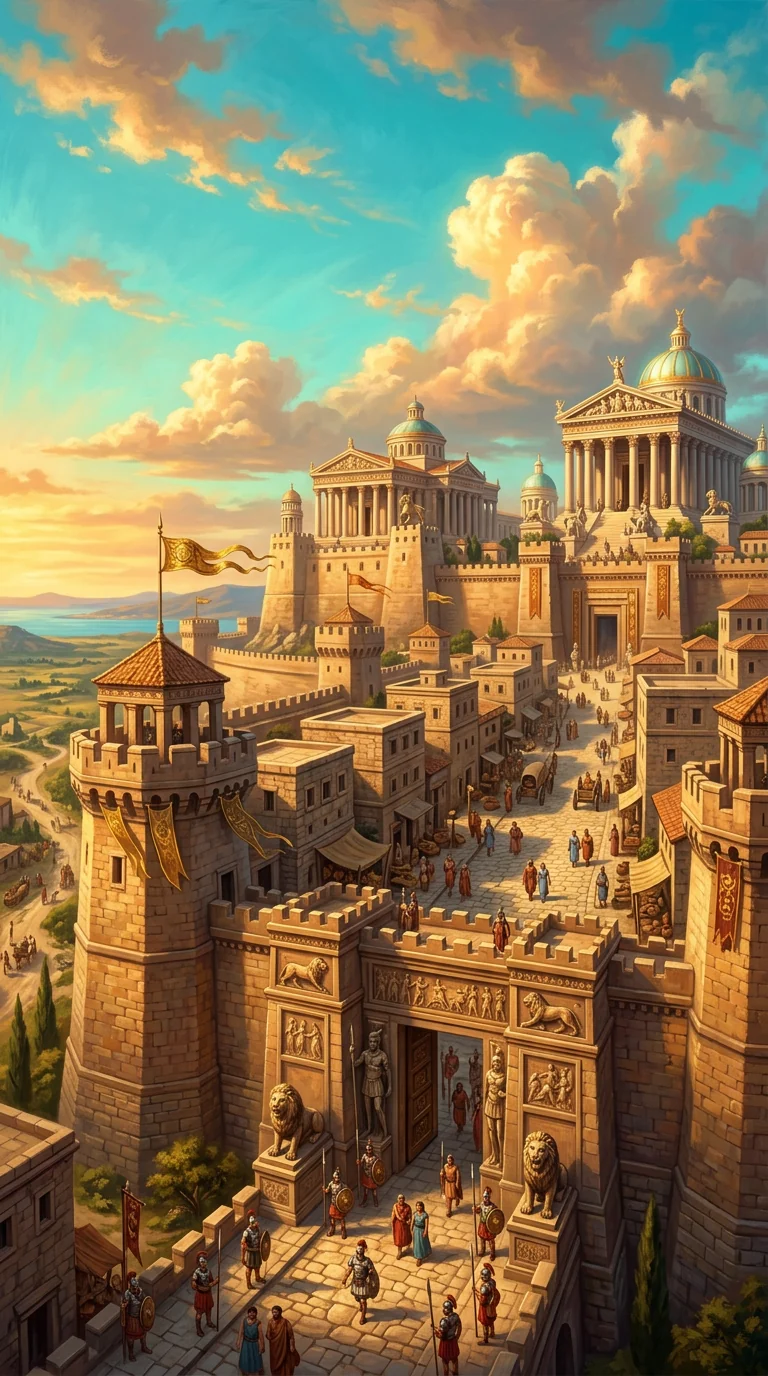
Every detail is based on archaeological discoveries and ancient Greek literature
🏛️ "Apollo Smintheus: Because even gods need memorable epithets. 'Of the Mice' certainly stands out."
Ancient Troad
Excavations at Chryse (modern Gülpınar, Turkey) have uncovered substantial temple remains dedicated to Apollo Smintheus. The site reveals magnificent Hellenistic-period structures with marble columns, altars, and inscriptions proving religious continuity from at least the Archaic period through Roman times.
Discovered Features:
Divine Protector
The Iliad opens with Apollo Smintheus demonstrating devastating power - sending plague arrows to punish the Greeks. Throughout the epic, Apollo sides decisively with Troy.
Homer's Iliad (8th century BCE)
Apollo answers Chryses' prayer with plague
Strabo's Geography (1st century CE)
Documents the temple's location in the Troad
Pausanias (2nd century CE)
Describes Apollo's mouse cult & epithets
🐭 "Apollo's PR team nailed the branding. 'Of the Mice' = unforgettable."
Divine Complexity
Apollo Smintheus embodies terrifying duality - he's the beautiful god of music, poetry, and prophecy, but also the archer who sends plague arrows, the deity whose wrath means mass death. This wasn't contradiction but wholeness in ancient thought.
Apollo governed boundaries: health and disease, life and death, divine favor and divine punishment. Seeking his protection meant acknowledging his terrible power - you prayed to Apollo not just for help but to avoid his devastating attention.
The temple embodied this complexity: beautiful architecture housing dangerous divinity, sacred space where comfort and fear intersected, where Trojans sought favor from a god who could destroy them as easily as protect them.
"Ancient Greek temple architecture: Making humans feel appropriately tiny since the Bronze Age."
Through spatial audio, you experience how temple architecture creates psychological effects. Approaching the sanctuary, you hear ambient sounds shift - birds, wind, distant chanting - marking your transition from ordinary to sacred space. Walking between marble columns, you sense the architectural rhythm - repetition, proportion, vertical emphasis - designed to lift awareness beyond mundane concerns. The colonnade creates liminal space: not quite outside, not fully inside, a threshold between mortal and divine realms.
The temple's acoustic properties become tangible through 3D sound. Hymns echo between columns in specific ways - voices amplifying, reverberating, creating harmonics that ancient architects understood intuitively. The altar area has different acoustic character than the outer colonnade. The inner sanctuary's sound is more intimate, focused. You understand Greek temples as sophisticated acoustic instruments designed to enhance religious experience, making divine presence feel real through architectural manipulation of sound and space.
Beyond architecture, the journey immerses you in ancient religious psychology. You hear prayers being offered - not as abstract recitations but as desperate pleas from people facing existential crisis. Trojans seeking Apollo's protection during the war aren't performing empty ritual; they're engaging what they believe is their only hope. The temple provides psychological structure when human efforts seem futile - a place where agency persists through divine appeal even when mortal power fails.
By experiencing the temple during the war, you understand religion's practical function in crisis. Sacred ritual provides routine when chaos threatens. Prayer offers psychological relief when action is impossible. The temple's permanence - marble columns standing unmoved while human affairs collapse - creates stability. After walking Apollo's sanctuary, you've felt what ancient religion meant: not abstract belief but lived practice providing meaning, structure, and hope when the mortal world offered none. This understanding comes through immersion, not intellectual analysis.
"Temple visits: 50% architecture, 50% divine vibes, 100% better with spatial audio."
This 14-minute journey works beautifully for anyone seeking connection with ancient religious practices
Experience Apollo Smintheus firsthand—the dual god of healing and plague, beauty and destruction—through immersive temple worship
Use ancient sacred architecture for mindfulness—experience how temple spaces create psychological transitions from mortal to divine realms
Explore Apollo's role as god of prophecy and truth—understand how ancient Greeks sought divine guidance during the Trojan War
Experience authentic Bronze Age religious practice—feel what it meant to pray for divine protection in desperate times
Walk through a real archaeological site—the Temple of Apollo Smintheus at Chryse has been excavated with marble columns and altars intact
The Iliad opens with Apollo Smintheus sending plague arrows to punish Greeks—experience the temple Homer describes in Book 1
"For anyone seeking divine favor. Results may vary. Side effects include philosophical insights."
Advanced spatial audio recreates ancient religious experience with unprecedented fidelity
Spatial audio recreates how sound behaves in columned architecture - echoes between marble, reverberation in open-air structures, voices carrying across courtyards. Greek architects understood acoustic principles intuitively, designing temples as instruments enhancing religious experience. You hear this through 3D sound positioning.
Based on excavations at Chryse/Gülpınar and comparative studies of Greek temple architecture. Homer's descriptions provide literary framework. Ancient religious texts inform ritual elements. The journey synthesizes archaeological, literary, and comparative evidence to recreate authentic religious atmosphere.
The journey moves through architectural and psychological layers - from profane to sacred space, from public colonnade to inner sanctuary. This progression mirrors how Greek temples functioned as graduated zones of sanctity, creating religious experience through spatial hierarchy and controlled access.
The Iliad's opening scene - Chryses praying to Apollo Smintheus - provides narrative framework. You experience the temple from within Homer's religious worldview, understanding Apollo as Trojans did: terrifying power, beautiful presence, protective yet dangerous divinity requiring careful propitiation.
Beyond architecture, the journey captures religious emotion - desperate hope, awe before divine power, psychological relief from ritual structure. You experience temples not as dead monuments but as living institutions providing meaning when human solutions failed.
Greek temples were designed to create psychological effects - proportion inducing calm, repetition creating rhythm, vertical emphasis lifting consciousness. The journey uses spatial audio to recreate these architectural effects, making ancient meditative design tangible through immersive sound.
"Spatial audio: Because experiencing ancient temples deserves better than stereo speakers."
Experience what Greek worship actually felt like - not abstract theology but lived practice in functioning temple. Understand religion through immersion in sacred architecture and ritual atmosphere
Make the epic's opening scene tangible - walk the temple where Chryses prayed, understand Apollo Smintheus as Homer's audience did, experience the religious worldview underlying Greek literature
Experience Greek temple design as intended - not as ruins but as functioning architecture creating psychological and spiritual effects through proportion, rhythm, and acoustic manipulation
Ancient temples provided structure, meaning, and transcendence to millions across millennia. Experience this through immersion - understand what sacred architecture offers when contemporary life feels meaningless or chaotic
Make Greek religion real for students - they'll remember experiencing Apollo's temple far longer than reading about belief systems. Perfect for classics, ancient history, religious studies, or archaeology courses
Greek temples pioneered architectural psychology - using proportion, rhythm, and space to create religious experience. Experience these principles through spatial audio that recreates acoustic and emotional effects
Achieve mindfulness through meaningful engagement with sacred architecture and ancient wisdom traditions rather than decontextualized meditation techniques. Connect your practice to millennia of human spiritual seeking
Visit Apollo Smintheus's temple through spatial audio immersion - an experience unavailable through tourism or reading. Use technology to bridge three millennia and experience Bronze Age religious practice authentically
"If temples, gods, and ancient mice intrigue you - welcome. We promise no actual plague arrows."
Discover more immersive experiences from ancient Troy and its legendary history
"Troy quartet: Horse, walls, palace, temple. The complete Bronze Age experience pack."
Everything you need to know about experiencing Apollo Smintheus's temple
Download Visionaria and walk where Trojans sought divine protection through spatial audio.
"No actual mice or plague arrows included. Just architectural transcendence."