
The Trojan War:
The Story in Order
"Ten years of siege, and everyone remembers the horse."
How did the Trojan War start, what really happens in the Iliad, and where does the wooden horse come from? The whole story in order, with the sources that tell each part.
What is the story of the Trojan War?
In Greek myth, the Trojan War was a ten-year siege of the city of Troy by a Greek army led by Agamemnon. It began when Paris, a prince of Troy, took Helen, the wife of Menelaus of Sparta. The war ends when the Greeks, by Odysseus's plan, hide warriors inside a wooden horse and Troy is burned. This page is a guide; it is not one episode in the app.
Free to start • Available on iOS & Android
"Beware of gifts, especially large wooden ones."
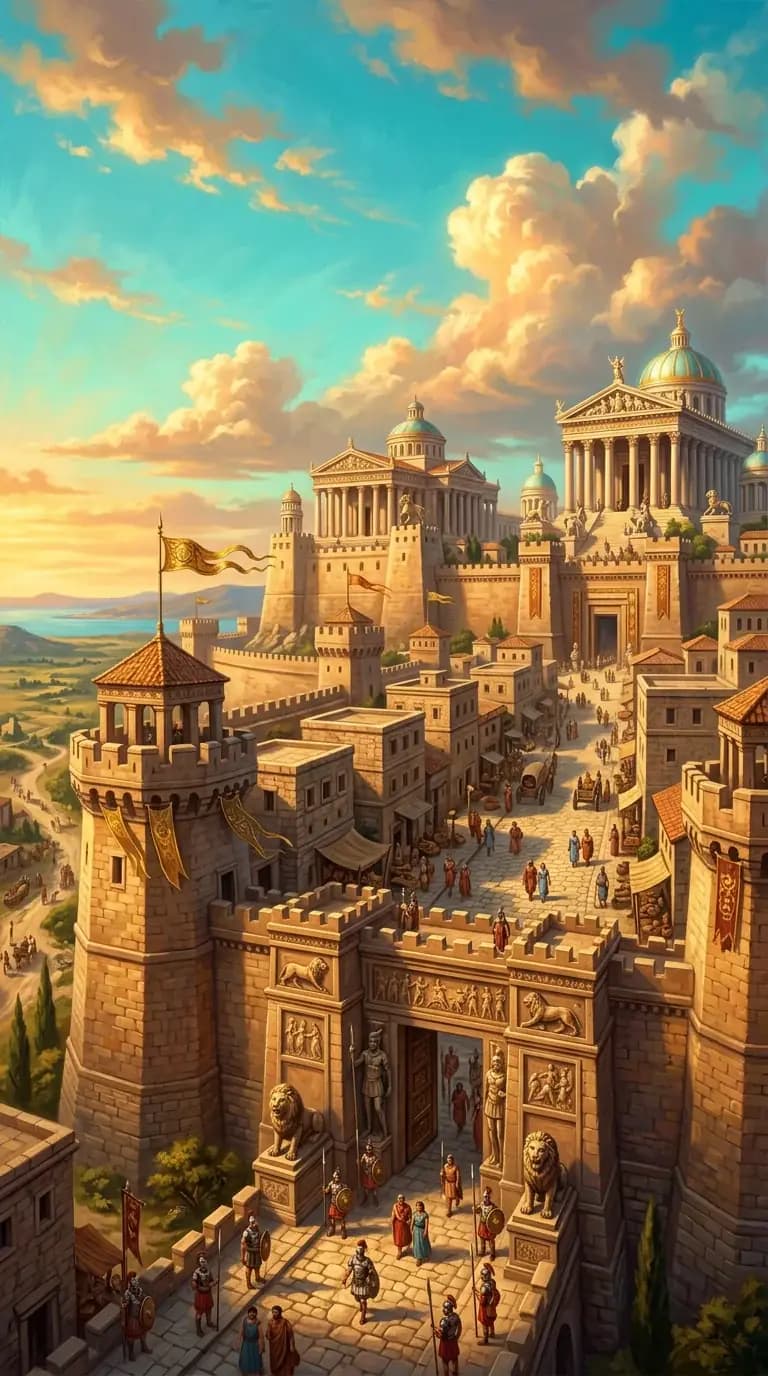
From Apple to Ashes
The Trojan War is the central story of Greek epic: a ten-year war between a coalition of Greek kings and the city of Troy on the northwest coast of Anatolia, in what is now Turkey. The poems that tell it were composed centuries after the date the Greeks gave the war, traditionally around 1200 BCE, and no ancient text is a neutral history. Whether a real conflict lies behind the legend is still discussed by scholars.
Key Facts About the Trojan War
The causes begin with a quarrel among goddesses. In the later telling, Eris, goddess of strife, throws a golden apple marked for the fairest, and Hera, Athena and Aphrodite each claim it. The prince Paris is asked to judge and he chooses Aphrodite, who promises him the most beautiful woman in the world. That woman is Helen, wife of King Menelaus of Sparta. Paris takes her to Troy, and the Greek kings, who had sworn to defend her marriage, gather a fleet under Menelaus's brother Agamemnon.
Most of the famous scenes are not in the Iliad at all. Homer's poem covers only a few weeks in the tenth year, and its subject is the anger of Achilles: his quarrel with Agamemnon, the death of his friend Patroclus, his killing of the Trojan prince Hector and the return of Hector's body to Priam. The poem ends with Hector's funeral. The death of Achilles, the building of the horse and the fall of the city are told elsewhere, in the lost poems of the Epic Cycle and in the Odyssey.
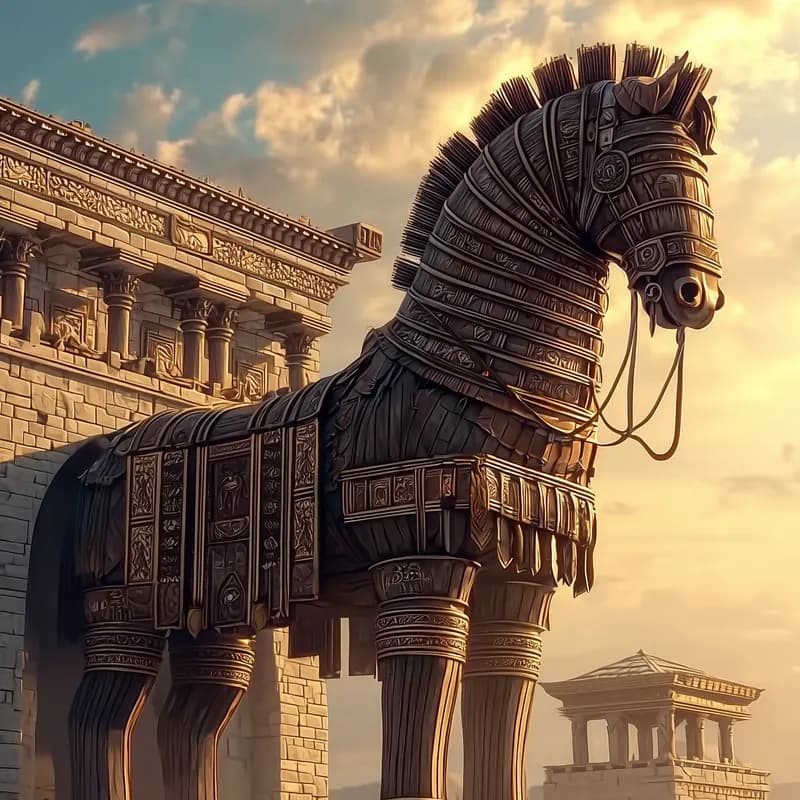
The horse comes mainly from later versions. In the Odyssey, Odysseus's plan and the hollow wooden horse are recalled by those who were there, and the Roman poet Virgil tells the scene in detail in book two of the Aeneid: the Greeks pretend to sail away, leave the horse, and the Trojans argue over whether to bring it in. The priest Laocoön warns them. The prophetess Cassandra, who is cursed never to be believed, warns them too. At night the warriors climb out and open the gates.
"The Trojans had a security team. The horse had a better plan."
The War, Step by Step
The gathering. The Greek fleet assembles at Aulis. In some versions the winds fail until Agamemnon sacrifices his daughter Iphigenia, a story that is not in Homer and is told by later poets and playwrights. Once at Troy, the Greeks cannot take the walls, which in the tradition were raised by gods, and settle into a siege that lasts years while raiding the countryside.
The anger of Achilles. In the Iliad, a plague strikes the Greek camp, and Agamemnon is forced to give up a captive woman. He then takes Briseis from Achilles, who withdraws from the fighting. Without him the Greeks lose ground. Patroclus enters the battle in Achilles's armor and is killed by Hector. Achilles returns, kills Hector, and drags his body behind a chariot. In the final book, Priam crosses the lines at night and asks for his son's body.
The fall. After Hector's funeral, the story moves to the Epic Cycle. Achilles is killed, famously by an arrow from Paris guided by Apollo, though that detail belongs to later retellings. Odysseus devises the wooden horse. The Greeks sail out of sight to the nearby island of Tenedos. The Trojans take the horse inside, celebrate, and that night the city is sacked. Priam is killed, the women are taken as captives, and the survivor Aeneas flees, according to Roman tradition, to found a line that leads to Rome.
The question of history. The site now called Hisarlik in northwest Turkey was excavated from the 1870s and shows a series of cities built on top of each other. Some layers were destroyed by fire or war around the late Bronze Age. Hittite records mention a place called Wilusa that some scholars link to the Greek name Ilios. Whether any of this is the war of the poems is open to debate, and honest accounts say so.
"The Trojan Horse was the original software update: looks harmless, changes everything."
Hearing It in the App
Troy Series
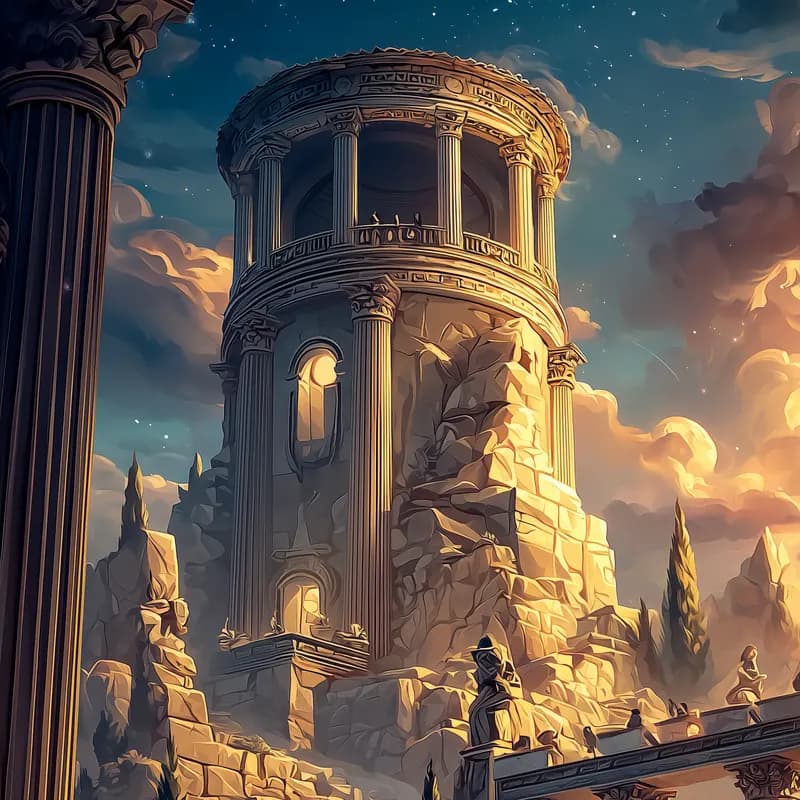
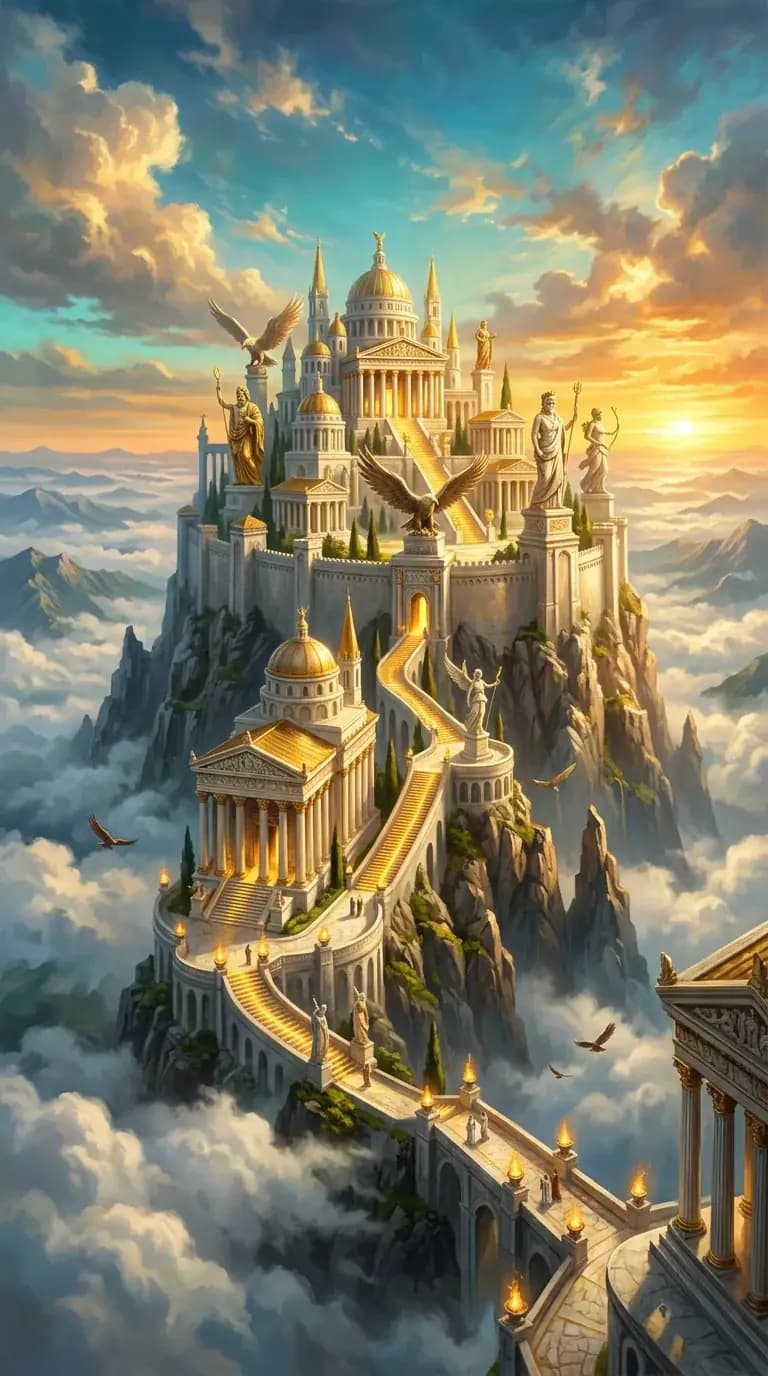
Visionaria has a Troy series of three episodes of roughly 13 to 14 minutes each: the Palace of Priam, the Temple of Apollo Smintheus and the Trojan Horse. About 41 minutes in all.
First-Person Audio
The episodes are told in the first person with narration, music and spatial (3D) sound, so you are inside the city rather than hearing a summary. Headphones work best for the spatial effect.
Story, Not Textbook
The episodes are dramatized meditations, not a lecture. Use this page for the sources and the sequence, and the episodes for the atmosphere.
Good for Evenings
The episodes are paced slowly enough to wind down with, which is the reason they exist. Many listeners play them at the end of the day.
The three episodes cover the city before the fall, not the whole war. Start with the Palace of Priam, continue to the Temple of Apollo Smintheus and finish with the Trojan Horse. The approach is explained under cinematic meditation.
"Please do not bring wooden gifts into your headphones."
Who This Guide Is For
First-Time Readers
You want the whole story before opening the Iliad, and a clear sense of what is in Homer and what comes from later poets.
Students
A fast route to the sequence of events, the main characters and the primary sources to cite.
Travelers to Turkey
A visit to the archaeological site of Troy is easier to follow if you know which stories are attached to which gate and wall.
Audio Listeners
You prefer to take stories in through your ears and want to know where to begin.
Fans of Epic Heroes
Achilles, Hector and Odysseus are among the oldest characters in Western literature. Here is where each of them stands.
Readers of Myth
For the gods behind the war, see our guide to the Greek gods.
Note for beginners: you do not need to know the poems. If you want to try one episode, the Trojan Horse is the best-known scene and a good place to start.
"Spoiler: Troy falls. Homer does not even bother to hide it."
Continue the Story
"The horse gets the credit, but the planning took ten years."
Your Questions Answered
Everything you need to know about the Trojan War
"Questions asked since Homer. Answers vary by poet."
Ready to Walk
Into Troy?
Download Visionaria and begin the Troy series with the Palace of Priam.
"One wooden horse, no returns."