
Greek Gods Explained:
Who Ruled What
"Twelve gods, one mountain, and no agreement on seating."
Who were Zeus, Hera, Poseidon and Athena, how are they related, and which ancient writers tell their stories? A clear guide for adults, with a calm way to hear the myths in the app.
Who are the Greek gods?
The Greek gods are the deities of ancient Greek religion and myth. The best known are the twelve Olympians, who in the myths live on Mount Olympus under Zeus, king of the gods. They followed an older generation, the Titans, whom Zeus and his siblings overthrew. This page is a guide to them; it is not an episode in the Visionaria app.
Free to start • Available on iOS & Android
"Family dinners on Olympus were never quiet."
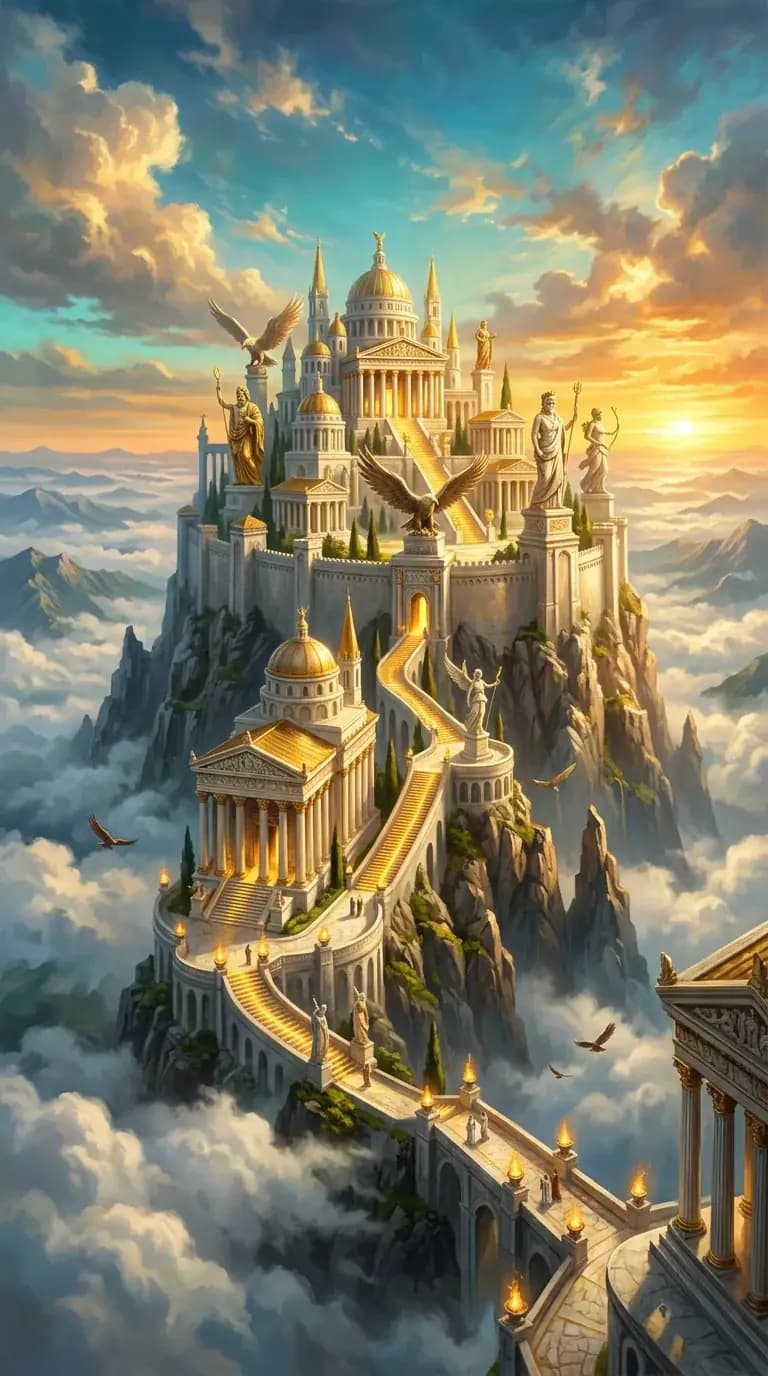
Meet the Olympians
The Greek gods are the deities worshipped across the ancient Greek world from the Bronze Age into late antiquity. The central group is the twelve Olympians, ruled by Zeus. Lists of the twelve differ slightly from place to place and from source to source, most often over whether Hestia or Dionysus holds the last seat. Their stories were never fixed in one book: they come from poems, hymns, plays and local cult traditions, which is why the same god can have more than one origin story.
Key Facts About the Greek Gods
The oldest surviving account of how the gods came to be is Hesiod's Theogony, composed around 700 BCE. It begins with Chaos and Gaia, the Earth, and follows the generations: Uranus, the Titans, and then the Olympians. Cronus, a Titan, swallowed his children as they were born, until his wife Rhea hid the youngest, Zeus, and gave Cronus a stone to swallow in his place. Zeus grew up, freed his brothers and sisters, and led them in a long war against the Titans, usually called the Titanomachy.
After the victory the three brothers divided the world. In the Iliad, Poseidon says that the three drew lots: Zeus received the sky, Poseidon the sea, and Hades the underworld, while the earth and Mount Olympus stayed common ground. Zeus became the leader because he was the one who had freed the others, and the later myths show him as the keeper of oaths, guests and justice, though rarely as a flawless one.
The Olympians are not simply symbols. Each had local cults, festivals and many titles. Athena guarded Athens and the craft of the city; Apollo spoke through the oracle at Delphi; Artemis ruled wild places and the hunt; Demeter and Persephone stood behind the Eleusinian Mysteries. Learning who a god was to the people who prayed to them is often more useful than memorizing a family tree, and it is why a visit to the Parthenon says more about Athena than any list.
"Greek family trees do not have branches. They have knots."
The Twelve, One by One
Zeus is king of the gods and ruler of the sky, thunder and lightning. Hera, his wife and sister, is goddess of marriage and a protector of women, and in the epics she is often a fierce opponent of Zeus's plans. Poseidon rules the sea and also earthquakes and horses. Demeter is goddess of grain and the harvest, and Hestia, goddess of the hearth, is sometimes counted among the twelve.
Athena is goddess of wisdom, strategy and crafts. Hesiod says Zeus swallowed her mother Metis and Athena was born from his head. Apollo is god of music, prophecy and healing, later also linked with the sun, and his twin Artemis is goddess of the hunt and the wild, later also linked with the moon. Ares is the god of war, and in Homer he is neither admired nor trusted. Aphrodite is goddess of love and beauty; Hesiod has her born from sea foam, while Homer calls her a daughter of Zeus and Dione.
Hephaestus is the smith god, lame in most tellings and the maker of divine armor and thrones. Hermes is the messenger, the god of travelers, merchants and boundaries, who also guides souls to the underworld. Dionysus, god of wine, theatre and ecstatic festival, is the youngest Olympian and a son of Zeus and the mortal Semele. Hades rules the dead but is usually not counted among the twelve, because he does not live on Olympus.
One useful rule when reading the myths: the gods are powerful, not perfect. They hold grudges, take sides in wars and are sometimes tricked. Greek writers disagreed with each other about them, and some, like Plato, criticized the poets for showing gods behaving badly. Treating the stories as a living tradition, rather than a single official version, makes them easier to read and much more interesting.
"Everyone on Olympus has a title. Most also have a grudge."
How to Use This Guide
Start With the Sources
If you want the stories in their own words, read Hesiod's Theogony for the origins and Homer's Iliad for the gods in action. Both exist in many English translations, and the translation you choose changes the tone considerably.
Match Gods to Places
Many gods are easier to remember through a place. Athena belongs to Athens, Apollo to Delphi and Delos, Artemis to wild country and the sanctuary at Sparta where she was worshipped as Artemis Orthia.
Listen at Your Own Pace
Visionaria's episodes are first-person audio journeys, most of them through five ancient cities, told with narration, music and spatial (3D) sound. Spatial audio works best with headphones. The gods appear in them as part of the places, not as the whole subject.
Take It in Pieces
You do not have to learn all twelve at once. Pick one god, read or listen to one story, and come back. A short evening with one myth tends to stay with you longer than a long evening with twelve.
This page is a reading guide, not an episode. In the app, the gods are part of the cities: the Temple of Athena Nike in Athens and the Altar of Zeus Lakedaimonios in Sparta are two places where you hear them. The ideas behind the format are explained under cinematic meditation.
"No quiz at the end. Hades does not grade on a curve."
Who This Guide Is For
Curious Adults
You know the names but not who is related to whom or why it matters. This guide gives the structure in a few minutes without talking down to you.
Students and Readers
Useful before reading the Iliad, the Odyssey or a Greek tragedy, where the gods appear without introduction.
Travelers to Greece
Temples make more sense once you know who they were built for. Athens, Delphi and Olympia all reward a little preparation.
Evening Listeners
If you like to wind down with a story, the myths here are a starting point, and the app's city journeys are one way to hear that world.
Comparative Readers
Greek and Norse myth share themes of fate and divine rivalry. Compare this page with our guide to Asgard.
Mountain Fans
Olympus is a real mountain you can hike. Our Mount Olympus guide covers the place itself.
Note for beginners: you do not need any background to use Visionaria. If you are new to it, the journeys through Athens are a good place to start.
"Beginners welcome. Titans, please use the side entrance."
More Myths to Explore
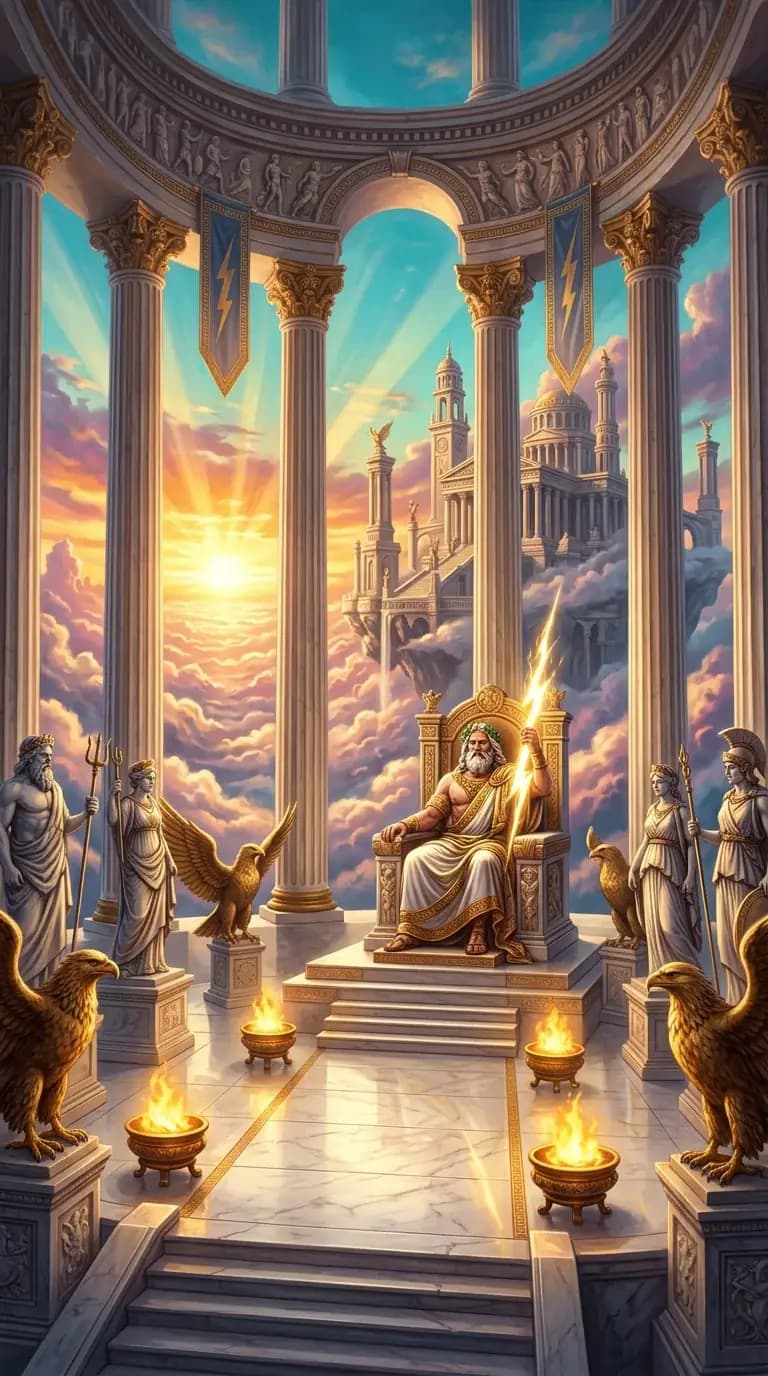
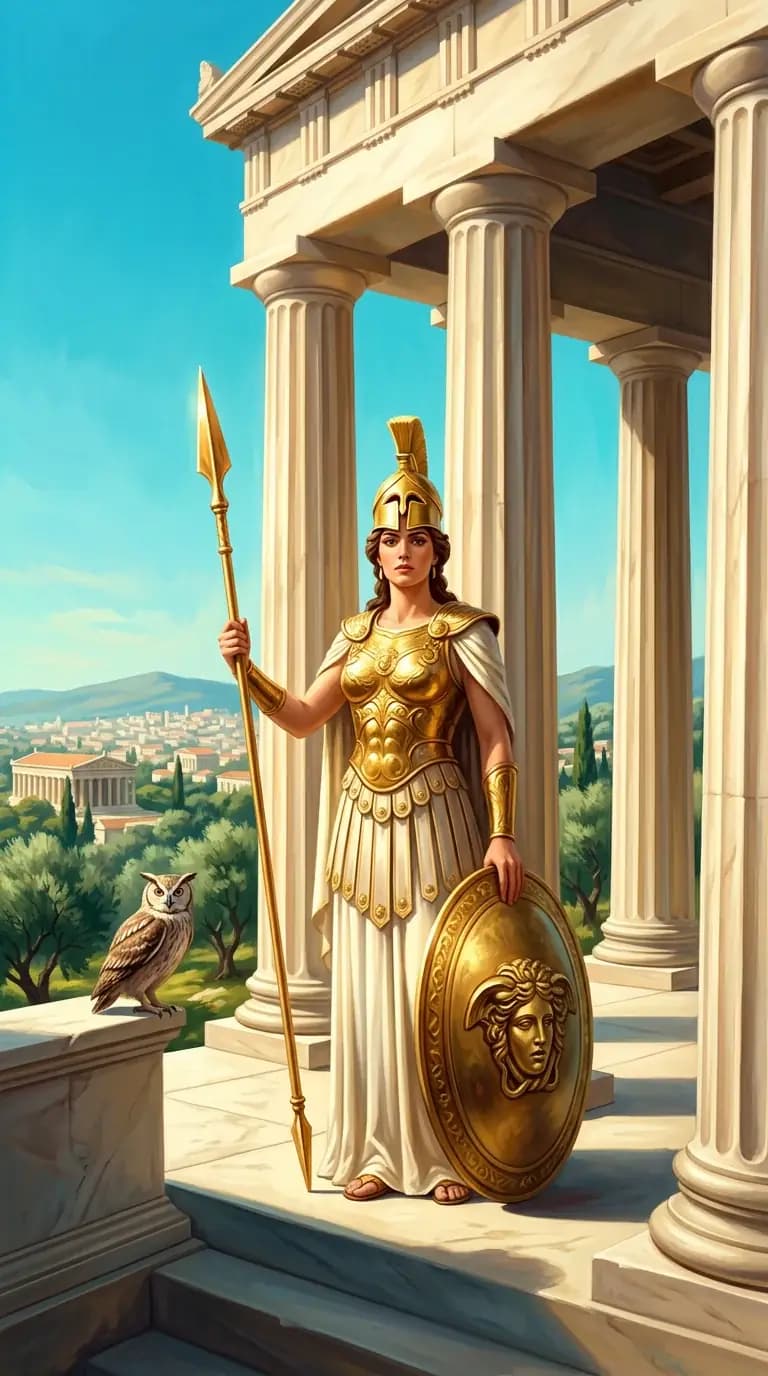
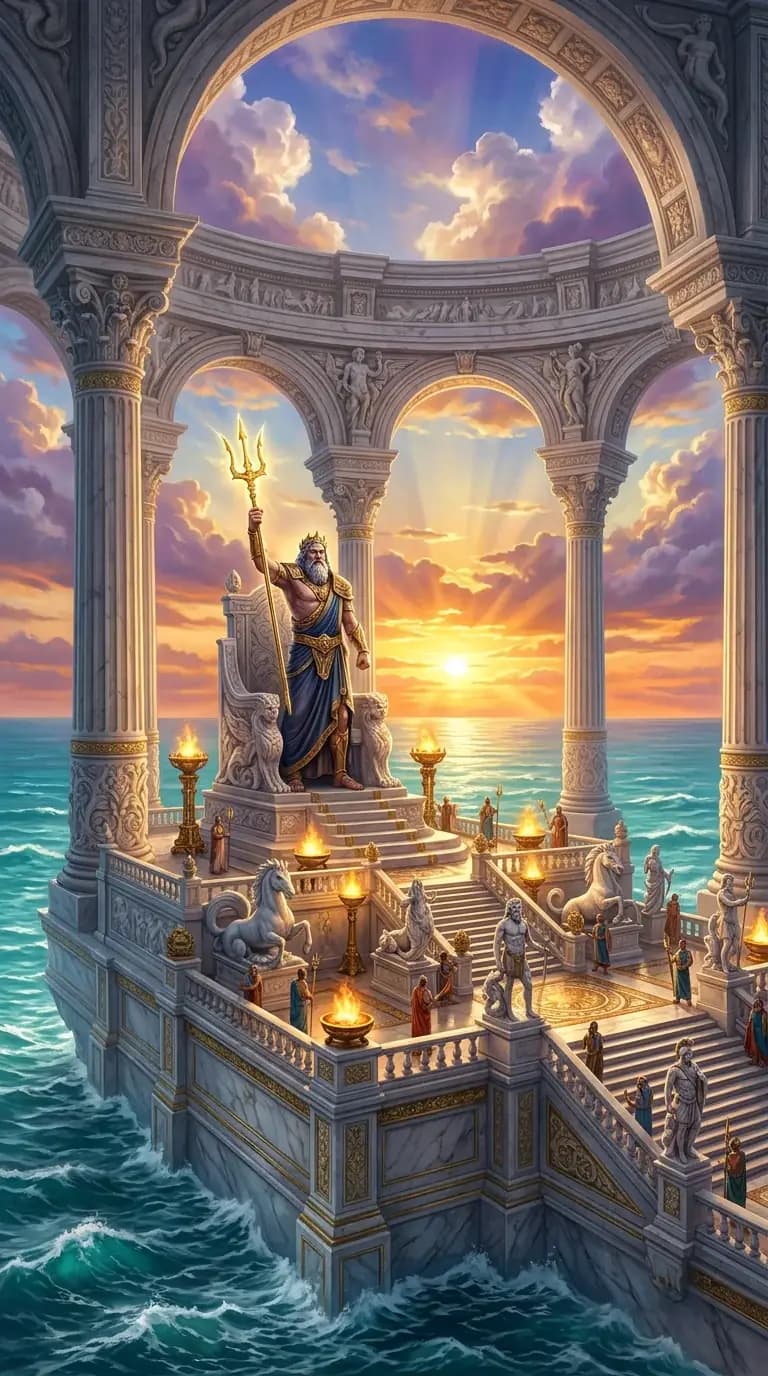
"Collect them all, just don't ask Zeus for a refund."
Your Questions Answered
Everything you need to know about the Greek gods
"Asked on the Acropolis for about twenty-five centuries."
Ready to Hear
the Myths?
Download Visionaria and step into Athens, Sparta and the other ancient cities where the Greek gods were worshipped.
"Start with one god. The others will find you."