
Temple of
Athena Nike
"Where victory got its wings, then had them clipped for safekeeping."
The Temple of Athena Nike (Greek: Ναός Αθηνάς Νίκης, "Temple of Athena Victory") is an ancient Greek temple located on the Acropolis of Athens, Greece, constructed between 427-424 BCE during the Peloponnesian War. Designed by architect Kallikrates in the Ionic order, this small amphiprostyle temple (approximately 8 meters long) was dedicated to Athena Nike (Athena as goddess of victory), commemorating Athens' victories over the Persians at Marathon (490 BCE) and Salamis (480 BCE). The temple originally housed a wingless (apteros) wooden statue of Nike, which Athenians believed would ensure the goddess could never leave their city. Its continuous sculptural frieze depicting battles between Greeks and Persians represents one of the finest examples of late 5th-century BCE Greek relief sculpture, celebrating Athenian military prowess and democratic ideals.
Key Facts About Temple of Athena Nike
- Location: Southwest bastion of Acropolis, Athens
- Construction: 427-424 BCE (architect: Kallikrates)
- Style: Ionic order, amphiprostyle (columns front/back only)
- Famous For: Wingless Nike statue, Persian War victory commemoration
- Frieze: Battle scenes between Greeks and Persians
The Temple of Athena Nike formed part of the sacred Acropolis ensemble alongside the Erechtheion (honoring Athena Polias with its Caryatid maidens in complex Ionic design) and the Parthenon (celebrating Athena Parthenos in monumental Doric splendor), three temples on one citadel demonstrating different aspects of Athena's power: Nike representing military victory, Polias representing civic protection, and Parthenos representing virgin wisdom, showing how Classical Athens expressed complex religious ideas through architectural diversity within a unified sacred landscape.
🏆 What is the Temple of Athena Nike experience?
A spatial audio meditation of about 15 minutes that transports you to Athens' victory temple on the Acropolis. Experience the sanctuary celebrating Athenian triumphs, witness victory rituals, and connect with themes of perseverance through immersive 3D soundscapes.
What You'll Experience
Approach the graceful Ionic temple on the Acropolis bastion. Hear the legend of Marathon's light and Athena's pomegranate of peace, feel the battle of Salamis echo through the columns, and connect with the spirit of overcoming impossible odds.
🏛️ "Small temple, big victories. Size isn't everything in architecture."
The Real History Behind Your Journey
Rooted in archaeological evidence and ancient historical sources
🏆 "Athens built a temple so victory would never leave. Ancient Greeks understood marketing."
427-424 BCE
Archaeological Evidence
The Temple of Athena Nike stands on the southwest bastion of the Acropolis, positioned prominently at the entrance to the sacred precinct. Designed by Kallikrates (who also worked on the Parthenon), this elegant Ionic temple celebrates Athenian military victories, especially over the Persian Empire. The temple was dismantled by the Ottomans in 1686 but was reconstructed twice: in the 1830s and comprehensively in 2000-2010.
Architectural Features:
- • Four Ionic columns on each facade
- • Continuous sculptural frieze (Persian Wars)
- • Nike Adjusting Her Sandal relief
- • Wingless Athena Nike statue inside
Primary Sources
Ancient Writers
The Temple of Athena Nike and its victory rituals are documented by ancient Greek writers who described Athens' celebrations after military triumphs and the symbolism of the wingless victory goddess.
Pausanias (2nd century CE)
Greek geographer & traveler
Thucydides (460-400 BCE)
Athenian historian of the Peloponnesian War
Herodotus (484-425 BCE)
Historian of the Persian Wars
📜 "Pausanias catalogued everything: the ancient TripAdvisor reviewer."
The temple's name, "Nike," means "Victory" in Greek. Athena Nike represented the goddess Athena in her aspect as bringer of military triumph. The temple was built after Athens' greatest victories: Marathon (490 BCE), where the Athenians defeated the first Persian invasion, and Salamis (480 BCE), where Themistocles' naval strategy crushed Xerxes' fleet. These victories saved not just Athens but the entire Greek world from Persian conquest, making the Temple of Athena Nike a monument to Western civilization's survival.
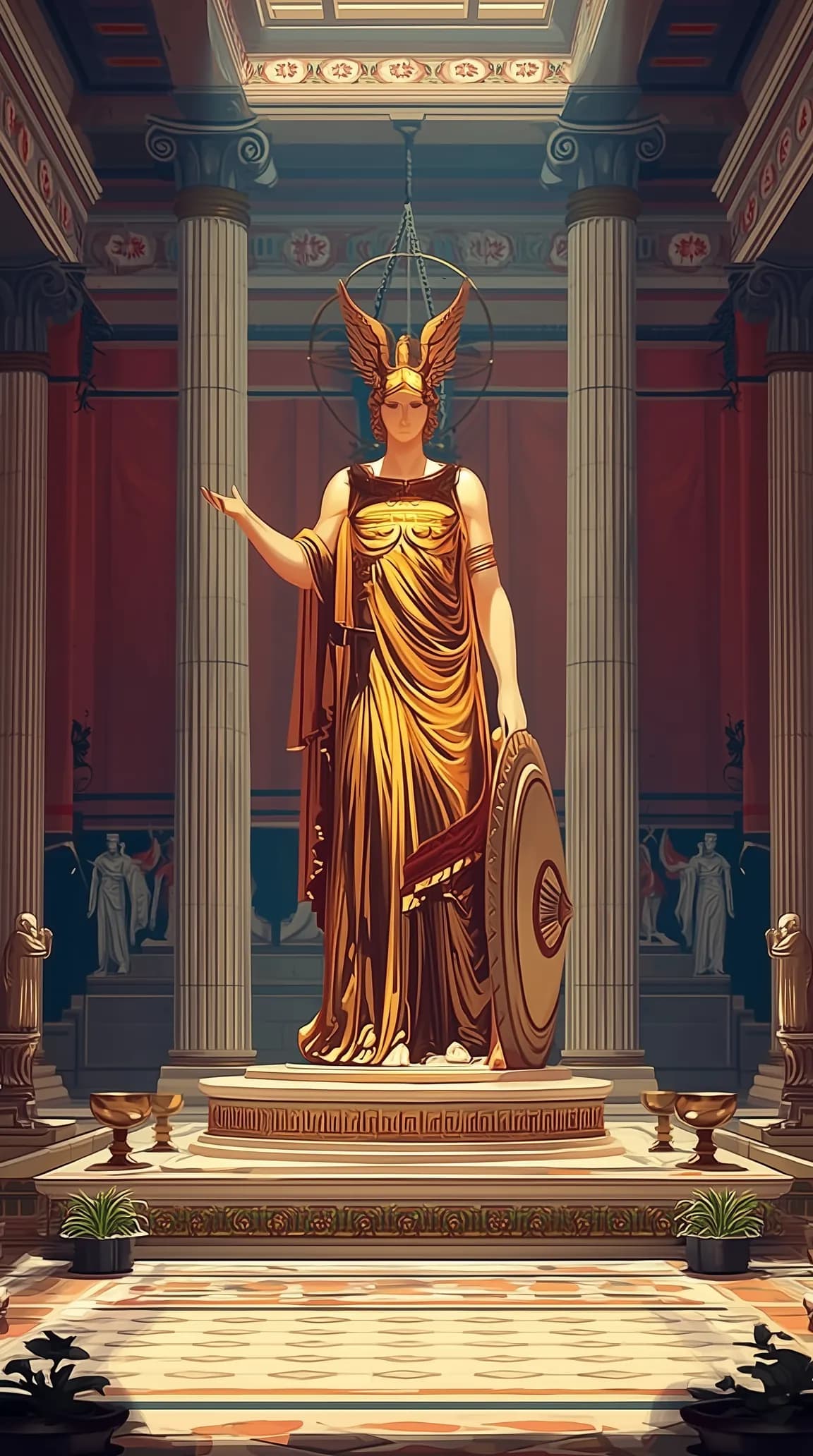
The most distinctive feature of the temple was the wingless statue of Athena Nike housed in the inner chamber. According to legend, Athenians deliberately depicted Nike without wings to ensure that victory would never fly away from their city. This "Athena Apteros" (Wingless Athena) became a powerful symbol of Athenian confidence: they believed their military prowess was so certain that victory had no need of wings to escape. The statue held a pomegranate (symbol of fertility and prosperity) in one hand and a helmet in the other, representing both peace and readiness for war.
The temple's sculptural program depicted scenes from the Persian Wars and mythological battles. The continuous frieze showed Athenians fighting Persians in various battles, emphasizing Athenian military superiority. One side depicted the Battle of Marathon, while another showed the Battle of Plataea. The most famous surviving relief, "Nike Adjusting Her Sandal," shows the goddess gracefully bending to fasten her sandal before flight. This relief's naturalistic drapery and elegant pose made it one of the masterpieces of classical Greek sculpture.
The temple's strategic bastion location at the Acropolis entrance made it highly visible to all approaching Athens, whether by land or sea. This positioning was deliberate: the Temple of Athena Nike served as a visual proclamation of Athenian power. Sailors approaching Piraeus harbor, traders on the roads to Athens, and foreign ambassadors ascending the Sacred Way all saw the victory temple first, receiving an immediate message about Athens' military might. The temple wasn't just religious architecture; it was political propaganda declaring Athens' dominance in the Greek world.
What You'll Experience
An immersive journey of about 15 minutes through Athens' victory sanctuary
Immersive Setting
Through 3D spatial audio, you'll climb the Acropolis and approach the bastion where the Temple of Athena Nike commands the entrance to the sacred precinct. You'll hear the wind sweeping through Ionic columns, the battle of Salamis echoing through the temple, the rhythm of the triremes in its marble friezes, and heroes bringing offerings beneath the goddess's gaze.
The soundscape places you in Classical Athens, with the temple standing at the edge of the Acropolis. You'll feel the memory of the Persian Wars, the pride of Athenian citizens in their victories, and the hope that Nike would continue blessing their city with triumph.
Technology & Production
Spatial audio creates a 360-degree soundscape, with sounds coming from specific directions around you. On the bastion's exposed edge, wind and space surround you and place you where ancient Athenians stood.
The first-person narration puts you beneath the goddess's gaze rather than simply describing the temple, so Nike's symbolism can speak to your own challenges and triumphs, making this meditation both historical and personally meaningful.
🎧 "Victory sounds better in 3D. Trust us on this one."
The journey moves from the edge of the Acropolis into the temple's story: the legend of Marathon's light, Athena's pomegranate of peace, and her winged presence that chose to stay forever. Each step builds emotional intensity, leaving room to reflect on overcoming obstacles through courage and perseverance.
Unlike generic motivational content, this experience grounds inspiration in history. You're not hearing abstract platitudes about success. You're experiencing the actual temple where Athenians celebrated their victories against impossible odds. When 10,000 Greeks defeated 100,000 Persians at Marathon, or when 300 Greek ships crushed 1,000 Persian vessels at Salamis, they attributed success to Athena Nike. This historical authenticity makes the motivational themes more powerful and credible.
💭 "If Athens could defeat Persia, you can handle your Monday morning meeting."
More Than Traditional Mindfulness
While traditional meditation focuses on calming the mind, this journey actively motivates and empowers you through historical inspiration
Motivational Visualization
Rather than emptying your mind, you're filling it with victory imagery: the temple celebrating triumph, Nike's wings representing achievement, Athenians overcoming impossible odds. This guided visualization draws on historical examples of courage.
Pre-Performance Ritual
You can use this journey as a pre-challenge ritual. At about 15 minutes, it fits before competitions, presentations, interviews, or any moment requiring peak performance. It pairs a calm pace with a story of victory.
Resilience Building
The Persian Wars represent one of history's greatest underdog victories. By connecting to these triumphs, you internalize the message that seemingly impossible challenges can be overcome through courage, strategy, and perseverance. This isn't abstract philosophy. It's proven by history.
Emotional Anchoring
The journey creates an emotional anchor you can revisit whenever you need motivation. Nike's symbolism is an image you can come back to whenever you want a reminder of courage.
🏆 "Think of it as a motivational speaker from 424 BCE, but with better acoustics."
Traditional meditation apps promote relaxation and stress reduction, which is valuable. But Visionaria's approach recognizes that sometimes you need activation, not just calm. Before important challenges, you don't want to be so relaxed you lose your edge. You want focused confidence. The Temple of Athena Nike journey pairs a meditative pace with stories of historical triumph.
The journey aims for more than a moment of motivation. It connects your personal struggles to humanity's greatest victories, giving your challenges historical context and making them feel more conquerable.
✨ "Side effects may include increased confidence and sudden desire to achieve impossible things."
Perfect For Winners
Whether you're facing challenges, pursuing goals, or celebrating achievements, this victory journey offers powerful inspiration
Athletes & Competitors
Perfect pre-competition ritual for getting into the winning mindset. Experience the same victory spirit that motivated ancient Greek athletes before the Olympic Games.
Career Professionals
Use before presentations, interviews, negotiations, or important meetings when you need confident, focused energy to perform at your peak.
Anyone Facing Challenges
Listen when confronting difficult situations, recovering from setbacks, or needing courage to attempt something intimidating. Athens defeated Persia. You can handle this.
History Enthusiasts
Experience the Persian Wars and Athenian military culture beyond textbooks. Understand victory monuments through immersive storytelling that makes history personally relevant.
Goal Pursuers
Anyone working toward ambitious goals who needs regular motivational reinforcement. Make this journey part of your morning routine for consistent inspiration.
Resilience Builders
Those recovering from failures or setbacks who need reminding that comebacks are possible. Athens rebuilt after Persian destruction. So can you.
🏛️ "Warning: May cause excessive confidence and historically-informed swagger."
More Journeys

Your Questions Answered
Everything you need to know about this journey
Start Your Journey Free Today
Experience the Temple of Athena Nike and other cinematic meditations. Download Visionaria now and connect with ancient victories, perfect for whenever you need motivation before challenges or inspiration after triumphs.
"Wings optional, confidence included."