
Zeus on Mount Olympus
Imagine receiving divine wisdom from the King of the Gods atop Mount Olympus
Experience Zeus, King of the Gods and ruler of Mount Olympus, in this imaginative journey through divine wisdom, cosmic justice, and the balance of power.
Key Facts About Zeus
- Domain: Sky, Thunder, Lightning, Law, Order, Justice
- Parents: Titans Cronus and Rhea
- Symbols: Thunderbolt, Eagle, Oak Tree
- Roman Name: Jupiter
- Famous Children: Athena, Apollo, Artemis, Hercules, Perseus
- Sacred Location: Mount Olympus, Greece's highest peak
⚡ What is the Zeus on Mount Olympus experience?
An imaginative journey to Mount Olympus, a visualisation for reflecting on the wisdom of Zeus, King of the Gods, about power, justice, leadership, and cosmic balance, amid imagined thunder, lightning, and the voice of the supreme deity. It is not an episode in the Visionaria app, which has no Mount Olympus journey; the app's closest listen is Sparta's Altar to Zeus of Laconia (about 15 minutes), a narrated 3D-audio journey where oaths were sworn to the king of the gods.
"Warning: May cause sudden urge to throw lightning bolts at minor inconveniences. (The King of Gods takes no responsibility for mortal electrical bills.)"
"Side effects include philosophical contemplation about cosmic order and questioning whether you'd make a good immortal ruler."
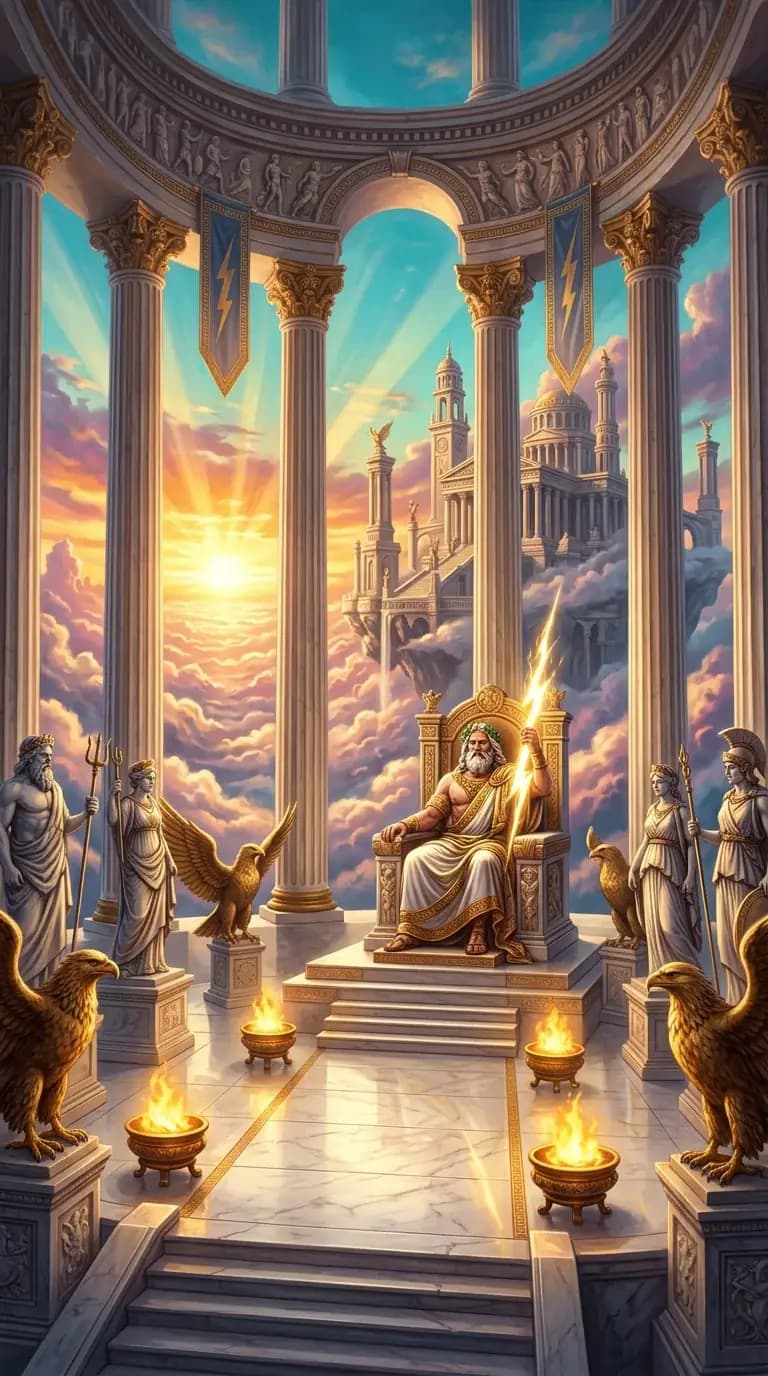
King of the Gods
Zeus (Greek: Ζεύς) is the King of the Gods in Greek mythology, ruler of Mount Olympus and supreme deity of sky, thunder, lightning, law, order, and justice. Son of the Titans Cronus and Rhea, Zeus led his siblings in overthrowing the Titans to establish the Olympian order around 2000 BCE in mythological chronology. Father to countless deities including Athena (wisdom), Apollo (light and prophecy), and Artemis (the hunt), as well as legendary heroes like Hercules, Perseus, and Helen of Troy (for the best-known of them, see the twelve labours of Heracles). His primary symbols, the thunderbolt, eagle, and oak tree, embodied his authority over both natural and moral order. According to Hesiod's Theogony and Homer's epics, Zeus presided over the assembly of gods, dispensed justice to mortals and immortals alike, and maintained cosmic balance between fate and free will. As the central figure of Greek religious worship, Zeus represented the ultimate synthesis of power and wisdom that defined classical civilization's understanding of divine sovereignty.
Divine Authority and Cosmic Order
Zeus's rise to power represents one of mythology's most dramatic narratives of generational change. Born to the Titan Cronus, who consumed his children fearing prophecy of overthrow, Zeus was saved by his mother Rhea's cunning: she substituted a stone wrapped in swaddling clothes. Raised in secret on Crete, Zeus eventually freed his siblings from Cronus's stomach and led the Olympians in a decade-long conflict known as the Titanomachy.
The outcome established the Olympian order: Zeus ruling the sky, Poseidon the seas, and Hades the underworld. But Zeus's authority wasn't merely inherited; it was earned through intelligence as much as force. He freed the Cyclopes and Hecatoncheires from Tartarus, gaining allies whose gratitude manifested as his legendary thunderbolt, a weapon representing both natural power and political acumen.
"Zeus started by overthrowing his father. Ancient Greek family dynamics make your Thanksgiving dinner look peaceful."
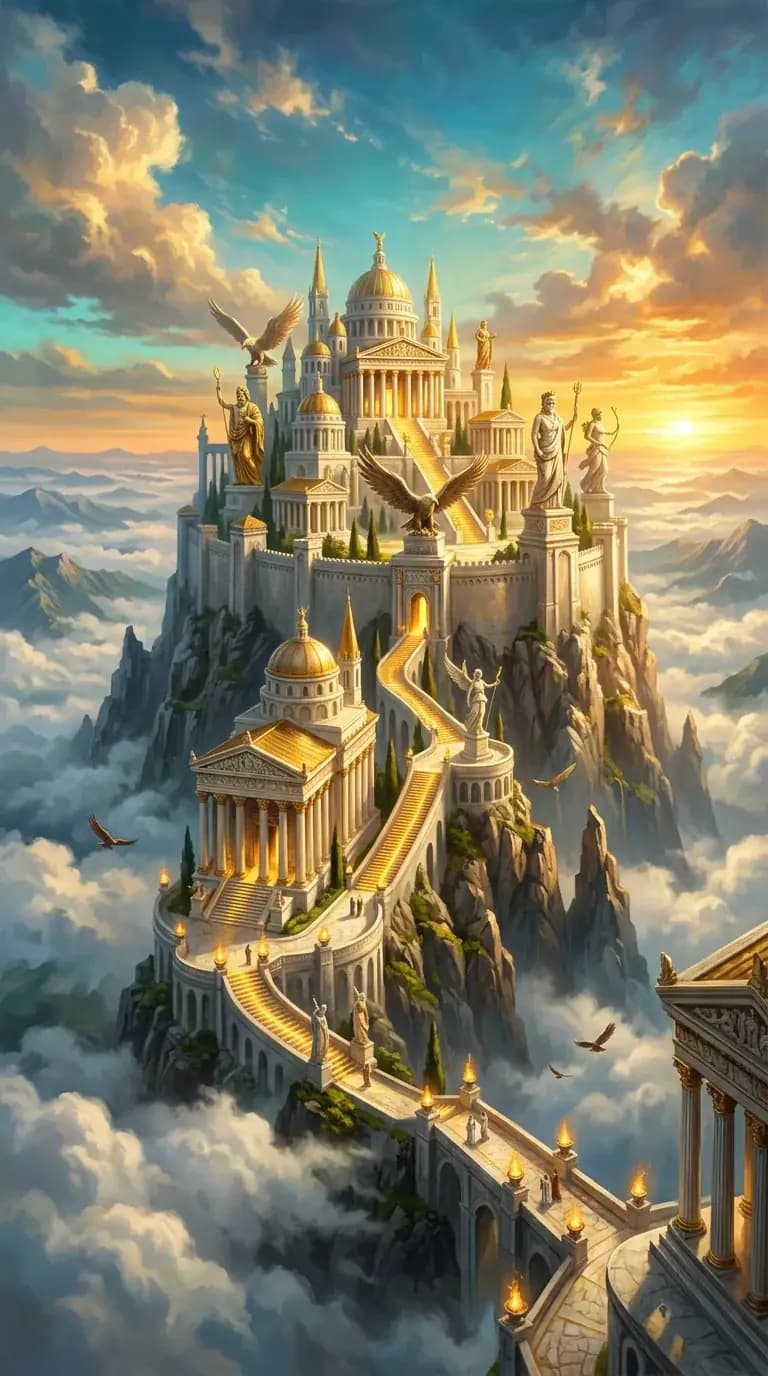
Mount Olympus became the physical manifestation of Zeus's rule: neither fully mortal nor entirely divine, existing at the boundary between earth and heaven. From his throne, Zeus presided over the Council of the Twelve Olympians, dispensing justice to gods and mortals, maintaining cosmic balance, and ensuring the natural order continued. His judgments shaped heroic destinies, city fates, and the fundamental laws governing both mortal and divine realms.
Yet Zeus embodied a profound paradox: unlimited power constrained by cosmic necessity. Even the King of Gods couldn't defy Fate (Moira), couldn't resurrect those whose time had ended, couldn't prevent destined outcomes. This tension between omnipotence and limitation made Zeus a more complex figure than simple tyrant: a ruler bound by the very laws he enforced, wielding authority while acknowledging powers beyond even divine intervention.
Ancient Greeks saw in Zeus not distant abstraction but immediate presence: in thunderstorms, in oaths sworn and honored, in hospitality's sacred laws. To swear "by Zeus" invoked ultimate accountability. To violate hospitality (xenia) was to offend Zeus himself. His worship pervaded Greek life, from the Olympic Games held in his honor to household altars where daily offerings acknowledged his omnipresent governance.
Thunderbolt Authority
Zeus's lightning bolt, forged by Cyclopes, represented more than weaponry. It symbolized swift, undeniable justice and the power to illuminate truth.
Cosmic Balance
Zeus maintained equilibrium between competing forces: gods' ambitions, mortal prayers, natural cycles, and fate's inexorable progression.
Divine Observation
From Olympus's heights, Zeus observed all mortal and divine affairs, his eagle companion extending his vision across creation.
"Being all-seeing sounds impressive until you realize you can never avoid watching your relatives' drama. Even on Olympus."
Imagined Journey to Olympus
Experience Zeus's divine realm in your imagination, picturing yourself on Mount Olympus
The Ascent to Olympus
Imagine your journey beginning at Olympus's base, where mortal realm meets divine territory. Picture the sounds gradually shifting as you ascend, earthly sounds fading, celestial atmospheres emerging. Wind carries different qualities here, charged with power that makes the air itself feel alive. Clouds drift past with weight and presence, not mere vapor but manifestations of Zeus's elemental domain.
As you approach the throne room, imagine thunder rumbling from specific directions, not random noise but purposeful sound, Zeus's presence announcing itself before visual revelation. Lightning crackles with precision, each strike pictured around you. The marble columns of Olympus echo with divine acoustics, footsteps resonating with a quality impossible in mortal architecture.
Then imagine that Zeus speaks. His voice doesn't merely sound from ahead. It reverberates through the space with layered authority, each word carrying weight that lesser beings cannot muster. When he gestures, lightning responds. When he contemplates, thunder holds its breath. Your imagination creates the visceral experience of standing before ultimate power, feeling small yet acknowledged, mortal yet somehow seen.
"Imagine recreating Zeus's voice by recording thunder, adding bass, and asking it politely to dispense wisdom."
Imagined Dialogue Format
Unlike passive observation, this visualisation positions you as active participant in an imagined dialogue with divinity. Picture Zeus addressing you directly, acknowledging your presence, your mortality, your questions about power and purpose. His words reference contemporary human struggles through timeless wisdom. He's spoken with mortals across millennia, after all, and understands the patterns that repeat in finite lives.
The visualisation explores sophisticated themes: How does one wield power without becoming its prisoner? Can justice and mercy coexist, or must authority choose between them? What price does leadership exact from those who genuinely care? How do you maintain cosmic order while respecting individual free will? Zeus doesn't offer simple answers. He shares the questions that have occupied him across eons of divine rule.
Pauses invite your mental responses. Imagine Zeus asking, then waiting (thunder held in suspension), giving you space to contemplate before continuing. This pacing gives the reflection a dialogue quality, even though it all happens in your mind. You're not lectured at but invited to think, as if worthy of Zeus's attention and insight.
Imagined soundscapes enhance immersion: his eagle's wings beating overhead, clouds drifting through Olympian architecture, distant voices of other gods in their chambers, the perpetual wind that sweeps Olympus's peak. These details ground you in place: picture yourself standing in his throne room, surrounded by evidence of divine reality.
Mount Olympus
Greece's highest peak becomes a divine throne room in your imagination
Thunder & Lightning
Pictured all around you, responding to Zeus's gestures and emotional states
Divine Voice
An imagined voice with the weight and resonance of supreme authority
Celestial Atmosphere
Clouds, wind, and elemental sounds that exist between mortal and divine
"We considered adding a 'smite' button but decided that might encourage unhealthy power fantasies."
Timeless Insights on Power and Leadership
Zeus shares perspectives earned across millennia of divine governance, addressing questions that resonate with contemporary life
The Burden of Authority
Zeus explores the profound isolation of ultimate power: how final authority separates you from genuine peer relationships, how every interaction becomes colored by others' awareness of your capacity to reward or punish, how you can never fully escape the weight of responsibility even in private moments.
He reflects on the loneliness of being the one to whom everyone appeals but who has no higher authority to petition. "A king's tears fall alone," Zeus observes, "for who consoles the one who must console all others?" This vulnerability humanizes the divine. Even gods understand the cost of power.
Justice Versus Mercy
One of Zeus's central contemplations: the tension between consistent law and compassionate exception. Enforce rules rigidly and you become tyrannical. Apply mercy too liberally and order collapses. Zeus discusses specific cases where he faced this dilemma: mortals deserving punishment yet circumstances warranting consideration, gods violating divine law yet motivations born from love or loyalty.
"Every exception weakens the rule," he explains, "yet rules without exception become chains rather than guides." This isn't abstract philosophy but practical wisdom from one who's navigated this balance across countless judgments, learning that perfect justice might be impossible and the best leaders can hope for is thoughtful imperfection.
Fate and Free Will
Perhaps Zeus's most philosophically sophisticated theme: the paradox of omnipotence constrained by cosmic necessity. Even the King of Gods cannot defy Moira (Fate). There are destined outcomes he must allow despite personal desires to intervene. Yet within fate's framework exists genuine choice, mortal agency that shapes how predetermined endpoints arrive.
Zeus shares how this tension defines divine governance: "I cannot change what must be, but I can influence how mortals approach their destinies." This offers profound comfort: we're not puppets, yet neither are we entirely self-determined. The space between fate and freedom is where meaning emerges, where choices matter precisely because they navigate toward inevitable conclusions through paths we select.
Power and Relationship
Zeus candidly addresses how authority complicates connection: romantic partnerships where the other person can never fully forget your power, friendships colored by awareness of your capacity to grant or deny, familial relationships strained by your position as ultimate authority even over family members who might prefer a father over a king.
He reflects on his own complex relationships: with Hera (partnership tested by conflicting duties), his children (loving them while maintaining divine hierarchy), mortals he admired (knowing their finite lives would end while he endured). "True intimacy requires equals," Zeus observes, "which makes ultimate power the loneliest of positions."
"Zeus's relationship advice: surprisingly insightful for someone whose own marriage involved turning into various animals."
Perfect For Seekers of Wisdom
Leaders and Managers
Anyone in positions of authority (CEOs, team leaders, managers, founders) who grapple with the isolation of leadership, the balance between enforcement and compassion, and the weight of decisions affecting others' lives. Zeus's millennia of divine governance offer perspective on timeless leadership dilemmas.
Philosophy Students
Those exploring questions about fate versus free will, the nature of justice, the relationship between power and morality, and cosmic order. Zeus embodies philosophical complexity. He's not simple autocrat but nuanced thinker wrestling with genuine dilemmas that ancient and modern philosophers continue debating.
Mythology Enthusiasts
Lovers of Greek mythology seeking deeper engagement than passive reading. This journey brings Zeus's character to life through imagined dialogue rather than description, exploring his psychology, motivations, and the complex persona behind the myths, seeing him as fully realized character rather than one-dimensional archetype.
Decision-Makers Under Pressure
Anyone facing difficult choices where competing values clash, where no perfect solution exists, where every option carries significant consequences. Zeus's wisdom about navigating impossible dilemmas, accepting imperfect outcomes, and maintaining integrity under pressure resonates across contexts from corporate boardrooms to personal crossroads.
Those Exploring Power Dynamics
Individuals examining how authority affects relationships, how power changes those who hold it, how to wield influence without becoming corrupted by it, and how to maintain genuine connections despite hierarchical positions. Zeus's candid reflections on power's isolating effects offer rare vulnerability from mythology's ultimate authority figure.
Experienced Meditation Practitioners
Those comfortable with psychologically sophisticated content, reflective visualisation, and thematic complexity beyond simple relaxation. This journey suits those familiar with meditation practice and willing to engage intellectually and emotionally with challenging questions about authority, responsibility, and cosmic order.
"Also perfect for anyone who's ever wanted to say they imagined a personal conversation with the King of the Gods. Great icebreaker at parties."
Your Questions Answered
Everything you need to know about this journey with Zeus
"We asked Zeus to answer these questions personally, but he said he's delegated FAQ duties to mortals. (Something about 'not micromanaging.')"
Continue Your Divine Journey
Explore more imaginative journeys with the Olympian gods and goddesses
From the blog
Ready to Ascend
Mount Olympus?
Download Visionaria and stand where oaths were sworn to the King of the Gods, at Sparta's Altar to Zeus of Laconia.
"Divine wisdom with a side of lightning. (Zeus's words, not ours.)"