The Enchanted Winter Kingdom: Hidden Meanings
✨ Fun fact: Hans Christian Andersen's "The Snow Queen" (1844)—one of the great ancestors of every enchanted winter kingdom—is subtitled "A Tale in Seven Stories," and it begins not with a queen at all but with a troll's mirror that shatters into millions of splinters, lodging in people's eyes and hearts and making everything good look cold and ugly. From that peculiar picture grew one of the most richly symbolic motifs in storytelling: a land where winter never ends, a hidden doorway opens from the ordinary world, a great lion stands for courage and renewal, and a heart turned to ice discovers that forgiveness is always possible. Myths, fairy tales, and folk festivals have told versions of this story for centuries, and each generation keeps discovering fresh meanings in it—some ancient, some emergent, and some so deeply layered that they only reveal themselves on a second or third reading. Trying to list all the hidden meanings of the enchanted winter kingdom is a bit like trying to count the snowflakes in its endless winter—there are always more than you expected, they're all beautiful, and the moment you think you've caught them all, another one lands gently on your nose.
For centuries, stories of a kingdom locked in endless winter have occupied a unique place in world storytelling—beloved as children's adventures, studied as symbolic tales, and treasured as some of the most imaginatively rich settings in folklore and fiction. The enchanted winter kingdom is not merely a fantasy setting but a complete symbolic world that operates on multiple levels of meaning simultaneously, rewarding casual readers with exciting adventure and rewarding attentive readers with layer upon layer of symbolism, allusion, and philosophical depth. Understanding its hidden meanings doesn't diminish the magic of these stories—it deepens it, revealing that the enchantment readers feel is not accidental but built from humanity's oldest and most powerful narrative patterns.
The Enchanted Winter Kingdom and its hidden meanings refers to the symbolic and mythological layers of a recurring story archetype—a land held in endless winter by a cold ruler, reached through a hidden doorway from the ordinary world, and freed by the coming of a great lion and the return of spring—found in myths, fairy tales, and modern fantasy alike. The hidden meanings encompass seasonal renewal symbolism (the great lion's coming and the thaw paralleling ancient myths of death and rebirth), classical mythological references (fauns, dryads, centaurs, and talking animals drawn from Greek, Roman, and Norse traditions), medieval literary allusions (chivalric quests, enchanted forests, and courtly virtues), and universal psychological archetypes (the hero's journey, the threshold crossing, the wise mentor, the shadow self). Rather than a strict allegory with a one-to-one code, the winter kingdom is best read as an archetype—an imagined picture of what courage, cruelty, and renewal might look like in a world of magic and mythical creatures. This distinction matters because it means the archetype's meanings are resonant rather than reductive—they invite interpretation and personal discovery rather than demanding a single correct reading.
This article explores the winter kingdom's hidden meanings across every dimension—from the song that wakes a frozen world to the final thaw that ends the long winter, from the great lion's symbolic significance to the psychological depth of the frozen heart's redemption, from the hidden doorway as a portal archetype to the archetype's surprising connections with Norse mythology, Slavic folklore, Andersen's fairy tales, and modern imagination psychology—and how to use it in meditation. Whether you first met a winter kingdom as a child and are returning with adult eyes, or you're exploring the archetype for the first time through a mythological lens, this guide will illuminate meanings that transform these beloved stories from wonderful adventure tales into some of the richest symbolic storytelling humanity has produced.
"Reading a winter-kingdom tale without noticing the hidden meanings is like visiting Rome and only noticing the gelato shops. The gelato is genuinely excellent—no one disputes that—but you're standing next to the Colosseum, the Pantheon, and two thousand years of accumulated art, history, and architecture. Similarly, the adventure story is genuinely thrilling: a child slips through a hidden doorway, meets speaking beasts and woodland spirits, and helps free an enchanted kingdom from an endless winter. That's wonderful. But beneath that wonderful surface lie layers of meaning so rich that folklorists have filled whole books with a single motif, and new readers keep discovering things that previous generations missed. The archetype isn't just a magical world—it's a magical world built on a moral argument, wrapped in a mythological tapestry, embroidered with psychological archetypes. And the best tellings make it look effortless, which is the most impressive trick of all."
Key Facts: The Enchanted Winter Kingdom at a Glance
- ••Archetype, Not Code: The enchanted winter kingdom is best read as an archetype rather than a strict allegory—an imagined picture of what cruelty, courage, love, and renewal might look like in a world of talking animals and magic, open to readers of every background
- ••Mythological Sources: The archetype draws heavily from Greek mythology (fauns, dryads, centaurs), Norse mythology (the Fimbulwinter and the end-and-renewal cycle), Slavic folklore (Morozko and Marzanna), Celtic folklore (enchanted forests), and medieval literary traditions (chivalric quests and courtly values)
- ••The Great Lion's Symbolism: The great lion represents the archetype of the wise, courageous, and returning figure found across world mythologies—embodying themes of self-giving love, renewal, creative power, and the idea that true authority serves rather than dominates
- ••The Seven-Planet Lens: Medieval cosmology recognized seven planets, each with its own character—the framework Dante used for the heavens of his Paradiso—and the archetype's great moments can be read through them (Jupiter, Mars, Sol, Luna, Mercury, Venus, Saturn)
- ••Portal Archetype: The hidden doorway is one of storytelling's most famous portal devices, connecting to the universal mythological motif of threshold crossing—from Alice's rabbit hole to Orpheus's descent—symbolizing the psychological transition between ordinary consciousness and states of wonder
- ••Global Reach: Cultures around the world ritualize the end of winter—from the Slavic custom of drowning or burning an effigy of Marzanna to the Persian spring festival of Nowruz—showing how universal the longing behind the winter kingdom really is
Quick Answer
✨ Fun fact: Hans Christian Andersen's "The Snow Queen" (1844)—one of the great ancestors of every enchanted winter kingdom—is subtitled "A Tale in Seven Stories," and it begins not with a queen at all but with a troll's mirror that shatters into millions of splinters, lodging in people's eyes and hearts and making everything good look cold and ugly. From that peculiar picture grew one of the most richly symbolic motifs in storytelling: a land where winter never ends, a hidden doorway opens from the ordinary world, a great lion stands for courage and renewal, and a heart turned to ice discovers that forgiveness is always possible. Myths, fairy tales, and folk festivals have told versions of this story for centuries, and each generation keeps discovering fresh meanings in it—some ancient, some emergent, and some so deeply layered that they only reveal themselves on a second or third reading. Trying to list all the hidden meanings of the enchanted winter kingdom is a bit like trying to count the snowflakes in its endless winter—there are always more than you expected, they're all beautiful, and the moment you think you've caught them all, another one lands gently on your nose.
What Makes the Enchanted Winter Kingdom More Than a Fairy Tale?
The most common misconception about stories of enchanted winter kingdoms is that they are simple children's adventures—entertaining but lightweight, enjoyable but ultimately shallow. This misunderstanding persists because the best of these tales achieve something extraordinarily rare: they work perfectly as surface-level adventures while simultaneously operating as some of the most densely symbolic storytelling in any language. A child reading The Snow Queen experiences a thrilling tale of a child braving the frozen north to rescue a friend from an icy queen. An adult rereading the same story encounters a carefully structured meditation on the nature of sacrifice, the psychology of coldness and forgiveness, and the question of whether true power is expressed through domination or through service.
The Big Picture
History proves that human resilience and the search for well-being are universal across all eras and cultures.
Winter-kingdom stories achieve this dual-level storytelling through a technique rooted in the medieval literary tradition. Medieval writers believed that the best literature operated on four simultaneous levels: the literal (what happens in the story), the allegorical (what the story represents), the moral (what the story teaches about right action), and the anagogical (what the story reveals about ultimate reality). The richest winter-kingdom tales embed all four levels with such skill that readers at each level of engagement find a complete, satisfying experience. The literal reader enjoys a great adventure. The allegorical reader recognizes parallels with sacred and mythological narratives. The moral reader discovers insights about courage, loyalty, humility, and compassion. And the contemplative reader encounters questions about the nature of reality, the meaning of joy, and what lies beyond the visible world.
What makes the enchanted winter kingdom exceptional even among symbolic stories is that its symbolism is rarely heavy-handed. Unlike John Bunyan's Pilgrim's Progress, where characters are literally named "Christian" and "Faithful," the winter kingdom's symbolic meanings emerge organically from vivid, emotionally compelling storytelling. The great lion doesn't feel like an abstract idea wearing a lion costume—it feels like a magnificent, terrifying, overwhelmingly good mythical creature that happens to embody profound truths about love, power, and renewal. This is the archetype's genius: the meanings are hidden not because they're obscure, but because they're so perfectly integrated into the narrative that they feel like natural properties of the world rather than imposed lessons.
A Roman walks into a bar, holds up two fingers, and says, 'Five beers, please.'
Spring's Return in Song: Creation, Music, and the Power of Imagination
In the Kalevala, the Finnish national epic compiled by Elias Lönnrot in 1835, the eternal singer Väinämöinen works his greatest wonders through song—and the image of a voice that reshapes the world is one of the most extraordinary in all folklore. In the winter-kingdom archetype, spring itself often returns as a song. In the stillness of a frozen land, a single voice begins—first one note, then more, rising and falling in a melody of such beauty that every listener is overwhelmed. As the song grows, the ice cracks; as the melody develops, streams run again, grass grows, trees bud, animals wake from their winter sleep, and the whole landscape takes shape anew as an expression of musical creativity. This is not renewal through command or force—it is renewal through art, through beauty, through the sheer generative power of creative expression.
The hidden meanings in this image are remarkable in their depth. On the philosophical level, it echoes the ancient concept of the Logos—the creative Word through which, in Platonic and religious traditions, reality itself is spoken into being. But the archetype transforms this abstract philosophical concept into something viscerally beautiful: not a word but a song, not a command but a melody. This choice connects the thaw to the deep human intuition that music and art are not ornamental additions to reality but fundamental expressions of the creative power that underlies imagination itself. The suggestion is that the universe is fundamentally aesthetic—that beauty is not a surface feature of creation but its deepest structure.
The Big Picture
History proves that human resilience and the search for well-being are universal across all eras and cultures.
On the mythological level, song-creation connects to creation myths across world cultures. The Aboriginal Australian Dreamtime features the world being "sung" into existence. Hindu cosmology describes the universe emerging from the primal sound Om. In Greek myth, Orpheus plays music so beautiful that trees, stones, and even the rulers of the underworld are moved. By placing song at the heart of renewal, the winter-kingdom archetype sits within a universal mythological pattern—one that modern neuroscience interestingly supports, as research shows that music activates more brain regions simultaneously than any other human activity, suggesting that the ancient intuition connecting music to creation reflects something genuine about how human consciousness processes and generates reality.
"The fact that so many myths have the world—or the spring—sung into existence rather than commanded into existence tells you everything you need to know about the imagination behind them. Most creation narratives involve power: a god speaks, commands, shapes, or assembles. Song-creation involves beauty. The universe, in this vision, is not a machine that was built—it's a song that was sung. And if you've ever been so moved by a piece of music that you felt the world change around you, you already understand exactly what these myths mean. A frozen world answering a melody with birdsong and running water, darkness transforming into stars and snow into blossom. That's not just myth—it's poetry of the highest order."

Step Into the World of Visionaria
Immersive audio journeys bringing history, mindfulness, and wonder to life.
Why did the inventor of the wheel win an award? Because his idea really got things rolling.
The Great Lion: Archetype and Symbol of Courage and Renewal
The great lion is the heart of the winter kingdom—the figure around whom the whole story of thaw and renewal revolves, and the one in whom the archetype concentrates its deepest philosophical meanings. The great lion is best understood not as a disguised portrait of any single deity but as an imagined picture of what love, justice, courage, and creative power might look like in a world of talking animals and magic. This distinction between allegory and archetype is crucial for understanding the lion's symbolic richness, because it means the lion is not a code to be deciphered but a living image that embodies rather than merely represents profound truths about the nature of goodness, power, and love.
The choice of a lion as the great guardian's form connects to symbolism that spans virtually every major world civilization. In ancient Egypt, the lion represented both royal authority and protective power (the Sphinx combines a lion's body with a pharaoh's head). In Greek tradition, the Nemean lion was Hercules's first great challenge. In Jewish and Christian symbolism, the "Lion of Judah" represents righteous sovereignty. In Hindu tradition, Narasimha (a lion avatar) represents the protective aspect of the divine. By choosing a lion, the archetype taps into a universal symbolic vocabulary—one that transcends any single religious tradition, ensuring that the great lion resonates with readers regardless of their cultural or spiritual background.
Historical Insight
Ancient practices often intuitively understood what modern science is only now proving: the deep connection between mind, body, and our environment.
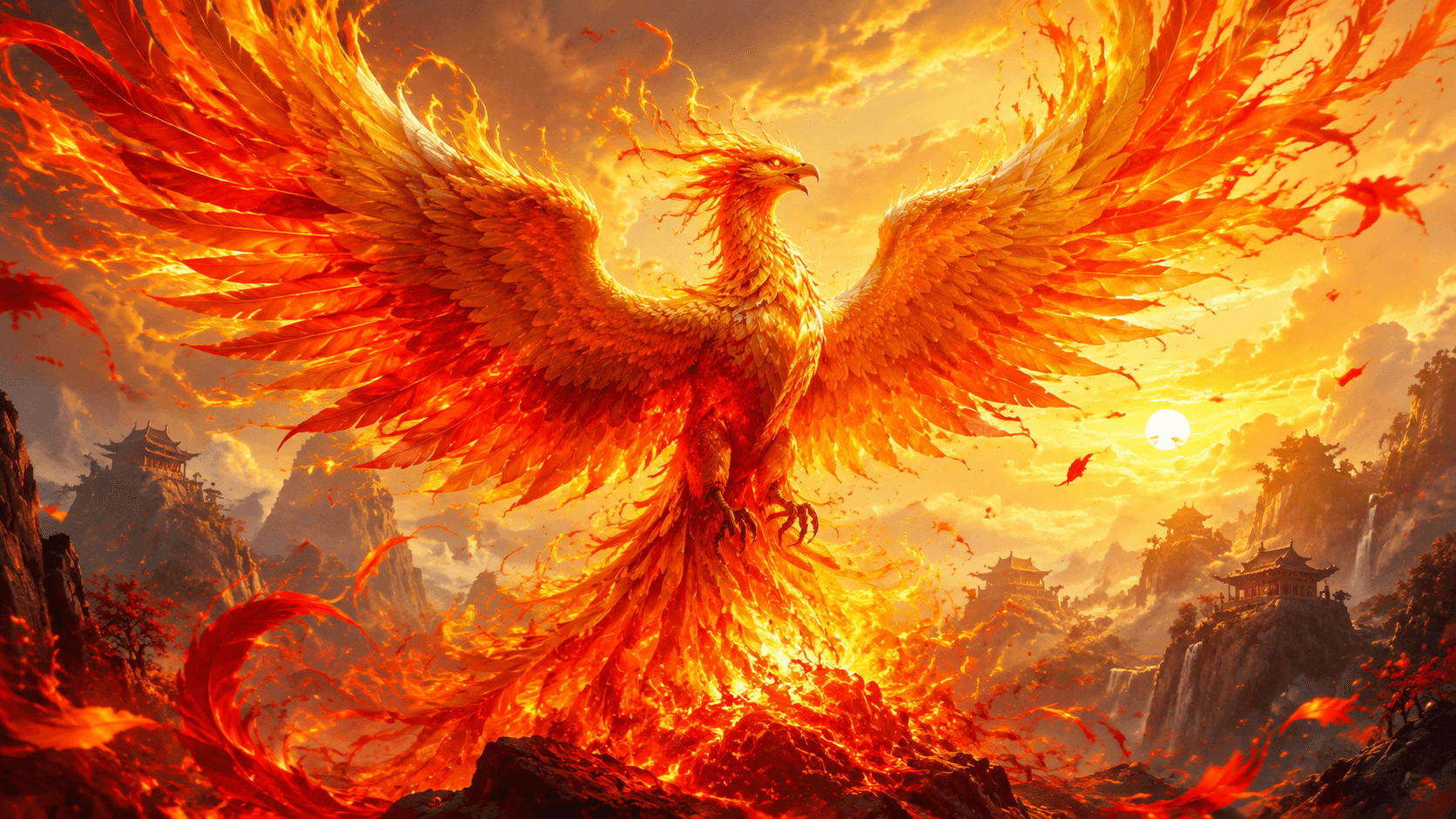
The lion's most significant role in the archetype—its coming signals that the long winter is breaking—draws on an ancient pairing: in Hellenistic astrology the sign of Leo was the Sun's own house, and Persian art joined the two in the famous lion-and-sun emblem. On the symbolic level, the lion's arrival is the return of light and warmth. But on the mythological level, it connects to the archetype of the passing and returning figure found across world cultures: Osiris in Egypt, Persephone in Greece, Baldur in Norse mythology, the Phoenix in universal fire mythology. Comparative mythologist Joseph Campbell identified this as one of humanity's most fundamental narrative patterns: the idea that true renewal requires a passage through apparent ending—that the deepest form of power is expressed not through domination but through self-giving love.
"The remarkable thing about the great lion is that the archetype manages to be simultaneously comforting and terrifying, gentle and awe-inspiring, approachable and utterly overwhelming. It captures something that most philosophy textbooks struggle to articulate across hundreds of pages: goodness is not the same as niceness. True goodness has claws. It has a mane. It shakes the earth when it walks. And it would stand between a frightened child and the whole weight of winter. That's not just good storytelling—it's a complete moral philosophy delivered through a single image of a lion."
An Epicurean, a Stoic, and a Cynic walk into a garden. The bartender says, 'Is this some kind of philosophical joke?'
The Frozen Heart: Temptation, Forgiveness, and Transformation
The figure of the child whose heart turns to ice—in Andersen's The Snow Queen it is the boy Kai, struck by a splinter of the troll's mirror—is one of the most psychologically sophisticated character journeys in the fairy-tale tradition, and one of the winter kingdom's most powerfully hidden meanings. The frozen heart is, at its core, a meditation on how ordinary human weakness can lead to profound harm, and how even after genuine wrongdoing, transformation and forgiveness remain possible. This is not a simple morality tale about a "bad" child learning to be "good"—it is a nuanced exploration of how resentment, insecurity, and the desire for recognition can make genuinely decent people vulnerable to manipulation.
Did You Know?
The relentless drive to understand the world was seen not just as an academic pursuit, but as a spiritual and healing practice by the ancients.
The one who turns cold—or turns traitor—in these tales does so not because they are evil but because they are insecure. Often this figure feels overlooked: irritable, sarcastic, and quietly resentful—feelings that any middle child (or any human who has felt overlooked) can immediately recognize. The winter ruler perceives this vulnerability and exploits it with enchanted food or flattering gifts—a brilliantly chosen symbol of addictive, temporary pleasure that promises satisfaction but delivers only craving. Folklore is full of such bait: Persephone's pomegranate seeds bind her to the underworld, fairy food in Celtic legend traps the eater in the otherworld, and Christina Rossetti's "Goblin Market" (1862) turns forbidden fruit into endless hunger. The betrayal is not the result of malice but of hunger—hunger for recognition, importance, and the sweetness that life seems to have denied. Storytellers have always understood that most human wrongdoing originates not in conscious evil but in unmet emotional needs that make people susceptible to false promises.
What makes this arc genuinely remarkable is what happens after the rescue. In Andersen's tale, Kai is not lectured or punished: Gerda finds him in the ice palace and weeps, her warm tears melt the splinter in his heart, and Kai bursts into tears himself until the glass washes out of his eye. This wordless healing is extraordinarily powerful. The meeting between love and a frozen heart is, symbolically, the most intimate moment of the story—and the tale keeps it free of lectures and explanations because real transformation happens in the unseen places of the heart. What we observe is the result: the frozen one becomes a changed person. Not perfect—still recognizably themselves—but fundamentally redirected. Their sense of justice, born from having experienced both coldness and forgiveness, is deeper and more compassionate than the justice of someone who has never fallen.
What's an ancient intellectual's favorite exercise? Jumping to conclusions.
The Winter Witch and the Symbolism of Endless Winter
The winter witch is one of folklore's most symbolically rich antagonists. Her enchantment over the kingdom—a winter that never turns to spring—is a masterpiece of symbolic compression, communicating in a handful of words a complete vision of spiritual and psychological oppression. Winter without spring is the natural cycle frozen in its coldest, most lifeless phase—growth suspended, renewal prevented, and the hope that winter will end eliminated. The winter witch represents not merely political tyranny but something more fundamental: the force that prevents transformation, that keeps the world locked in a state of cold stasis where nothing can grow, change, or become more than it already is.
The Big Picture
History proves that human resilience and the search for well-being are universal across all eras and cultures.
On the mythological level, the winter witch connects to a family of frost and winter figures found across world mythology. In Norse mythology, the frost giants represent the primordial forces of cold and chaos that oppose the gods' creative order. In Russian folklore, Morozko (Father Frost) tests and challenges travelers in the winter wilderness. In Slavic tradition, Marzanna is a goddess of winter whose effigy is symbolically released each spring to mark the return of warmth. The archetype places its winter witch within this universal tradition of winter as antagonist while adding a distinctive layer: her evil is specifically that she prevents the cycle from completing—she doesn't bring winter as a natural season but traps the world in permanent winter, denying the rhythm of renewal that is, in the archetype's vision, the fundamental law of healthy existence.
The winter witch's most famous literary ancestor, Andersen's The Snow Queen, adds further symbolic depth. The Snow Queen rules from a vast palace of ice, seated at the centre of a frozen lake she calls the Mirror of Reason, and she sets her captive an impossible task: to spell out a single word with shards of ice—"Eternity"—promising him his freedom, the whole world, and a new pair of skates if he succeeds. This detail reveals the winter ruler's essential nature: she offers a perfect, frozen order in place of living warmth, a figure who would rather freeze an entire world than share it. In psychological terms, she represents the narcissistic drive taken to its absolute extreme—the ego so consumed by its own importance that it cannot tolerate the existence of anything outside its control. Her endless winter is the same impulse made visible: a world frozen around her authority, where no independent growth or change is permitted.
What's an ancient intellectual's favorite exercise? Jumping to conclusions.
The Seven Planets: A Hidden Spiritual Map
One of the most illuminating ways to read the winter-kingdom archetype is through the medieval cosmos of seven planets—the same framework Dante used to structure his Paradiso (completed around 1320), in which the soul rises through the heavens of the seven planets, each with its own character and spiritual meaning—a symbolic framework that any medieval storyteller would have known intimately. Read through this lens, the motifs of the winter kingdom form not a random collection of adventures but a carefully designed cosmological map reflecting the medieval understanding of the universe as an ordered, meaningful hierarchy of spiritual influences.
Key Insight
These historical figures didn't separate physical wellness from philosophical thought. To them, it was all one continuous practice of living well.
Read this way, the archetype's great moments line up with the planets: The return of the rightful ruler corresponds to Jupiter—the planet of kingship, festivity, and joyful authority (the feast and crowning that close so many winter tales). The stand against winter's army corresponds to Mars—the planet of chivalric courage and heroic engagement (the restoration of rightful rule through valor). The first sunrise after the thaw corresponds to Sol (the Sun)—representing illumination, gold, and the journey toward ultimate light (the ancient pairing of the lion and the sun). The long enchanted night corresponds to Luna (the Moon)—the planet of madness, enchantment, and the boundary between the visible and invisible (the winter witch's realm of illusion). The speaking beasts and messengers corresponds to Mercury—the planet of speech, communication, and twinship. The first green shoots of spring corresponds to Venus—the planet of creation, fertility, and the beginning of things. And The passing of the old world corresponds to Saturn—the planet of endings, transformation, and the passage beyond the visible world.
This planetary lens reveals something about how symbolic storytelling works: medieval storytellers worked with a symbolic system far more sophisticated than most modern readers realize. Each planet carried its own imagery, mood, color palette, and emotional tone—not as rigid allegory but as the kind of deep atmospheric coherence that readers feel without necessarily being able to name. The joyful warmth of the royal feast (Jupiter), the golden radiance of the first sunrise (Sol), the eerie silver stillness of the enchanted night (Luna)—all these atmospheric qualities, which readers experience as the "feeling" of a winter tale, turn out to be expressions of an old and carefully designed cosmological architecture.
An Epicurean, a Stoic, and a Cynic walk into a garden. The bartender says, 'Is this some kind of philosophical joke?'
Talking Animals and the Language of Fable
The talking animals of the winter kingdom are among its most beloved features—and they carry hidden meanings that connect to some of humanity's oldest symbolic traditions. In these tales, the distinction between speaking and ordinary animals is not merely biological but moral and spiritual: speaking animals possess reason, moral agency, and the capacity for friendship with humans and with the great lion, while ordinary animals exist as their natural counterparts. This distinction reflects a philosophical question that has fascinated thinkers from Aristotle to modern cognitive scientists: what is the nature of consciousness, and what responsibilities come with the capacity for reason and moral choice?
Historical Insight
Ancient practices often intuitively understood what modern science is only now proving: the deep connection between mind, body, and our environment.
The talking animals also connect the winter kingdom to the global tradition of animal fables and beast allegory—from Aesop's fables in ancient Greece to the Jataka tales of Buddhist tradition, from the Roman de Renart of medieval France to the Anansi stories of West Africa. In all these traditions, animals who speak and reason serve as mirrors for human nature—allowing storytellers to examine human qualities (courage, cowardice, loyalty, treachery, wisdom, foolishness) in a form that is simultaneously more vivid and less threatening than direct human portrayal. The tradition is full of memorable examples: Aesop's little mouse who frees a trapped lion embodies courage in its purest form, Reynard the fox explores the comedy and danger of cunning, and the slow tortoise who beats the hare represents the peculiar virtue of patience outlasting speed.
Perhaps the most poignant folk belief involving talking animals is the old European legend of Christmas Eve, when animals are said to kneel and speak at midnight—and, in some versions, anyone who eavesdrops hears something they cannot bear—not because the animals are unkind, but because the listener's own choices have made them unready for the truth. This haunting motif suggests that folk storytellers understood the ultimate significance of the talking-animal metaphor: the capacity for speech, reason, and moral choice is simultaneously humanity's greatest gift and greatest responsibility, because it means we are capable of both recognizing and refusing the deepest truths about reality.
"Storytellers have filled winter kingdoms with talking animals for the same reason that Aesop, La Fontaine, and Beatrix Potter did—because there is something about a mouse discussing honor, a horse debating philosophy, or a beaver serving tea that simultaneously makes us laugh and makes us think. We lower our intellectual defenses around animals in a way we don't around human characters, which means the truths they deliver penetrate more deeply. When Aesop's tiny mouse gnaws through the ropes that hold a mighty lion, we are moved in a way we might not be if a human character did the same thing—because a mouse rescuing the king of beasts is both utterly ridiculous and utterly magnificent, and the combination of those qualities is, the fable suggests, closer to the truth about courage than either quality alone."
An Epicurean, a Stoic, and a Cynic walk into a garden. The bartender says, 'Is this some kind of philosophical joke?'
The Winter Kingdom's Hidden Connections to World Mythology
One of the archetype's most underappreciated aspects is the extraordinary range of mythological traditions woven into it. Far from belonging to a single tradition, the enchanted winter kingdom draws on an astonishing diversity of mythological sources—creating a world that feels universally resonant precisely because it synthesizes symbolic patterns from cultures around the globe.
Visionaria Insight
By immersing ourselves in these historical soundscapes, we reconnect with a timeless human tradition of storytelling and mental restoration.
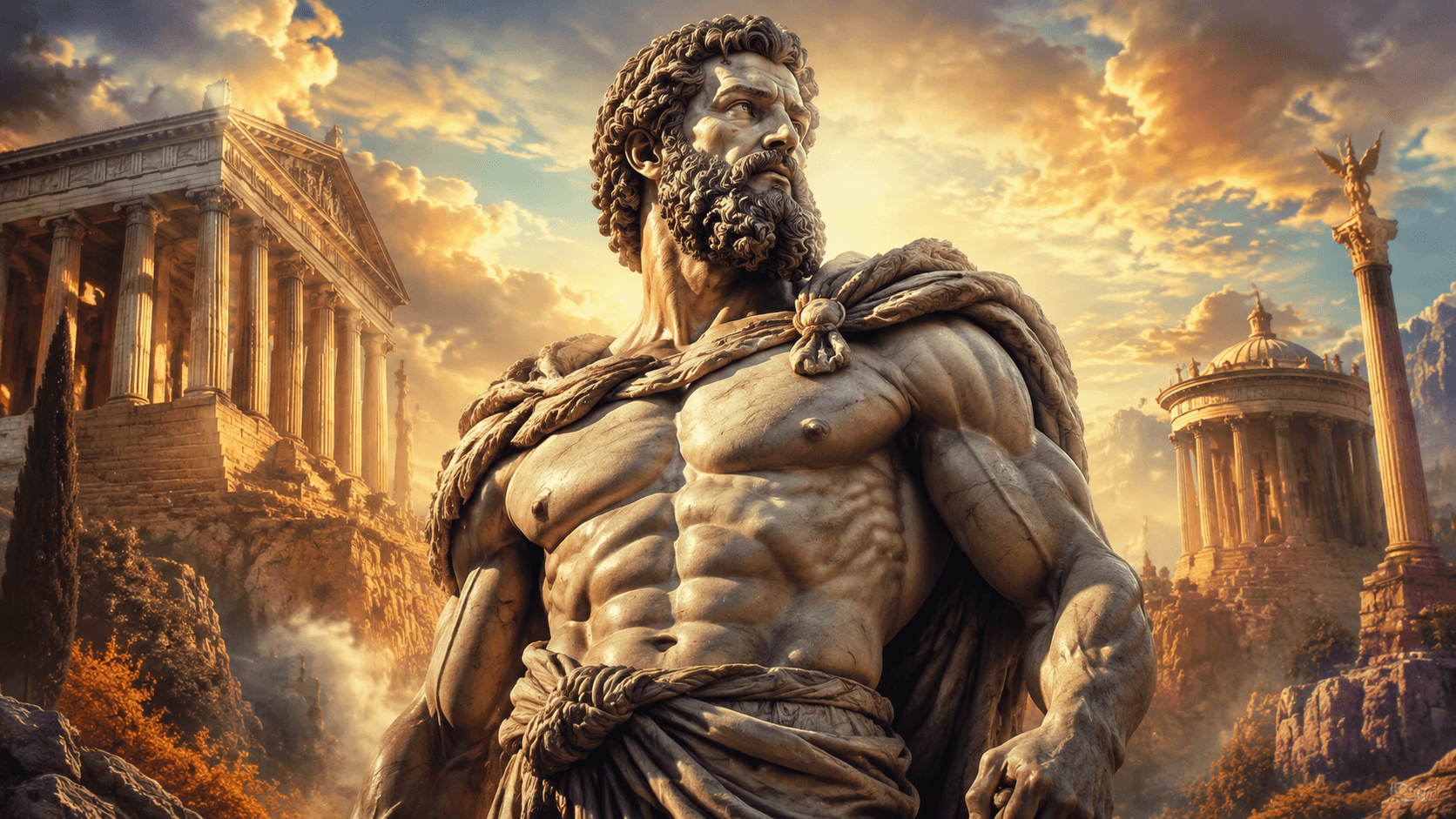
Greek and Roman mythology provides the winter kingdom's most visible mythological furniture. The faun—a creature from Roman mythology associated with Pan, the wild god of nature and music—is a familiar woodland guide. Dryads and naiads, the tree spirits and water spirits of Greek mythology, wake with the thaw. Centaurs, minotaurs, and satyrs all appear, bringing their classical associations with them. But the archetype doesn't merely borrow these creatures—it recontextualizes them within its own moral framework, suggesting that the mythological beings of classical tradition were glimpses of genuine truths about the relationship between the natural and supernatural worlds.
Norse mythology provides some of the winter kingdom's deepest structural patterns. The endless winter itself echoes the Fimbulwinter—three winters in a row with no summer between them—that precedes Ragnarök, the twilight of the gods that comes before the renewal of the world. The golden apples in the Prose Edda (Idunn's apples, which keep the gods young) echo the life-giving fruit of countless enchanted gardens, and Yggdrasil, the Norse world tree, stands behind every ancient tree at the heart of a magical wood. Celtic mythology contributes the enchanted forests, the otherworldly islands of The Voyage of Bran (an early Irish tale of the blessed isles beyond the western sea), and the general sense of a thin place where the boundary between the ordinary and the magical is permeable. Irish and Welsh storytellers kept these patterns alive for centuries.
Read more: The Myth of Hercules and the Hero's Journey: Complete Guide to Greek Mythology's Greatest Legend
Eastern mythological traditions appear too, and they share the same seasonal wisdom. In Persian tradition, Nowruz—the new year celebrated at the spring equinox for thousands of years—marks the return of light and warmth after the dark of winter, and it is shared by everyone who celebrates it, whatever their background. It reflects a principle found across many traditions: that renewal is a gift shared by all, not a possession of the powerful. This is one of the archetype's most generous and philosophically sophisticated ideas, and it shows how inclusive the symbolism of spring's return has always been.
Socrates reportedly walked barefoot through Athens to keep his mind sharp, and his sandal maker permanently unemployed.
The Last Chapter: The Thaw as a New Beginning
Ragnarök, the final battle of Norse myth, contains one of mythology's most profoundly meaningful turns. The end of the old world is not an ending but a transformation—the old world passes away, but a new earth rises green from the sea, fields grow without sowing, and the returning gods find the golden game pieces of the old days in the grass: a world that contains everything good from the old one while being more vivid, more substantial, and more joyful. The winter kingdom's thaw carries the same promise—not an escape from reality but an entry into deeper reality, a place where every good thing from the frozen world returns in its most living form.
Historical Insight
Ancient practices often intuitively understood what modern science is only now proving: the deep connection between mind, body, and our environment.
This concept of endings as deeper beginnings connects to what historian of religion Mircea Eliade called "the myth of the eternal return"—the idea that the oldest mythological patterns (the passing and returning god, the journey through the underworld, the renewal of the world after apparent conclusion) were not merely stories but rituals of renewal through which communities felt time itself begin again. In the winter kingdom's thaw, the archetype dramatizes a related idea: that the entire physical world—with all its beauty, pain, joy, and complexity—points beyond itself, being a shadow or copy of something more real, more permanent, and more beautiful. This is Platonic philosophy expressed through fantasy: the visible world as an image of the eternal, and the passage beyond the visible world not as loss but as the discovery that everything beloved was preserved in its most perfect form.
The emotional power of the thaw lies in its refusal to sentimentalize. The old world genuinely ends. There is real loss, real grief, real acknowledgment that beautiful things pass. But the archetype insists—through the logic of the story and the joy of its characters—that this passing is not the last word. The last word is spring: a vision of reality expanding rather than contracting, of endings opening into beginnings so vast and beautiful that the frozen world, for all its strange loveliness, was merely the first page of a much longer story. Whether one reads this as myth, as psychology, or simply as magnificent storytelling, the emotional impact is extraordinary.
A time traveler went back to antiquity to teach them about 'holistic health.' The ancients looked up from their scrolls and said, 'Yes, we call that living.'
Why the Enchanted Winter Kingdom Still Shapes Imagination Today
Across centuries and cultures, stories of frozen kingdoms, hidden doorways, and returning spring continue to be told, retold, and adapted. The archetype's enduring power stems not from nostalgia but from the fact that it taps into narrative patterns so deeply embedded in human psychology that they transcend historical period, cultural context, and literary fashion. The portal into another world, the wise animal guide, the heroic quest, the struggle between creative love and selfish power, the transformation of the flawed hero these are not merely literary conventions but fundamental structures of human imagination.
The archetype's influence on later storytelling is immense. Hans Christian Andersen's tale of an icy queen and a child whose heart turns to ice has been retold in ballets, operas, animated films, and novels for nearly two centuries—and its pattern (an ordinary child enters a frozen realm, confronts a force of cold selfishness, and learns that love is the deepest magic) echoes through much of modern fantasy. Portal fantasy, the genre in which characters cross from our world into another, grew from the same roots as Alice's Adventures in Wonderland and the old fairy-tale doorway—proof of the archetype's continuing cultural power. Countless modern writers and filmmakers keep returning to frozen kingdoms, speaking beasts, and the thaw that follows a long winter, because these images still say something no argument can.
Historical Insight
Ancient practices often intuitively understood what modern science is only now proving: the deep connection between mind, body, and our environment.
From a psychological perspective, the winter kingdom's endurance is explained by the concept of narrative transportation—the well-documented phenomenon in which readers who become deeply absorbed in a story experience genuine changes in emotional state, perspective, and self-understanding. The archetype's hidden meanings function as a kind of imaginative nutrition: readers absorb the stories' symbolic content—the possibility of forgiveness, the reality of courage, the existence of beauty beyond the visible—even when they are not consciously analyzing the symbolism. Storytellers have long understood this: stories are not merely entertainment but a form of indirect knowledge—a way of knowing truths that are too large, too complex, or too emotionally overwhelming to be communicated through argument alone.
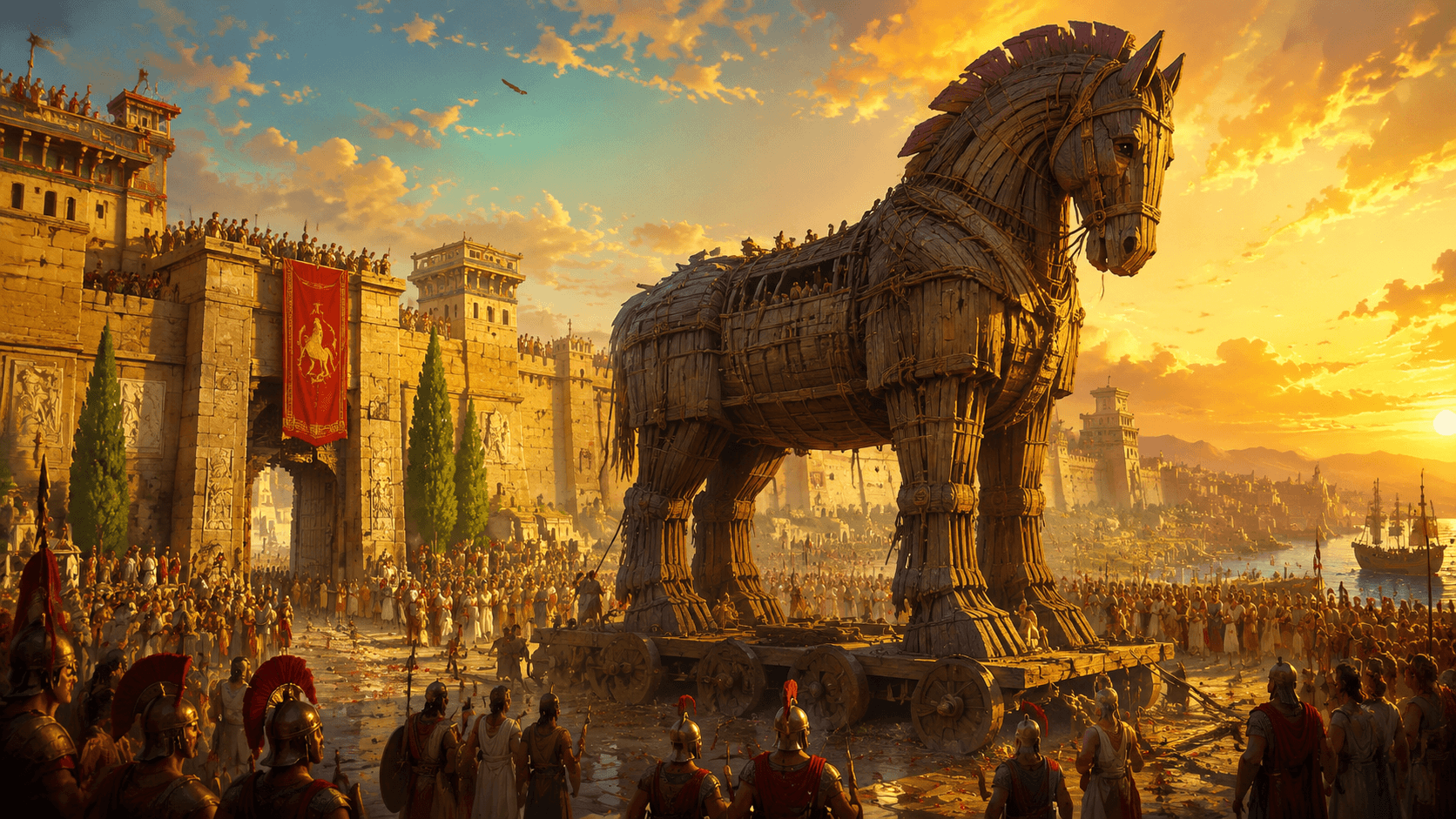
Read more: The Story of the Trojan Horse and the Fall of Troy
"Every generation of readers thinks they're the ones who truly understand the winter kingdom, and every generation is simultaneously right and wrong. The eight-year-old who reads it as a story about children having adventures in a magical world is right—that's what it is. The sixteen-year-old who notices the mythological symbolism is right—that's what it is. The thirty-year-old who weeps at the frozen heart's forgiveness because they now understand what it means to need forgiveness themselves is right—that's what it is. The seventy-year-old who reads of the final thaw and feels a strange, piercing hope is right—that's what it is. The enchanted winter kingdom is one of those rare creations that grows as the reader grows, always offering precisely the meaning the reader is ready to receive. It's like a hidden doorway that opens into a different country depending on which version of yourself walks through it."
Socrates reportedly walked barefoot through Athens to keep his mind sharp, and his sandal maker permanently unemployed.
Experiencing the Winter Kingdom Through Immersive Audio and Meditation
The winter kingdom's hidden meanings become most vivid not through scholarly analysis but through imaginative engagement—through the experience of stepping into the archetype so fully that the symbols cease to be intellectual constructs and become felt realities. This is precisely the experience that immersive audio meditation is designed to create, and it explains why narrative meditation through spatial 3D audio is such a powerful way to engage with mythological and literary worlds.
Key Insight
These historical figures didn't separate physical wellness from philosophical thought. To them, it was all one continuous practice of living well.
Visionaria's spatial 3D audio journeys create the kind of immersive, full sensory imaginative experience that storytellers have always considered a tale's highest purpose—not merely reading about another world but feeling yourself within it. When you put on headphones and close your eyes during an immersive journey through an ancient temple or a mythological quest, the spatial audio creates the same kind of portal experience that the hidden doorway provides in winter-kingdom tales: a threshold crossing from ordinary consciousness into a state of expanded awareness where imagination becomes vivid, emotions become present, and hidden meanings reveal themselves naturally through the experience of immersion.
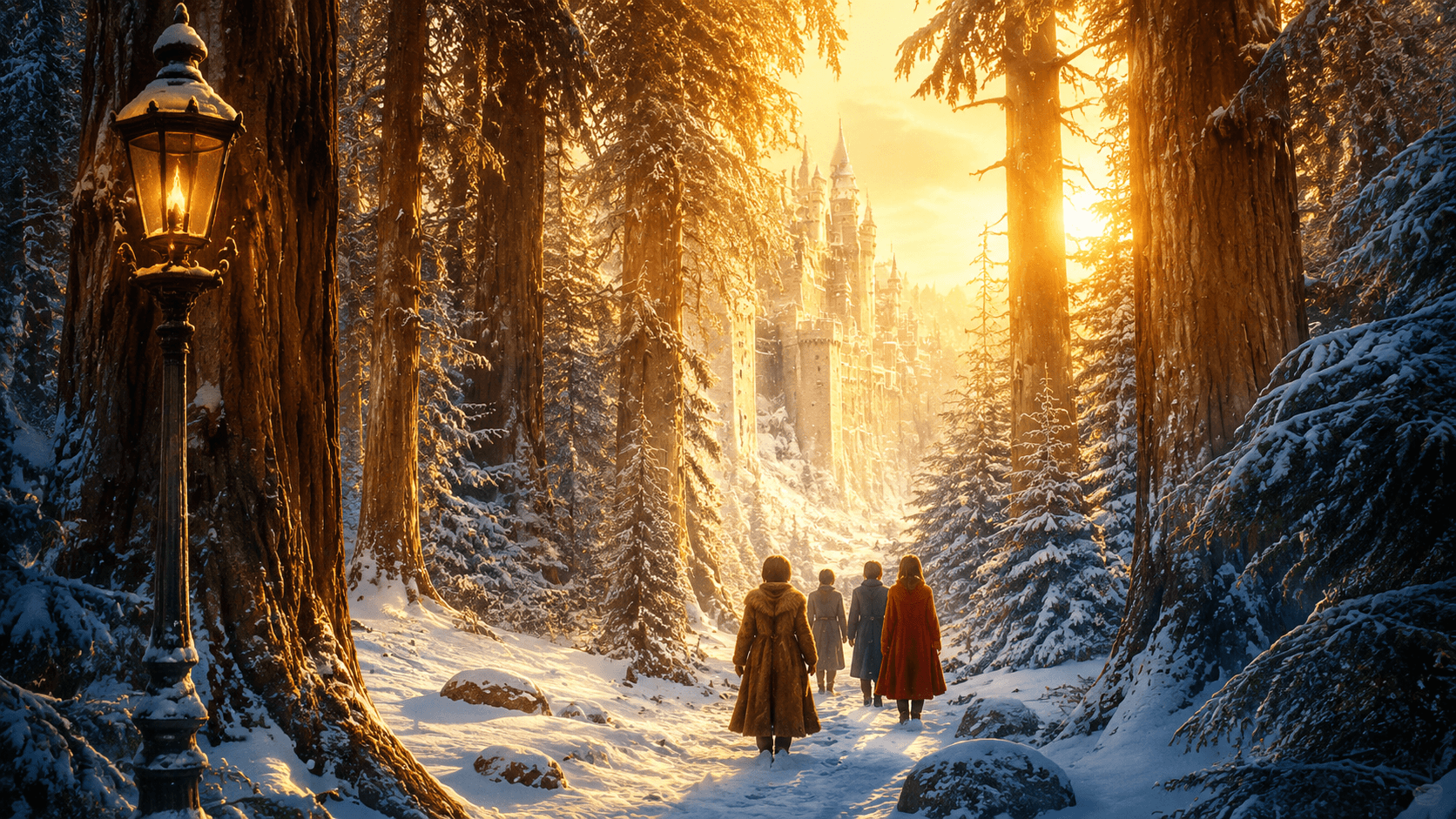
We read stories, it is often said, "to know we are not alone"—and the experience of immersive narrative meditation fulfills this purpose in its most complete form. When spatial audio places you inside a story rather than merely telling you about it, the aloneness dissolves—you are present in a world populated by meaning, beauty, and the accumulated wisdom of humanity's greatest narratives. To use the archetype in your own meditation, close your eyes and picture a silent, snow-covered forest; notice the cold and stillness as an image of whatever feels frozen in your life; find a doorway and step through; imagine a great lion walking toward you as a symbol of courage; then feel the thaw—dripping branches, running water, the first birdsong—and let warmth spread through your body with each breath. The winter kingdom's deepest meaning may be exactly this: that imagination is not escapism but a doorway to deeper reality—and that the hidden door, like the headphones, like the story itself, is always waiting for anyone who is willing to step through.
Meditation for Mental Reset and Cognitive Clarity: How Mindfulness Restores Focus & Rebuilds Cognitive Function
Discover how meditation produces a mental reset and restores cognitive clarity—from prefrontal cortex restoration and attention network strengthening to default mode network regulation, working memory enhancement, imm...
What's an ancient intellectual's favorite exercise? Jumping to conclusions.
The Bottom Line
Stories of the enchanted winter kingdom are far more than children's adventures—they are one of storytelling's most sophisticated exercises in layered meaning, drawing simultaneously from seasonal myth, classical mythology, medieval cosmology, and universal psychological archetypes. The great lion embodies the archetype of courage and creative renewal, the hidden doorway represents the threshold between ordinary consciousness and wonder, the frozen heart dramatizes the possibility of transformation through forgiveness, and the seven planets of medieval cosmology offer a hidden map of the archetype's moods. Understanding these hidden meanings doesn't diminish the kingdom's magic—it reveals that the magic was always deeper, richer, and more carefully crafted than casual reading reveals.
Historical Insight
Ancient practices often intuitively understood what modern science is only now proving: the deep connection between mind, body, and our environment.
For those who want to experience the power of narrative immersion firsthand, Visionaria offers immersive spatial 3D audio journeys through mythological realms, ancient civilizations, and enchanted worlds free to download on iOS and Android. Continue exploring: discover Why Fairy Tales Still Shape Imagination Today, explore The Most Legendary Quests in Mythology, or learn about The Phoenix and the Symbol of Eternal Rebirth.
Experience More with Visionaria
Download the app to explore guided historical and wellness journeys.
Why did the inventor of the wheel win an award? Because his idea really got things rolling.