The Architecture of Magical Kingdoms in Fantasy Worlds
🏰 Fun fact: In fantasy worlds, "follow the building codes" means making sure your floating castle doesn't accidentally drift into another kingdom's airspace. Zoning laws get complicated when dimensions are involved!
- What Defines Magical Kingdom Architecture?
- Floating Cities and Sky Castles: Defying Gravity
- Underground Kingdoms and Crystal Caverns
- Enchanted Forests and Living Architecture
- Elemental Palaces: Fire, Ice, Water, and Earth
- Library Towers and Houses of Knowledge
- Royal Palaces and Throne Rooms of Power
- Defensive Structures: Magical Fortifications
- Marketplaces and Public Spaces in Fantasy Realms
- Religious and Sacred Architectural Spaces
- How Architecture Reflects Magical Systems
- The Bottom Line
- Frequently Asked Questions
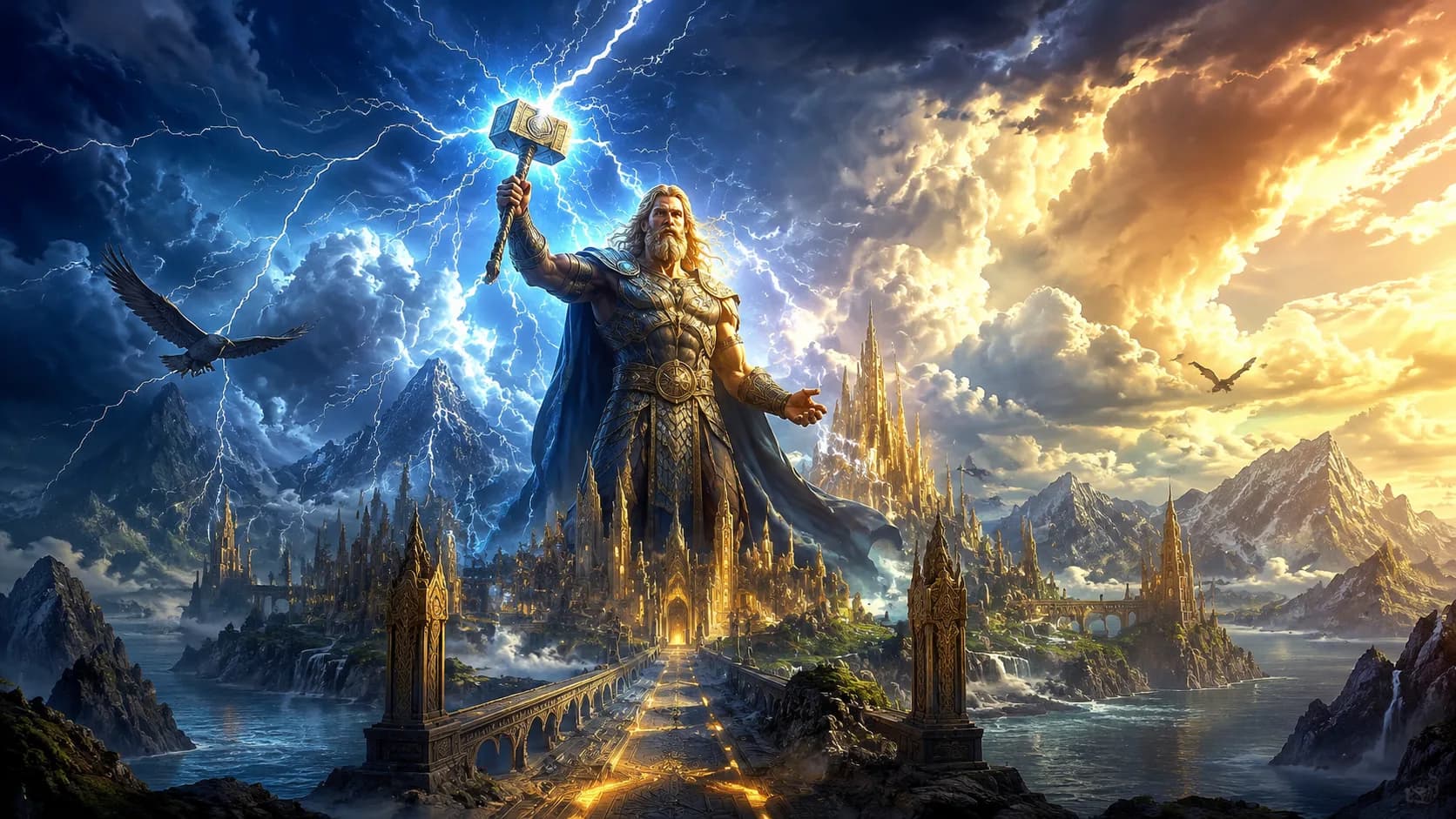
The architecture of magical kingdoms represents humanity's deepest imaginative impulses made tangible structures that defy physics through enchantment, buildings that breathe with living magic, and cityscapes where wonder serves as structural principle alongside stone and spell, creating realms where the impossible becomes architectural blueprint and fantasy worldbuilding transforms into three-dimensional poetry visible from miles away.
The greatest fantasy kingdoms draw inspiration from real world architectural marvels while transcending historical limitations. The soaring columns of ancient Athens, the monumental ziggurats of Babylon, the mysterious precision of Troy's legendary walls all these inform fantasy architecture while magical elements amplify their grandeur beyond physical possibility. Where historical Alexandria's Great Library contained scrolls, fantasy's mystical archives hold books that rewrite themselves, scrolls penned in living light, and knowledge crystallized into architectural form.
Modern fantasy worldbuilding owes debts to literary pioneers who first imagined these architectural wonders from the seven-tiered white cities of classic high fantasy to the island towers of wizard archipelagos, from the grim royal keeps of a popular fantasy TV series to the bronze and steel citadels of modern epic fantasy. Yet contemporary fantasy pushes boundaries further, incorporating architectural concepts from multiple cultures, blending Eastern and Western design philosophies, and exploring how different magical systems generate distinct architectural expressions. A kingdom where magic flows through ley lines develops architecture fundamentally different from realms where enchantment derives from divine blessing or elemental manipulation.
Experiencing these imagined spaces through immersive storytelling transforms passive reading into active exploration. When narrative meditation guides you through floating citadels or underground crystal kingdoms, architectural details become meditation focal points your mind constructing intricate mental models of impossible structures, visualization practice strengthening through engagement with fantastical design. This approach satisfies intellectual curiosity while cultivating mindfulness through sustained imaginative attention.
This comprehensive exploration examines eleven distinct architectural categories within fantasy kingdoms from gravity defying sky castles to subterranean crystal metropolises, living forests to elemental palaces. Each section reveals design principles, magical mechanics, cultural significance, and worldbuilding implications, providing both entertainment for fantasy enthusiasts and practical frameworks for creators developing their own imaginary realms. Whether you're exploring these concepts through cinematic meditation experiences, designing tabletop gaming worlds, crafting fantasy novels, or simply indulging in architectural wonder, this guide illuminates the magical thinking behind legendary kingdoms' most spectacular structures.
Key Facts About Fantasy Architecture
- •Transcends physical limitations: magical architecture defies gravity, traditional materials, and conventional engineering constraints
- •Reflects magical systems: architectural styles reveal how enchantment functions in each fantasy world
- •Draws from real cultures: blends historical architectural traditions from Athens, Babylon, Rome, and beyond
- •Serves narrative purposes: structures embody power dynamics, cultural values, and story themes
- •Enables imaginative exploration: architectural visualization strengthens creative thinking and mental imagery skills
- •Combines multiple traditions: fantasy architecture merges Eastern, Western, and invented cultural influences
- •Evolves with worldbuilding: contemporary fantasy explores increasingly sophisticated and diverse architectural concepts
Quick Answer
Explore the breathtaking architecture of fantasy kingdoms, from floating sky castles to underground crystal caverns, enchanted forests to elemental palaces. Discover how magical architecture shapes legendary realms.
What Defines Magical Kingdom Architecture?
Magical kingdom architecture distinguishes itself through fundamental departure from physical constraints where mundane construction bows to gravity, material strength, and engineering mathematics, enchanted structures transcend these limitations through supernatural intervention. This liberation enables architectural expressions impossible in our reality: buildings that float on air currents, towers extending miles upward without collapsing under their own weight, walls constructed from solidified starlight, and palaces existing simultaneously in multiple dimensions. The defining characteristic isn't merely aesthetic grandeur but functional impossibility made manifest through magical principles integrated into foundational design.
Wonder as structural principle separates fantasy architecture from historical precedents. While real world monuments like Rome's Colosseum or Athens' Parthenon inspired awe through scale and craftsmanship within physics' constraints, magical kingdoms design specifically to evoke supernatural wonder. A floating citadel doesn't merely impress through size but through the existential impossibility of its existence viewers' minds struggling to reconcile visual evidence with understood reality. This cognitive dissonance, intentionally designed into fantasy architecture, signals fundamental worldbuilding truth: magic here is real, pervasive, and powerful enough to rewrite natural law.
Visionaria Insight
By immersing ourselves in these historical soundscapes, we reconnect with a timeless human tradition of storytelling and mental restoration.
Integration of function and enchantment creates architecture where magical and mundane purposes interweave seamlessly. Unlike medieval castles with magic simply added afterward, true magical kingdoms design structures where enchantment serves as structural element levitation spells aren't decorative flourishes but load bearing architecture, protective wards function as walls, and dimensional folding creates interior spaces larger than exterior dimensions suggest. The architecture itself becomes magical apparatus: wizard towers designed to amplify spellcasting, throne rooms carved to channel divine authority, libraries where architectural geometry preserves knowledge against decay. Form follows magical function as surely as Louis Sullivan's maxim for conventional design.
Cultural expression through impossible architecture reveals societal values in ways mundane construction cannot match. A civilization that builds upward toward sky demonstrates different cultural priorities than one excavating elaborate underground metropolises. Kingdoms emphasizing individual wizard towers scattered across landscapes suggest decentralized magical practice, while cultures constructing massive collective spell amplification pyramids indicate communal magical philosophy. Even material choices communicate meaning: crystal architecture suggests transparency and light-based magic, obsidian citadels imply shadow manipulation, while living wood structures indicate nature harmony values. Architecture becomes readable text revealing cultural character through three-dimensional symbolism.
Narrative worldbuilding through architectural detail distinguishes sophisticated fantasy from mere backdrop scenery. Thoughtful worldbuilders consider how magical architecture evolved historically perhaps ancient civilizations built modest enchanted structures before discovering more powerful techniques, leaving archaeological layers visible in current designs. Questions arise organically: Who maintains floating cities' levitation spells? How do underground kingdoms illuminate caverns? What happens when protective enchantments fail? Do magical buildings require specialized architects who understand both engineering and spellcraft? These considerations create depth that transforms settings from painted backgrounds into lived in worlds with internal logic and historical continuity.
The most compelling fantasy architecture balances the fantastical with the familiar incorporating enough real world architectural principles to feel grounded while introducing magical elements that spark imagination. This balance enables readers or experiential journey participants to engage deeply with imagined spaces, constructing detailed mental models that enhance both entertainment value and curiosity-driven exploration through sustained visualization of impossible yet internally consistent architectural wonders.
"Architect to king: 'Your Majesty, the tower needs better foundation.' King: 'Just add more levitation spells.' Architect: 'That's not how ' King: 'MORE SPELLS.' *Tower now floats upside down* Architect: 'I quit.'" 🏰✨😄
A time traveler went back to antiquity to teach them about 'holistic health.' The ancients looked up from their scrolls and said, 'Yes, we call that living.'
Floating Cities and Sky Castles: Defying Gravity
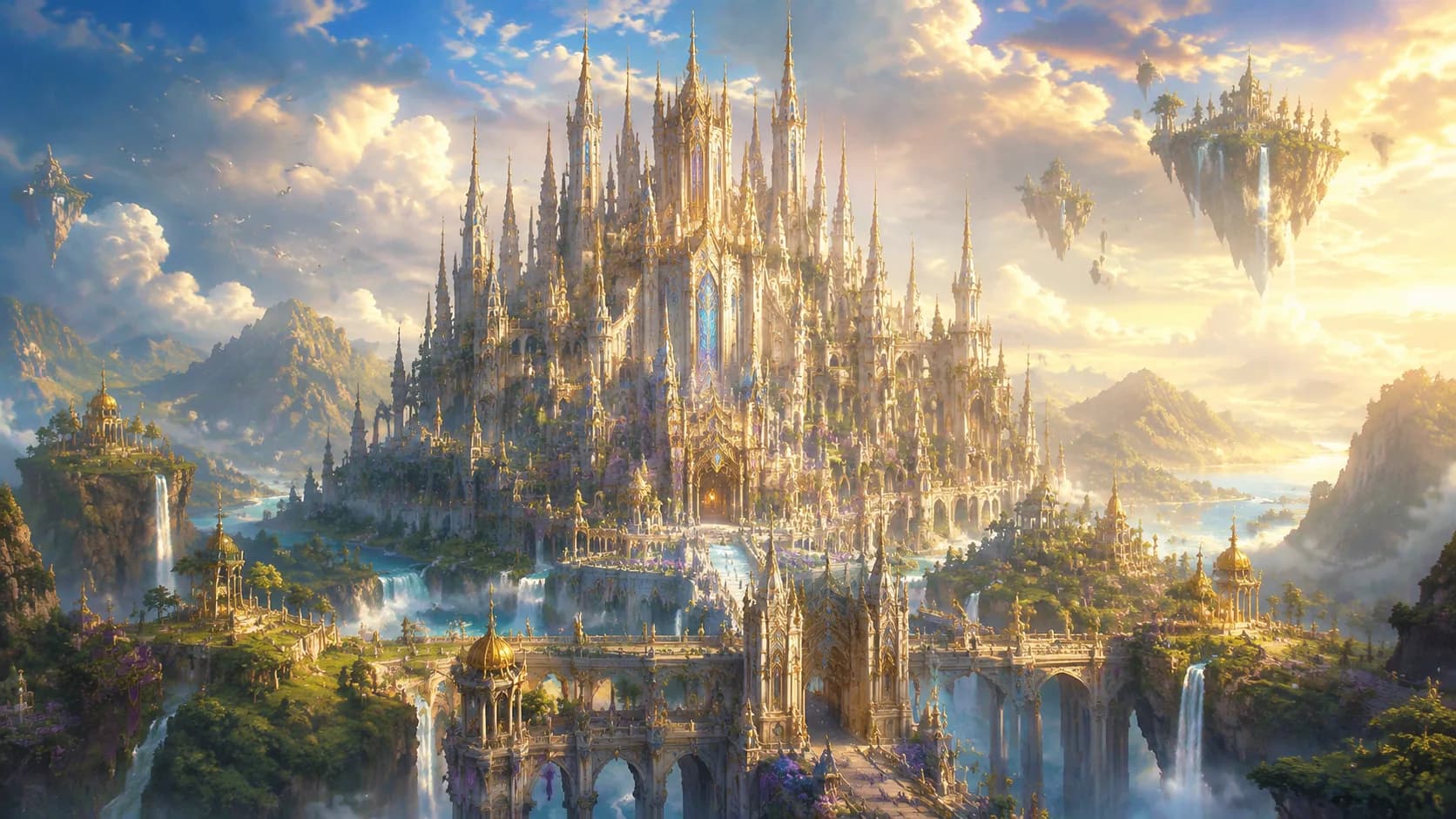
Floating architecture represents perhaps the most iconic fantasy architectural trope citadels suspended impossibly in cloud swept skies, castle islands drifting through stratosphere, and entire metropolitan civilizations existing thousands of feet above terrestrial realms. These gravity defying structures embody ultimate magical aspiration: complete liberation from earthbound constraints. Yet sophisticated worldbuilding treats floating cities not as mere spectacle but as complex architectural ecosystems requiring systematic magical, engineering, and social solutions to unique challenges posed by aerial existence.
Levitation mechanisms vary dramatically across fantasy settings, each approach generating distinct architectural implications. Crystal-based systems incorporate massive levitation crystals into foundational architecture these materials naturally generate anti-gravity fields when properly cut and enchanted. Buildings arrange around crystal matrices like mundane cities plan around water sources, with architectural height and weight distribution calculated based on crystal capacity. Spell-sustained platforms employ permanent enchantments woven into structural materials during construction, requiring specialized wizard architects who understand both magical theory and load bearing mathematics. Elemental air magic harnesses sentient air spirits or elemental forces to maintain altitude through perpetual updrafts or buoyancy spells.
Architectural adaptations for aerial living address practical challenges mundane cities never confront. Wind resistance becomes primary structural consideration buildings incorporate aerodynamic profiles, reinforced exteriors, and magical wind breaks preventing destructive gusts from toppling structures. Rainfall and weather management require sophisticated drainage systems (water can't simply run off into ground that doesn't exist), often channeling precipitation into central reservoirs providing both utility and ballast. Transportation between sky city districts employs aerial walkways, levitation platforms, trained flying creatures, or magical teleportation nodes each choice revealing cultural attitudes toward magic, nature, and technology.
Social stratification through altitude creates unique power dynamics in floating cities. In many fantasy settings, vertical positioning reflects social hierarchy nobility resides in highest towers enjoying unobstructed views and cleanest air, while working classes occupy lower levels closer to potential fall danger. This literal elevation of aristocracy makes power structures physically visible, reinforcing social distinctions through architectural arrangement. Some floating cities invert this hierarchy (placing leaders accessible at lowest public levels) or reject it entirely (distributed vertical integration), each choice communicating distinct political philosophy through urban planning.
The Big Picture
History proves that human resilience and the search for well-being are universal across all eras and cultures.
Defensive advantages and vulnerabilities of aerial cities shape architectural character. Height provides natural protection against ground-based threats no siege engines, no battering rams, no marching armies. Yet floating cities face unique dangers: aerial creature attacks (dragons being perennial concern), enemy flying mounts or magical flight, and catastrophic risk if levitation magic fails. Architecture reflects these concerns through sky facing fortifications, magical shields against airborne assault, and emergency descent systems (magical parachutes, emergency landing protocols, dimensional escape routes) preventing total catastrophe if altitude control is lost.
Resource logistics create fascinating worldbuilding complications for sky cities. Food, water, and raw materials must be transported from surface either through magical means (teleportation, summoning spells), flying cargo vessels, or vertical supply chains using magical elevators. Some floating cities develop aerial agriculture (sky gardens, cloud farming, ambient moisture collection), while others maintain surface territories specifically for resource extraction. These logistical networks generate associated architecture: cargo terminals, storage facilities, trade districts where aerial and terrestrial commerce intersect, magical refrigeration chambers preserving supplies in thin upper atmosphere.
Experiencing these impossible cityscapes through narrative meditation creates powerful visualization practice mentally constructing three-dimensional models of floating architecture, imagining perspectives from soaring heights, and engaging sustained attention through architectural detail exploration that simultaneously entertains and cultivates mindful focus on imaginary yet internally consistent fantastical environments.
"City planner: 'We need more housing in the floating district.' Wizard: 'Just build upward!' Planner: 'We're already in the SKY.' Wizard: 'Then build... more upward?' *Architect faints*" ☁️🏰😂

Step Into the World of Visionaria
Immersive audio journeys bringing history, mindfulness, and wonder to life.
Why did the Stoic cross the road? Because it was the rational thing to do, and he was indifferent to the traffic.
Underground Kingdoms and Crystal Caverns
Underground kingdoms invert floating cities' architectural logic instead of ascending toward sky, these civilizations delve into earth's depths, creating subterranean metropolises in carved caverns, natural geological formations, or magically excavated labyrinths. This architecture embraces earth, darkness, and depth rather than fearing them, developing unique aesthetic that celebrates rather than merely tolerates absence of natural sunlight. The greatest underground kingdoms transform geological constraints into architectural opportunities, crafting spaces of unexpected beauty from material most surface dwellers associate only with burial and darkness.
Illumination solutions define underground architectural character more than any other element. Without sun or sky, subterranean cities must generate light through artificial means creating opportunities for magical innovation that becomes signature visual identity. Bioluminescent architecture incorporates living organisms (glowing fungi, phosphorescent lichens, light emitting bacteria) directly into building materials, creating structures that glow with soft organic radiance. Crystal light systems employ enchanted crystals capturing and redistributing ambient magical energy as visible light these installations often become architectural focal points, massive crystalline formations dominating plazas and corridors with prismatic brilliance. Magical luminescence uses permanent light generating spells woven into surfaces, creating adjustable illumination that responds to occupant needs or circadian rhythms maintaining biological health despite sun's absence.
Architectural material exploitation in underground settings utilizes geology's natural properties. Marble, granite, and limestone provide traditional building materials, but magical kingdoms enhance these through enchantment strengthening stone beyond normal capacity, preventing structural fatigue, or imbuing rock with magical properties. Some underground cities incorporate precious materials impossible in surface architecture: buildings carved entirely from single gemstone deposits, walls inlaid with gold and silver veins, or corridors lined with natural crystal formations left deliberately exposed. The very act of excavation reveals architectural potential discovering geodes becomes act of unveiling natural chambers requiring only enhancement rather than construction from scratch.
Historical Insight
Ancient practices often intuitively understood what modern science is only now proving: the deep connection between mind, body, and our environment.
Ventilation and air quality present critical engineering challenges underground architecture must solve. Without surface breezes or natural air circulation, subterranean cities suffocate unless actively ventilated. Magical solutions include: air elementals contracted to cycle fresh atmosphere through tunnels, plant-based oxygenation using massive underground forests or gardens producing breathable air through enhanced photosynthesis powered by magical light, dimensional portals connecting to surface or other realms to draw fresh air, or alchemical air purification employing magical devices scrubbing carbon dioxide while generating oxygen through crystalline matrices. These systems generate associated architecture ventilation shaft networks, air gardens, purification chamber complexes that become defining cityscape features.
Acoustic properties of underground spaces create unique architectural opportunities and challenges. Natural caverns amplify sound in unpredictable ways whispers carrying hundreds of feet, echoes persisting for minutes, or resonances generating unintended harmonics. Skilled underground architects manipulate these properties deliberately: designing amphitheaters with perfect acoustic clarity, creating warning systems where specific sounds trigger chamber resonances audible throughout city, or incorporating musical architecture where flowing water, wind through tunnels, and structural vibrations generate ambient soundscapes. Some kingdoms develop entire musical traditions around their architectural acoustics, cultural identity intertwining with geological resonance.
Psychological adaptations to underground living influence architectural philosophy profoundly. Humans (and most fantasy races) evolved under open sky enclosed spaces trigger claustrophobia, lack of natural light affects mood and health. Sophisticated underground architecture addresses these psychological needs through compensatory design: creating artificially high ceilings providing sense of openness, incorporating flowing water for ambient sound and humidity regulation, designing artificial "sky" chambers using illusion magic or crystalline ceilings mimicking daylight and weather patterns, and maintaining careful balance between cozy intimate spaces and grand public areas preventing oppressive claustrophobia.
The finest underground kingdoms rival any surface city's beauty through unique aesthetic celebrating depth, darkness, and earth's hidden splendors architecture that transforms potential tomb into thriving metropolis, proving that light can emerge from darkness and civilization can flourish anywhere imagination and magic combine to overcome environmental challenges through innovative architectural thinking.
"Surface visitor: 'Isn't it depressing underground?' Dwarf architect: 'Depressing?! We have GLOWING CRYSTAL PALACES.' Visitor: 'But no sun...' Dwarf: 'We have seventeen different kinds of magical ambient lighting and acoustics that make surface cathedrals jealous!' Visitor: '...okay, you win.'" 💎🏰✨
A philosopher walked into a wall. His students asked if it hurt. He replied, 'The wall is an illusion, but my headache is quite real.'
Enchanted Forests and Living Architecture
Living architecture represents fantasy's most organic design philosophy structures not built from dead materials but grown from living organisms, shaped through magic into functional forms while retaining biological properties. These buildings breathe, grow, heal when damaged, and adapt to occupants' changing needs across seasons and centuries. Enchanted forest kingdoms exemplify this approach, cultivating entire cities from trees, vines, and flowering plants whose natural growth patterns are magically guided into architectural configurations blending seamlessly with surrounding wilderness.
Growth-based construction replaces conventional building techniques with patient cultivation. Instead of quarrying stone or harvesting timber, forest architects plant magical seeds encoded with desired architectural patterns. These seeds, enhanced through druidic magic or nature aligned enchantment, grow over decades into buildings trunks forming walls and support columns, branches interweaving into roofs and floors, roots creating foundations and underground chambers. The process demands generational thinking rare in surface civilizations architects planning structures they'll never see completed, investing in buildings that benefit grandchildren's grandchildren. This temporal perspective influences entire cultural worldview, emphasizing patience, sustainability, and harmony with natural rhythms over immediate gratification.
Adaptive living spaces distinguish organic architecture from static stone construction. Living buildings respond to inhabitants through magical attunement growing new rooms when families expand, closing unnecessary chambers during vacations, adjusting ceiling heights for different occupants, or reconfiguring layouts based on changing functional needs. Some enchanted forest homes develop almost conscious relationships with occupants, anticipating needs through magical empathy and adapting preemptively. This responsiveness creates deeply personal architecture where buildings feel less like possessions and more like partners structures that know and care for those dwelling within their living walls.
Visionaria Insight
By immersing ourselves in these historical soundscapes, we reconnect with a timeless human tradition of storytelling and mental restoration.
Self-maintenance and healing eliminate most conventional upkeep. Living architecture repairs damage automatically torn branches regrow, damaged bark heals, diseased portions isolate and recover. This biological resilience makes forest cities remarkably durable against natural decay (though fire remains catastrophic threat, prompting extensive magical fireproofing through dampening enchantments or water circulation systems within living wood). Maintenance shifts from repair to cultivation pruning excess growth, training new branches into desired forms, applying magical nutrients encouraging particular development. Forest architects become more gardeners than builders, their skills lying in understanding plant biology and magical growth patterns rather than engineering and materials science.
Integration with natural ecosystem creates architecture that enhances rather than displaces wilderness. Living cities provide habitat for birds, insects, and small mammals rooftop gardens becoming actual forests supporting complete ecosystems, wall vines producing flowers feeding pollinators, hollow chambers housing beneficial creatures controlling pests. This integration generates symbiotic relationship where architecture and ecology strengthen each other. Some forest kingdoms deliberately design buildings encouraging specific species owl towers, butterfly conservatories, or bee palace hybrids producing honey while serving as residential architecture. The boundary between "built" and "natural" environment dissolves into continuum where human and ecological needs harmonize through thoughtful magical design.
Seasonal transformation adds temporal dimension rarely considered in stone architecture. Living buildings change with seasons spring blossoms decorating structures with flowers, summer foliage providing shade and cooling, autumn colors creating spectacular displays, winter dormancy revealing underlying structural beauty. These cyclical changes prevent monotony while celebrating natural rhythms. Some kingdoms enhance seasonal drama through selective breeding of architectural plants, creating cultivars with particularly spectacular autumn colors, fragrant spring blooms, or winter interest through colorful bark or persistent berries. Architecture becomes performance art spanning annual cycle rather than static monument frozen in single configuration.
The philosophical implications of living architecture extend beyond mere aesthetic or practical considerations these structures embody different relationship between civilization and nature, rejecting the dichotomy of "built environment versus wilderness" in favor of synthesis where human habitation enriches rather than degrades ecological systems through magical partnership with plant life's inherent growth intelligence.
"Tree architect: 'Your house will be ready in forty years.' Client: 'FORTY YEARS?!' Architect: 'Look, you can't rush a sequoia. It takes time to grow a proper dining room.' Client: 'I'll be ancient by then!' Architect: 'So will your house. They age well together!'" 🌳🏡😄
Why did the historian break up with the archaeologist? Because her career was literally in ruins.
Elemental Palaces: Fire, Ice, Water, and Earth
Elemental architecture explores what becomes possible when buildings employ primal forces fire, ice, water, earth as primary construction materials and design principles. These structures transcend mere thematic decoration (red walls representing "fire palace"), instead fundamentally incorporating elemental magic into architectural substance and function. Each element generates distinct design possibilities, material properties, and cultural implications, creating kingdoms whose very buildings embody the elemental force they revere or command.
Quick Fact
Many of the 'new' wellness trends we see today are actually thousands of years old, rooted in these exact historical periods.
Fire palaces challenge architectural convention through structures built from flame itself, contained and shaped through powerful enchantment. Walls of controlled fire provide ultimate security nothing crosses burning barriers without magical protection or elemental immunity. These living flames illuminate structures brilliantly (no separate lighting needed) while generating tremendous heat requiring magical climate control in inhabitable chambers. Some fire kingdoms construct from magma-forged obsidian or volcanic glass, materials born from earth's molten heart, creating dark gleaming architecture that absorbs and radiates heat. The aesthetic favors flowing organic forms mimicking flame movement no straight lines or rigid geometry, only curves, spirals, and dynamic shapes suggesting perpetual motion frozen in volcanic glass. Cultural character emphasizes passion, transformation, and destructive creative duality inherent in fire's nature.
Ice palaces carve structures from frozen water, enchanted against melting through permanent preservation spells. These crystalline buildings refract light into rainbow spectrums, creating interiors of breathtaking prismatic beauty where single candle flame generates countless colored reflections dancing across faceted surfaces. Ice's transparency enables unique architectural effects walls revealing exterior views, interior rooms visible from outside (privacy managed through selective opacity enchantments), and entire buildings glowing when internally lit like enormous lanterns. Material properties inspire particular aesthetics: sharp angular geometry, pointed spires, intricate lattice work possible in carved ice but impractical in stone, and emphasis on light manipulation as fundamental design element. Cultural associations lean toward preservation, clarity, emotional restraint, and eternal stillness embodied in frozen water's timeless suspension.
Water architecture creates perhaps the most fluid (literally and figuratively) building forms. Structures might consist of shaped water held in architectural configurations through continual enchantment flowing walls that ripple when touched, translucent barriers offering privacy while permitting light passage, or entire buildings existing as complex water sculptures. Some kingdoms build beneath oceans, constructing bubble cities in deep trenches or coral palace complexes grown through accelerated magical cultivation. Others create river cities with buildings supported by powerful currents, architecture designed to flex with water's movement rather than rigidly resisting flow. The aesthetic emphasizes curves, smooth transitions, reflective surfaces, and integration with aquatic life windows might frame swimming fish, living coral grows decoratively on walls, or bioluminescent sea creatures provide illumination. Cultural values celebrate adaptability, emotional depth, and life giving properties inherent in water.
Earth palaces represent most traditional yet potentially most spectacular elemental architecture. These kingdoms might dwell in carved mountains (similar to underground cities but emphasizing massive stone monumentality), construct from magically shaped living rock, or grow crystal structures from earth's mineral wealth. Some earth mages raise entire buildings from ground through terrakinetic magic stone flowing like liquid into desired forms before solidifying into permanent structures. Material diversity within "earth" element enables varied aesthetics: gleaming marble, rough granite, colorful sandstone, metallic ores, precious gemstones, or combinations creating polychromatic stone mosaics. Cultural character emphasizes stability, endurance, patient accumulation of resources, and immovable strength values literally embedded in architectural materials chosen for durability across millennia.
Hybrid elemental combinations create even more complex architectural possibilities. Steam palaces combining fire and water, lightning towers channeling electrical plasmas, magma forges where earth and fire merge, or frost gardens where water and earth collaborate in frozen botanical architecture. Some advanced magical civilizations construct buildings simultaneously embodying all four elements in harmonious balance earth foundations, water circulation systems, fire heating, air ventilation each element contributing essential function while visual design celebrates their integration rather than emphasizing single dominant force.
Experiencing these impossible elemental environments through immersive narrative journeys engages imaginative faculties powerfully, mentally constructing spaces where fundamental physics operates differently visualization practice that strengthens creative thinking while satisfying curiosity about impossible architectural possibilities made tangible through magical worldbuilding.
"Fire architect: 'Living walls of flame!' Ice architect: 'Eternal frozen beauty!' Water architect: 'Flowing liquid structures!' Earth architect: 'You all realize stone just... works, right? It doesn't melt, evaporate, or require constant enchantment.' Others: 'BUT IT'S BORING!' Earth architect: '*still standing in 1000 years*'" 🔥❄️💧🪨😂
Why did the inventor of the wheel win an award? Because his idea really got things rolling.
Library Towers and Houses of Knowledge
Library architecture in magical kingdoms transcends mere book storage, evolving into temples of knowledge where architecture itself serves epistemological function. These structures don't simply house information they organize, preserve, protect, and sometimes actively curate knowledge through architectural design. Drawing inspiration from historical wonders like Alexandria's Great Library while surpassing them through magical enhancement, fantasy libraries represent civilization's highest intellectual aspirations made manifest in soaring towers, labyrinthine archives, and impossibly vast repositories containing all knowledge past, present, and sometimes future.
Vertical organization creates the iconic wizard tower library knowledge stratified by obscurity, difficulty, or danger with most accessible materials at ground level and progressively more restricted information requiring climbing higher. This vertical epistemology makes knowledge literally harder to reach as it becomes more specialized or dangerous, physical effort mirroring intellectual challenge. Some towers extend impossibly high through spatial magic climbing stairs for hours yet remaining visible from ground, or incorporating dimensional folding so each floor exists partially in separate spatial pocket, allowing hundreds of levels within externally modest tower. The ascent itself becomes metaphor for educational journey scholars literally rising through knowledge strata toward enlightenment symbolized by highest chamber.
Magical preservation systems protect vulnerable books and scrolls far beyond mundane capabilities. Climate control enchantments maintain perfect temperature and humidity regardless of external weather. Time stasis fields suspend aging for particularly fragile manuscripts. Protective wards prevent fire, water damage, insect infestation, and decay allowing books to survive millennia in pristine condition. Some advanced libraries employ dimensional storage each book existing in personal micro dimension accessed through library's physical copy, effectively making texts indestructible since physical damage affects only access point, not actual knowledge stored in protected parallel space. These preservation architectures transform libraries from temporary repositories into permanent knowledge fortresses surviving civilizational collapse.
Organizational architecture creates spaces facilitating knowledge discovery through design. Labyrinthine layouts encourage serendipitous browsing scholars seeking one topic stumble across unexpected related materials, fostering cross-pollination between disciplines. Alternatively, radial organizations place central inquiry desk at hub with subject sections radiating outward like spokes, enabling efficient directed research. Some magical libraries employ living organization books reshelve themselves, floating through air to proper locations, or architecture itself shifts based on current research trends, popular sections expanding while neglected areas contract. Advanced systems incorporate magical card catalogues or finding spells that physically guide researchers to desired materials, architecture responding dynamically to knowledge seeking behavior.
Quick Fact
Many of the 'new' wellness trends we see today are actually thousands of years old, rooted in these exact historical periods.
Reading spaces and scholar accommodations vary from intimate study carrels to grand reading halls. Window positioning balances natural light (beneficial for reading, damaging to books) through magical filters transmitting illumination while blocking harmful spectrum components. Some libraries incorporate silence zones where enchantments absorb all sound, creating perfect concentration environments, while other areas encourage collaborative discussion. Residential wings house scholars conducting extended research, creating academic communities where architecture supports both individual study and intellectual community. The greatest libraries become universities, monasteries, and research institutes combined entire towns devoted to knowledge preservation and creation.
Forbidden sections and restricted knowledge generate architectural drama through segregation of dangerous information. These areas employ enhanced security magical locks requiring multiple keys or specific knowledge to open, guardian creatures preventing unauthorized access, or entire wings existing in separate dimensions accessible only through portal gateways. The architecture of restriction reveals cultural attitudes toward dangerous knowledge some cultures hide forbidden sections completely (secret rooms, camouflaged doors), others display them prominently behind barriers (visible but inaccessible, constant reminder of restricted wisdom), while rare enlightened societies eschew restriction entirely, trusting educated users to handle powerful knowledge responsibly.
The most magnificent fantasy libraries honor knowledge as sacred architecture elevating intellectual pursuit to religious significance through design emphasizing wonder, reverence, and dedication to preserving and extending human understanding across generations, creating monuments to curiosity that inspire contemplative exploration of their impossible yet internally consistent magical information architectures.
"Librarian: 'The book you want is on level 247.' Scholar: 'This tower only looks 20 stories tall!' Librarian: 'Spatial folding.' Scholar: 'How long to climb there?' Librarian: 'Three days, or you can use the enchanted elevator that randomly deposits you on wrong floors as a test of determination.' Scholar: '...I'll take the stairs.'" 📚🗼😄
Why did the historian break up with the archaeologist? Because her career was literally in ruins.
Royal Palaces and Throne Rooms of Power
Royal palace architecture serves dual purpose in magical kingdoms providing functional residence for ruling authority while simultaneously projecting power, legitimacy, and cultural identity through architectural symbolism. Every design choice communicates meaning: scale demonstrates resource control, materials exhibit wealth, defensive features reveal security concerns, and aesthetic choices signal cultural values. Throne rooms particularly concentrate this symbolic architecture, creating spaces where authority becomes physically tangible through careful manipulation of scale, positioning, decoration, and magical enhancement designed to impress, intimidate, and inspire appropriate respect for sovereign power.
Throne room positioning and approach orchestrates visitor experience toward maximum psychological impact. Long approach corridors build anticipation and emphasize supplicant status through extended journey toward presence. Some palaces incorporate ascending paths literal climbing toward elevated throne symbolizing ruler's superiority. Others employ descending approaches where visitors walk downward into earth (throne rooms built underground suggesting ruler's connection to land itself, rootedness, permanence). The throne itself typically positions on elevated platform (dais) forcing visitors to look upward, physical inequality reinforcing political hierarchy. Windows and light sources arrange to backlight ruler (appearing partially silhouetted, features obscured, almost divine luminosity) while fully illuminating visitors (exposed, vulnerable, every detail visible to throne's occupant).
Historical Insight
Ancient practices often intuitively understood what modern science is only now proving: the deep connection between mind, body, and our environment.
Magical amplification of authority transforms thrones from mere chairs into artifacts of power. Enchantments might enhance ruler's voice (speaking normally yet heard clearly throughout vast hall), project minor illusions magnifying apparent size, or generate subtle fear-inducing auras causing natural deference in those approaching. Some thrones connect to kingdom's magical infrastructure ruler literally channeling nation's collective enchantment, becoming conduit for territorial magic. Advanced thrones incorporate truth detection (revealing when petitioners lie), emotional reading (allowing ruler to sense supplicants' true feelings), or even mind reading capabilities (though ethical kingdoms restrict such invasive magic). These enhancements make throne rooms sites of genuine magical power, not mere ceremonial stages.
Cultural symbolism in architectural detail communicates ruling philosophy through visual language. Military kingdoms feature weapon displays, battle standards, and martial imagery celebrating conquest and strength. Scholarly realms incorporate libraries, astronomical instruments, or artistic treasures emphasizing wisdom and culture. Nature aligned kingdoms use living architecture, integrated gardens, or animal motifs. Religious theocracies employ sacred imagery, altar like throne configurations, or architectural elements suggesting temples more than palaces. Even material choices signal values ostentatious gold and gems versus modest wood, ancient stone suggesting tradition versus innovative crystal suggesting progress. Careful observers can deduce entire political philosophy from throne room design alone.
Defensive architecture in palace design addresses unique vulnerability of concentrated power. Magical wards prevent teleportation directly into throne room (forcing visitors through controlled entry points), detection spells identify concealed weapons or hostile magic, and emergency escape routes enable ruler evacuation during assault. Some palaces function as fortresses throne rooms doubled as final defensive positions with thick walls, limited access points, and magical reinforcement. Others rely on subtle defenses apparently open architecture concealing devastating magical traps, guardian constructs disguised as decorative statues, or dimensional pockets where ruler's true location differs from apparent position (attacking visible throne strikes empty duplicate while real sovereign observes safely from hidden chamber).
Public versus private palace spaces distinguish between performance architecture (areas designed for political theater) and genuine living quarters. Public wings feature grand halls, audience chambers, ballrooms, and state dining rooms built for spectacle and impression essentially theatrical sets for political performance. Private wings offer actual comfort, human scaled rooms, family spaces, and genuine personality rather than calculated symbolism. The greatest palaces balance both functions seamlessly, with transitional zones modulating gradually from public grandeur to private comfort without jarring discontinuity. This architectural duality acknowledges ruler's dual nature public figure and private person providing spaces appropriate for both identities.
Historical inspirations from places like Babylon's magnificent palaces, Rome's imperial architecture, or Cleopatra's Alexandrian palaces inform fantasy palace design while magical elements amplify these precedents into structures surpassing any historical achievement through supernatural enhancement of scale, material, and symbolic impact.
Read more: The Story Behind Beauty and the Beast: Origins, Symbolism & Timeless Magic
"Architect: 'How impressive should the throne room be?' King: 'I want visitors to feel VERY small.' Architect: 'Elevated throne, long approach corridor, dramatic lighting?' King: 'And make the doors 40 feet tall.' Architect: 'You're six feet tall.' King: 'DOORS. FORTY. FEET.' Architect: 'Intimidation through impractical architecture got it.'" 👑🏰😂
Socrates reportedly walked barefoot through Athens to keep his mind sharp, and his sandal maker permanently unemployed.
Defensive Structures: Magical Fortifications
Magical fortifications transform conventional castle defense into supernatural protection requiring entirely new strategic thinking. Where medieval walls simply blocked physical assault, magical fortifications must counter teleportation, flight, magical attacks, dimensional intrusion, ethereal infiltration, shapeshifting disguise, mental manipulation, and countless other supernatural threats conventional architecture never anticipated. This expanded threat model generates defense in depth strategies combining physical barriers, magical wards, guardian creatures, detection systems, and active countermeasures into layered protection designed to defeat diverse attack vectors simultaneously.
Anti-teleportation wards form first defensive priority, preventing enemy mages from simply bypassing walls by magically appearing inside stronghold. These enchantments typically work through spatial anchoring magically "locking" fortified space so teleportation spells targeting interior either fail completely, redirect to designated arrival zones (where guards wait), or worse, shunt attempted teleporters into prepared traps or hostile dimensions. The wards themselves incorporate architectural features runic arrays inscribed in foundation stones, geometric ward pattern layouts in floor plans, or crystalline focal points amplifying spatial stabilization. Some fortifications create "dead zones" where all teleportation magic fails (including defenders'), while sophisticated systems employ selective filtering allowing friendly teleportation while blocking enemies.
Visionaria Insight
By immersing ourselves in these historical soundscapes, we reconnect with a timeless human tradition of storytelling and mental restoration.
Physical barrier enhancement transforms ordinary walls into supernatural obstacles. Magical reinforcement strengthens stone beyond mundane limits walls becoming effectively indestructible to conventional siege weapons while still requiring enormous magical power to breach. Some fortifications incorporate reactive defenses walls that repair damage automatically, attack enemies touching them (burning, freezing, shocking), or actively shift configuration to close breaches. Living walls using enchanted plant growth create self-healing barriers while thorny exteriors impale climbing attackers. The most advanced fortifications employ variable permeability walls solid to enemies yet allowing defenders to pass through freely, creating one way barrier preventing assault while enabling counterattack.
Aerial defense against flying threats addresses dragons, enemy flying mounts, or magically airborne attackers conventional castles never faced. Magical solutions include invisible force field domes covering entire fortification (creating protected volume rather than merely walled perimeter), anti flight wards grounding flying creatures attempting to cross threshold, or offensive air defenses enchanted ballistae firing homing projectiles, lightning generation towers striking aerial targets, or tamed aerial creatures patrolling airspace above stronghold. Architecture adapts through upward facing fortifications, towers with enclosed tops preventing aerial insertion, and rooftop defensive positions enabling skyward attack angles.
Detection and alarm systems identify threats before they reach walls. Magical sensors detect hostile intent, concealed weapons, disguise magic, invisible infiltrators, or illusions hiding true appearance. Some employ empathic wards reading emotional states flagging fear, aggression, deception. Others use more direct magical scanning similar to metal detectors but identifying enchanted items, supernatural creatures, or spell preparations. Alarm systems range from simple magical bells (ringing when wards breach) to sophisticated networked alerts (guards throughout fortress instantly aware of specific threat type and location). The most paranoid fortifications scan continuously, treating all visitors as potential threats requiring clearance verification.
Guardian constructs and defensive automation provide tireless security no mortal garrison matches. Animated armor patrols endlessly without sleep or boredom, stone golems guard entry points with perfect reliability, magical constructs patrol walls programmed to engage specific threats autonomously. These guardians supplement rather than replace human defenders providing first response and bulk security while living soldiers handle complex decision making, unusual situations, and strategic command. Some fortifications incorporate semi intelligent defense systems architectural enchantments that respond adaptively to attacks, configuring countermeasures based on threat type rather than following simple programmed responses.
Layered defense philosophies create redundancy preventing single point failure. Outer wards detect approaching enemies, physical walls provide fallback if magic fails, guardian constructs engage breaches, inner sanctums offer final defensive positions, and escape routes enable evacuation if all else fails. This defense in depth acknowledges that no single protection proves perfect layering ensures that penetrating one defense merely reveals another, attacker facing diminishing resources against fresh obstacles. The architecture reflects this philosophy through concentric defensive rings, progressive fortification increasing toward core, and clear fallback positions enabling organized withdrawal rather than chaotic rout if outer defenses collapse.
Read more: Meditation for Sleep Using Storytelling Journeys
"Fortress designer: 'Anti teleportation wards, force field dome, dragon resistant roof, golem patrols, detection grids...' King: 'Is it impregnable?' Designer: 'If someone breaches THIS, they deserve to conquer you honestly.' King: 'Fair enough.'" 🏰🛡️✨
A time traveler went back to antiquity to teach them about 'holistic health.' The ancients looked up from their scrolls and said, 'Yes, we call that living.'
Marketplaces and Public Spaces in Fantasy Realms
Magical marketplaces transform ordinary commercial districts into wonder filled bazaars where impossible goods exchange hands, exotic creatures serve as beasts of burden, and merchants peddle everything from bottled starlight to crystallized dreams. These public spaces represent fantasy kingdoms' most accessible architecture where common citizens experience magical civilization's benefits through commercial activity rather than merely observing noble grandeur from distance. Market architecture must balance practical commerce needs (efficient circulation, appropriate storage, weather protection) with magical realm's unique commercial opportunities and challenges.
Dimensional marketplace expansion addresses space limitations through magical cheating markets whose interior area vastly exceeds exterior dimensions through spatial folding. Entering modest market building reveals sprawling indoor districts with countless shops extending impossibly far, each vendor's stall existing partially in pocket dimension accessed through storefront portal. This allows dense urban centers to host extensive markets without requiring massive land allocation. Some dimensional markets employ creative geography climbing stairs reveals entirely different market districts (spice quarter, metalwork district, magical component bazaar) each existing on separate dimensional layer accessed through vertical circulation. Navigation becomes genuinely challenging maps include dimensional annotations, veteran shoppers memorize portal sequences, while bewildered newcomers wander indefinitely through endless mercantile labyrinth.
Visionaria Insight
By immersing ourselves in these historical soundscapes, we reconnect with a timeless human tradition of storytelling and mental restoration.
Magical goods and appropriate architecture require specialized facilities conventional markets lack. Shops selling volatile magical components need containment wards preventing accidental explosions. Creature merchants require reinforced cages, environmental controls for exotic species, and containment against escape. Potion sellers need climate controlled storage. Enchanted weapon dealers install anti-theft wards that disable merchandise if shoplifted. Food vendors selling magically preserved delicacies or alchemically enhanced cuisine require preparation spaces incorporating magical apparatus alongside conventional kitchen equipment. Architecture becomes increasingly specialized, each commercial type demanding unique magical infrastructure that conventional retail never contemplated.
Security and anti fraud measures protect against magical theft, disguise, illusion, and deception far exceeding mundane pickpocketing. Markets employ truth verification enchantments (ensuring merchants accurately represent goods), anti counterfeiting wards (detecting magically duplicated currency or fraudulent goods), shoplifting prevention fields (items automatically returning to vendor if unpaid), and concealment piercing spells (revealing disguised thieves, invisible shoplifters, or illusory customers attempting to defraud merchants). Some markets incorporate central security architecture guard towers with detection equipment, holding cells for apprehended criminals, arbitration chambers resolving commercial disputes through magical truth verification ensuring fair judgment. The most advanced markets achieve near perfect security through comprehensive magical surveillance that privacy conscious kingdoms might find dystopian but merchants consider essential.
Cultural diversity and international trade districts create architectural variety within single market. Foreign merchant quarters employ architectural styles from distant kingdoms desert traders constructing mud brick stalls with colorful awnings, northern merchants building timber booths with steep roofs, underwater breathing species creating water-filled vendor spaces accessible through magical environmental transition zones. This architectural diversity signals cosmopolitan tolerance while providing practical accommodation for varied species' environmental needs (temperature, atmosphere, humidity, gravity). The resulting streetscapes become cultural patchwork celebrating diversity while generating navigation challenges architectural style shifts sometimes indicating you've crossed into different trade district serving different cultural demographic.
Public gathering and social architecture recognizes markets serve community functions beyond mere commerce. Central plazas provide performance spaces for street entertainers, speakers, public announcements, or community gatherings. Covered arcades shelter social congregation during inclement weather. Fountain squares offer meeting points and refreshment. Taverns, tea houses, and cafés provide conversation venues where business negotiations, social exchanges, and information trading occur alongside food consumption. Architecture facilitating these social functions transforms market from mere transaction location into community heart the agora or forum where democratic discourse, cultural exchange, and social bonding occur through designed public spaces encouraging congregation and interaction.
The finest fantasy marketplaces honor commerce's social and cultural significance through architecture that celebrates exchange not merely of goods but of ideas, cultures, and human connection creating public spaces where immersive narrative exploration reveals both practical worldbuilding details and deeper truths about communities defined through their commercial architectural expressions.
"Tourist: 'This market looks small.' Merchant: 'Step inside.' Tourist: *enters* 'IT'S BIGGER ON THE INSIDE!' Merchant: 'Dimensional folding. The Fire District is upstairs, Water Merchants downstairs, and if you take a wrong turn you'll end up in the Cheese Dimension.' Tourist: 'The WHAT?!' Merchant: 'Just follow the smell.'" 🏪✨🧀
Why did the inventor of the wheel win an award? Because his idea really got things rolling.
Religious and Sacred Architectural Spaces
Sacred architecture in magical kingdoms transforms worship spaces into literal intersections between mortal and divine realms temples where gods actually manifest, shrines channeling genuine divine power, and sanctuaries providing measurable spiritual effects beyond mere psychological comfort. Unlike historical religious architecture that symbolically represented transcendent concepts, fantasy temples often function as operational magical infrastructure connecting worshippers to active deities or cosmic forces. This functional divinity shapes architectural requirements fundamentally buildings must not only inspire reverence but actually contain and channel supernatural energies safely while facilitating genuine divine mortal interaction.
Divine manifestation architecture creates spaces where deities can safely appear without overwhelming mortal witnesses or accidentally destroying surrounding structures through sheer power. Specialized materials resist divine energy enchanted stone, blessed metals, crystalline structures specifically consecrated against divine radiation. Architectural geometry might incorporate sacred mathematics (proportions believed pleasing to specific deity, numerological significance in dimensions, or geometric patterns attracting particular divine attention). Some temples employ dampening enchantments reducing divine presence to tolerable levels gods manifesting at fractional power preventing mortal minds from shattering under full deity exposure. The architecture functions almost like transformer reducing dangerous voltage to usable current, making divine encounter survivable for human worshippers.
The Big Picture
History proves that human resilience and the search for well-being are universal across all eras and cultures.
Miracle amplification and prayer focusing transforms temples into supernatural amplifiers enhancing worshippers' connection to divine power. Architectural features might include: resonance chambers amplifying prayers (literally making petitions heard more clearly in divine realms), sacrificial altars designed to efficiently convert offerings into divine energy, meditation labyrinths walking which induces trance states facilitating divine communion, or scrying pools enabling communication with deity or viewing sacred visions. The temple becomes magical apparatus as much as gathering space architecture itself performing religious function through deliberate design enabling specific spiritual effects rather than merely providing venue for worship conducted through purely human effort.
Polytheistic complexity creates unique architectural challenges when multiple gods require simultaneous worship. Pantheon temples incorporate separate shrines for each deity while maintaining unified sacred space architectural diplomacy preventing divine jealousy through careful attention equity. Some employ radial designs with central common area and deity specific chambers radiating outward like spokes. Others use vertical stratification (different floors for different gods) or temporal division (different deities worshipped at different times in same space, architecture reconfiguring between services). The most elaborate pantheon complexes essentially function as divine neighborhoods entire temple districts where each god maintains personal sacred architecture reflecting their domain, personality, and worshipper base while architectural planning maintains harmonious coexistence.
Pilgrimage architecture and sacred geography extends beyond single building to encompass journey toward sanctity. Pilgrimage routes employ architectural waypoints small shrines, rest houses, meditation stations creating gradual spiritual preparation as devotees travel toward ultimate destination. The sacred site itself often positions deliberately mountaintops requiring arduous climb (physical effort proving devotion), remote wildernesses (isolation from worldly concerns), or sites of miraculous events (location itself possessing inherent holiness). Architecture enhances natural sanctity through minimal intervention preserving location's inherent power while providing necessary facilities for worship, housing pilgrims, and protecting against elements.
Magical side effects and containment address unintended consequences of concentrated divine power. Temples might leak miracles minor magical effects occurring spontaneously in vicinity (wounds healing faster, plants growing more vigorously, emotional states shifting toward peace or ecstasy). While generally beneficial, uncontrolled divine radiation requires architectural containment preventing spillover into secular areas where it might cause problems (unwanted emotional manipulation, magical contamination of non sacred spaces, or divine attention attracting unwelcome supernatural entities). Containment architecture employs boundary wards, transition zones gradually reducing divine intensity, or consecrated barriers preventing magical leakage beyond temple precincts while maintaining full divine presence within sacred bounds.
The relationship between sacred architecture and mythological frameworks from traditions like Norse mythology or Greek divine pantheons provides rich inspiration for fantasy temple design while magical elements transform symbolic architecture into functional divine infrastructure operating according to each fantasy world's unique theological and magical principles.
"Architect: 'The temple is complete.' Priest: 'Will it contain divine manifestations safely?' Architect: 'Tested up to deity category 3. For category 4 gods, worshippers should maintain minimum 50 foot distance and wear protective amulets.' Priest: 'What about category 5?' Architect: 'Pray it never comes to that.'" ⛪✨🙏
Why did the inventor of the wheel win an award? Because his idea really got things rolling.
How Architecture Reflects Magical Systems
The deepest worldbuilding recognizes that architectural style should reflect underlying magical system's fundamental nature how magic functions determines what architecture becomes possible, practical, and culturally valued. A world where magic flows through natural ley lines generates vastly different architecture than realms where enchantment derives from divine blessing, individual willpower, alchemical science, or technological magitech hybridization. Understanding this architecture magic correlation enables creators to develop internally consistent fantasy realms where building styles, city layouts, and structural innovations all emerge naturally from magical principles rather than appearing as arbitrary aesthetic choices disconnected from worldbuilding logic.
Ley line architecture in worlds where magic follows terrestrial energy currents creates cities positioned deliberately at ley line intersections, nodes, or confluences. Buildings align with magical flow walls, roads, and structures oriented to channel rather than block energy movement. Temples, wizard towers, and power dependent facilities concentrate at ley line nexuses, while mundane structures occupy magically inert zones. This generates distinctive city morphology development following invisible magical geography rather than visible terrain features, creating street grids that seem inexplicable from conventional urban planning but perfectly logical when underlying magical topology is visualized. Some civilizations develop architectural techniques for redirecting, storing, or amplifying ley line energy magical infrastructure analogous to how conventional cities manage water or electricity.
Personal power architecture in settings where magic depends primarily on individual mages creates fundamentally different building patterns. Without environmental magical sources to exploit, architecture emphasizes individual wizard's power isolated towers where lone practitioners develop skills privately, educational institutions where magical knowledge transfers from master to apprentice, or magical academies pooling student power for collective works. Cities might sprawl irregularly as powerful mages establish personal domains wherever whim strikes (no need to respect ley line placement), creating patchwork urban landscapes reflecting individual magical territoriality rather than collective planning. Defensive architecture assumes threats from powerful individuals rather than armies, generating protection focused on anti mage countermeasures rather than conventional fortification.
Divine magic architecture where enchantment flows from gods creates temple-centric urban design. Religious structures dominate skylines, occupy premium real estate, and receive finest craftsmanship since they function as magical infrastructure providing community's supernatural needs. Secular and sacred architecture blur even mundane buildings incorporate shrine alcoves, devotional imagery, or religious architectural elements ensuring divine favor. City planning might follow religious calendars (processional routes for holy festivals), theological hierarchies (pantheon temples positioned according to divine status), or sacred geometry (street layouts forming devotional symbols visible from divine perspective). The architecture itself becomes worship building cathedrals serving as prayer in stone, each carved detail offering glorifying deity while generating tangible magical benefits.
Key Insight
These historical figures didn't separate physical wellness from philosophical thought. To them, it was all one continuous practice of living well.
Alchemical science architecture in settings treating magic as natural philosophy combines laboratory functionality with architectural expression. Buildings incorporate facilities for magical experimentation ventilation systems removing dangerous fumes, reinforced experimental chambers containing failed transmutations, specialized storage for volatile reagents, and observation rooms enabling safe monitoring of dangerous processes. Aesthetics reflect scientific values clean lines, functional efficiency, modular organization enabling reconfiguration as research needs evolve. Some alchemical cities develop industrial character as magical mass production scales from individual experimentation to factory output, architecture shifting from artisan workshops to production facilities optimized for efficient magical manufacturing rather than aesthetic appeal.
Hybrid magitech integration creates most complex architectural expressions where magic and technology merge synergistically. Buildings might employ technological structural engineering enhanced through magical reinforcement, conventional electricity supplemented by magical power generation, or mechanical automation controlled through enchanted intelligence. The aesthetic often blends industrial and fantastical steel and crystal, gears and glowing runes, steam engines channeling magical energy. These settings generate unique urban character cities that look simultaneously medieval (magical elements) and industrial (technological components), creating distinctive fusion architecture that would feel at home in neither pure fantasy nor pure science fiction but compellingly inhabits hybrid space between.
The most sophisticated fantasy worldbuilding considers these correlations systematically, ensuring architectural choices align with magical mechanics creating settings where attentive observers can deduce fundamental magical principles from buildings' visible characteristics, where architecture tells coherent story about how enchantment functions, and where structural design emerges logically from supernatural context rather than existing as unmotivated decoration applied to essentially mundane construction.
"Worldbuilder 1: 'I put wizard towers everywhere!' Worldbuilder 2: 'Why?' Worldbuilder 1: '...Because wizards?' Worldbuilder 2: 'But where does magical power come from in your world?' Worldbuilder 1: 'I... uh...' Worldbuilder 2: 'Architecture should reflect magic system, not just look cool.' Worldbuilder 1: '*frantically redesigning entire world*'" 🏰📐✨
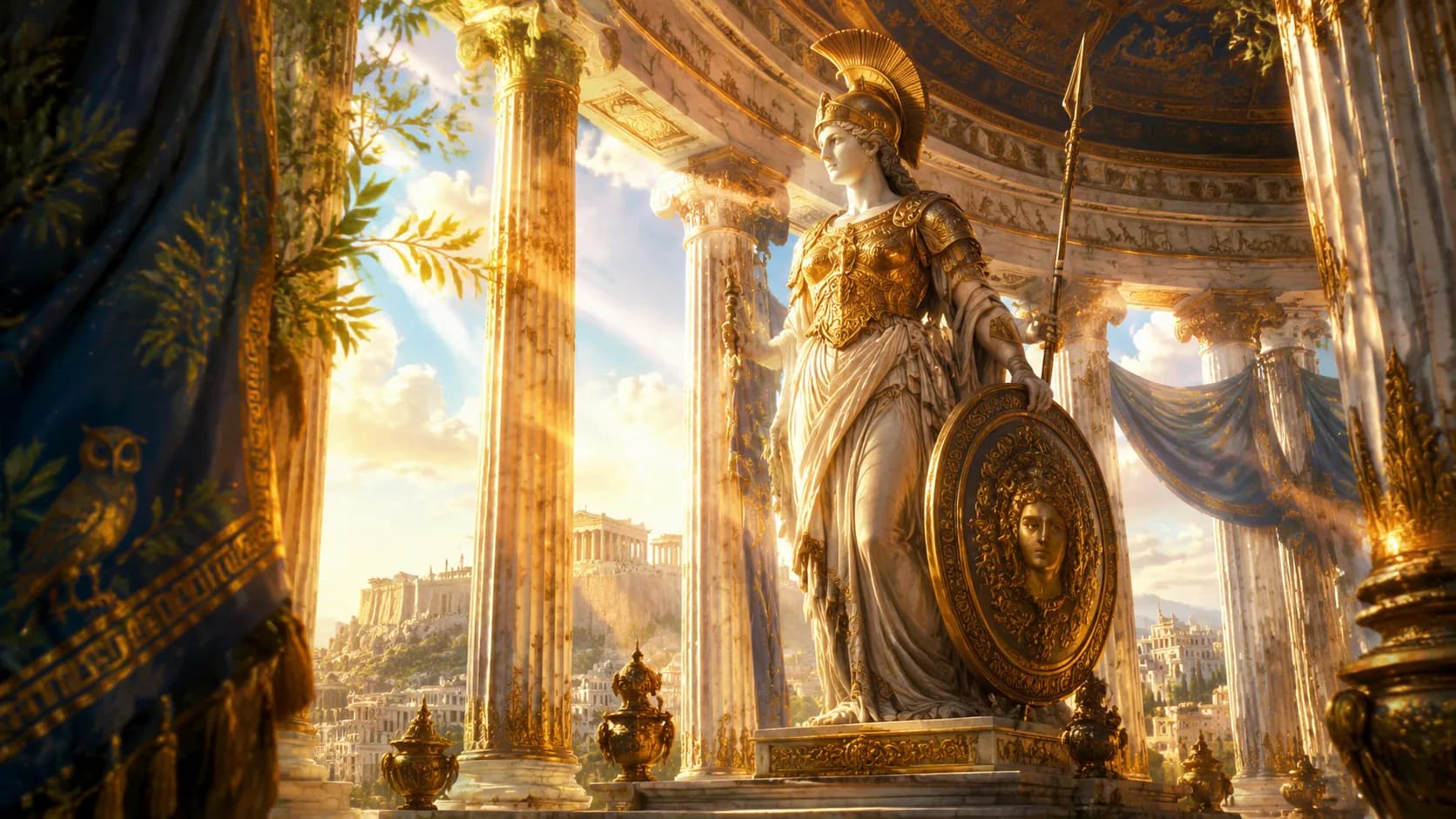
Athena and the Wisdom of the Ancient World
Discover Athena and the wisdom of the ancient world, from the goddess of wisdom, strategy, and craft to the Parthenon, Homer's Odyssey, the owl and olive tree, Greek philosophy, Athena's contest with Poseidon, parallel...
Why did the Stoic cross the road? Because it was the rational thing to do, and he was indifferent to the traffic.
The Bottom Line
Magical kingdom architecture represents fantasy worldbuilding's most visible and tangible element structures that tell stories, embody cultures, and create wonder through impossible designs made plausible within each world's unique magical logic. From floating citadels defying gravity to underground crystal kingdoms, enchanted forest cities to elemental palaces, the greatest fantasy architecture balances spectacle with substance, creating spaces that simultaneously inspire awe and serve coherent functional, cultural, and magical purposes.
Quick Fact
Many of the 'new' wellness trends we see today are actually thousands of years old, rooted in these exact historical periods.
Effective fantasy architecture emerges organically from worldbuilding foundations magical systems determining what becomes possible, cultural values shaping aesthetic preferences, environmental conditions influencing materials and methods, and narrative needs generating symbolic architecture advancing story themes. The most memorable kingdoms feature architecture readers or experiencers can visualize clearly, mentally constructing detailed models of impossible structures through rich descriptive detail that engages imagination while maintaining internal consistency preventing cognitive rejection of fantastical elements.
Read more: Best Meditation Apps 2026: A Complete Guide
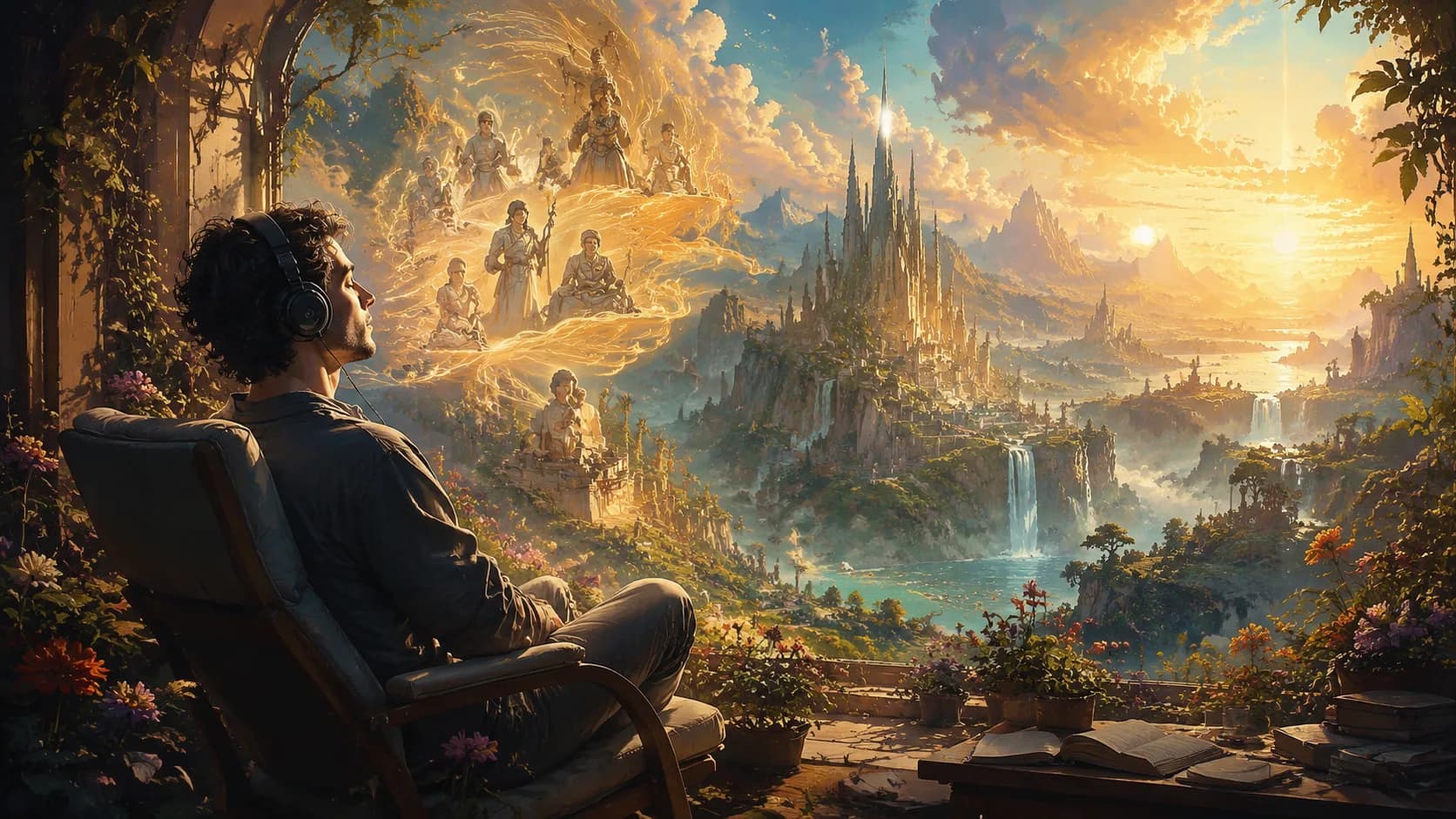
Whether exploring these concepts through immersive audio journeys that bring magical architecture to life, designing worlds for creative projects, or simply indulging in architectural wonder, fantasy kingdoms' impossible buildings remind us that imagination constrained only by internal logic rather than physical law can generate spaces as meaningful and memorable as any historical monument proving that wonder, properly architected, becomes as real as stone.
Experience More with Visionaria
Download the app to explore guided historical and wellness journeys.
A time traveler went back to antiquity to teach them about 'holistic health.' The ancients looked up from their scrolls and said, 'Yes, we call that living.'
This article is for educational and informational purposes only. Historical details are based on available research and may evolve as new evidence emerges.
Visionaria journeys are designed for relaxation, guided imagination, and personal enrichment. They are not a substitute for medical, mental health, legal, or professional advice.