The Phoenix and the Symbol of Eternal Rebirth
✨ Fun fact: The Phoenix has appeared in the mythologies of ancient Egypt, Greece, Rome, Persia, China, Japan, India, the Islamic world, and medieval Europe—making it possibly the most globally recognized mythical creature in human history. It is also the only mythical creature whose central narrative is not about what it does to others but about what it does to itself: it transforms, renews, and begins again. In an age of personal development podcasts and self-help bestsellers, the Phoenix was essentially the world's first motivational speaker—3,500 years before TED Talks, and significantly more dramatic about it.
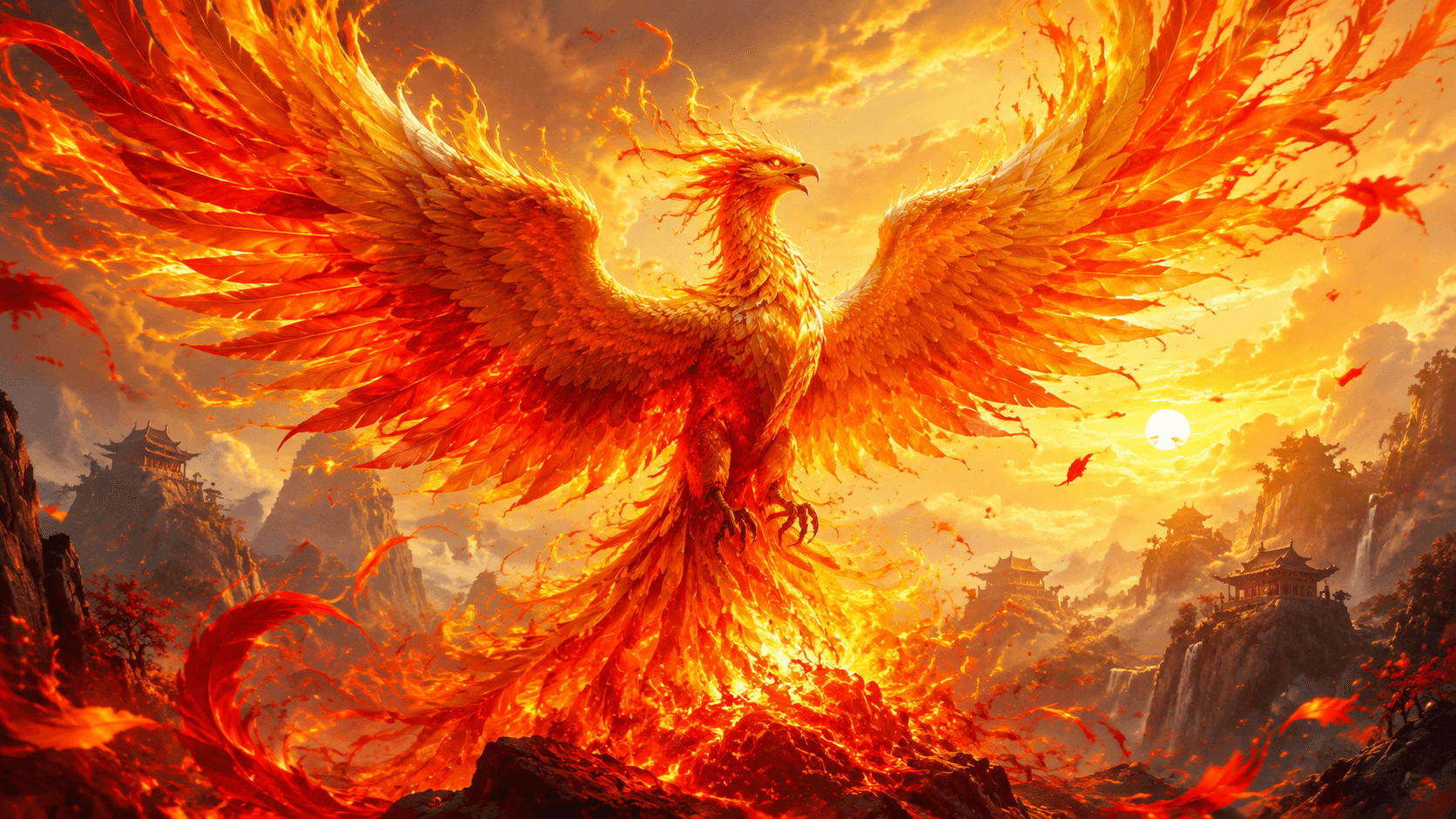
Of all the mythical creatures humanity has imagined dragons, unicorns, griffins, and chimeras none carries the emotional power of the Phoenix. While other legendary creatures embody strength, purity, or menace, the Phoenix embodies something far more profound: the promise that endings are not conclusions but beginnings. This sacred firebird, which transforms itself through flame and rises renewed from its own ashes, has resonated across virtually every major civilization for over 3,500 years not because people believed in a literal flaming bird, but because the Phoenix gave form to humanity's deepest hope: that transformation is always possible, that renewal follows even the most complete change, and that the capacity to begin again is woven into the fabric of existence itself.
The Phoenix is a mythical firebird originating in ancient Egyptian mythology as the Bennu and adopted across Greek, Roman, Persian, Chinese, Japanese, Christian, Islamic, and alchemical traditions that symbolizes eternal renewal through its cyclical self transformation: consumed by sacred flame at the end of each life cycle before rising rejuvenated from its own ashes. The Phoenix matters because it is far more than a fantastical creature it is a symbolic framework for understanding transformation, resilience, and continuity that has shaped religious thought, philosophical inquiry, artistic expression, and psychological healing across millennia. Modern narrative psychology recognizes the Phoenix cycle (completion → transformation → renewal) as one of the most therapeutically powerful archetypal patterns available, used in grief counseling, addiction recovery, trauma processing, and personal development. Through immersive spatial 3D audio, the Phoenix's transformative story can now be experienced with unprecedented sensory depth the crackling warmth of sacred flame, the profound stillness of ashes, and the soaring exhilaration of renewal surrounding the listener in three dimensional sound that engages the same imaginative faculties that made the Phoenix myth so powerful around ancient campfires.
This article explores the Phoenix and the symbol of eternal rebirth from its ancient Egyptian origins and Greek literary appearances to its transformation across Eastern traditions, its adoption by Christian theology and alchemical philosophy, its remarkable presence in modern culture, and the psychological reasons why the Phoenix continues to resonate so powerfully in an age that desperately needs symbols of hope and renewal. Whether you're drawn to the legendary quests of world mythology, the intersection of ancient symbolism and modern mindfulness, or simply the beauty of a story about a bird made of flame and hope, this journey through the Phoenix's mythology will illuminate why this singular creature has earned its place as the most universal symbol of renewal in human civilization.
"The Phoenix has been adopted by ancient Egypt, Greece, Rome, Persia, China, Japan, India, Christianity, Islam, alchemy, Romantic poetry, Harry Potter, and at least three professional sports teams. No other mythical creature has this kind of cross cultural reach. Dragons come close, but dragons tend to represent power and danger the Phoenix represents hope. And hope, it turns out, has much better international PR. The Phoenix doesn't need to hoard gold or guard castles. It just needs to catch fire gracefully and come back looking better than before which is, honestly, the most aspirational narrative in mythology."
Key Facts About the Phoenix
- ••Ancient Origins: The Phoenix myth originated in ancient Egypt as the Bennu bird, a sacred heron-like creature associated with the sun god Ra, the city of Heliopolis (City of the Sun), and the creative force of the primordial waters—dating to at least 1500 BCE in surviving texts, with roots potentially reaching back to 2600 BCE
- ••Global Presence: Phoenix-like creatures appear in Egyptian (Bennu), Greek/Roman (Phoenix), Persian (Simurgh), Chinese (Fenghuang), Japanese (Hō-ō), Slavic (Firebird/Zhar-ptitsa), Hindu (Garuda), and Jewish (Milcham) mythologies—making it arguably the most cross-culturally universal mythical creature
- ••Life Cycle: Classical sources vary on the Phoenix's lifespan—Herodotus suggests 500 years, Pliny the Elder proposes 540 years, and some medieval sources extend it to 1,461 years (matching the Egyptian Sothic cycle)—but all agree on the essential pattern: the Phoenix builds a nest of aromatic spices, is consumed by sacred flame, and rises renewed from the ashes
- ••Symbolism Scope: The Phoenix has symbolized solar renewal, spiritual resurrection, imperial authority, alchemical transformation, literary rebirth, personal resilience, and urban reconstruction—making it one of the most versatile symbols in human culture
- ••Modern Influence: The Phoenix appears in Harry Potter (Fawkes), X-Men (Jean Grey/Phoenix), The Chronicles of Narnia, countless city emblems (San Francisco, Atlanta, Coventry), and corporate logos—and serves as the name of Arizona's capital city, demonstrating its continued cultural vitality
- ••Therapeutic Application: Modern psychology uses the Phoenix archetype in narrative therapy, resilience training, post-traumatic growth frameworks, and mindfulness practices—recognizing that the cycle of transformation-through-flame provides a powerful symbolic framework for processing life transitions and building emotional resilience
Quick Answer
✨ Fun fact: The Phoenix has appeared in the mythologies of ancient Egypt, Greece, Rome, Persia, China, Japan, India, the Islamic world, and medieval Europe—making it possibly the most globally recognized mythical creature in human history. It is also the only mythical creature whose central narrative is not about what it does to others but about what it does to itself: it transforms, renews, and begins again. In an age of personal development podcasts and self-help bestsellers, the Phoenix was essentially the world's first motivational speaker—3,500 years before TED Talks, and significantly more dramatic about it.
The Origins of the Phoenix: Ancient Egypt and the Bennu Bird
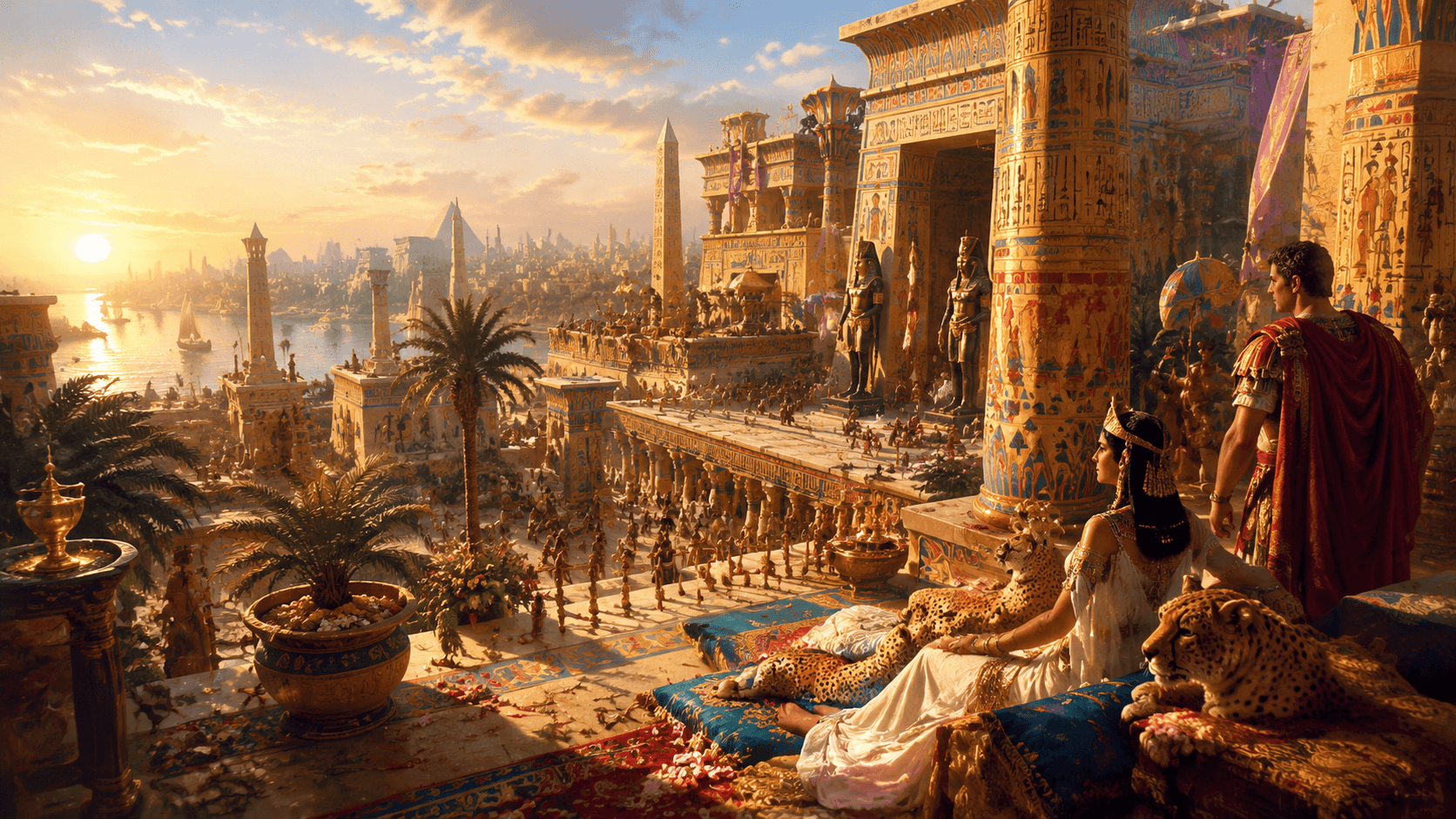
The Phoenix's story begins not in Greece, as many assume, but in the sun drenched temples of ancient Egypt, where a sacred heron like creature called the Bennu was venerated as a manifestation of the sun god Ra and a symbol of the creative force that brought the world into existence. The Bennu was depicted in Egyptian art as a large grey or purple heron, crowned with a distinctive two feathered crest, perched atop the sacred benben stone in the great temple complex at Heliopolis the City of the Sun. In Egyptian cosmology, the Bennu was the first living creature to emerge from the primordial waters of chaos, its cry the first sound that broke the cosmic silence and set creation in motion.
Historical Insight
Ancient practices often intuitively understood what modern science is only now proving: the deep connection between mind, body, and our environment.
The Bennu's association with cyclical renewal was deeply connected to Egypt's most important natural phenomenon: the annual flooding of the Nile. Just as the Nile appeared to expire during the dry season before returning with life giving waters, the Bennu symbolized the principle that apparent endings are preludes to renewal. The bird was also linked to the planet Venus as a morning star the celestial body that appears to vanish each evening and return each dawn reinforcing the Bennu's identity as a creature of perpetual return. This layered symbolism, connecting the Bennu to solar cycles, river floods, and stellar movements, gave the myth an astronomical and ecological grounding that made it feel less like fantasy and more like observed natural truth.
Read more: Meditation for Sleep Using Storytelling Journeys

When the Greek historian Herodotus visited Egypt around 450 BCE, he recorded the Bennu tradition and transmitted it to the wider Mediterranean world, transforming the Egyptian heron god into the Greek Phoenix (phoinix, meaning "crimson" or "palm tree"). This cultural translation from Egyptian sacred bird to Greek legendary creature was one of the great mythological transfers of the ancient world, carrying the Bennu's symbolism of solar renewal and cyclical regeneration into the tradition that would eventually spread it across all of Western civilization and beyond.
Why did the Stoic cross the road? Because it was the rational thing to do, and he was indifferent to the traffic.
The Phoenix in Greek and Roman Mythology
In Greek and Roman literature, the Phoenix evolved from the Egyptian Bennu into a more elaborate and dramatically vivid creature a magnificent bird the size of an eagle, with plumage of gold and crimson, eyes like sapphires, and a lifespan measured in centuries. Herodotus (c. 484 425 BCE) provided the earliest Greek account, describing a bird that visited Heliopolis every 500 years to inter its predecessor in a ball of myrrh. Ovid, in his Metamorphoses (8 CE), gave the Phoenix its most famous Western description: a creature that builds a nest of cinnamon, spikenard, and myrrh, is consumed by sacred flame, and rises from its own ashes as a renewed version of itself an image so vivid that it has defined the Phoenix in Western imagination ever since.
The Roman adoption of the Phoenix was particularly significant because the Romans transformed it from a mythological curiosity into a political symbol. Roman emperors placed the Phoenix on coins to signify the renewal of the state, the dawning of new eras, and the promise of aeternitas eternal continuity. The Phoenix appeared on coins of Augustus, Trajan, Hadrian, and Constantine, each emperor claiming the bird's symbolism to legitimize their reign as a new beginning for Rome. This political deployment of the Phoenix established a tradition that continues today: cities, nations, and institutions adopt the Phoenix to signal renewal after crisis from ancient city states to modern metropolises.
Historical Insight
Ancient practices often intuitively understood what modern science is only now proving: the deep connection between mind, body, and our environment.
What distinguishes the Greco Roman Phoenix from other mythological creatures is its fundamentally solitary and self directed nature. Unlike dragons that must be confronted by heroes, or unicorns that symbolize external purity, the Phoenix's transformation comes entirely from within. It does not require a hero, a quest, or a divine intervention it carries the power of renewal within itself. This self sufficient quality made the Phoenix a uniquely powerful symbol for personal transformation and an early mythological expression of what modern psychology would call intrinsic resilience.
"Ovid described the Phoenix's nest as containing cinnamon, spikenard, and myrrh essentially the most expensive spice collection in the ancient world. The Phoenix didn't just transform; it transformed while surrounded by luxury aromatherapy ingredients. This is the mythological equivalent of a high end spa treatment, except the spa is on fire and the client emerges as a completely new person. Modern wellness retreats have been trying to replicate this experience ever since, though typically with less flame and more scented candles."

Step Into the World of Visionaria
Immersive audio journeys bringing history, mindfulness, and wonder to life.
An Epicurean, a Stoic, and a Cynic walk into a garden. The bartender says, 'Is this some kind of philosophical joke?'
The Phoenix Across Eastern Traditions: China, Japan, and Persia
The Phoenix's presence in Eastern mythology demonstrates that the symbol of renewal through transformation is not a Western invention but a universal human intuition. In China, the Fenghuang (鳳凰) is a magnificent composite creature combining elements of the pheasant, crane, parrot, and peacock representing virtue, grace, harmony, and the union of yin and yang. Unlike the Western Phoenix, which is solitary and self renewing, the Fenghuang appears in pairs (the feng being male and the huang female), symbolizing the balanced harmony of complementary forces. The Fenghuang was reserved as a symbol of the Empress (paired with the dragon of the Emperor) and represented the highest expression of cosmic order and benevolent governance.
Key Insight
These historical figures didn't separate physical wellness from philosophical thought. To them, it was all one continuous practice of living well.
In Japan, the Fenghuang was adopted as the Hō ō (鳳凰), becoming a symbol of imperial authority, justice, and the sun. The Hō ō appears on the Phoenix Hall (Hōōdō) of the Byōdō in temple in Uji, one of Japan's most treasured architectural masterpieces a building so culturally significant that it appears on the Japanese ten yen coin. The Hō ō represents the arrival of a just and virtuous era, descending from heaven when the world is governed with wisdom and compassion. This association of the Phoenix with moral excellence rather than mere power reflects a distinctive emphasis in East Asian mythology on virtue as the foundation of legitimate authority.
The Persian Simurgh, perhaps the most philosophically complex of all Phoenix related creatures, was a benevolent, ancient bird of enormous wisdom that nested in the Tree of Knowledge and had witnessed the turning of multiple ages. In Ferdowsi's Shahnameh (Book of Kings), the Simurgh raises the hero Zal and provides healing feathers that save lives at critical moments. In Sufi mysticism, Attar's Conference of the Birds (12th century) uses the Simurgh as the ultimate symbol of spiritual seeking: thirty birds (si murgh) journey to find the Simurgh, only to discover that they themselves collectively are the Simurgh a profound meditation on the nature of the divine within. This mystical interpretation connects the Phoenix tradition to the deepest currents of contemplative spiritual practice.
Why did the ancient physician prescribe a long walk? Because he was tired of listening to the patient complain in his office.
The Symbolism of Fire and Renewal in Phoenix Mythology
Fire is the defining element of the Phoenix myth, and its symbolic significance extends far beyond simple combustion. In virtually every ancient tradition, fire occupied a unique position among the elements: it was simultaneously the most creative and the most transformative force in nature. Fire cooks food, forges metal, warms homes, and illuminates darkness but it also consumes, purifies, and fundamentally changes whatever it touches. The Phoenix's relationship with fire embodies this dual nature: the flame that appears to end the bird's existence is the same flame that catalyzes its renewal. This paradox the agent of transformation is identical to the agent of apparent conclusion is the philosophical heart of the Phoenix myth.
The mythology of fire across cultures consistently associates flame with purification and spiritual elevation. The Zoroastrian eternal flame, the Hindu fire ceremony (Agni), the Jewish burning bush, the Christian Pentecostal tongues of flame, and the Buddhist concept of nirvana (literally "blowing out" or "extinguishing") all use fire as a symbol of spiritual transformation rather than mere physical process. The Phoenix stands at the center of this tradition: it is the creature that embodies fire's transformative potential in narrative form, giving humanity a story that makes the abstract concept of purification through challenge vivid, memorable, and emotionally accessible.
Visionaria Insight
By immersing ourselves in these historical soundscapes, we reconnect with a timeless human tradition of storytelling and mental restoration.
The aromatic spices in the Phoenix's nest cinnamon, myrrh, frankincense, spikenard add another symbolic layer. These were the most precious substances in the ancient world, associated with religious ceremony, royal anointing, and sacred ritual. The Phoenix doesn't simply encounter fire randomly; it deliberately constructs the conditions for its own transformation, gathering the finest materials and choosing the moment of its renewal. This intentionality transforms the Phoenix from a passive victim of change into an active agent of its own renewal a distinction that gives the myth its unique psychological power and makes it a model for conscious personal transformation rather than mere survival.
"The Phoenix prepares for its transformation by gathering cinnamon, myrrh, and frankincense essentially building itself a nest that costs more than most ancient houses. This is the mythological equivalent of redecorating before a major life change. It suggests that even cosmic renewal benefits from a bit of planning and good taste. The Phoenix understood something that modern self help authors have been saying for decades: if you're going to reinvent yourself, do it with intention and preferably surrounded by pleasant aromas."
Why did the Stoic cross the road? Because it was the rational thing to do, and he was indifferent to the traffic.
The Phoenix in Early Christianity and Medieval Thought
Early Christian writers found in the Phoenix a perfect natural symbol for resurrection and eternal life. Clement of Rome, in his First Epistle (c. 96 CE), cited the Phoenix as evidence that God had provided signs of resurrection in nature itself. This was a remarkable theological move: by adopting a pagan mythological creature as evidence for Christian doctrine, Clement established a pattern of cultural synthesis that would characterize Christianity's relationship with classical mythology for centuries. The Phoenix appeared in early Christian mosaics, manuscripts, and sermons as a symbol of the promise of renewal not replacing Christian theology but providing a vivid, universally recognizable image for concepts that were central to the faith.
Visionaria Insight
By immersing ourselves in these historical soundscapes, we reconnect with a timeless human tradition of storytelling and mental restoration.
Medieval bestiaries illustrated encyclopedias of real and mythical animals gave the Phoenix a prominent place, typically depicting it as a beautiful purple or gold bird surrounded by flames. These bestiaries were not merely entertainment; they were moral and theological teaching tools, and the Phoenix entry was consistently interpreted as a lesson in spiritual renewal and the triumph of hope. The medieval Phoenix was understood as a creature that demonstrated a fundamental truth: that the capacity for renewal is built into the structure of creation itself. This interpretation connected the Phoenix to the broader medieval worldview in which nature was a book of divine symbols, each creature revealing an aspect of spiritual reality.
The Phoenix's medieval influence extended beyond theology into heraldry, literature, and political symbolism. It appeared on coats of arms throughout Europe, symbolizing resilience, immortality, and renewal after adversity. In literature, Dante referenced the Phoenix in his Inferno (Canto XXIV), and the creature appeared in Anglo Saxon poetry, Middle English romances, and the fairy tale traditions that emerged from medieval storytelling. The Phoenix's adaptability its ability to carry meaning for Egyptian priests, Greek philosophers, Roman emperors, Christian theologians, and medieval artists alike is itself a form of renewal: the symbol continuously transforms while maintaining its essential meaning.
Why did the historian break up with the archaeologist? Because her career was literally in ruins.
Alchemy and the Phoenix: Transformation Through Flame
Nowhere was the Phoenix symbol more central than in the tradition of alchemy the philosophical and proto scientific practice that sought to transform base metals into gold, discover the elixir of life, and achieve spiritual perfection through material processes. The Phoenix became the primary symbol of the alchemical Great Work (Magnum Opus), representing the final stage of transformation in which purified matter and by extension, the purified soul emerges from the crucible renewed and perfected. The alchemical Phoenix was not merely decorative; it was a technical symbol encoding practical instructions within a framework of mythological imagery.
The alchemical process itself mirrored the Phoenix's cycle with remarkable precision. The nigredo (blackening) corresponded to the gathering of materials; the albedo (whitening) to purification; the citrinitas (yellowing) to the dawn of new qualities; and the rubedo (reddening) to the final achievement of transformation the moment when the Phoenix rises from the ashes in crimson and gold. This color symbolism connected alchemical practice to the Phoenix myth so thoroughly that the two became virtually inseparable in medieval and Renaissance thought, with alchemical texts regularly depicting the Phoenix emerging from the athanor (furnace) at the moment of successful transmutation.
Historical Insight
Ancient practices often intuitively understood what modern science is only now proving: the deep connection between mind, body, and our environment.
The psychological dimension of alchemy later explored extensively by Carl Jung recognized that the real transformation the alchemists sought was internal. The Phoenix, in this interpretation, represents the Self that emerges from the fire of psychological integration: the whole, renewed personality that results from confronting and incorporating one's shadow elements. This Jungian reading transforms the Phoenix from a supernatural curiosity into a map of psychological development a symbolic guide to the process of becoming more fully oneself through the conscious embrace of change, challenge, and renewal. It's a framework that continues to inform modern approaches to emotional resilience and personal growth.
"Alchemists spent centuries trying to turn lead into gold using furnaces, specialized vessels, and extremely complex philosophical justifications. They never succeeded at the metallurgy, but they accidentally invented modern chemistry, pioneered laboratory techniques, and created one of the most sophisticated symbolic systems in human intellectual history. The Phoenix was their mascot a creature that proves that even if your primary project doesn't work out, the secondary outcomes might be extraordinary. Every failed alchemist was a successful metaphor maker."
A philosopher walked into a wall. His students asked if it hurt. He replied, 'The wall is an illusion, but my headache is quite real.'
The Phoenix in Modern Literature, Film, and Popular Culture
The Phoenix's transition from ancient mythology to modern popular culture is one of the most successful symbolic migrations in literary history. In J.K. Rowling's Harry Potter series, Fawkes the phoenix serves as companion to Dumbledore, providing healing tears, carrying immense weight in flight, and undergoing on page transformation and renewal introducing the Phoenix myth to an entirely new generation of readers. The X Men's Phoenix Saga, in which Jean Grey becomes host to the cosmic Phoenix Force, explores the overwhelming and potentially consuming nature of transformative power a sophisticated modern interpretation that acknowledges both the promise and the challenge of radical change.
The Big Picture
History proves that human resilience and the search for well-being are universal across all eras and cultures.
In literary fiction, the Phoenix metaphor pervades narratives of personal reinvention and cultural renewal. Sylvia Plath's poem "Lady Lazarus" explicitly invokes the Phoenix ("Out of the ash / I rise"), and Ray Bradbury titled his foundational science fiction novel Fahrenheit 451's final section "Burning Bright" using the Phoenix as the symbol of civilization's capacity to renew itself through the preservation of knowledge. C.S. Lewis, Edith Nesbit, Rick Riordan, and dozens of contemporary fantasy authors have incorporated Phoenix figures, each finding new meanings in the ancient symbol while preserving its core message: transformation through apparent ending leads to something genuinely new and often more beautiful.
Perhaps most remarkably, the Phoenix has become a symbol for cities and communities that have rebuilt after devastating events. San Francisco adopted the Phoenix after the 1906 earthquake. Atlanta's city seal features a Phoenix referencing the city's rebuilding. Coventry, England uses the Phoenix to symbolize its post reconstruction renewal. Warsaw's reconstruction after the Second World Engagement is frequently described in Phoenix terms. These adoptions demonstrate that the Phoenix has transcended mythology to become a functional symbol of collective resilience a shared cultural image that communities use to frame their own stories of recovery and renewal, much as ancient Troy's stories shaped collective identity through narrative.
Why did the ancient physician prescribe a long walk? Because he was tired of listening to the patient complain in his office.
The Psychology of Rebirth: Why the Phoenix Resonates Today
Modern psychology offers compelling explanations for why the Phoenix myth continues to resonate so powerfully across cultures and centuries. The concept of post traumatic growth the psychological phenomenon in which individuals emerge from challenging experiences with greater wisdom, deeper relationships, and enhanced appreciation for life maps almost perfectly onto the Phoenix's narrative arc. Research by psychologists Richard Tedeschi and Lawrence Calhoun has demonstrated that approximately 50 70% of people who experience significant adversity report some form of positive growth, suggesting that the Phoenix's promise of renewal through challenge reflects genuine psychological reality rather than mere wishful thinking.
Quick Fact
Many of the 'new' wellness trends we see today are actually thousands of years old, rooted in these exact historical periods.
Narrative therapy, developed by Michael White and David Epston, explicitly uses the Phoenix archetype as a therapeutic tool. Clients are invited to "re author" their life stories, identifying moments of Phoenix like transformation points where something they thought had ended was actually the beginning of something new. This therapeutic approach recognizes that humans process experience through narrative frameworks, and that providing powerful archetypal stories like the Phoenix gives people symbolic language for understanding their own capacity for change. The Phoenix becomes not just a myth but a cognitive template a way of perceiving adversity that transforms it from a final verdict into a transitional stage.
The Phoenix also resonates because it addresses what existential psychologists call the "anxiety of finitude" the fundamental human awareness that all things end. The Phoenix doesn't deny this reality; it acknowledges it directly the bird is indeed consumed, the ashes are real but then offers something beyond resignation: the possibility of renewal on the other side of apparent conclusion. This balanced acknowledgment of both the reality of change and the possibility of continuation beyond it makes the Phoenix a uniquely mature symbol, suitable for adults processing genuine life transitions rather than children seeking simple reassurance. It's this psychological sophistication that makes the Phoenix relevant to contemporary imaginative practice and emotional well being.
"Psychologists have discovered that the Phoenix archetype activates something they call 'post traumatic growth' the documented tendency for people to emerge from difficult experiences with greater wisdom and deeper appreciation for life. In other words, the ancient Egyptians figured out a core principle of modern psychology approximately 3,500 years before modern psychology existed. They just expressed it as a flaming bird instead of a peer reviewed journal article. Honestly, the flaming bird communicates the concept more effectively."
Why did the Stoic cross the road? Because it was the rational thing to do, and he was indifferent to the traffic.
Phoenix Symbolism in Art and Architecture Through the Ages
The Phoenix has been one of the most frequently depicted creatures in world art, appearing across virtually every medium from Egyptian temple carvings and Greek pottery to Byzantine mosaics, medieval manuscripts, Renaissance paintings, Art Nouveau posters, and contemporary digital art. Each artistic tradition has reimagined the Phoenix according to its own aesthetic vocabulary while preserving the essential symbolism of transformation and renewal. Egyptian artists depicted the Bennu as a stately heron with solar disk; Greek vase painters showed a radiant eagle like bird amid flames; medieval illuminators created exquisitely detailed miniatures of the Phoenix amid its aromatic nest; and Renaissance artists like Francesco Bacchiacca incorporated the Phoenix into allegorical paintings exploring themes of immortality and virtue.
Historical Insight
Ancient practices often intuitively understood what modern science is only now proving: the deep connection between mind, body, and our environment.
In architecture, the Phoenix has served as both decorative motif and structural metaphor. Japan's Byōdō in Phoenix Hall (1053 CE) is arguably the most magnificent Phoenix inspired building in the world its sweeping rooflines deliberately echoing the wings of the Hō ō in flight, with bronze Phoenix figures crowning its ridgepole. In the West, the Phoenix appears on buildings associated with renewal and reconstruction: banks, insurance companies, libraries, and civic buildings institutions that symbolize community resilience and the preservation of value through change. The architectural Phoenix reminds communities that their built environment itself embodies the possibility of renewal.
Read more: The Story Behind the Hanging Gardens of Babylon: Complete Guide to the Ancient Wonder

Contemporary artists continue to find fresh meaning in the Phoenix symbol. Street artists in cities worldwide use Phoenix imagery to symbolize urban regeneration; installation artists create immersive Phoenix experiences using light, sound, and flame; and digital artists explore the Phoenix through animation, virtual reality, and interactive media. The Phoenix's artistic durability its ability to remain visually compelling and symbolically relevant across 3,500 years of artistic evolution is itself evidence of the myth's extraordinary depth. Symbols that are merely decorative fade from fashion; symbols that connect to fundamental human experiences renew themselves perpetually, like the creature they depict.
A philosopher walked into a wall. His students asked if it hurt. He replied, 'The wall is an illusion, but my headache is quite real.'
The Phoenix and the Science of Renewal in Nature
One of the most remarkable aspects of the Phoenix myth is how accurately it mirrors real processes of renewal observed throughout the natural world. Fire adapted ecosystems from the chaparral of California to the eucalyptus forests of Australia to the pine savannas of the American Southeast depend on periodic fire for their health and regeneration. Many plant species have evolved seeds that germinate only after exposure to fire, their cones or seed cases sealed with resin that melts in heat, releasing new life precisely when the flame has cleared the ground. The Phoenix's narrative of renewal through flame is not merely symbolic it describes an actual ecological principle that predates human mythology by millions of years.
Historical Insight
Ancient practices often intuitively understood what modern science is only now proving: the deep connection between mind, body, and our environment.
At the cellular level, the human body exhibits its own form of Phoenix like renewal. Most cells in the body are replaced cyclically skin cells every 2 3 weeks, red cells every 4 months, liver cells every 6 12 months, and even bone cells over a 10 year cycle. The biological reality is that the physical body you inhabited a decade ago has been almost entirely replaced; you are, in a very real sense, a renewed version of yourself composed of the same pattern but different material, like the Phoenix that preserves its identity while renewing its substance. This biological parallel suggests that the Phoenix myth may encode an intuitive understanding of renewal processes that operate at scales from cellular to cosmic.
Even at astronomical scales, the Phoenix's cycle finds echoes. Stars "live," consume their fuel, and when they reach their end, some explode as supernovae scattering the elements that become the building materials for new stars, new planets, and eventually new life. Every atom heavier than hydrogen in the human body was forged in the core of a star that completed its cycle and "rose again" as the raw material of future creation. The Phoenix, in this light, is not just a myth but a poetic description of the universe's fundamental operating principle: that the material of one cycle becomes the foundation of the next, and that renewal is woven into the fabric of existence.
"Scientists have discovered that the atoms in your body were forged inside ancient stars that completed their cycles and scattered their elements across the cosmos. In other words, you are literally made of stellar Phoenix material. The ancients imagined a bird that transforms through flame and renews itself modern astrophysics has confirmed that the entire universe operates on exactly this principle. The Phoenix wasn't fantasy; it was just ahead of the science by several millennia. Astrophysicists, of course, prefer terms like 'stellar nucleosynthesis,' but the Phoenix said it more beautifully."
A philosopher walked into a wall. His students asked if it hurt. He replied, 'The wall is an illusion, but my headache is quite real.'
How Meditation and Storytelling Channel the Phoenix Spirit
The Phoenix's transformative cycle completion, dissolution, stillness, and renewal maps with extraordinary precision onto the core structure of meditative practice. In meditation, the practitioner releases attachment to the thoughts and identities of the day (completion), allows the mind to settle into stillness (dissolution), rests in the quiet space between thoughts (stillness), and emerges from the practice with refreshed clarity and perspective (renewal). This structural parallel is not coincidental it suggests that the Phoenix myth may have originated partly as a narrative description of the meditative experience itself, encoding in story form the psychological journey that contemplatives had been experiencing in guided contemplative practice for millennia.
Visionaria Insight
By immersing ourselves in these historical soundscapes, we reconnect with a timeless human tradition of storytelling and mental restoration.
Modern narrative meditation explicitly uses Phoenix imagery to guide listeners through experiences of release and renewal. Practitioners are invited to visualize releasing what no longer serves them into a purifying flame, resting in the stillness of ashes, and then imagining themselves rising with new clarity and purpose. This technique is particularly effective because it engages both symbolic and somatic processing the image of warmth, light, and rising activates physiological relaxation responses while the narrative of transformation provides cognitive frameworks for understanding personal change. Research in narrative psychology confirms that symbolic experiences processed through guided imagination produce measurable changes in emotional regulation and resilience.
Storytelling traditions worldwide have used the Phoenix as a structural template for narratives of personal transformation. Joseph Campbell's "hero's journey" includes a stage he called "apotheosis" the moment of symbolic completion and renewal that precedes the hero's return which Campbell explicitly connected to Phoenix mythology. Every story of a character who faces their greatest challenge, appears to reach their lowest point, and then rises transformed inherits the Phoenix's narrative DNA. From Gandalf's return in The Lord of the Rings to Tony Stark's renewal in Iron Man to the countless quest narratives in which heroes emerge strengthened from their trials, the Phoenix pattern is the hidden architecture of transformative storytelling.
Why did the historian break up with the archaeologist? Because her career was literally in ruins.
Experience the Phoenix Journey Through Visionaria
Everything this article has explored the Egyptian origins, the global mythological spread, the fire symbolism, the alchemical philosophy, the psychological resonance, and the scientific parallels converges in Visionaria's immersive Phoenix journeys. Each experience draws on the mythological traditions and symbolic frameworks that have given the Phoenix its extraordinary power across cultures and centuries, presented through spatial 3D audio that transforms listening into living. Feel the warmth of sacred flame surrounding you, rest in the profound stillness of ashes, and experience the soaring exhilaration of renewal all through sound that places you inside the myth rather than outside it.
With 150+ immersive journeys spanning legendary creatures, ancient cities, mythological worlds, sacred temples, and transformative meditations, Visionaria continues the tradition that ancient storytellers began: using the power of narrative voice to transport listeners into worlds of wonder, challenge, and renewal. The Phoenix taught humanity that transformation is always possible. Visionaria brings that lesson to life through the most immersive storytelling medium ever created.
Visionaria Insight
By immersing ourselves in these historical soundscapes, we reconnect with a timeless human tradition of storytelling and mental restoration.
The Phoenix's promise has echoed across 3,500 years of human civilization: endings are not conclusions but doorways. From Egyptian temple priests to Greek philosophers, from medieval alchemists to modern psychologists, from Sufi mystics to contemporary meditators, humanity has returned again and again to the firebird's story because it speaks to something fundamental about what it means to be alive. Visionaria honors that tradition with spatial 3D audio technology that places you inside the Phoenix's story because the myth that taught humanity about renewal deserves to be experienced, not just read.
"For 3,500 years, the Phoenix has been telling humanity the same story: that it's possible to go through something that feels like an ending and emerge from it renewed. Ancient priests communicated this through temple rituals. Medieval artists communicated it through illuminated manuscripts. Poets communicated it through verse. Visionaria communicates it through spatial 3D audio that places you inside the experience. The technology keeps improving, but the message stays the same and it's a message that never gets old. Which is, when you think about it, very on brand for an immortal bird."

The Temples of Ancient Sparta: Sacred Architecture, Ritual Practices & How Immersive Audio Meditation Brings Spartan Sanctuaries to Life
Explore the temples of ancient Sparta—from the Sanctuary of Artemis Orthia and the Temple of Athena Chalkioikos to the Menelaion and the Amyklaion—discover Spartan sacred architecture, ritual practices, and how spatia...
Why did the historian break up with the archaeologist? Because her career was literally in ruins.
The Bottom Line
The Phoenix is far more than a mythical creature it is humanity's most enduring and universal symbol of renewal, resilience, and the continuity of life through transformation. From its origins as the Egyptian Bennu bird through its adoption by Greek, Roman, Persian, Chinese, Japanese, Christian, and alchemical traditions, the Phoenix has provided generations with a narrative framework for understanding that apparent endings are often beginnings in disguise. Modern psychology confirms what ancient mythmakers intuited: that the Phoenix archetype corresponds to real processes of post traumatic growth and psychological renewal that operate in human experience.
Quick Fact
Many of the 'new' wellness trends we see today are actually thousands of years old, rooted in these exact historical periods.
For those seeking to experience the transformative power of the Phoenix firsthand, Visionaria offers immersive spatial 3D audio journeys that bring the Phoenix's story to life. Continue exploring: discover How Dragons Became Legends Across Every Culture, explore The Trojan War Stories That Shaped Greek Mythology, or learn about The Sacred Temples of Ancient Egypt.
Experience More with Visionaria
Download the app to explore 150+ guided historical and wellness journeys.
Why did the ancient physician prescribe a long walk? Because he was tired of listening to the patient complain in his office.