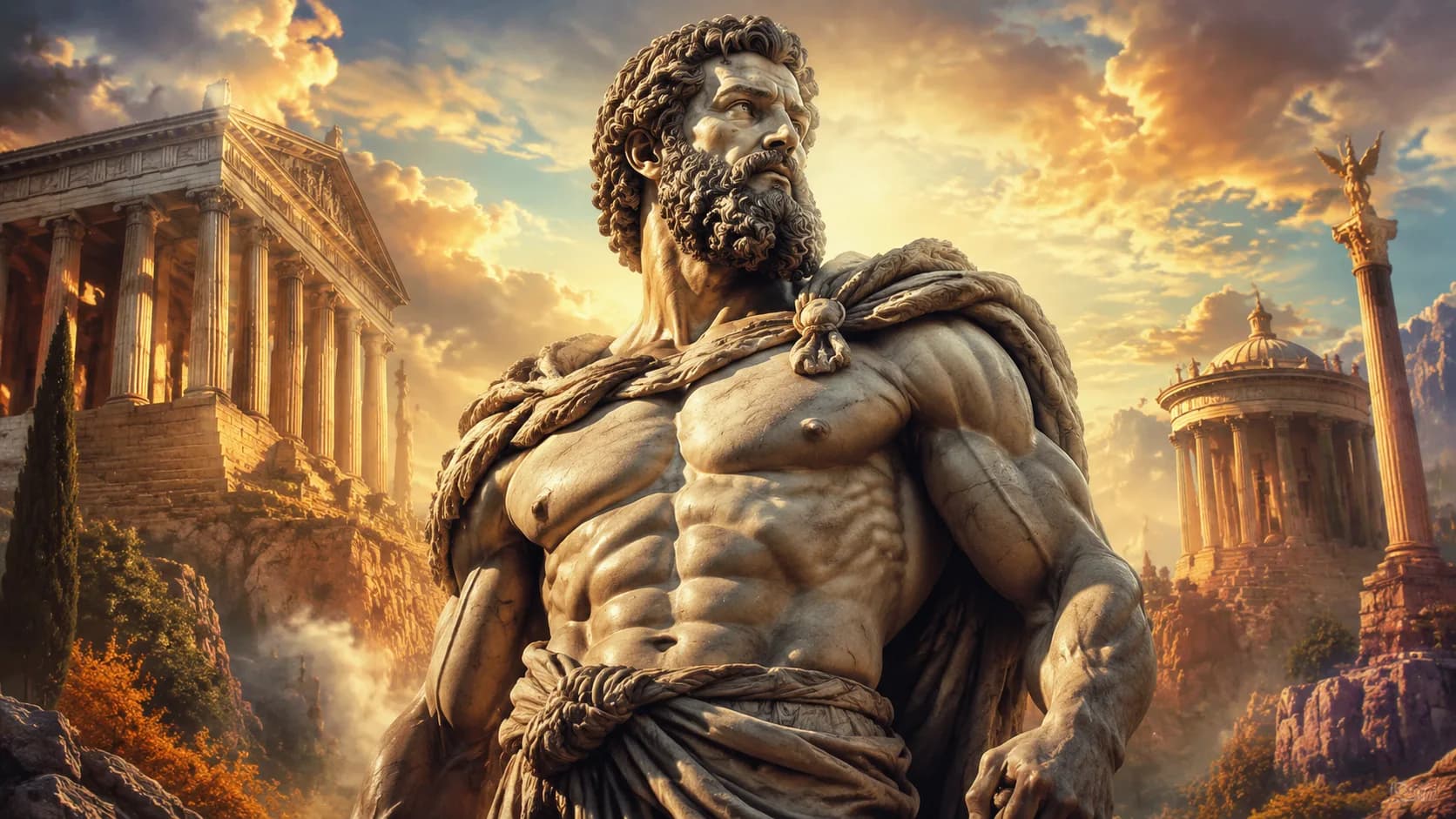
Orpheus and Eurydice: Love That Crossed the Underworld
💡 Fun fact: Orpheus's musical talent was so legendary that ancient Greeks believed his lyre playing could literally make rocks dance, rivers change course, and fierce animals sit down and listen politely. He was essentially the world's first rock star, except his audience included actual rocks. When the ancient Greeks needed someone to represent the ultimate power of art over nature, Orpheus was their unanimous choice.
- Who Were Orpheus and Eurydice?
- The Love Story That Captivated Ancient Greece
- Orpheus's Journey to the Underworld
- The Power of Music in Greek Mythology
- The Condition: Why Orpheus Could Not Look Back
- The Moment That Changed Everything
- What the Myth Teaches About Love and Trust
- Orpheus and Eurydice in Art and Literature Through the Ages
- The Psychology of the Orpheus Myth
- How Ancient Greeks Understood the Afterlife
- Experiencing the Orpheus Journey Through Visionaria
- The Enduring Legacy of Orpheus and Eurydice
- The Bottom Line
- Frequently Asked Questions
Of all the myths that ancient Greece bequeathed to the world, few have been retold as often or with as much emotional power as the story of Orpheus and Eurydice. It is a tale that has inspired poets from Homer's era to the present day, fuelled operas by Monteverdi and Gluck, paintings by Rubens and Corot, films by Jean Cocteau, and songs by Nick Cave and Arcade Fire. It has been adapted into Broadway musicals, reimagined in novels, and studied by psychologists as a window into the human experience of love, loss, longing, and the limits of trust.
The myth of Orpheus and Eurydice is the ancient Greek story of the legendary musician Orpheus son of the Muse Calliope and widely considered the greatest artist the world had ever known and his beloved wife Eurydice, a wood nymph whose untimely departure from the mortal world on their wedding day drove Orpheus to undertake the most extraordinary journey in all of mythology: a descent into the Underworld itself, armed with nothing but his golden lyre and the depth of his love. There, in the realm of Hades and Persephone, Orpheus played music so achingly beautiful that the rivers of the Underworld stopped flowing, the shades paused in their eternal wandering, and even the stern king of the realm was moved to grant what no mortal had ever been granted: the return of a departed soul. But the gift came with a single, devastating condition and in the moment Orpheus chose to look back, the myth became something far more profound than a simple love story. It became a meditation on the nature of trust, doubt, human longing, and the exquisite fragility of second chances. First recorded by Virgil in the Georgics (29 BCE) and expanded by Ovid in the Metamorphoses (8 CE), the myth has endured for over 2,700 years as one of civilisation's most powerful explorations of what love can and cannot overcome.
In this comprehensive guide, you'll discover the complete story of Orpheus and Eurydice, explore the mythology's deeper meanings, understand why the tale has captivated artists for millennia, examine its psychological insights, learn how ancient Greeks understood the afterlife, and discover how immersive audio journeys through Visionaria bring this timeless myth to life in spatial 3D sound.
"Every civilisation has love stories. The Greeks had Orpheus and Eurydice a love so powerful it charmed the guardians of the afterlife, so devoted it walked into the realm of the departed, and so human it faltered at the very last moment. It's the kind of story that makes you think the ancient Greeks understood human nature better than we do. They probably did."
Key Facts: Orpheus and Eurydice
- ••Origins: The myth dates to at least the 6th century BCE, with the most famous literary versions by Virgil (Georgics, 29 BCE) and Ovid (Metamorphoses, 8 CE), two of the most influential texts in Western literature
- ••Orpheus's parentage: Son of Calliope (the Muse of epic poetry) and, in many traditions, the god Apollo, making him semi-divine, with music literally in his celestial bloodline
- ••Musical power: Orpheus's lyre playing could charm wild animals, move trees and rocks, change the course of rivers, and, most remarkably, convince Hades himself to bend the laws of existence
- ••Argonaut connection: Before his love story, Orpheus sailed with Jason and the Argonauts, where his music saved the crew from the Sirens by out-playing their enchanting songs
- ••Cultural legacy: Inspired 70+ operas, hundreds of paintings, dozens of films, and countless poems, making Orpheus and Eurydice one of the most adapted myths in all of Western art history
- ••Psychological depth: Modern psychologists study the myth as an archetype of love, attachment, trust, and the human tendency to undermine our own happiness through doubt, making it as relevant today as 2,700 years ago
Quick Answer
💡 Fun fact: Orpheus's musical talent was so legendary that ancient Greeks believed his lyre playing could literally make rocks dance, rivers change course, and fierce animals sit down and listen politely. He was essentially the world's first rock star, except his audience included actual rocks. When the ancient Greeks needed someone to represent the ultimate power of art over nature, Orpheus was their unanimous choice.
Who Were Orpheus and Eurydice?
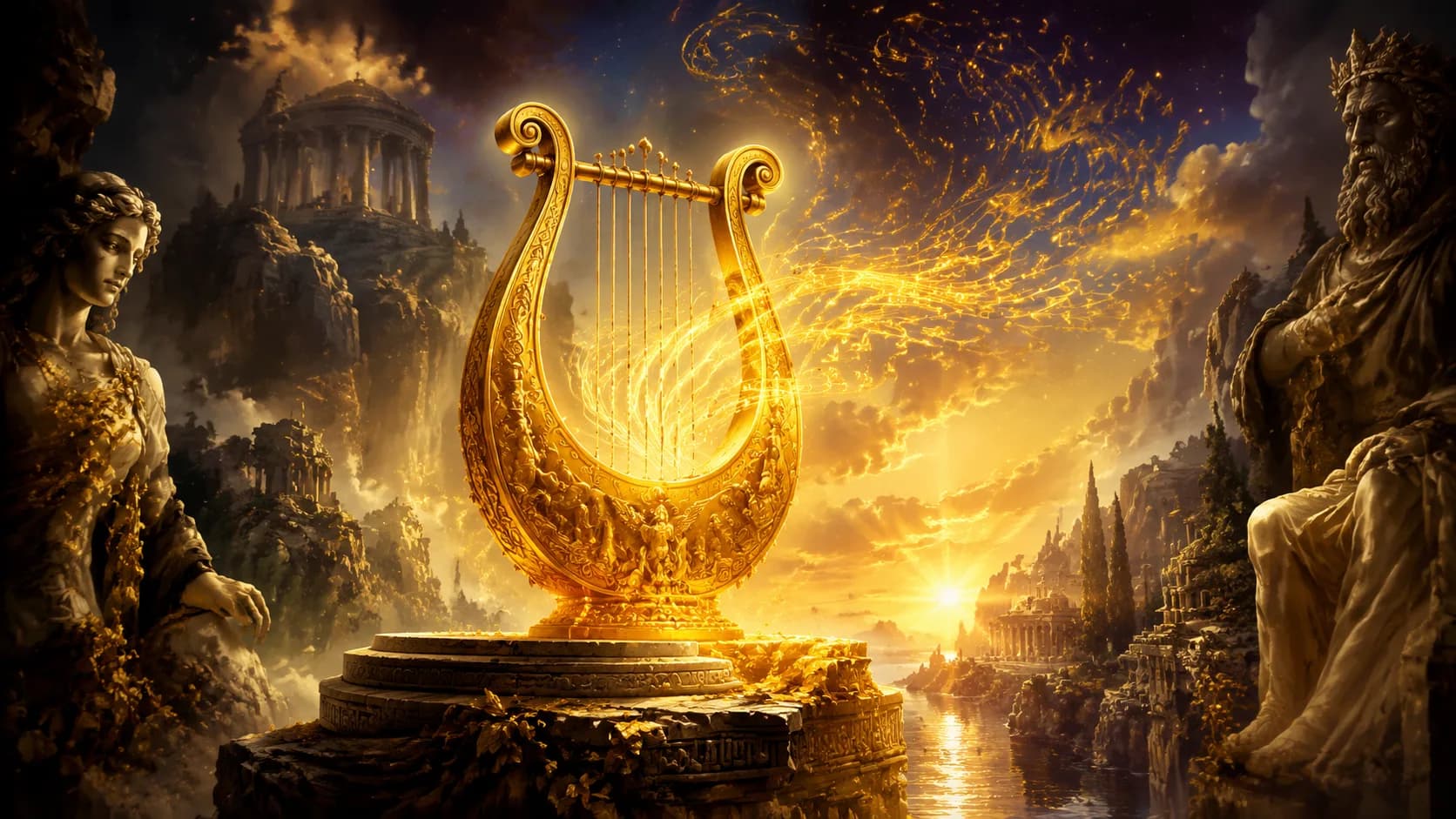
Orpheus was no ordinary mortal. Born to Calliope, the chief of the nine Muses and patron of epic poetry, and according to the most common tradition Apollo, the god of music, light, and prophecy, Orpheus carried the divine gift of music in his very essence. Apollo reportedly gave his son a golden lyre and the Muses taught him to play it, and by the time Orpheus reached adulthood, his musical ability surpassed that of any mortal or god. When he played, rivers paused in their courses. Trees uprooted themselves to gather closer. Wild animals lions, bears, wolves sat peacefully at his feet, enchanted into stillness. Even stones, the ancient poets tell us, were moved by his melodies.
Before his fateful love story, Orpheus established his legend as one of the Argonauts the band of heroes who sailed with Jason to retrieve the Golden Fleece. On that voyage, Orpheus's music proved as essential as any champion's strength: when the ship passed the island of the Sirens whose enchanting songs lured sailors to their end Orpheus played his lyre so brilliantly that his music drowned out theirs, saving the entire crew. It was the first great demonstration of art's power to overcome even supernatural peril.
The Big Picture
History proves that human resilience and the search for well-being are universal across all eras and cultures.
Eurydice was an Auloníad a type of nymph associated with pastoral valleys and meadows. While ancient sources give her less background than Orpheus, her role in the myth is no less essential. She represents not just the beloved but the ideal of love itself something so precious, so irreplaceable, that it drives the greatest musician alive to attempt what no mortal had ever achieved. Eurydice is the reason Orpheus crosses the boundary between the living and departed worlds, and her absence is the force that transforms his music from mere beauty into something that can move the very rulers of the afterlife.
"Orpheus was the son of a god of music and a Muse of poetry. He was basically born with a divine record deal. But all the talent in the cosmos couldn't prepare him for what would become his greatest composition: a song of love so powerful it changed the mind of the lord of the Underworld. Not bad for acoustic lyre."
A philosopher walked into a wall. His students asked if it hurt. He replied, 'The wall is an illusion, but my headache is quite real.'
The Love Story That Captivated Ancient Greece
Orpheus and Eurydice's love was, by all ancient accounts, immediate, consuming, and mutual. When the legendary musician first encountered the nymph in a flowering meadow his lyre sending cascading notes across the valley something extraordinary happened: for perhaps the first time, Orpheus found something more beautiful than his own music. Eurydice, in turn, was captivated not merely by the sound of the lyre but by the depth of feeling the musician poured into every note. Their courtship was the union of art and nature, the divine gift of music and the wild beauty of the natural world.
Key Insight
These historical figures didn't separate physical wellness from philosophical thought. To them, it was all one continuous practice of living well.
They married with great joy, invoking Hymenaeus, the god of marriage ceremonies, to bless their union. But ancient sources note an ominous detail: when Hymenaeus arrived at the wedding, his torch normally a symbol of bright celebration sputtered and smoked instead of burning clearly. The ancient Greeks, expert readers of omens, understood this as a sign that the marriage, however passionate, carried a shadow. Ovid writes that Hymenaeus was present, but "brought neither joyful words nor a happy face nor a fortunate omen." The greatest love story in Greek mythology began, like many Greek narratives, beneath the weight of foreknowledge the audience already sensing that something profound would test this union.
What happened next was swift and devastating. On the very day of the wedding or shortly after, depending on the source Eurydice was walking through a meadow when she was bitten by a venomous serpent. In Virgil's account, she was fleeing the unwanted advances of Aristaeus, a minor deity of beekeeping, when she stepped on the hidden snake. The venom was swift. Eurydice departed the mortal world on what should have been the happiest day of her life and Orpheus, the man whose music could move the natural world, found himself powerless before the one force his art could not immediately overcome: the finality of separation from the one he loved most.

Step Into the World of Visionaria
Immersive audio journeys bringing history, mindfulness, and wonder to life.
Why did the historian break up with the archaeologist? Because her career was literally in ruins.
Orpheus's Journey to the Underworld
What Orpheus did next set him apart from every other figure in Greek mythology. He did not accept. He did not resign himself. Instead, driven by a love that transcended the boundary between worlds, Orpheus descended into the Underworld itself the realm from which no living mortal had ever returned carrying only his lyre and the single minded determination to bring Eurydice back.
Did You Know?
The relentless drive to understand the world was seen not just as an academic pursuit, but as a spiritual and healing practice by the ancients.
The journey to the Underworld was, in Greek cosmology, no small undertaking. Orpheus had to find the entrance at Taenarus (Cape Matapan in modern Greece), descend through caverns that twisted deeper and deeper into the earth, and cross the river Styx the boundary between the world of the living and the realm of the departed. At the river stood Charon, the fearsome ferryman who transported shades across the dark water. Charon normally refused living mortals. But when Orpheus began to play, the ferryman's oar went still. The music that had charmed animals and moved trees now worked its power on a figure as ancient and implacable as the river itself. The power of narrative and music opened the way where strength could not.
Beyond the Styx, Orpheus faced Cerberus, the three headed guardian hound of the Underworld. This monstrous creature had never before been calmed by anything yet Orpheus's lyre sent it sinking to the ground, all three great heads laid upon its paws, enchanted into stillness. Past Cerberus, Orpheus entered the great hall of Hades and Persephone, the king and queen of the Underworld, where the shades of the departed gathered around him as he played. Ovid writes that as Orpheus performed, "the bloodless spirits wept" the wandering shades paused in their eternal patterns, and even the wisest of the immortals acknowledged the unprecedented nature of what was happening. For the first time in the history of the cosmos, a mortal stood before the throne of the Underworld and made art powerful enough to alter its laws.
🎵 Key Insight: Music as the Ultimate Hero's Weapon
While Hercules used strength and Odysseus used cunning, Orpheus is unique among Greek heroes because his power was entirely artistic. His lyre was his sword, his melodies his armour. The myth establishes one of Western civilisation's most enduring themes: that art, at its highest expression, is as powerful as any physical force perhaps more so, because it works through empathy rather than compulsion. Hades wasn't overpowered. He was moved.
"Most Greek heroes faced the Underworld with a sword in one hand and a shield in the other. Orpheus brought a lyre. And he got further than any of them. There's a lesson in there somewhere about the relative effectiveness of weaponry versus excellent music. The ancient Greeks figured it out 2,700 years ago. The rest of us are still catching up."
Why did the ancient physician prescribe a long walk? Because he was tired of listening to the patient complain in his office.
The Power of Music in Greek Mythology
To understand why the Orpheus myth resonated so deeply with ancient Greeks, one must appreciate the extraordinary status that music held in Greek culture and cosmology. The Greeks didn't view music as mere entertainment they considered it a fundamental force of the universe, connected to mathematics, harmony, the movements of celestial bodies, and the very structure of reality. Pythagoras taught that the planets produced a "music of the spheres" as they moved a celestial harmony that governed the cosmos. Sound, in Greek thought, was cosmically powerful.
Did You Know?
The relentless drive to understand the world was seen not just as an academic pursuit, but as a spiritual and healing practice by the ancients.
Apollo, god of music and Orpheus's father in many traditions, represented the civilising power of artistic harmony the force that transforms chaos into order, discord into beauty. When Orpheus inherited this divine musical gift and amplified it beyond even divine proportions, he became the mythological embodiment of what the Greeks believed music could achieve: the literal transformation of reality through harmonic beauty. His ability to move rocks, tame animals, and change river courses wasn't magical in the fantasy sense it was the natural consequence of music reaching its highest possible expression.
This context makes Orpheus's Underworld performance even more significant. When his music moved Hades and Persephone, it demonstrated that cosmic harmony could penetrate even the final boundary the separation between living and departed. The Greeks saw this not as mere sentimentality but as a profound statement about the nature of reality: if the universe is built on harmonic principles, then sufficiently perfect music can influence any aspect of that universe, including its darkest, most immutable domains. Modern immersive audio meditation draws on this same understanding that sound has the power to transform inner experience in ways that transcend ordinary communication.
A time traveler went back to antiquity to teach them about 'holistic health.' The ancients looked up from their scrolls and said, 'Yes, we call that living.'
The Condition: Why Orpheus Could Not Look Back
Moved by Orpheus's music and perhaps by Persephone's own sympathy, as she too knew the ache of separation from a loved one Hades agreed to something unprecedented: Eurydice could return to the world of the living. But the king of the Underworld attached a single condition, and it was as psychologically precise as any test the gods had ever devised. Orpheus must walk ahead of Eurydice on the ascending path. He must not turn to look at her until both of them had fully emerged into sunlight. If he looked back even once, even for an instant Eurydice would return to the Underworld permanently, and no second appeal would be possible.
The condition seems simple. It is anything but. Hades was testing the very quality that Orpheus's love required most: trust. Could Orpheus trust that Eurydice was truly behind him? Could he maintain faith in the face of uncertainty walking forward through darkness, hearing nothing but his own footsteps and the distant echoes of the Underworld, with everything he loved dependent on his ability to resist the most natural impulse in the world: the desire to see the face of the person he had moved heaven and the Underworld to reach?
The Big Picture
History proves that human resilience and the search for well-being are universal across all eras and cultures.
Scholars have debated for centuries why Hades chose this specific condition. Some argue it was a test of faith could a mortal truly trust a god's word without visual confirmation? Others suggest it reflected the fundamental law of the Underworld: that those who dwell in the realm of the departed must not be looked upon by the living until they have fully crossed back. Still others see it as a psychological challenge worthy of the deepest hero's journey: the trial isn't physical danger but inner mastery the ability to control doubt, anxiety, and the desperate need for certainty that defines the human experience of love.
"Hades basically invented the ultimate trust exercise 2,700 years before corporate team building retreats. 'Walk forward. Don't look back. Trust that what you love is following you.' If Orpheus had been through a few more workplace workshops, the myth might have ended differently. Then again, the workshops didn't involve walking through the literal Underworld with the fate of your beloved spouse at stake."
Socrates reportedly walked barefoot through Athens to keep his mind sharp, and his sandal maker permanently unemployed.
The Moment That Changed Everything
Orpheus began the ascent. He walked forward through the dark, winding passages of the Underworld, his lyre silent now for the music had done its work, and this final test required something beyond art. It required pure, unwavering trust. Behind him, Eurydice followed but Orpheus could not see her, could not hear her (for the shades of the Underworld move silently), and could not know with certainty that she was truly there. All he had was Hades' word and the vast, consuming anxiety of a man who has already experienced the most devastating separation imaginable and is now asked to walk blindly toward the hope that it will not happen again.
Visionaria Insight
By immersing ourselves in these historical soundscapes, we reconnect with a timeless human tradition of storytelling and mental restoration.
The ancient poets describe the ascent with excruciating emotional detail. The path was steep, dark, and shrouded in mist. The silence was absolute no birdsong, no wind, no sound of following footsteps. With each step toward the surface, Orpheus's doubt grew. Was Eurydice truly behind him? Had Hades honoured the bargain? Was this all an elaborate cruelty a false hope designed to punish mortal presumption? The anxiety would have been almost unbearable. And then just as the first pale light of the surface appeared ahead, just as the boundary between the Underworld and the mortal world became visible Orpheus could bear it no longer.
He turned. In that single, devastating moment with sunlight visible but not yet reached, with freedom mere steps away Orpheus looked back at Eurydice. And she was there. He saw her face, her reaching hands, her eyes filled with love and understanding. But even as their gazes met, the condition broke. Eurydice began to fade. Ovid writes that she spoke a single word "Vale" (farewell) before being drawn back into the depths. She did not reproach him. She did not weep. She simply faded, like smoke dissolving into darkness, returning to the Underworld from which she had nearly been freed. Orpheus reached for her but his hands closed on empty air. She was gone. And this time, there would be no second chance.
Why did the ancient physician prescribe a long walk? Because he was tired of listening to the patient complain in his office.
What the Myth Teaches About Love and Trust
At its deepest level, the Orpheus myth is a story about the relationship between love and trust and the devastating consequences when love, however genuine, is accompanied by doubt. Orpheus's love for Eurydice was never in question. He literally walked into the realm of the departed for her. He played music that moved gods. He did what no mortal had ever done. And yet, at the crucial moment, his love was not enough without trust. He needed to believe without seeing, without proof, without certainty that Eurydice was following him. And he couldn't.
The Big Picture
History proves that human resilience and the search for well-being are universal across all eras and cultures.
This tension between love and trust has made the myth endlessly relevant. In any relationship, there are moments that require trust without certainty moments where you must move forward without looking back, believing that the person you love is with you even when you cannot see them. The Orpheus myth dramatises this universal human experience in the most extreme possible terms: the stakes are literally life beyond life, and the trust required is walking through darkness with everything at stake. Most relationship challenges are less dramatic, but the psychological dynamic is identical. Trust requires the courage to not look back to resist the anxiety that whispers, "Check. Verify. Make sure."
Some scholars argue that Orpheus's failure was not weakness but inevitability that the condition was designed to be unkeepable because the very intensity of love that drove Orpheus to the Underworld was the same intensity that made it impossible for him not to look back. The love that was strong enough to enter the Underworld was too strong to walk blindly away from what it had come to retrieve. This reading transforms the myth from a cautionary tale into something more compassionate: a recognition that human nature contains contradictions that even the most devoted love cannot resolve.
Why did the Stoic cross the road? Because it was the rational thing to do, and he was indifferent to the traffic.
Orpheus and Eurydice in Art and Literature Through the Ages
No Greek myth has been more consistently adapted across artistic media than Orpheus and Eurydice. The story's combination of intense emotion, visual drama, and universal psychological themes has made it irresistible to artists for 2,700 years, producing a body of works that constitutes one of Western civilisation's richest artistic traditions.
In opera, the myth essentially launched the art form. Jacopo Peri's Euridice (1600) is considered the earliest surviving opera, and Claudio Monteverdi's L'Orfeo (1607) became the first operatic masterpiece both built on the Orpheus story. Christoph Willibald Gluck's Orfeo ed Euridice (1762) remains one of the most performed operas in the repertoire, its "Che farò senza Euridice?" ("What shall I do without Eurydice?") among the most famous arias ever composed. Jacques Offenbach later wrote Orpheus in the Underworld (1858), a comedic take featuring the famous "Can Can" music demonstrating the myth's capacity to inspire both heartbreak and humour.
Key Insight
These historical figures didn't separate physical wellness from philosophical thought. To them, it was all one continuous practice of living well.
In visual art, the story has been painted by masters including Peter Paul Rubens, Nicolas Poussin, Jean Baptiste Camille Corot, Frederic Leighton, and Auguste Rodin (in sculpture). The "turning moment" Orpheus looking back, Eurydice reaching forward, the connection breaking has been depicted hundreds of times, each artist finding new emotional depth in the same devastating instant. In film, Jean Cocteau's Orphée (1950) reimagined the myth in contemporary Paris, while the Brazilian film Black Orpheus (1959) transposed it to Rio de Janeiro's Carnival. Most recently, the Broadway musical Hadestown (2019) won eight Tony Awards for its reimagining set during an American Great Depression inspired Underworld, proving that ancient myths continue to shape modern imagination.
"The myth of Orpheus and Eurydice has been adapted into over 70 operas, which means there are more operatic versions of this story than there are episodes of most Netflix series. It's been a painting by Rubens, a film by Cocteau, a Broadway musical by Anaïs Mitchell, and a song by virtually every singer songwriter who's ever had their heart involved in anything. Two thousand seven hundred years of continuous artistic production. That's what a good love story can do."
Why did the historian break up with the archaeologist? Because her career was literally in ruins.
The Psychology of the Orpheus Myth
Modern psychology has found in the Orpheus myth a remarkably precise dramatisation of several fundamental human experiences. Attachment theory, developed by John Bowlby in the mid 20th century, offers one of the most illuminating frameworks. Orpheus's behaviour his inability to tolerate the uncertainty of Eurydice's presence behind him mirrors the pattern psychologists call anxious attachment: a deep love accompanied by chronic anxiety about whether the loved one is truly present, truly committed, truly there. The anxiously attached individual seeks constant reassurance, and Orpheus's backward glance is the ultimate expression of this need.
Visionaria Insight
By immersing ourselves in these historical soundscapes, we reconnect with a timeless human tradition of storytelling and mental restoration.
Jungian psychologists interpret the myth through the lens of the shadow journey a descent into the unconscious to retrieve something lost. In this reading, the Underworld represents Orpheus's own inner depths, Eurydice represents an aspect of himself (his anima, or feminine soul image), and the upward journey represents the process of psychological integration. The backward glance, then, becomes a metaphor for the human tendency to check on our own progress to interrupt the process of growth by anxiously evaluating it rather than trusting it to unfold. Anyone who has ever undermined their own meditation by thinking "am I doing this right?" understands the Orpheus impulse.
Existential psychologists see a different dimension: the myth explores the human inability to fully accept impermanence. Orpheus cannot accept that he must walk forward without certainty that the path toward reunion requires tolerating the unknown. His backward glance is the refusal to accept that some things must be trusted rather than verified. This reading gives the myth its most contemporary resonance: in an age of constant information, instant verification, and the compulsion to check our phones every few minutes, Orpheus's inability to resist looking back feels more relatable than ever.
Psychologist Rollo May used the Orpheus myth in his influential work on love and will, arguing that Orpheus represents the paradox of passion: the very intensity that makes love extraordinary is the same intensity that makes trust nearly impossible. May suggested that the myth teaches not avoidance of passion but awareness of its double edged nature a lesson that mindfulness and self-awareness practices can help modern people integrate.
Why did the historian break up with the archaeologist? Because her career was literally in ruins.
How Ancient Greeks Understood the Afterlife
The Orpheus myth provides one of the most detailed literary descriptions of the Greek Underworld a concept that was central to ancient Greek religion and philosophy but fundamentally different from modern notions of an afterlife. The Greek Underworld (Hades, named after its ruler) was not a place of punishment or reward for most souls. It was simply the place where shades went a vast, dim, subterranean realm where the departed existed as pale reflections of their former selves, wandering through asphodel meadows in a state of diminished consciousness.
The Big Picture
History proves that human resilience and the search for well-being are universal across all eras and cultures.
The Underworld's geography, as Orpheus traverses it, follows the established Greek cosmological map. The river Styx (by which gods swore their most binding oaths) formed the outer boundary. Charon the ferryman required payment hence the Greek custom of placing a coin (obolus) in the mouth of the departed. Cerberus, the three headed hound, guarded the entrance to prevent the living from entering and the departed from leaving. Within, the rivers Acheron (woe), Lethe (forgetfulness), Phlegethon (fire), and Cocytus (lamentation) flowed through the landscape, each representing a different aspect of the afterlife experience.
Orpheus's journey through this landscape was extraordinary because the living were not meant to be there. Only a handful of mythological figures ever entered the Underworld while alive: Hercules (to capture Cerberus as his twelfth Labour), Odysseus (to consult the shade of the prophet Tiresias), Aeneas (guided by the Sibyl), Theseus and Pirithous (to abduct Persephone, with disastrous results), and Orpheus (to retrieve Eurydice). Of all these, Orpheus's journey was unique because he came not as a champion or a king but as a musician, armed with art rather than strength, and he came not for glory or information but for love. This distinction is what gives his myth its particular emotional power and its lasting resonance with audiences across cultures and centuries.
Read more: The Gods of Olympus and the Stories Behind Them

"The ancient Greek Underworld had a three headed guard dog, a ferryman who demanded exact change, five rivers of varying unpleasantness, and a strictly enforced 'no living visitors' policy. Most Greek heroes needed divine intervention, magical weapons, or both to get through. Orpheus brought a stringed instrument and sincere feelings. And he got further than almost any of them. Customer reviews for the Underworld: 'Terrible security. One musician with a lyre bypassed the entire system.' Two stars."
A Roman walks into a bar, holds up two fingers, and says, 'Five beers, please.'
Experiencing the Orpheus Journey Through Visionaria
Visionaria brings the Orpheus and Eurydice myth to life through immersive spatial audio journeys that place you inside the story not as a reader or listener, but as a participant experiencing the narrative's emotional arc firsthand. Using spatial 3D audio technology, you hear the dripping caverns of the Underworld around you in three dimensions, the dark waters of the Styx flowing past, the low breathing of Cerberus, and the haunting melodies of Orpheus's lyre resonating through vast subterranean chambers.
The meditation journey follows the myth's emotional arc: beginning in the sunlit meadows where Orpheus and Eurydice's love began, descending through the darkening caverns into the Underworld, experiencing the extraordinary moment when music moves the rulers of the afterlife, and walking the ascending path with all its uncertainty and emotional intensity. Multiple brain regions engage simultaneously your auditory cortex processes the spatial soundscape, your emotional centres respond to the narrative tension, and your motor cortex simulates the experience of walking through the dark passage.
Did You Know?
The relentless drive to understand the world was seen not just as an academic pursuit, but as a spiritual and healing practice by the ancients.
The result is a meditation experience that develops genuine psychological qualities: the capacity for trust, the ability to sit with uncertainty, emotional resilience in the face of longing, and a deeper understanding of the relationship between love and faith. With journeys spanning Greek mythology, Norse legends, and world folklore all rendered in immersive spatial audio Visionaria transforms humanity's greatest stories into tools for modern personal growth and mindful reflection.
Read more: Romeo and Juliet: The Story That Defined Love

"I put on headphones, closed my eyes, and suddenly I was standing at the entrance to the Underworld. The sound of dripping water echoed from cavern walls around me. A distant lyre began to play. And for 18 minutes, I wasn't in my apartment anymore I was walking the same path Orpheus walked, feeling the same tension between moving forward and the overwhelming urge to look back. When I opened my eyes, I understood the myth differently than I ever had from reading it. That's what spatial audio storytelling can do."
Why did the historian break up with the archaeologist? Because her career was literally in ruins.
The Enduring Legacy of Orpheus and Eurydice
The myth of Orpheus and Eurydice endures because it speaks to experiences that are universal and timeless. Every person who has ever loved knows the Orpheus fear: the anxiety that what you love most might be lost, the desperate desire for certainty, the tension between trust and doubt. Every person who has ever lost someone understands the Orpheus longing: the wish that love alone could cross the boundary that separates us from those who have departed. And every person who has ever sabotaged their own happiness through impatience, anxiety, or the inability to trust recognises the Orpheus moment that instant when you look back too soon and lose what was almost yours.
Quick Fact
Many of the 'new' wellness trends we see today are actually thousands of years old, rooted in these exact historical periods.
Beyond personal resonance, the myth established several themes that have defined Western civilisation's understanding of love and art. It established the artist as hero the idea that creative expression is a form of courage equal to physical bravery. It established the power of music to transcend ordinary boundaries a theme that echoes from Beethoven's symphonies to modern immersive audio experiences. It established the bittersweet love story as a narrative form the understanding that the most moving stories are those where love is genuine but circumstances are beyond love's power to fully overcome. And it established a fundamental psychological truth that modern mindfulness practice continues to explore: that the greatest challenges we face are often internal not monsters to be overcome but doubts to be managed, trust to be maintained, and the patience to walk forward without looking back.
Orpheus's story didn't end with Eurydice's second departure. According to Ovid, he spent his remaining years wandering through the wilderness, playing his lyre to the trees and rocks and animals the same audience that had always responded to his music. His songs became even more beautiful, deepened by experience and longing. In this final chapter, the myth offers its gentlest wisdom: that love, even when it cannot reclaim what was lost, transforms the one who loved. The story endures because that transformation poignant, irreversible, and somehow beautiful is something every human heart eventually understands.

The Mythological World of Zeus Explained: Origins, Symbols, Legacy & the King of the Greek Gods
Discover the mythological world of Zeus, from his origins and rise to power on Mount Olympus, sacred symbols, the Twelve Olympians, temples at Olympia, Zeus across world cultures, psychology of divine authority, and ho...
Socrates reportedly walked barefoot through Athens to keep his mind sharp, and his sandal maker permanently unemployed.
The Bottom Line
You've explored the complete myth of Orpheus and Eurydice from the legendary musician's divine heritage and his beloved nymph wife, through their love and devastating separation, to Orpheus's unprecedented descent into the Underworld armed with nothing but music and devotion. You've discovered why his backward glance remains one of mythology's most psychologically profound moments, explored the myth's influence across 2,700 years of art, and understood its deep psychological insights about love, trust, and the human condition.
Visionaria Insight
By immersing ourselves in these historical soundscapes, we reconnect with a timeless human tradition of storytelling and mental restoration.
Through Visionaria, you can experience this timeless story not as words on a page but as an immersive spatial audio journey hearing the caverns of the Underworld around you, feeling the emotional arc of Orpheus's quest, and discovering what this 2,700 year old myth has to teach about trust, patience, and the transformative power of love.
"Orpheus walked into the Underworld for love, and his music moved the gods themselves. He almost brought Eurydice back. Almost. That 'almost' has haunted artists, philosophers, psychologists, and anyone who's ever loved for nearly three thousand years. It will haunt us for three thousand more. Because the story isn't really about the Underworld. It's about the human heart and the space between trust and doubt where everything we love either survives or slips away."
Experience More with Visionaria
Download the app to explore guided historical and wellness journeys.
Why did the inventor of the wheel win an award? Because his idea really got things rolling.
This article is for educational and informational purposes only. Historical details are based on available research and may evolve as new evidence emerges.
Visionaria journeys are designed for relaxation, guided imagination, and personal enrichment. They are not a substitute for medical, mental health, legal, or professional advice.