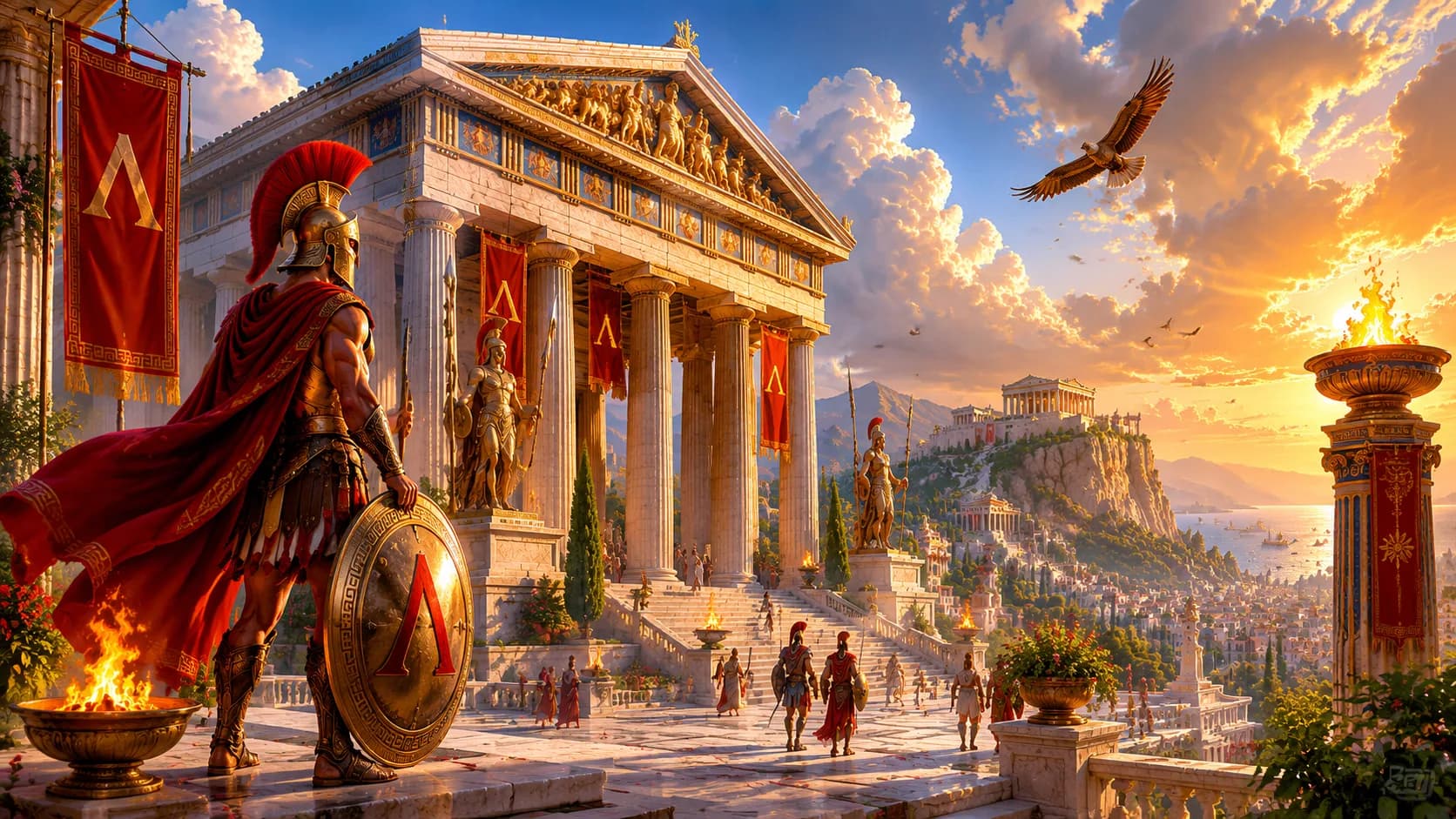
The Mysteries of Delphi and the Oracle Experience
🏛️ Fun fact: Ancient Greeks called Delphi the "navel of the world": the literal center of the Earth. According to myth, Zeus released two eagles from opposite ends of the world and they met at Delphi. So the most important spiritual center in the ancient world was essentially located by a divine GPS system involving birds. Modern technology has caught up: we now use satellites instead of eagles, though the eagles were arguably more majestic.
- Delphi: The Navel of the Ancient World
- The Pythia: How the Oracle Delivered Prophecies
- The Sacred Rituals and Ceremonies of Delphi
- The Temple of Apollo: Architecture of Divine Connection
- Pilgrims and Seekers: Who Traveled to Delphi and Why
- The Delphic Maxims: Ancient Wisdom That Still Resonates
- The Science Behind the Oracle's Trance State
- Delphi's Influence on Ancient Greek Culture and Philosophy
- The Treasury Houses and Sacred Way of Delphi
- How Immersive Audio Brings Delphi's Mysteries to Life
- Experience the Oracle of Delphi Through Visionaria
- The Bottom Line
- Frequently Asked Questions
High on the slopes of Mount Parnassus, where the air grows thin and the landscape opens into sweeping views of olive groves cascading toward the Gulf of Corinth, stands one of the most extraordinary sacred sites in human history. Delphi the place the ancient Greeks believed was the very center of the world was far more than a temple or a city. It was a living intersection between the human and the divine, a place where mortals could approach the threshold of cosmic knowledge and, through the voice of the Pythia, receive guidance from Apollo himself. For over twelve centuries, this mountainside sanctuary shaped the course of civilizations, influenced the decisions of legendary leaders, and inspired a tradition of self-knowledge that echoes through philosophy, psychology, and meditative practice to this day.
The mysteries of Delphi and the Oracle experience encompass the full spectrum of ancient Greek spiritual life: the elaborate rituals of purification and offering, the architectural genius of the Temple of Apollo, the extraordinary altered consciousness states of the Pythia (the Oracle priestess), and the profound wisdom traditions including the famous Delphic Maxims "Know Thyself" and "Nothing in Excess" that emerged from this sacred center. Modern archaeology, geology, and neuroscience have revealed fascinating explanations for what ancient worshippers experienced, while immersive storytelling technology now allows us to step inside Delphi's sacred spaces and experience the Oracle's mystery through spatial 3D audio hearing the chanting of priests, the crackle of sacred fires, and the Oracle's enigmatic voice as if standing within the temple itself.
"For over a thousand years, the most powerful people in the ancient world would travel weeks across treacherous terrain, bring expensive gifts, and wait in long queues all to hear a woman sitting on a tripod speak in riddles they might not understand. If that doesn't sound like the original escape room experience, nothing does. At least modern escape rooms have a customer satisfaction guarantee."
Key Facts About the Mysteries of Delphi
- ••The Navel of the World: Ancient Greeks believed Delphi was the exact center of the Earth, marked by a sacred stone called the Omphalos ("navel"), placed where Zeus's two eagles met after being released from the edges of the world
- ••Duration of Operation: The Oracle of Delphi functioned for over 1,200 years (from approximately the 8th century BCE to the 4th century CE), making it one of the longest-operating religious institutions in human history
- ••The Pythia: The Oracle priestess was always a woman chosen from among the local population, who sat upon a sacred tripod in the inner sanctum (adyton) of Apollo's temple and delivered prophecies in an altered state of consciousness
- ••Geological Discovery: Modern geologists have identified two fault lines intersecting directly beneath the Temple of Apollo, which released ethylene and other hydrocarbon gases, potentially contributing to the Pythia's trance state
- ••The Delphic Maxims: 147 aphorisms inscribed at the temple, including the famous "Know Thyself" (Gnothi Seauton) and "Nothing in Excess" (Meden Agan), which continue to influence philosophy and psychology today
- ••Pan-Hellenic Importance: Delphi hosted the Pythian Games (second in prestige only to the Olympic Games) and served as a neutral diplomatic center where rival city-states could negotiate through the Oracle's guidance
Quick Answer
🏛️ Fun fact: Ancient Greeks called Delphi the "navel of the world": the literal center of the Earth. According to myth, Zeus released two eagles from opposite ends of the world and they met at Delphi. So the most important spiritual center in the ancient world was essentially located by a divine GPS system involving birds. Modern technology has caught up: we now use satellites instead of eagles, though the eagles were arguably more majestic.
Delphi: The Navel of the Ancient World
The story of Delphi begins with a myth that speaks to humanity's deepest need to locate itself in the cosmos. According to ancient tradition, Zeus sought to find the exact center of the world by releasing two golden eagles from the opposite ends of the Earth. The eagles flew toward each other and met at Delphi, whereupon Zeus placed a sacred stone the Omphalos, meaning "navel" to mark the spot. This wasn't merely a poetic conceit; the ancient Greeks genuinely believed that Delphi occupied a unique position in the geography of the cosmos, a place where the veil between human and divine realms grew thin enough for communication to flow freely between them.
Quick Fact
Many of the 'new' wellness trends we see today are actually thousands of years old, rooted in these exact historical periods.
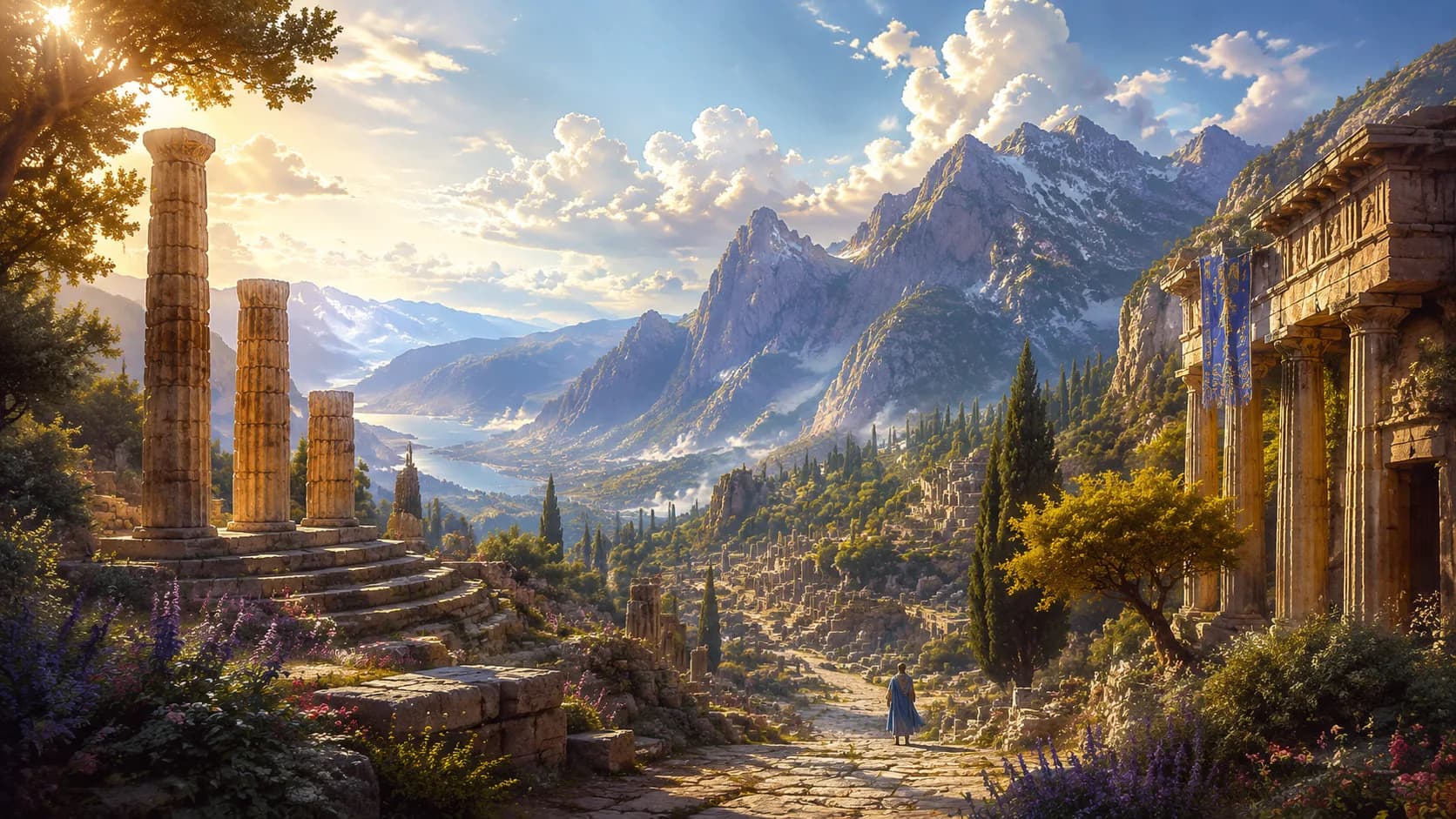
The physical setting of Delphi contributed powerfully to its sense of otherworldly significance. Perched at approximately 570 meters above sea level on the southwestern slopes of Mount Parnassus, the sanctuary occupies a natural amphitheater of limestone cliffs that seems designed to inspire reverence. The twin rocks of the Phaedriades ("Shining Ones") tower above the site, reflecting sunlight across the valley in a display that ancient visitors interpreted as divine radiance. Below, the sacred Castalian Spring flows from a cleft between the rocks the same spring where pilgrims purified themselves before consulting the Oracle. The landscape itself seemed to confirm that this was a place apart, a threshold between the ordinary world and something far greater.
Read more: The Magical Wizarding School Explained

Before Apollo claimed Delphi, the site was sacred to Gaia, the Earth Mother, and guarded by a great serpent called Python. According to myth, the young Apollo traveled to Delphi and overcame Python, claiming the Oracle for himself and establishing the prophetic tradition that would endure for over a millennium. This transition from earth goddess worship to Apollonian prophecy reflects a broader shift in Greek religion but Delphi never entirely lost its connection to the chthonic (earth-based) energies that first made it sacred. The gases that rose from beneath the temple, the spring waters that flowed from deep within the mountain, and the geological forces that shaped the landscape all connected the Oracle's prophecy to the living body of the Earth itself a connection that modern archaeological research into ancient sacred sites continues to illuminate.
Why did the historian break up with the archaeologist? Because her career was literally in ruins.
The Pythia: How the Oracle Delivered Prophecies
At the heart of Delphi's mystery stood the Pythia the priestess who served as Apollo's voice on Earth. Contrary to popular imagination, the Pythia was not a mysterious figure from birth; she was chosen from among ordinary women of the local community, typically of good character and reputation. In the earliest periods, the Pythia was required to be a young maiden, but after an incident in which a consultant fell in love with the priestess, the age requirement was changed to women over fifty though they still dressed in the garments of a young woman as a symbol of purity and renewal. The selection process itself was considered divinely guided, with Apollo's choice manifesting through signs and circumstances.
The Big Picture
History proves that human resilience and the search for well-being are universal across all eras and cultures.
The prophetic process was extraordinary in its detail and solemnity. On the seventh day of each month (Apollo's sacred day), the Pythia would begin her preparations at dawn. She bathed in the sacred Castalian Spring, drank from the Kassotis fountain, and offered laurel leaves and barley on a sacred fire. She then descended into the adyton the innermost sanctum of Apollo's temple, a subterranean chamber that no ordinary person was permitted to enter. There, she sat upon a tall golden tripod positioned over a chasm in the earth from which vapors rose. Holding a spray of laurel and a phiale (libation bowl), the Pythia entered an altered state of consciousness and began to speak.
What the Pythia spoke was, by all ancient accounts, not ordinary language. Her utterances were described as ecstatic, sometimes barely comprehensible, delivered in a voice that seemed to come from beyond herself. A group of male priests called prophetai ("interpreters") attended the session, translating the Pythia's ecstatic speech into the hexameter verse or prose responses that consultants received. This interpretive layer added complexity and ambiguity to the Oracle's responses, creating the famously cryptic prophecies that could be read in multiple ways. The ambiguity wasn't a flaw; it was a feature that encouraged the deep reflection and creative interpretation that Delphic wisdom demanded of its seekers.
"The Pythia essentially invented the concept of 'terms and conditions apply.' Her prophecies were technically always accurate it was the interpretation that was the tricky part. King Croesus was told that if he crossed the river, a great empire would be transformed. He assumed it meant his enemy's empire. It did not. The Oracle was the original 'read the fine print' advocate, two thousand years before fine print existed."

Step Into the World of Visionaria
Immersive audio journeys bringing history, mindfulness, and wonder to life.
A Roman walks into a bar, holds up two fingers, and says, 'Five beers, please.'
The Sacred Rituals and Ceremonies of Delphi
Consulting the Oracle was not a casual affair it was a deeply ritualized experience that could take days of preparation and involved multiple stages of purification, offering, and spiritual readiness. The journey to Delphi was itself considered a sacred act, with pilgrims often traveling for weeks across difficult terrain, crossing seas and mountain passes, their anticipation building with each step closer to the navel of the world. Upon arrival, consultants first had to register with the Delphic authorities and pay the consultation fee a system that was remarkably well organized for the ancient world, with different fee structures for individuals, delegations, and city states.
Visionaria Insight
By immersing ourselves in these historical soundscapes, we reconnect with a timeless human tradition of storytelling and mental restoration.
The purification rituals began at the Castalian Spring, where consultants washed their hair and, in the case of those seeking answers to particularly significant questions, immersed their entire bodies in the cold mountain waters. This wasn't merely symbolic cleanliness the ancient Greeks understood purification as a spiritual transformation that prepared the mind and soul to receive divine communication. The practice resonates powerfully with modern understanding of how ritual preparation enhances meditative states the act of physical purification created a psychological boundary between ordinary life and sacred experience, priming the mind for heightened receptivity.
After purification, consultants proceeded to the great altar of Apollo where animal offerings were made. The behavior of the sacrificial animal was itself an omen if it trembled when sprinkled with cold water, it was considered a favorable sign from Apollo, and the consultation could proceed. If it did not, the consultation was postponed. This screening process served a brilliant dual purpose: it maintained the Oracle's reputation by ensuring consultations occurred only under "favorable" conditions, and it built further anticipation and psychological readiness in the consultant. By the time a pilgrim finally entered the temple to hear the Pythia's words, they had undergone a transformation of mindset that made them profoundly receptive to whatever guidance was offered a principle that guided meditation practitioners recognize as essential to deep transformative experience.
What's an ancient intellectual's favorite exercise? Jumping to conclusions.
The Temple of Apollo: Architecture of Divine Connection
The Temple of Apollo at Delphi was rebuilt at least six times throughout the sanctuary's history, each incarnation grander than the last. The version whose ruins visitors see today the fourth major construction, completed around 330 BCE was a magnificent Doric temple with six columns across the front and fifteen along each side, constructed from local limestone and adorned with sculptures depicting Apollo's arrival at Delphi and the great struggles between the Olympian gods and the giants. The temple wasn't merely a building; it was a machine for producing divine encounter, designed so that every architectural element guided the visitor's psychological state toward receptivity and awe.
The approach to the temple was masterfully choreographed. Visitors ascended the Sacred Way a winding processional road that climbed through the sanctuary, passing the treasury houses of various city states, monumental statues, and commemorative offerings. Each turn revealed new vistas and new displays of wealth and devotion, building the visitor's sense of approaching something momentous. The Sacred Way functioned as a narrative journey much like the carefully paced structure of modern cinematic meditation experiences where each stage prepared the mind for the next level of engagement.
Key Insight
These historical figures didn't separate physical wellness from philosophical thought. To them, it was all one continuous practice of living well.
Inside the temple, the visitor encountered a series of increasingly sacred spaces. The pronaos (entrance porch) displayed the famous Delphic Maxims inscribed in stone "Know Thyself" and "Nothing in Excess" among them setting the philosophical tone for the encounter ahead. The naos (main hall) contained the sacred hearth where an eternal flame glowed, tended by the women of Delphi. And deep within, accessible only to the Pythia and the priests, lay the adyton the forbidden inner chamber where prophecy occurred. Archaeological evidence suggests the adyton was positioned directly above a geological fault from which gases seeped, creating an environment that was literally unlike anywhere else on Earth a unique convergence of architecture, geology, and ritual that modern temple archaeology continues to study with fascination.
"The Temple of Apollo was essentially the ancient world's most exclusive venue. It had a strict door policy, required weeks of advance booking, charged premium prices, and the main attraction spoke in riddles. Some things about exclusive experiences clearly haven't changed in three thousand years except modern venues are less likely to have geological gas vents under the VIP section."
Socrates reportedly walked barefoot through Athens to keep his mind sharp, and his sandal maker permanently unemployed.
Pilgrims and Seekers: Who Traveled to Delphi and Why
The consultants who traveled to Delphi represented an extraordinary cross section of the ancient world. Kings, generals, legislators, and tyrants came seeking guidance on matters of state should a colony be founded? Should an engagement be joined? How should a new city's laws be organized? The Athenian lawgiver Solon consulted Delphi before establishing the constitutional reforms that laid the groundwork for Athenian democracy. The Spartan kings routinely sought the Oracle's guidance before major campaigns. Even foreign rulers like Croesus of Lydia and the pharaohs of Egypt sent rich delegations to seek the Pythia's wisdom.
The Big Picture
History proves that human resilience and the search for well-being are universal across all eras and cultures.
But Delphi was not exclusively for the powerful. Ordinary individuals also made the pilgrimage, seeking answers to deeply personal questions: Should I marry this person? Should I relocate my family? Will my illness improve? What career should my child pursue? These personal consultations reveal something remarkable about the ancient Greek relationship with the divine there was no question too small or too personal for Apollo's attention. The Oracle served as a kind of ultimate counselor, combining spiritual authority with practical wisdom in a way that addressed the full spectrum of human concern.
The diversity of Delphi's consultants gave the Oracle a unique pan-Hellenic perspective. Because delegations came from across the Greek world and beyond the priests of Delphi accumulated an extraordinary body of knowledge about geography, politics, resources, and cultural practices. Some modern historians argue that the Oracle's prophecies were informed not just by divine inspiration but by this vast intelligence network the priests of Delphi may have been among the best informed individuals in the ancient world, their guidance reflecting genuine geopolitical insight wrapped in the language of prophecy. This combination of spiritual authority and practical intelligence made Delphi the most trusted advisory institution in the Mediterranean, a role that shaped legendary decisions and journeys across the ancient world.
Why did the inventor of the wheel win an award? Because his idea really got things rolling.
The Delphic Maxims: Ancient Wisdom That Still Resonates
Among Delphi's most enduring legacies are the Delphic Maxims a collection of 147 aphorisms inscribed on the temple walls, traditionally attributed to the Seven Sages of Greece. These concise statements of wisdom were intended to guide visitors toward the state of mind necessary for receiving divine insight, and their influence has rippled through Western thought for over two and a half millennia. The two most famous "Gnothi Seauton" (Know Thyself) and "Meden Agan" (Nothing in Excess) became foundational principles of Greek philosophy and continue to inform modern psychology, meditation practice, and personal development.
"Know Thyself" was far more than a suggestion for casual self-reflection. In the Delphic context, it was a prerequisite for prophecy the idea that only a person who understood their own nature, limitations, and position in the world could properly interpret and apply the Oracle's guidance. Socrates famously adopted this maxim as the cornerstone of his philosophical method, turning it into the driving principle of Western intellectual life. In modern terms, "Know Thyself" anticipates the core insight of mindfulness-based psychology: that emotional resilience and wise decision making require accurate self-awareness a recognition of one's own patterns, biases, strengths, and vulnerabilities.
Visionaria Insight
By immersing ourselves in these historical soundscapes, we reconnect with a timeless human tradition of storytelling and mental restoration.
"Nothing in Excess" spoke to the Greek ideal of sophrosyne moderation, balance, and harmonious self-control. This wasn't puritanical restriction but rather the understanding that excellence in any domain requires balance: courage without recklessness, ambition without greed, passion without obsession. The maxim recognized that human greatness comes not from extremes but from the disciplined integration of opposing tendencies an insight that resonates powerfully with modern research on sustainable meditation and wellness practices, which emphasize consistency and balance over dramatic effort.
"'Know Thyself' has been the most quoted piece of advice in the history of philosophy and possibly the least followed. Socrates spent his entire career asking Athenians if they truly knew themselves, and most of them got quite annoyed about it. Two thousand years later, self-help books are a multi-billion dollar industry, which suggests we're still working on it. The Oracle would probably say 'I told you so.'"
What's an ancient intellectual's favorite exercise? Jumping to conclusions.
The Science Behind the Oracle's Trance State
For centuries, modern scholars dismissed the ancient accounts of the Pythia's ecstatic trance as exaggeration or myth. Then, in the late 1990s and early 2000s, a remarkable interdisciplinary investigation by geologist Jelle Zeilinga de Boer, archaeologist John Hale, and chemist Jeffrey Chanton confirmed that the ancient sources were essentially accurate. Their research demonstrated that two geological fault lines intersect directly beneath the Temple of Apollo, and that these faults release ethylene, methane, and other hydrocarbon gases from the underlying limestone precisely the kind of vapors that could induce the altered states of consciousness described in ancient texts.
Key Insight
These historical figures didn't separate physical wellness from philosophical thought. To them, it was all one continuous practice of living well.
Ethylene, in particular, is known to produce effects remarkably consistent with ancient descriptions of the Pythia's behavior. In low concentrations, it can cause euphoria, a sense of floating, reduced inhibition, and altered speech patterns without loss of consciousness. In the confined, poorly ventilated adyton of the temple, vapors rising through cracks in the floor would have created a localized atmosphere capable of inducing these effects, especially in someone who was fasting and psychologically primed by hours of ritual preparation. The Pythia's tripod, elevated above the floor, would have positioned her directly in the concentration zone of the rising gases.
But the geological explanation is only part of the story. Modern neuroscience suggests that the Pythia's trance involved a convergence of multiple consciousness altering factors: the physiological effects of the gases, the psychological impact of deep ritual preparation, the expectation of divine encounter shaped by lifelong religious belief, the sensory environment of the dimly lit, incense filled adyton, and potentially meditative practices that the Pythia may have employed. This multi factor model of the Oracle's trance state mirrors modern understanding of how immersive experiences create altered states of consciousness combining environmental factors, psychological priming, and sensory stimulation to produce states of heightened awareness and receptivity that feel genuinely transcendent.
"So the Oracle's mystical powers were partly geological. The ancient Greeks built the most famous prophetic institution in history directly over a natural gas vent. This is either a remarkable coincidence or the most successful real estate feature in antiquity. Modern listing: 'Mountain views, eternal spring, gas powered prophecy capabilities. Must see to believe. Literally.'"
A Roman walks into a bar, holds up two fingers, and says, 'Five beers, please.'
Delphi's Influence on Ancient Greek Culture and Philosophy
Delphi's influence on ancient Greek civilization cannot be overstated it was the closest thing the fragmented Greek world had to a central authority. In a civilization composed of hundreds of independent city states with no shared government, the Oracle provided a common reference point for decision making that was recognized and respected across political boundaries. When city states considered founding colonies a major economic and demographic undertaking they almost invariably consulted Delphi first. The Oracle's guidance shaped the pattern of Greek colonization across the Mediterranean, from Sicily and southern Italy to the Black Sea coast, effectively directing the geographic expansion of Greek civilization.
Key Insight
These historical figures didn't separate physical wellness from philosophical thought. To them, it was all one continuous practice of living well.
Delphi's role in Greek philosophy was equally profound. The maxim "Know Thyself" became Socrates' philosophical rallying call, transforming from a religious instruction into the foundational principle of rational self-examination. Plato, Socrates' student, made Delphi central to his dialogue "Apology," where Socrates describes how the Oracle's declaration that no one was wiser than Socrates launched his philosophical career his search to understand what the Oracle meant led to the invention of the Socratic method itself. Through this chain of influence, the words inscribed on Delphi's temple became the seed from which Western philosophy grew, connecting the Oracle's ancient wisdom to the entire tradition of critical self-examination that defines intellectual curiosity and inquiry.
Beyond philosophy, Delphi shaped Greek religious practice, artistic expression, and athletic competition. The Pythian Games held every four years at Delphi in honor of Apollo were the second most prestigious athletic competition in Greece after the Olympics. Unlike the Olympics, the Pythian Games also included musical and poetic competitions, reflecting Apollo's dual role as god of both prophecy and the arts. The treasury houses that lined the Sacred Way were filled with masterpieces of Greek sculpture, painting, and metalwork, making Delphi one of the ancient world's greatest art galleries a living museum of Greek artistic achievement that connected creative expression to divine inspiration in a way that modern creativity research continues to explore.
A Roman walks into a bar, holds up two fingers, and says, 'Five beers, please.'
The Treasury Houses and Sacred Way of Delphi
The Sacred Way the processional path that wound upward through the sanctuary from the main entrance to the Temple of Apollo was one of the most extraordinary architectural experiences in the ancient world. Approximately 200 meters long, the Sacred Way was lined on both sides with an astonishing concentration of monuments: treasury buildings, commemorative statues, votive offerings, and inscribed pillars that represented the wealth, devotion, and competitive ambition of Greek city states. Walking the Sacred Way was a journey through the achievements and aspirations of an entire civilization, a curated experience designed to overwhelm the senses and prepare the mind for the divine encounter that awaited at the top.
Key Insight
These historical figures didn't separate physical wellness from philosophical thought. To them, it was all one continuous practice of living well.
The treasury houses were particularly remarkable. These small but exquisitely crafted buildings erected by individual city states to house their most precious offerings to Apollo served as both religious dedications and political advertisements. The Treasury of the Athenians, rebuilt after the Athenian led Greek coalition's remarkable stand at Marathon, displayed reliefs celebrating the deeds of Heracles and legendary heroes reminding every visitor of Athenian valor. The Treasury of the Siphnians, funded by the silver mines of the tiny island of Siphnos, was so lavishly decorated that it rivaled the offerings of far larger states. Each treasury told a story of civic pride and divine gratitude, creating a competitive display that motivated city states to outdo each other in the magnificence of their offerings.
The cumulative effect of walking the Sacred Way was psychologically transformative. Modern archaeologists and psychologists who study ancient ritual spaces recognize that the Sacred Way functioned as a carefully designed liminal corridor a transitional space that systematically shifted the visitor's mental state from the everyday to the sacred. Each monument, each inscription, each glimpse of the temple above built the sense of approaching something momentous. By the time the pilgrim reached the temple terrace and gazed up at Apollo's sanctuary, they had been psychologically prepared by the journey itself to receive whatever wisdom awaited a principle of experiential design that modern immersive storytelling and guided meditation journeys consciously employ.
Why did the Stoic cross the road? Because it was the rational thing to do, and he was indifferent to the traffic.
How Immersive Audio Brings Delphi's Mysteries to Life
Of all the ancient sacred sites that immersive spatial audio can bring to life, Delphi may be the most powerfully suited to the medium. The Oracle experience was fundamentally multisensory and acoustic the sound of chanting priests echoing off limestone cliffs, the crackle and hiss of sacred fires on the great altar, the murmur of pilgrims ascending the Sacred Way, the splash of purification waters at the Castalian Spring, and above all, the voice of the Pythia emerging from the depths of the temple in the dim, incense thick air of the adyton. These sounds were inseparable from the experience's power, and recreating them in three-dimensional audio creates a sense of presence that visual media alone cannot achieve.
Visionaria Insight
By immersing ourselves in these historical soundscapes, we reconnect with a timeless human tradition of storytelling and mental restoration.
Visionaria's spatial 3D audio technology positions sounds in precise three-dimensional space around the listener, creating the perceptual experience of actually standing within an acoustic environment. For a Delphi journey, this means hearing footsteps on ancient stone beneath your feet, the wind moving through olive groves to your left, birdsong echoing off cliff faces above and behind you, and the distant sound of hymns growing louder as you approach the temple. Spatial audio can make a story feel more like being there than ordinary stereo does, turning a story about Delphi into the experience of walking its Sacred Way.
The emotional and psychological benefits of experiencing Delphi through immersive audio extend beyond entertainment or education. The Oracle's tradition of self-knowledge and balanced living "Know Thyself," "Nothing in Excess" gains new resonance when experienced not as abstract philosophy but as living wisdom encountered in context. Hearing these maxims spoken as you approach the temple, feeling the atmosphere of anticipation and reverence that surrounded the Oracle's pronouncements, creates a meditative experience that connects ancient wisdom to personal reflection in a way that no textbook can replicate. The mysteries of Delphi become not just history but lived practice a journey into self-understanding guided by the same principles that Socrates, Plato, and countless seekers found transformative.
Read more: How Storytelling Activates Multiple Brain Regions
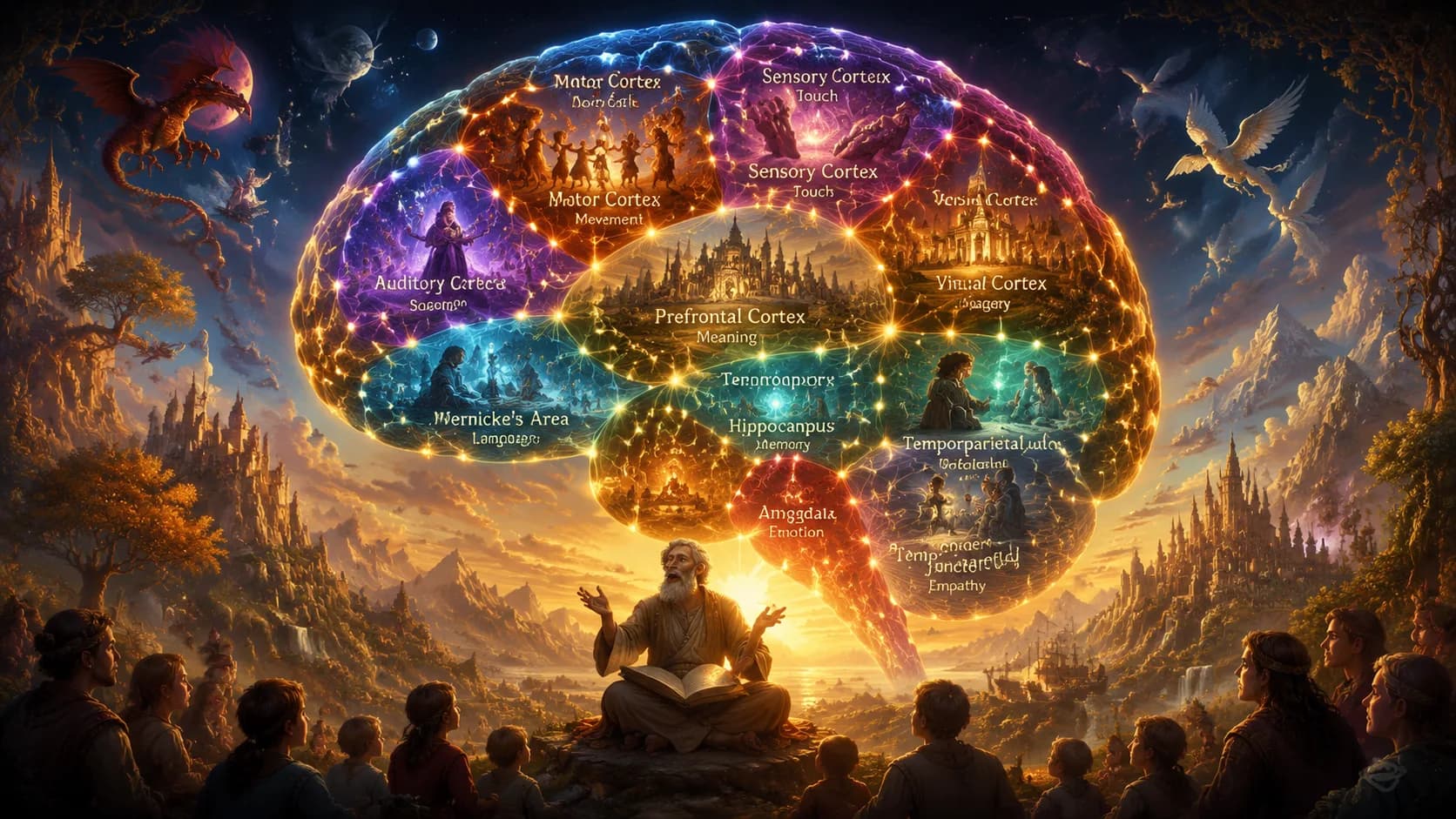
"With spatial audio, you can now experience the Oracle of Delphi without the weeks of sea travel, the mountain hiking, the animal offerings, or the long wait in line. The ancient Greeks would have been absolutely astonished not by the technology, but by the fact that you can receive profound wisdom while lying on your couch. They climbed mountains for this. You press play. Progress is real."
An Epicurean, a Stoic, and a Cynic walk into a garden. The bartender says, 'Is this some kind of philosophical joke?'
Experience the Oracle of Delphi Through Visionaria
Everything this article has explored the mythology of the world's navel, the Pythia's extraordinary prophetic process, the elaborate purification rituals, the awe-inspiring Temple of Apollo, the wisdom of the Delphic Maxims, and the science behind the Oracle's trance state converges in Visionaria's immersive audio journeys. Each journey to Delphi is crafted to activate the same principles of narrative transportation, sensory immersion, and psychological transformation that made the original Oracle experience so powerful placing you on Mount Parnassus, walking the Sacred Way among ancient monuments, and entering Apollo's temple to hear the Oracle's enigmatic voice.
Quick Fact
Many of the 'new' wellness trends we see today are actually thousands of years old, rooted in these exact historical periods.
With immersive journeys spanning the entire ancient world from the sacred temples of Egypt and the gates of Babylon to the magical realms of fiction and encounters with history's most fascinating figures Visionaria transforms ancient history from something you read about into something you experience firsthand. The mysteries of Delphi aren't locked in the past; through spatial 3D audio technology, they become accessible, immersive, and genuinely transformative experiences that connect you to the deepest traditions of human wisdom.
Walking Through Ancient Athens in Your Mind: How Imaginative Journeys Through the Acropolis, Agora & Plato's Academy Rebuild Focus & Deepen Calm
Discover how walking through ancient Athens in your mind (from the Parthenon and Agora to the Theatre of Dionysus and Plato's Academy) uses spatial audio meditation to rebuild focus, deepen calm, and expand historical u...
What's an ancient intellectual's favorite exercise? Jumping to conclusions.
The Bottom Line
The mysteries of Delphi represent one of humanity's most extraordinary experiments in bridging the gap between the human and the divine a twelve century tradition of prophecy, self-knowledge, and sacred experience that shaped the course of Western civilization. From the geological vapors beneath the Temple of Apollo to the philosophical maxims inscribed on its walls, Delphi combined natural wonder, architectural genius, ritual sophistication, and genuine psychological insight into an experience that millions found transformative.
Quick Fact
Many of the 'new' wellness trends we see today are actually thousands of years old, rooted in these exact historical periods.
Read more: The Gods of Olympus and the Stories Behind Them
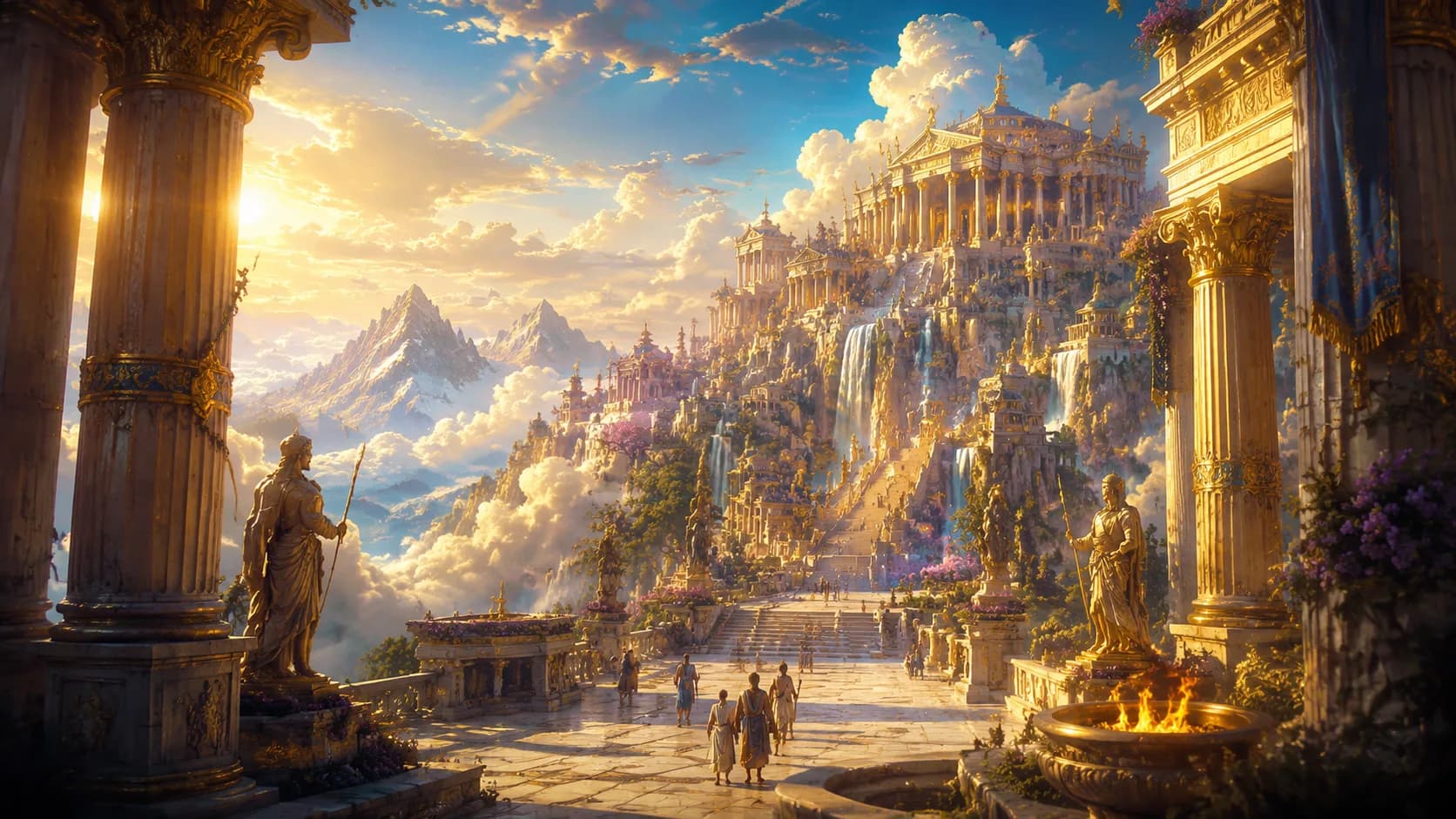
For those seeking to experience Delphi's mystery and wisdom firsthand, Visionaria offers immersive spatial 3D audio journeys that bring ancient sacred sites to life. Continue exploring: discover The Sacred Temples of Ancient Egypt, explore The Most Legendary Quests in Mythology, or read about Why Fictional Worlds Feel So Real to Readers.
Experience More with Visionaria
Download the app to explore guided historical and wellness journeys.
Why did the Stoic cross the road? Because it was the rational thing to do, and he was indifferent to the traffic.
This article is for educational and informational purposes only. Historical details are based on available research and may evolve as new evidence emerges.
Visionaria journeys are designed for relaxation, guided imagination, and personal enrichment. They are not a substitute for medical, mental health, legal, or professional advice.