How Natural Landscapes Inspired Ancient Mythology
💡 Fun fact: The ancient Greeks believed Mount Olympus was so tall that its summit touched the sky, and they weren't entirely wrong. At 2,917 metres, the peak is above the cloud line for most of the year, creating a natural "ceiling" that made it look like the mountain literally pierced the heavens. No wonder they put the gods up there.
- How Natural Landscapes Inspired Mythology
- Mountains as Homes of the Gods
- Rivers, Lakes, and Sacred Waters
- Forests and Groves in Mythological Imagination
- Volcanoes, Caves, and the Underworld
- Oceans and Islands in Ancient Storytelling
- Deserts, Plains, and the Mythology of Open Spaces
- How Landscape Shaped Greek Mythology
- Norse Mythology and the Frozen North
- Egyptian Mythology and the Nile
- Why Landscape Mythology Still Resonates
- Experiencing Mythological Landscapes Through Audio
- The Bottom Line
- Frequently Asked Questions
Stand at the base of a mountain that disappears into clouds and you feel something primal awe, insignificance, wonder. Watch lightning split the sky above a storm tossed ocean and you understand why ancient sailors imagined Zeus hurling thunderbolts from heaven. Walk into an ancient forest so dense that sunlight barely reaches the floor and you sense why every culture on Earth populated its woodlands with spirits, gods, and enchanted creatures. The natural world didn't merely backdrop ancient mythology it wrote the script.
The relationship between natural landscapes and ancient mythology is one of the most fundamental connections in human culture. Across every civilisation Greek, Norse, Egyptian, Hindu, Celtic, Japanese, Aboriginal Australian, and Indigenous American the physical geography of the land directly shaped the mythological stories that arose from it. Mountains became the thrones of gods. Rivers became divine beings or the boundaries between life and the afterlife. Forests became enchanted realms inhabited by spirits and supernatural beings. Volcanoes became gateways to the underworld. Oceans represented the primordial chaos from which the world emerged. This was not coincidence it was the natural human response to landscapes of extraordinary power, beauty, and mystery. Ancient peoples experienced the same awe we feel today when standing before a sacred mountain, entering a primeval forest, or watching the sea during a storm and they translated that awe into the mythological narratives that have shaped human consciousness for millennia. Understanding this connection reveals how deeply landscape is woven into the fabric of human storytelling, spirituality, and sensory imagination.
In this comprehensive guide, you'll discover how specific landscape features mountains, rivers, forests, caves, volcanoes, oceans, deserts, and islands inspired the mythologies of Greece, Scandinavia, Egypt, and cultures worldwide. You'll learn why the Greek gods lived on cloud wrapped Olympus, why Norse mythology imagined a world tree connecting ice and fire realms, why the Nile shaped Egypt's understanding of life and renewal, and how these ancient landscape connections still resonate in modern imagination, storytelling, and immersive meditation journeys.
"Every mountain is someone's Olympus. Every river is someone's Styx. Every forest is someone's Enchanted Wood. The ancient myths weren't invented in libraries they were experienced standing at the edge of landscapes so extraordinary that the only rational response was 'there must be gods here.' Turns out, the ancients weren't wrong. The gods were always in the landscape. They're still there. You just need headphones and a good imagination to hear them."
Key Facts: Landscapes & Mythology
- ••Universal pattern: Every known human civilisation, from ancient Sumer (3500 BCE) to Aboriginal Australia (60,000+ years of continuous culture), developed mythology directly inspired by local landscape features, confirming that landscape mythology is a fundamental human cognitive response
- ••Mountains = divine homes: Over 80% of the world's mythological traditions place their supreme deities on mountain summits, such as Mount Olympus (Greek), Mount Meru (Hindu/Buddhist), Mount Sinai (Abrahamic), and Mount Kailash (Tibetan), because altitude naturally evokes transcendence, power, and proximity to the heavens
- ••Water = life and transformation: Rivers appear as divine beings in virtually every mythology, such as the Ganges (Hindu), the Nile (Egyptian), the Styx (Greek), and the Rhine (Norse), because water's life-giving, cleansing, and boundary-marking properties naturally inspired stories of purification, renewal, and passage between worlds
- ••Forests = enchantment: Dense forests were the most common setting for supernatural encounters across world mythology because their darkness, unfamiliar sounds, and disorienting pathways naturally activated the human imagination and heightened emotional awareness
- ••Geological accuracy: Modern geology confirms that many mythological "explanations" for landscape features contained surprisingly accurate observations (volcanic activity, tectonic shifts, flood patterns) encoded in narrative form millennia before scientific understanding developed
- ••Modern resonance: Neuroscience research shows that experiencing awe-inspiring landscapes, whether physically or through immersive visualization, activates the same brain regions (default mode network suppression, prefrontal engagement) in modern humans as it would have in our ancestors, explaining why landscape mythology still moves us profoundly
Quick Answer
💡 Fun fact: The ancient Greeks believed Mount Olympus was so tall that its summit touched the sky, and they weren't entirely wrong. At 2,917 metres, the peak is above the cloud line for most of the year, creating a natural "ceiling" that made it look like the mountain literally pierced the heavens. No wonder they put the gods up there.
How Natural Landscapes Inspired Mythology
The connection between landscape and mythology operates through a psychological mechanism that neuroscientists call awe response the overwhelming cognitive and emotional experience triggered by encountering something vastly larger, more powerful, or more mysterious than oneself. When ancient humans stood before a mountain range, watched a volcanic eruption, or sailed into an endless ocean, their brains experienced the same awe response that modern humans feel in identical situations. This awe demanded explanation and in the absence of geological science, mythological narrative provided the most powerful explanatory framework available.
But mythology was never merely "primitive science." The stories ancient peoples created about their landscapes were simultaneously explanations, moral teachings, cultural identity markers, and profound expressions of the human relationship with the natural world. When the Greeks told stories of Zeus on Mount Olympus, they weren't simply explaining why the mountain was tall they were articulating an entire cosmology in which the divine and natural worlds were inseparable. When the Norse imagined Yggdrasil, the world tree whose roots connected ice realms to fire realms, they were encoding their lived experience of Scandinavia's extreme climatic contrasts into a cosmic narrative structure.
Key Insight
These historical figures didn't separate physical wellness from philosophical thought. To them, it was all one continuous practice of living well.
The genius of landscape mythology lies in its embodied quality. These weren't abstract philosophical systems they were stories rooted in places people could visit, see, touch, and feel. A Greek citizen could look up at Olympus and see the home of the gods. An Egyptian farmer could watch the Nile's annual flood and witness the renewal cycle that their mythology described. This tangible, physical quality gave landscape mythology a persuasive power that abstract belief systems could never match and it's the same quality that makes guided visualization stories set in these landscapes so profoundly effective today.
The awe response that ancient humans experienced before extraordinary landscapes is neurologically identical to what modern humans experience. When you stand at the rim of the Grand Canyon or look up at the Himalayas, your brain's default mode network quiets (reducing self-focused thinking), your sense of time expands, and you feel connected to something larger than yourself. Ancient mythology was the cultural technology for processing and transmitting this experience. Modern immersive meditation is the next evolution.
"Ancient people looked at mountains and thought: 'Gods must live there.' Modern people look at mountains and think: 'I should take a photo for Instagram.' Perhaps the ancients had the more poetic response. Either way, the awe is identical it's just the storytelling technology that changed."
An Epicurean, a Stoic, and a Cynic walk into a garden. The bartender says, 'Is this some kind of philosophical joke?'
Mountains as Homes of the Gods
Mountains occupy the most prominent position in landscape mythology worldwide. Their height literally bridging earth and sky made them the natural residence for supreme deities across nearly every culture. Mount Olympus (Greece), Mount Meru (Hindu Buddhist cosmology), Mount Kailash (Tibetan Buddhism and Hinduism), Mount Sinai (Abrahamic tradition), and Mount Fuji (Japanese Shinto) all served as divine dwelling places, establishing a universal pattern: the closer to the sky, the closer to the divine.
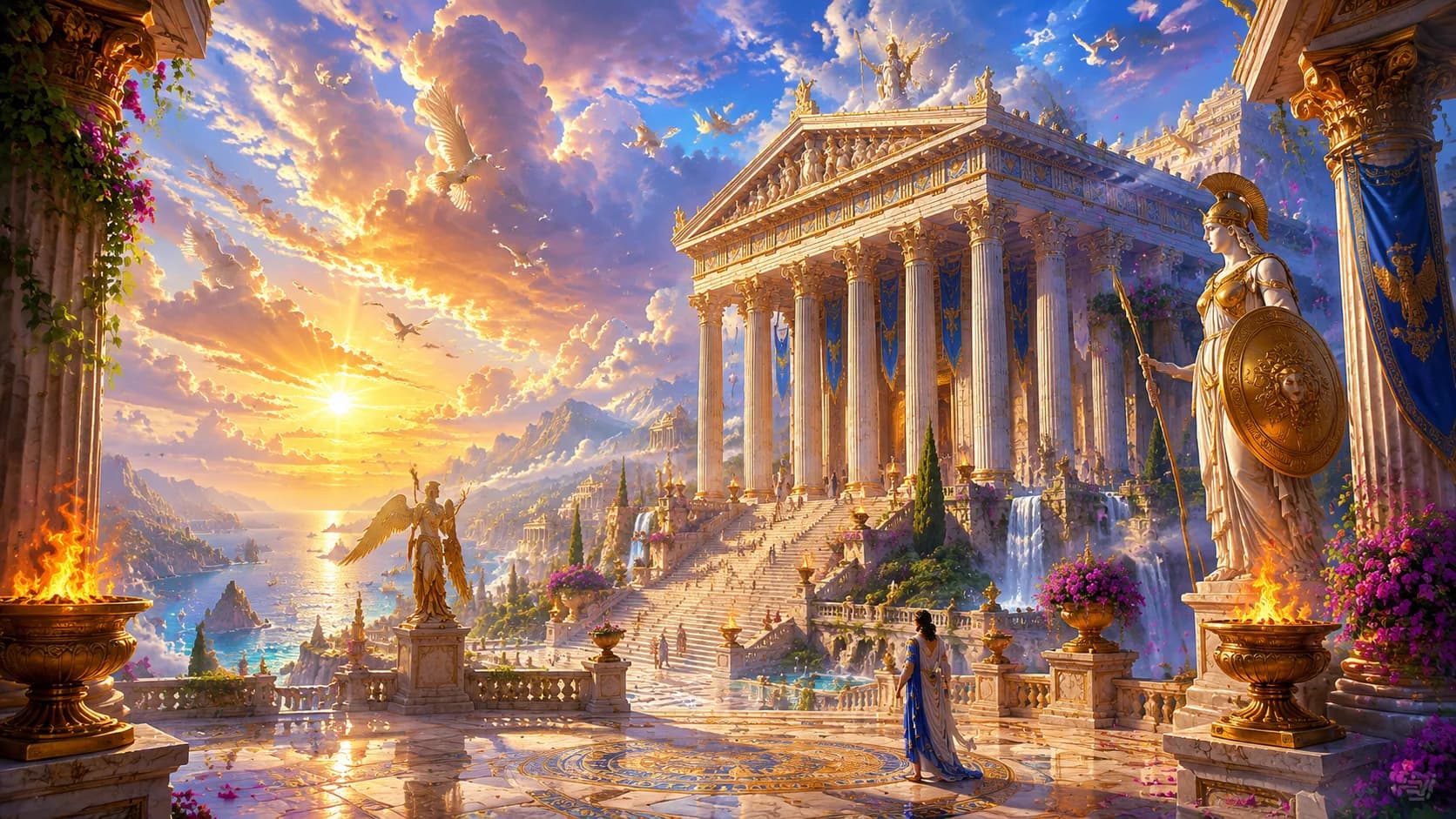
The Greek relationship with Mount Olympus illustrates how physical geography directly shaped theological imagination. At 2,917 metres, Olympus is Greece's highest peak its summit frequently hidden above the cloud line. For ancient Greeks looking up from the Thessalian plain, the mountain appeared to be a pillar connecting earth to heaven, its top literally in a different realm. The clouds that perpetually wreathed the summit weren't meteorological phenomena they were the veil separating mortal and divine worlds. Zeus and the Olympians didn't choose to live on a mountain arbitrarily; the mountain's physical properties extreme height, cloud cover, dramatic weather made it the only logical home for beings of supreme power.
Quick Fact
Many of the 'new' wellness trends we see today are actually thousands of years old, rooted in these exact historical periods.
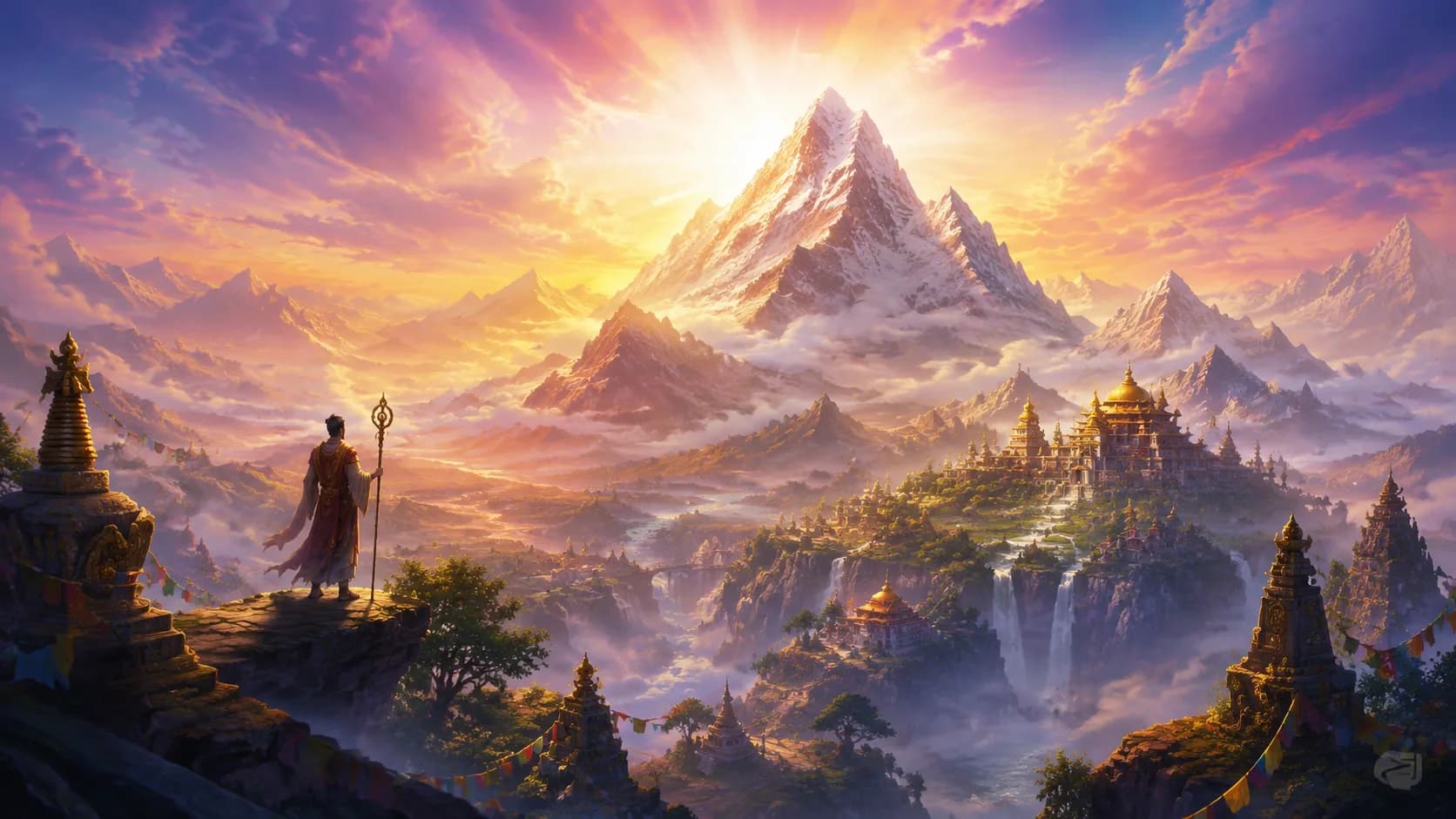
In Hindu Buddhist cosmology, Mount Meru (also called Sumeru) serves as the axis of the entire universe a cosmic mountain of inconceivable height around which the sun, moon, and stars revolve. While Mount Meru is considered a metaphysical rather than physical location, it was modelled on the Himalayas the world's most imposing mountain range. Every Buddhist temple architecture replicates Mount Meru in miniature, with the central spire representing the cosmic peak. The Himalayan landscape didn't just inspire a story; it provided the structural template for an entire civilisation's sacred architecture.
Mount Kailash in western Tibet presents perhaps the most striking example of landscape inspiring mythology. This symmetrical, snow-capped peak (6,638 metres) is considered the home of Shiva in Hinduism, the centre of the universe in Jainism, and a sacred site in Tibetan Buddhism. Its extraordinary visual symmetry resembling a natural pyramid and its position as the source of four of Asia's great rivers (Indus, Sutlej, Brahmaputra, Karnali) create a physical geography so remarkable that multiple cultures independently concluded it must be the axis of the world.
"Mountains are nature's way of pointing at the sky and saying 'look up.' Every civilisation that looked up at a really impressive mountain came to essentially the same conclusion: 'Something divine lives up there.' The Greeks called it Olympus. The Hindus called it Meru. The Japanese called it Fuji. The basic theological argument was always the same: 'It's really, really tall and really, really impressive, therefore gods.'"

Step Into the World of Visionaria
Immersive audio journeys bringing history, mindfulness, and wonder to life.
A Roman walks into a bar, holds up two fingers, and says, 'Five beers, please.'
Rivers, Lakes, and Sacred Waters
If mountains connected earth to sky, water connected life to the sacred. Rivers, lakes, springs, and seas appear as divine beings, magical boundaries, and sacred substances in virtually every mythology on Earth and the reason is profoundly practical. Water was (and is) the most essential substance for human survival. Its life giving, cleansing, and transformative properties naturally inspired stories of purification, renewal, and the passage between worlds.
In Greek mythology, rivers were literal deities the Potamoi, river gods who were children of Oceanus and Tethys. The River Styx, flowing through the underworld, served as the boundary between the living and the departed a mythological boundary inspired by real Greek rivers whose dark, canyon shrouded waters appeared to flow into the earth itself. The Acheron, Cocytus, and Phlegethon rivers of the Greek underworld correspond to actual Greek waterways whose physical characteristics (dark colour, sulfurous smell, underground courses) made them natural candidates for otherworldly geography. The great Greek myths are inseparable from the waterways that inspired their settings.
Did You Know?
The relentless drive to understand the world was seen not just as an academic pursuit, but as a spiritual and healing practice by the ancients.
The Ganges in Hindu mythology represents perhaps the most elaborate river mythology in the world. According to tradition, the Ganges originally flowed through the heavens before being brought to earth by King Bhagiratha's devotion. The goddess Ganga descended from heaven, her enormous force breaking her fall on Lord Shiva's matted hair before flowing gently across the Indian subcontinent. This mythology encodes real observations: the Ganges originates from Himalayan glaciers (descending from "heaven" the mountain peaks) and flows with tremendous force before spreading across the plains. The physical behaviour of the river is precisely described in mythological language.
Celtic mythology is saturated with sacred springs and wells. The Well of Wisdom (Connla's Well) in Irish mythology contained the salmon of knowledge and was surrounded by nine hazel trees whose nuts contained all the world's knowledge. This mythology reflects the genuine life sustaining importance of freshwater springs in the Celtic world and the ecological reality that springs create abundant micro ecosystems (the "wisdom" concentrated at water sources). Legendary quest narratives frequently centre on finding sacred water sources mirroring the actual survival imperative of locating clean water in ancient landscapes.
Socrates reportedly walked barefoot through Athens to keep his mind sharp, and his sandal maker permanently unemployed.
Forests and Groves in Mythological Imagination
Forests occupy a uniquely powerful position in the mythological imagination simultaneously places of enchantment, transformation, danger, and wisdom. In European, Asian, African, and Indigenous American traditions, the forest represents the unknown, the wild, and the supernatural. The psychological reasons are clear: dense forests limit visibility (heightening uncertainty), amplify unfamiliar sounds (triggering alertness), create disorientation (dissolving ordinary spatial awareness), and support extraordinary biodiversity (populating the environment with surprising encounters).
Did You Know?
The relentless drive to understand the world was seen not just as an academic pursuit, but as a spiritual and healing practice by the ancients.
In Greek mythology, forests and sacred groves served as the dwelling places of nymphs, satyrs, and nature spirits. Sacred groves (alsos) were among the most important religious sites in the ancient Greek world natural temples where trees themselves were considered divine. The grove of Dodona, sacred to Zeus, was the oldest oracle in Greece where priests interpreted the divine will by listening to the rustling of oak leaves. This wasn't mere superstition; it was a sophisticated form of contemplative listening to the natural world, practiced for centuries. The hero's journey repeatedly passes through forests because entering the forest symbolises entering the unknown regions of the psyche.
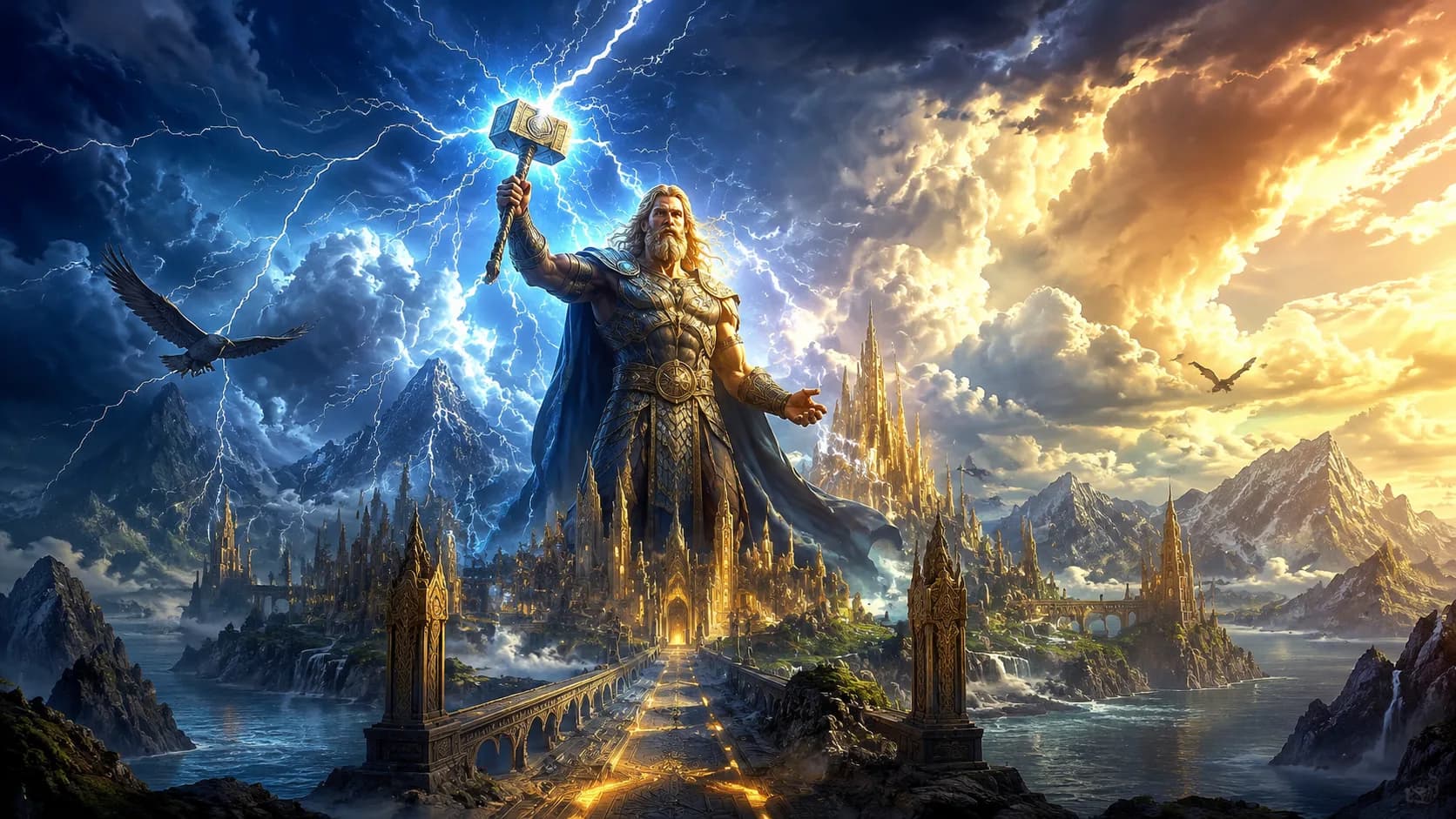
Norse mythology imagined the entire cosmos as a tree. Yggdrasil, the world ash, was an immense tree whose branches extended to the heavens, whose trunk formed the axis of the world, and whose three roots reached into the realms of the gods (Asgard), the giants (Jötunheim), and the primordial void (Niflheim). This cosmic tree mythology almost certainly arose from the Scandinavian experience of ancient boreal forests vast, ancient woodlands where individual trees could live for centuries and whose canopies created a world above the world. Thor and the Norse gods moved through this tree defined cosmos, and every Norse person living in the shadow of the Scandinavian forests could look at the trees around them and see the cosmic architecture of their mythology reflected in the natural world.
Japanese Shinto tradition regards certain forests as shinboku dwelling places of kami (divine spirits). The famous Aokigahara forest at the base of Mount Fuji and the ancient cedar forests of Yakushima are considered living sacred spaces where the boundary between natural and supernatural dissolves entirely. This tradition inspired Japanese animated films particularly Japanese animated films about forest spirits demonstrating how forest mythology continues to shape modern storytelling. Fairy tales from every culture feature enchanted forests precisely because forests naturally evoke the psychological state of heightened imagination and expectation.
Read more: The Gods of Olympus and the Stories Behind Them
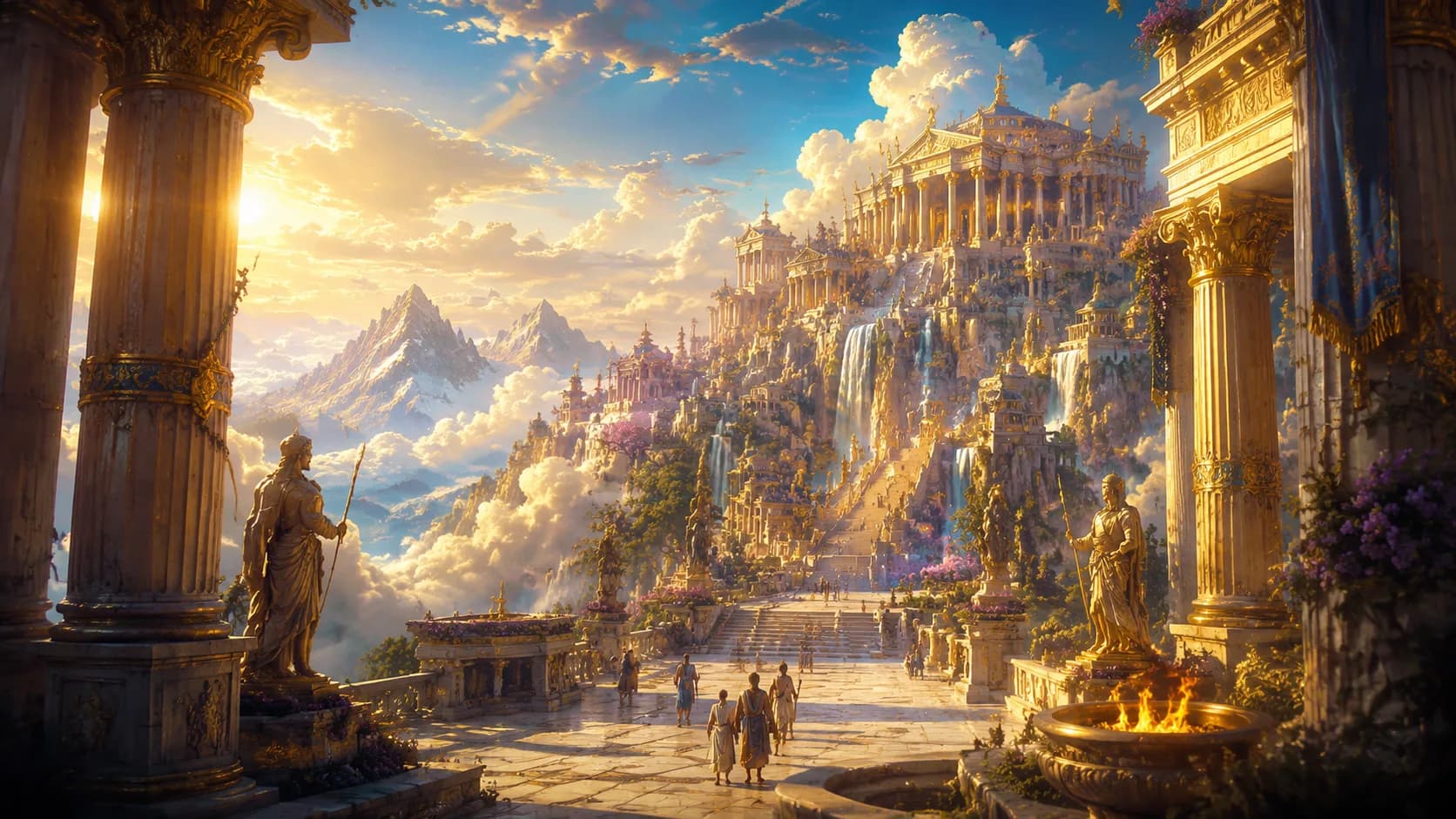
"Forests are nature's VR headset. Step into dense woodland and your ordinary sense of reality starts to dissolve visibility narrows, sounds become mysterious, directions become uncertain, and your imagination activates to fill in what your eyes can't see. Ancient peoples called this enchantment. Psychologists call it 'environmental priming for imaginative cognition.' Same phenomenon, different vocabulary."
A philosopher walked into a wall. His students asked if it hurt. He replied, 'The wall is an illusion, but my headache is quite real.'
Volcanoes, Caves, and the Underworld
If mountains inspired celestial mythology, the subterranean world caves, volcanic vents, and underground rivers inspired mythology's other great domain: the underworld. Every major civilisation developed detailed mythology about what lies beneath the earth's surface, and these mythologies were consistently shaped by the geological features that ancient peoples could actually observe: caves that disappeared into darkness, hot springs with sulfurous odours, volcanic eruptions that sent fire from below, and underground rivers that seemed to flow into oblivion.
Greek underworld mythology provides the clearest example. The entrance to Hades was traditionally located at various real geographic features: the Necromanteion of Acheron (an actual ancient temple built near a river that flows underground), the caves of Cape Tainaron (deep limestone caves on the southern Peloponnese), and the volcanic landscape of the Phlegraean Fields near Naples (where sulfurous vents, boiling mud, and subterranean rumbling created a literal hellscape). These were not random locations they were places where the earth's geological activity was visible, audible, and tangible. The Greek concept of a fiery underworld wasn't abstract imagination; it was mythology built directly from geological observation.
Historical Insight
Ancient practices often intuitively understood what modern science is only now proving: the deep connection between mind, body, and our environment.
Volcanic landscapes produced some of mythology's most dramatic imagery. The forge of Hephaestus (the Greek god of metalworking) was placed beneath volcanic islands specifically Lemnos and the Aeolian Islands because the volcanic activity on these islands (smoke, fire emerging from the earth, rumbling sounds) literally looked and sounded like a divine smithy. In Hawaiian mythology, the goddess Pele lives within Kīlauea volcano her moods determining whether the lava flows gently or erupts with fury. This mythology encodes genuine understanding of volcanic behaviour patterns, transmitted through narrative across generations.
Archaeological surveys have identified over 300 caves across the Mediterranean that show evidence of ancient ritual use confirming that cave mythology wasn't just stories but active, practised spirituality. The Dictaean Cave on Crete (mythological birthplace of Zeus), the Cave of the Sibyl at Cumae (prophetic oracle site), and the Corycian Cave at Delphi (sacred to Pan and the Nymphs) were all real geological features that generated real mythological traditions.
"Imagine being an ancient Greek farmer who accidentally discovers a cave where the ground is hot, the air smells like sulfur, and strange rumbling sounds come from deep below. You have two options: (A) develop a theory about tectonic plate movement and geothermal activity, or (B) conclude that you've found the entrance to the underworld where a divine blacksmith is hammering weapons for the gods. Given the available information, option B was actually the more reasonable conclusion."
A philosopher walked into a wall. His students asked if it hurt. He replied, 'The wall is an illusion, but my headache is quite real.'
Oceans and Islands in Ancient Storytelling
The ocean represented the ultimate expression of the unknown in ancient mythology. For civilisations that could see the sea stretching to the horizon an apparently infinite expanse of water with no visible end the ocean naturally became the symbol of primordial chaos, the source of creation, and the home of creatures beyond ordinary understanding. Greek, Norse, Polynesian, Japanese, and countless other mythologies placed cosmic significance in the sea's boundless, unpredictable power.
In Greek cosmology, Oceanus was a titanic river god encircling the entire world a concept directly inspired by the Mediterranean experience of being surrounded by water. The sea was simultaneously the source of prosperity (trade, fishing, travel) and the source of existential danger (storms, shipwreck, the unknown beyond the horizon). This duality produced mythology that portrayed the ocean as both life giving and terrifyingly powerful home to Poseidon's wrath and the gentle Nereids, to monstrous Scylla and Charybdis and the paradisiacal Elysian Fields. The epic voyage narratives of Odysseus are fundamentally ocean mythology stories that encode the lived experience of Mediterranean seafaring into mythological adventure.
Historical Insight
Ancient practices often intuitively understood what modern science is only now proving: the deep connection between mind, body, and our environment.
Islands held particular mythological significance because they represented isolation, otherness, and possibility. In Greek mythology, islands were where the extraordinary happened: Circe's enchanted island of Aeaea, the island of the Cyclopes, Calypso's hidden paradise of Ogygia, and the island of the Lotus Eaters. Each island represented a world with different rules a landscape separated from the mainland where normal laws of reality could be suspended. This island mythology was directly inspired by the Greek archipelago over 6,000 islands scattered across the Aegean and Ionian seas, many of which were genuinely isolated, ecologically distinct, and culturally unique.
"For an ancient Greek sailor, every island on the horizon was a genuine mystery it might contain friendly farmers, or it might contain a one eyed giant who eats visitors. This wasn't paranoia; it was a reasonable assessment based on the incredible diversity of cultures scattered across 6,000 islands. Odysseus's voyage wasn't exaggeration. It was just a typical Mediterranean commute with better storytelling."
An Epicurean, a Stoic, and a Cynic walk into a garden. The bartender says, 'Is this some kind of philosophical joke?'
Deserts, Plains, and the Mythology of Open Spaces
While mountains, forests, and oceans inspired mythology through their overwhelming physical presence, open landscapes deserts, plains, and steppes inspired mythology through their overwhelming emptiness. The vast, featureless expanses of desert and grassland produced mythologies characterised by cosmic scale, spiritual encounter, and the relationship between the individual soul and the infinite.
Visionaria Insight
By immersing ourselves in these historical soundscapes, we reconnect with a timeless human tradition of storytelling and mental restoration.
The Arabian and Saharan deserts produced mythologies centred on the djinn supernatural beings created from smokeless fire who inhabit the empty places of the earth. Desert mythology across the Middle East and North Africa consistently features encounters with the supernatural in isolated, arid landscapes because the sensory deprivation of desert travel (minimal visual variation, extreme silence, heat induced mirages) naturally produces altered states of consciousness and heightened perception. The great prophetic traditions of the Abrahamic faiths all feature desert revelation Moses at Sinai, Jesus in the wilderness, Muhammad in the cave of Hira reflecting the genuine psychological effect of extended time in featureless landscapes.
The vast Eurasian steppes produced the mythology of Tengri the Eternal Blue Sky worshipped by Turkic and Mongol peoples. When your landscape is an endless grassland stretching to every horizon beneath an enormous, unobstructed sky, the sky itself becomes the most prominent feature of your environment and naturally becomes the dwelling place of the supreme deity. Tengri mythology reflects the steppe experience with remarkable precision: an omnipresent, all seeing deity who is always overhead, always watching, impossible to hide from in a landscape without shelter or cover.
Why did the Stoic cross the road? Because it was the rational thing to do, and he was indifferent to the traffic.
How Landscape Shaped Greek Mythology
Greece provides the most thoroughly documented example of landscape directly shaping mythology. The Greek landscape is uniquely varied for a relatively small geographic area: dramatic mountain ranges, deep valleys, rugged coastlines, thousands of islands, volcanic activity, underground rivers, dense forests, and a brilliant, clear light that makes everything visible with extraordinary clarity. This geographic diversity produced the most elaborate and varied mythology in the ancient world because there were more types of landscape to inspire more types of stories.
Athens sat in a broad plain dominated by the Acropolis a natural limestone outcrop that rises dramatically from flat ground, naturally becoming a sacred high place. The Acropolis wasn't chosen as a temple site because of human design it was chosen because the landscape itself declared it sacred through its dramatic, elevated prominence. Every major Greek city built its most important temples on the highest available point, reflecting the mountain as divine home principle at civic scale.
Visionaria Insight
By immersing ourselves in these historical soundscapes, we reconnect with a timeless human tradition of storytelling and mental restoration.
The Greek practice of placing sanctuaries in specific landscape settings reveals sophisticated understanding of how environment shapes spiritual experience. Delphi, the most important oracle site in Greece, was positioned in a dramatic mountain setting where the landscape itself seemed to amplify the sacred atmosphere steep cliffs, a deep gorge, the Castalian spring, and geological faults that actually produced intoxicating vapours (confirmed by modern geological surveys). The site wasn't sacred despite its geography it was sacred because of its geography.
Modern geological research has confirmed that the Oracle of Delphi sits directly above a geological fault that released ethylene gas a substance known to produce trance-like states and altered consciousness. The Pythia (oracle priestess) genuinely entered altered states, and the "divine vapours" mentioned in ancient sources were real geological phenomena. The landscape didn't just inspire the mythology it literally produced the physiological conditions that the mythology described.
Why did the historian break up with the archaeologist? Because her career was literally in ruins.
Norse Mythology and the Frozen North
Norse mythology provides perhaps the most dramatic example of landscape shaping mythological imagination, because the Scandinavian environment is itself so dramatic. Extreme cold, long winter darkness, volcanic activity, glaciers, fjords, boreal forests, and the aurora borealis each of these distinctive landscape features directly inspired specific elements of the Norse mythological cosmos.
The Norse creation myth begins with Ginnungagap a primordial void flanked by Niflheim (realm of ice and mist) and Muspelheim (realm of fire). When ice and fire met in the void, the interaction created the first living being. This creation narrative directly encodes the Scandinavian experience of living in a land where glaciers and volcanic activity coexist particularly in Iceland, where glaciers sit atop active volcanoes and the interaction of ice and fire literally creates new land. The Norse didn't need to invent a creation myth from abstract philosophy; they could watch creation happening in real time as lava met glacier.
Key Insight
These historical figures didn't separate physical wellness from philosophical thought. To them, it was all one continuous practice of living well.
Thor's thunder was the mythological interpretation of Scandinavian storms which are genuinely more dramatic in northern latitudes, with lightning illuminating vast, dark skies over fjords and mountains. The Bifröst (rainbow bridge connecting earth to Asgard) was inspired by the aurora borealis the northern lights that paint Scandinavian winter skies with shimmering, otherworldly colours. When you've seen the aurora dance across a frozen sky above a fjord, the idea that it's a bridge to the realm of the gods isn't superstition it's the most reasonable interpretation your imagination can produce.
The fjords dramatic, narrow inlets carved by glaciers into mountainous coastlines created a landscape of hidden valleys, isolated communities, and vast vertical scale that directly inspired the Norse concept of nine separate worlds connected by Yggdrasil. In a fjord landscape, you can stand at the water's edge and look up at mountains rising thousands of metres on either side, creating a sense of vertical immensity and separate, enclosed realms that perfectly mirrors the Norse cosmological structure.
Read more: How Sensory Imagination Enhances Mindfulness: Complete Guide
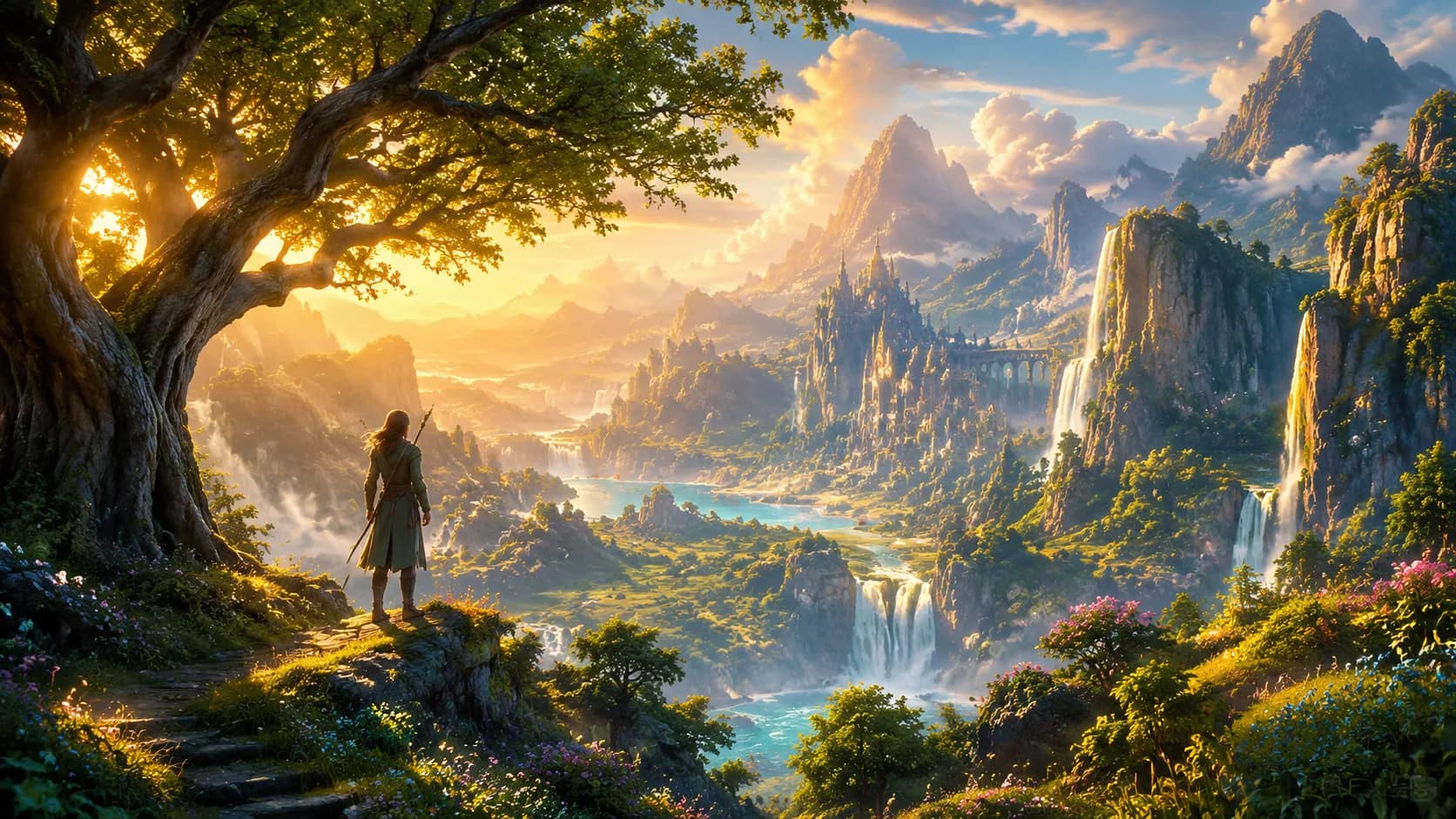
"If you lived in a land where glaciers sat on top of volcanoes, the sky turned green and purple at night, and winter darkness lasted for months, you'd invent Norse mythology too. The Scandinavians didn't have wild imaginations they had a wild landscape. The mythology was simply accurate journalism."
Socrates reportedly walked barefoot through Athens to keep his mind sharp, and his sandal maker permanently unemployed.
Egyptian Mythology and the Nile
Egyptian mythology is inseparable from the Nile the river that literally created Egyptian civilisation. Without the Nile's annual flood cycle, Egypt would be uninhabitable desert. With it, Egypt became one of the most fertile and prosperous civilisations in human history. This absolute dependence on a single landscape feature produced mythology in which the river was the central axis around which everything cosmology, theology, agriculture, architecture, and afterlife belief revolved.
Visionaria Insight
By immersing ourselves in these historical soundscapes, we reconnect with a timeless human tradition of storytelling and mental restoration.
The Nile's annual inundation (flood cycle) was the foundational experience of Egyptian religion. Each year, the river rose, flooded the surrounding land, deposited rich silt, and then receded leaving behind extraordinarily fertile soil. This predictable cycle of apparent destruction followed by abundance directly inspired the mythology of Osiris the god who passed through challenge and emerged renewed, becoming the lord of renewal and the afterlife. The Osiris myth is essentially the Nile flood cycle in narrative form: apparent ending, transformation, and gloriously renewed life. Egypt's sacred temples were positioned along the Nile's banks, and their orientation reflected the river's flow the fundamental direction of Egyptian sacred geography.
Read more: How Heroic Adventures Shape Mythic Stories: Children's Fairy Tales Guide (2026)
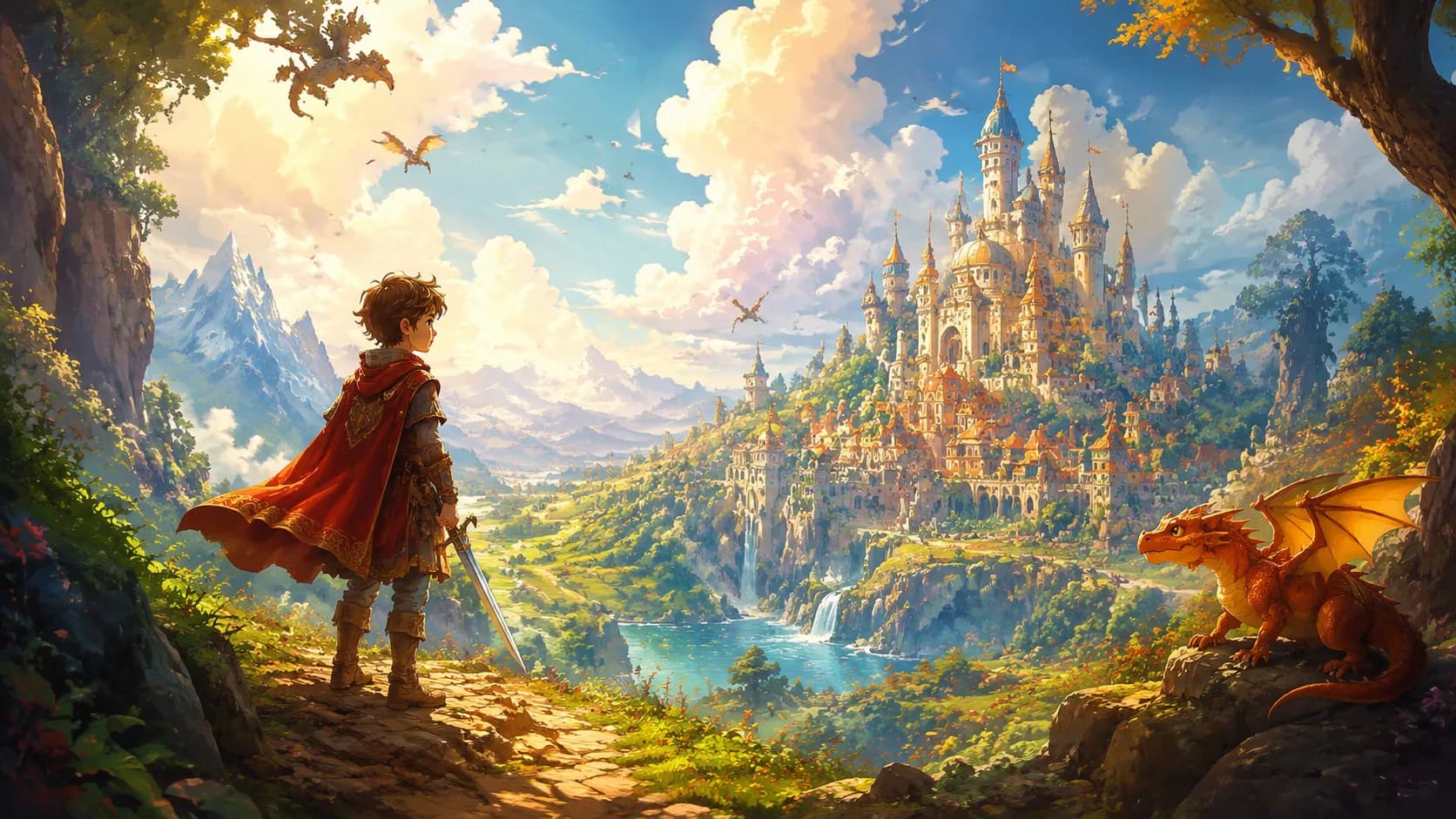
The sun's daily journey across the Egyptian sky rising in the east, traversing the vast, cloudless expanse, and setting dramatically in the west produced the mythology of Ra's solar barque, which sailed across the sky during the day and through the underworld at night. This mythology was shaped by the Egyptian landscape's extraordinary clarity the desert air provides some of the clearest views of the sun's path anywhere on earth, making the solar journey across the sky a daily spectacle of cosmic drama. The western desert, where the sun set, naturally became associated with the realm of the departed because every evening, the sun visibly "entered" the western desert and disappeared.
A Roman walks into a bar, holds up two fingers, and says, 'Five beers, please.'
Why Landscape Mythology Still Resonates
The mythological stories that ancient landscapes inspired remain profoundly moving thousands of years later and neuroscience explains why. The awe response that powered ancient mythology is hardwired into human neurology. When modern humans encounter awe-inspiring landscapes whether physically, through photography, or through immersive visualization journeys their brains respond with the same neurological patterns that ancient humans experienced. The default mode network quiets (reducing self-focused anxiety), the prefrontal cortex engages (enhancing present moment awareness), and oxytocin levels rise (producing feelings of connection and meaning).
This neurological continuity means that landscape mythology functions as a kind of emotional technologystories designed to trigger specific brain states through the evocation of specific environments. When you hear a story about standing on Mount Olympus and looking down through clouds at the mortal world, you may feel a real sense of awe, along with a broader perspective and a more open frame of mind. The brain experiences well told stories as reality, which means that mythological landscape narratives produce genuine landscape awe responses.
Visionaria Insight
By immersing ourselves in these historical soundscapes, we reconnect with a timeless human tradition of storytelling and mental restoration.
This is precisely why landscape-based meditation is so effective. When a multi-sensory guided meditation transports you to a sacred mountain, an ancient forest, or a mythological coastline, it's not merely telling a nice story it's activating the same awe response circuits that produced the world's great mythologies. The meditation becomes a direct experience of the same psychological state that inspired thousands of years of human spiritual and creative achievement. Narrative meditation rewires neural pathways precisely because these landscape awe circuits are among the most powerful and transformative in the human brain.
"The reason landscape mythology still gives you goosebumps after 3,000 years is that your brain is running the same awe response software as Homer's audience. The operating system hasn't been updated. The hardware is identical. When you imagine standing on Olympus, your neurons fire exactly the way a Mycenaean Greek's neurons fired. The only difference is that you're wearing headphones instead of a bronze helmet."
Why did the ancient physician prescribe a long walk? Because he was tired of listening to the patient complain in his office.
Experiencing Mythological Landscapes Through Audio
The ancient experience of encountering a mythologically significant landscape standing at the base of Olympus, entering a sacred grove, watching the Nile flood was fundamentally a multi-sensory, embodied experience. You didn't just see the mountain; you felt the wind, heard the distant thunder, smelled the pine forests on its slopes, and felt the ground tremble beneath a world that seemed to pulse with divine energy. Modern interactive audio journeys are designed to recreate this multi-sensory experience using spatial 3D audio technology.
Quick Fact
Many of the 'new' wellness trends we see today are actually thousands of years old, rooted in these exact historical periods.
Visionaria offers immersive journeys through many of the mythological landscapes discussed in this article. Using spatially positioned audio sounds that come from specific locations in three-dimensional space around your head combined with expert narration and story-based meditation technique, these journeys transport you to ancient Athens, sacred sanctuaries, mythological forests, and sacred mountain summits. The spatial audio creates genuine auditory presence the sound of wind changes as you "turn" in the environment, footsteps echo appropriately for the architecture, and birdsong is positioned in the canopy above you.
This isn't escapism it's the same experience that inspired mythology in the first place, delivered through modern technology. When you close your eyes and hear the wind moving through the columns of a Greek temple while a narrator describes the sunset light turning marble to gold, your brain generates the same awe response, the same sense of connection to something larger, and the same deep calm that an ancient Greek would have felt standing in that actual temple. Guided visualization stories set in mythological landscapes produce some of the deepest meditation states because they tap into our species' most ancient and powerful emotional programming: the awe of the natural world.
"Ancient mythology was essentially a meditation app running on campfire technology. The stories transported listeners to extraordinary landscapes, engaged their imaginations, produced awe and calm, and transmitted cultural wisdom exactly what Visionaria does with spatial audio. The delivery system upgraded from campfire to headphones. The human brain receiving it hasn't changed at all. And the landscapes are still magnificent."
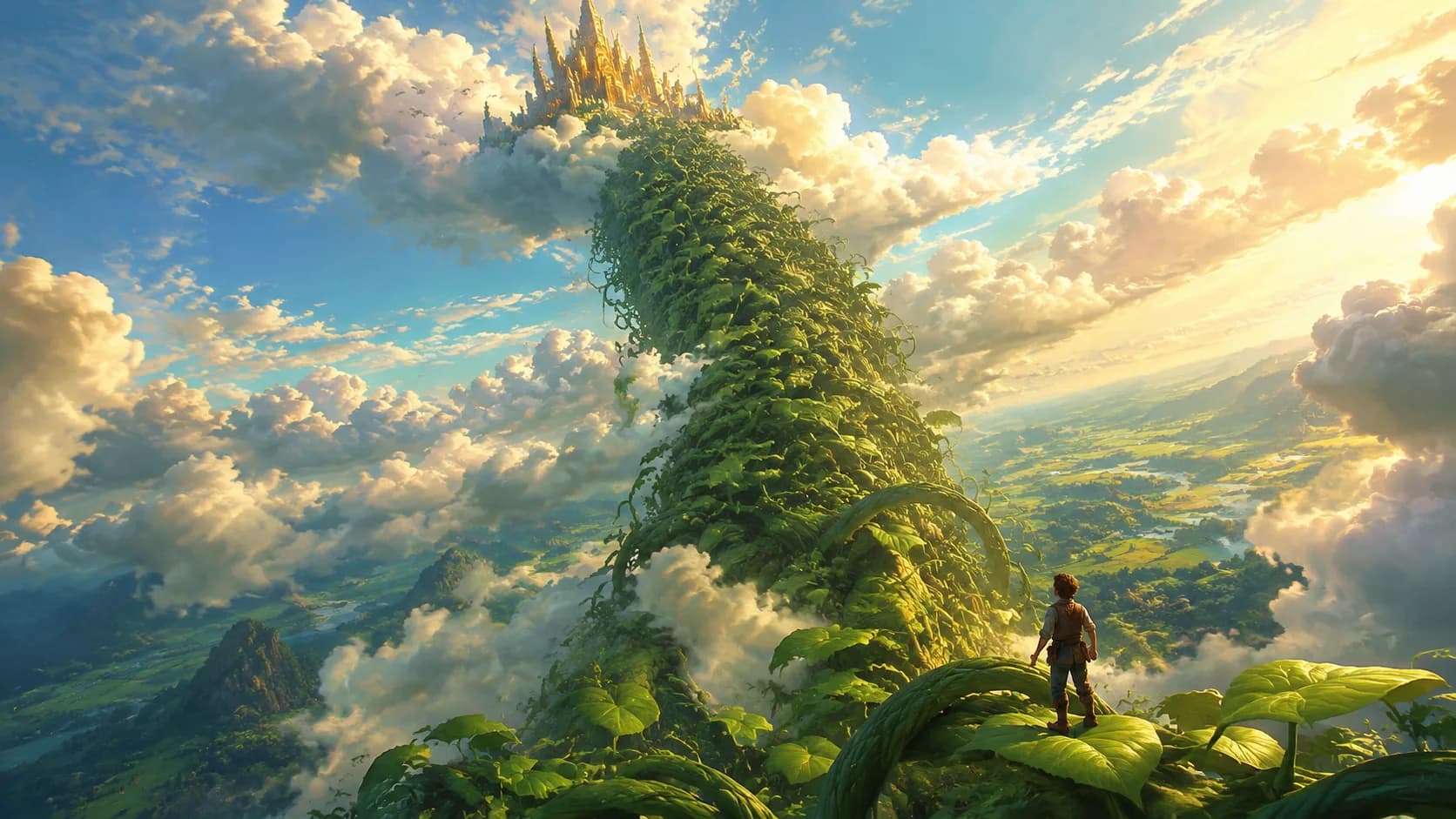
The True Origins of Jack and the Beanstalk: Ancient Roots, Hidden Symbolism & the Fairy Tale That Changed Storytelling
Discover the true origins of Jack and the Beanstalk, from 5,000-year-old Indo-European roots and giant mythology to Victorian retellings, hidden symbolism, comparative folklore, trickster archetypes, and how immersive...
An Epicurean, a Stoic, and a Cynic walk into a garden. The bartender says, 'Is this some kind of philosophical joke?'
The Bottom Line
You've learned how natural landscapes inspired ancient mythology from mountains that became homes of the gods to rivers that became divine beings, forests that became enchanted realms, volcanoes that inspired underworld mythology, and oceans that represented primordial chaos and infinite possibility.
Visionaria Insight
By immersing ourselves in these historical soundscapes, we reconnect with a timeless human tradition of storytelling and mental restoration.
This article explored the awe response that connects ancient and modern experiences of landscape, specific examples from Greek, Norse, Egyptian, Celtic, Hindu, and other mythological traditions, and how modern immersive audio technology allows you to experience these mythologically significant landscapes through spatial 3D sound and guided visualization.
Experience More with Visionaria
Download the app to explore guided historical and wellness journeys.
Why did the Stoic cross the road? Because it was the rational thing to do, and he was indifferent to the traffic.
This article is for educational and informational purposes only. Historical details are based on available research and may evolve as new evidence emerges.
Visionaria journeys are designed for relaxation, guided imagination, and personal enrichment. They are not a substitute for medical, mental health, legal, or professional advice.