Unicorns and Their Meaning in Medieval Legends
🦄 Fun fact: In medieval Europe, narwhal tusks were sold as genuine "unicorn horns" for up to ten times their weight in gold. Royalty used them to test drinks for harmful substances, which tells you everything about both medieval dinner party etiquette and the power of a good marketing story.
- What Are Unicorns and Why Do They Appear in Medieval Legends?
- Ancient Origins: Unicorns Before the Middle Ages
- The Unicorn in Medieval Christian Symbolism
- The Famous Unicorn Tapestries: Art and Hidden Meaning
- Unicorns in Medieval Heraldry and Royal Courts
- The Alicorn: Medieval Beliefs About the Unicorn's Horn
- Unicorns and the Maiden: The Capture Legend
- Unicorns Across Medieval European Cultures
- The Natural History of Unicorns: Medieval Bestiaries
- Unicorns in Medieval Literature and Poetry
- How Unicorn Legends Shaped Modern Fantasy
- Experiencing Unicorn Legends Through Immersive Meditation
- The Bottom Line
- Frequently Asked Questions
Few mythological creatures have captured the human imagination as completely and as enduringly as the unicorn. From ancient Persian reliefs and Greek natural histories to medieval tapestries, illuminated manuscripts, and royal coats of arms, the unicorn has galloped through more than two thousand years of human storytelling. Yet it was during the Middle Ages that the unicorn achieved its most profound symbolic significance becoming simultaneously a Christian allegory, a heraldic emblem, a medical wonder, and a creature of breathtaking beauty that embodied everything from divine grace to untamed natural power.
This article explores the full history and meaning of unicorns in medieval legends from their ancient origins in Greek and Eastern texts to their transformation into powerful Christian symbols, their role in heraldry, the fascinating trade in "unicorn horns," and how medieval unicorn mythology continues to shape modern fantasy. Whether you're a mythology enthusiast, an art history lover, or simply fascinated by the enduring power of legendary creatures, the unicorn's story is one of the richest and most layered in all of folklore.
"The unicorn is the only mythological creature that somehow became more popular over the centuries rather than less. It went from 'terrifying wild beast in Greek texts' to 'adorable sparkly horse on lunchboxes' arguably the greatest career pivot in mythology."
Key Facts About Unicorns in Medieval Legends
- ••Ancient Origins: The earliest written accounts of unicorns come from the Greek physician Ctesias (c. 400 BCE), who described a wild creature in India with a single horn possessing healing properties
- ••Christian Allegory: Medieval theologians interpreted the unicorn as a symbol of Christ: its willingness to rest in a maiden's lap paralleled the Incarnation (Christ entering the world through the Virgin Mary)
- ••Alicorn Trade: Narwhal tusks were sold throughout medieval Europe as genuine "unicorn horns" for up to ten times their weight in gold. Royalty used them as toxin-detecting utensils
- ••Masterwork Tapestries: The "Hunt of the Unicorn" (c. 1495-1505) at The Met Cloisters and "The Lady and the Unicorn" (c. 1484-1500) at the Musée de Cluny are among the greatest surviving medieval artworks
- ••Royal Heraldry: The unicorn appears on the Royal Arms of Scotland and remains part of the British Royal Coat of Arms to this day, representing sovereignty and untameable power
- ••Bestiary Standard: Medieval bestiaries included unicorns as real animals alongside lions, elephants, and eagles, complete with detailed "natural history" descriptions and moral lessons
Quick Answer
🦄 Fun fact: In medieval Europe, narwhal tusks were sold as genuine "unicorn horns" for up to ten times their weight in gold. Royalty used them to test drinks for harmful substances, which tells you everything about both medieval dinner party etiquette and the power of a good marketing story.
What Are Unicorns and Why Do They Appear in Medieval Legends?
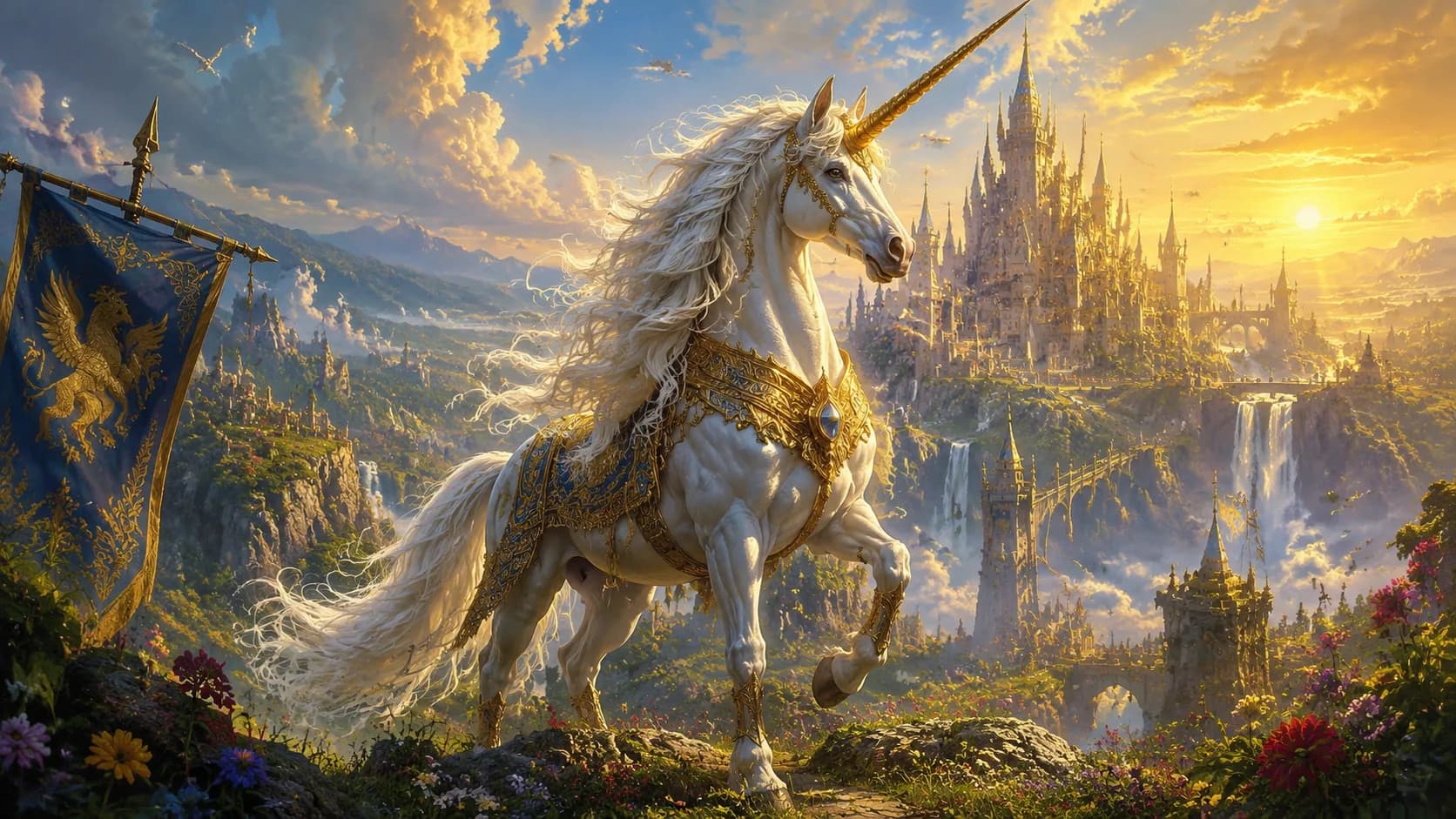
The unicorn from the Latin unicornis ("one horn") is a mythological creature that has fascinated humanity for over two millennia. While the image most people associate with unicorns today is a graceful white horse with a spiraling ivory horn, the creature's description has varied dramatically across cultures and centuries. Ancient accounts described a fierce, powerful animal closer to a wild ox or rhinoceros. Medieval European artists gradually refined the unicorn into the elegant, horse like figure that persists in modern imagination a creature of extraordinary beauty, speed, and supernatural purity.
Did You Know?
The relentless drive to understand the world was seen not just as an academic pursuit, but as a spiritual and healing practice by the ancients.
What made the unicorn so central to medieval European culture was its remarkable versatility as a symbol. The unicorn served simultaneously as a religious allegory (representing Christ's purity and sacrifice), a courtly love symbol (the wild creature tamed only by the gentle maiden), a medical authority (the horn's supposed healing and purifying powers), and a heraldic emblem (denoting courage, sovereignty, and noble virtue). Few mythological creatures have carried so many layers of meaning across so many domains of medieval life religion, art, science, politics, and romance all claimed the unicorn as their own.
The unicorn's persistence in medieval legend also reflects something deeper about the human imagination: our need to believe that the natural world contains wonders beyond what we can see. In an era before global exploration had mapped every corner of the Earth, the existence of magical creatures in distant, unexplored lands seemed entirely plausible. Unicorns represented the tantalizing possibility that somewhere, in some forest or mountain range not yet reached by European travelers, creatures of transcendent beauty still roamed free carrying in their very bodies the power to heal, purify, and transform the world around them.
A time traveler went back to antiquity to teach them about 'holistic health.' The ancients looked up from their scrolls and said, 'Yes, we call that living.'
Ancient Origins: Unicorns Before the Middle Ages
The unicorn's story begins long before the medieval era. The earliest known written account comes from Ctesias of Cnidus, a Greek physician serving at the Persian court around 400 BCE. In his work Indica, Ctesias described a "wild donkey" found in India with a white body, dark red head, blue eyes, and a single horn about one and a half feet long white at the base, black in the middle, and crimson at the tip. He reported that cups made from this horn could detect harmful substances and cure various ailments. This description clearly based on garbled reports of rhinoceroses, Indian wild asses, and possibly antelope species viewed in profile established the unicorn as a creature of medical and magical significance from its very first mention in Western literature.
Aristotle referenced "one horned" animals in his History of Animals, treating them as real creatures of natural history. Pliny the Elder, in his encyclopedic Natural History (77 CE), described the "monoceros" a creature with a horse's body, deer's head, elephant's feet, boar's tail, and a single black horn two cubits long. The Roman writer's matter of fact tone reflects how fully the ancient world accepted the unicorn as a real, if exotic, animal. This naturalistic tradition would carry directly into medieval bestiaries, where the unicorn continued to be catalogued alongside elephants, lions, and other actual species.
Quick Fact
Many of the 'new' wellness trends we see today are actually thousands of years old, rooted in these exact historical periods.
The biblical connection cemented the unicorn's authority. The Hebrew Bible's re'em likely referring to the now extinct aurochs (wild ox) was translated as "monoceros" in the Greek Septuagint and "unicornis" in the Latin Vulgate. When medieval Christians read passages like "His glory is like the firstling of his bullock, and his horns are like the horns of unicorns" (Deuteronomy 33:17), they understood them as referring to the magical one horned creature they already knew from bestiaries and classical texts. The Bible's apparent confirmation of the unicorn's existence gave it an authority that no merely legendary creature could claim it was, in medieval understanding, as divinely attested as the lion or the eagle.
"Ancient writers described the unicorn as having a horse's body, an elephant's feet, and a boar's tail. Medieval artists wisely decided to ignore most of these details and give us the graceful white horse instead. Sometimes creative license is simply better zoology."

Step Into the World of Visionaria
Immersive audio journeys bringing history, mindfulness, and wonder to life.
What's an ancient intellectual's favorite exercise? Jumping to conclusions.
The Unicorn in Medieval Christian Symbolism
The most profound transformation of the unicorn legend occurred when early Christian theologians adopted the creature as a powerful allegory for Christ. The connection was built on several parallel characteristics: the unicorn was described as pure, powerful, wild, and utterly untameable by human force yet it would willingly lay its head in the lap of a virgin maiden. For medieval Christian interpreters, this story mapped perfectly onto the doctrine of the Incarnation: Christ (powerful, divine, uncapturable by human means) willingly entered the world through the Virgin Mary (the maiden). The unicorn's single horn represented the unity of Christ and God the Father one divine power expressed through a single point.
Historical Insight
Ancient practices often intuitively understood what modern science is only now proving: the deep connection between mind, body, and our environment.
The Physiologus a hugely influential Christian text written in Greek around the 2nd 4th century CE and subsequently translated into Latin, Ethiopic, Armenian, and dozens of other languages established the standard allegorical framework. Its description of the unicorn became the template for virtually all medieval bestiary entries: "He is a small animal, like a kid [young goat], but exceedingly fierce, with one horn in the middle of his head. No hunter is able to catch him. But he may be caught in the following manner: a virgin maiden is placed before him. He springs into her lap, and she warms and nourishes him, and takes him to the palace of the king." The Physiologus explicitly identified the unicorn with Christ, the maiden with the Virgin Mary, and the "palace of the king" with heaven.
This allegorical reading gave the unicorn an extraordinary sacred status throughout medieval European culture. Churches featured unicorn imagery in stained glass windows, carved capitals, and manuscript illuminations. Sermons referenced the unicorn legend to explain complex theological concepts to congregations. The capture of the unicorn became a visual shorthand for the Annunciation the moment the angel Gabriel announced to Mary that she would bear the Son of God. In some artistic traditions, the unicorn is shown leaping toward the maiden while the angel Gabriel approaches from the other side, blowing a hunting horn blending the hunt narrative with the Annunciation scene in a single, densely symbolic image.
Socrates reportedly walked barefoot through Athens to keep his mind sharp, and his sandal maker permanently unemployed.
The Famous Unicorn Tapestries: Art and Hidden Meaning
The most celebrated artistic expressions of medieval unicorn mythology are two magnificent tapestry series that rank among the greatest surviving works of European art. "The Hunt of the Unicorn" (c. 1495-1505), a series of seven large tapestries now housed at The Cloisters museum in New York, depicts the pursuit, capture, and resurrection of a unicorn in astonishing detail. Woven in the Southern Netherlands, these tapestries feature over 100 identifiable plant species, dozens of human figures, hunting dogs, and the unicorn itself depicted with extraordinary naturalism despite being a legendary creature. The final panel, "The Unicorn in Captivity," shows the unicorn alive within a circular fence beneath a pomegranate tree, its white coat scattered with red drops an image that scholars have interpreted as representing both Christ's resurrection and the joyful containment of love in marriage.
The second masterwork, "The Lady and the Unicorn" (c. 1484-1500), consists of six tapestries now at the Musée de Cluny in Paris. Five of the tapestries represent the five senses Sight, Hearing, Taste, Smell, and Touch each showing a noble lady flanked by a unicorn and a lion against the distinctive millefleurs ("thousand flowers") background that defines the series' visual style. The sixth panel, inscribed "À Mon Seul Désir" ("To My Only Desire"), has generated centuries of scholarly debate. Does it represent the renunciation of the senses? The sixth sense of understanding? Free will? Love? The ambiguity is part of the tapestries' enduring power they invite contemplation rather than providing simple answers, much like meditation itself.
Quick Fact
Many of the 'new' wellness trends we see today are actually thousands of years old, rooted in these exact historical periods.
Both tapestry series demonstrate the unicorn's unique position in medieval culture: simultaneously a religious symbol, a courtly love emblem, a natural history subject, and a vehicle for the most sophisticated artistic expression of the era. The technical mastery required to produce these tapestries years of work by teams of highly skilled weavers using silk, wool, and metallic threads reflects how seriously medieval patrons took their unicorn imagery. These were not whimsical decorations but profound statements of faith, power, and aesthetic achievement that remain among the most visited and studied artworks in the world today.
Read more: Why Fictional Worlds Feel So Real to Readers

"The 'Lady and the Unicorn' tapestries depict the five senses through a lady, a unicorn, and a lion. The sixth panel, 'To My Only Desire,' has baffled scholars for five hundred years. Clearly, the medieval weaver invented the concept of the 'mysterious sixth episode' long before streaming television."
A time traveler went back to antiquity to teach them about 'holistic health.' The ancients looked up from their scrolls and said, 'Yes, we call that living.'
Unicorns in Medieval Heraldry and Royal Courts
Beyond religion and art, the unicorn played a significant role in medieval heraldry the system of symbolic imagery used to identify noble families, kingdoms, and institutions. In heraldic tradition, the unicorn represented courage, purity, virtue, and power particularly the kind of power that could not be compelled, only freely given. A unicorn on a coat of arms declared that the bearer possessed strength tempered by grace, fierceness guided by nobility, and authority that came from moral virtue rather than mere force.
Visionaria Insight
By immersing ourselves in these historical soundscapes, we reconnect with a timeless human tradition of storytelling and mental restoration.
The most famous heraldic unicorn is the Royal Unicorn of Scotland. Since at least the 12th century, Scottish kings adopted the unicorn as a symbol of their sovereignty a choice rich with political meaning. The unicorn's untameable nature represented Scotland's fierce independence, while its association with purity and healing conveyed the crown's protective role over its people. When James VI of Scotland became James I of England in 1603, the English lion and the Scottish unicorn were joined in the Royal Coat of Arms of the United Kingdom where they remain to this day, facing each other across the royal shield. The old nursery rhyme "The Lion and the Unicorn were fighting for the Crown" directly references this heraldic pairing and the political tensions it symbolized.
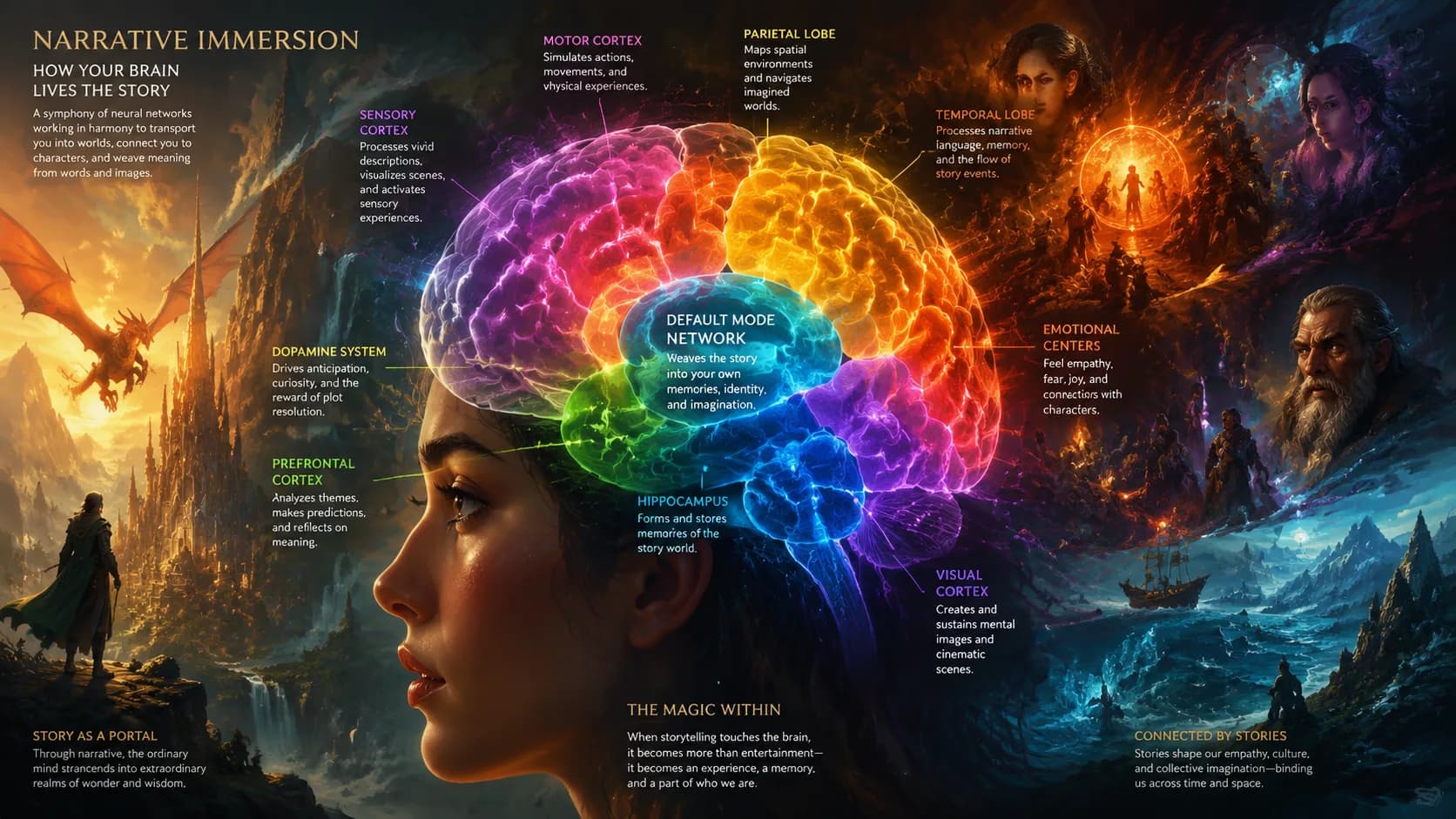
Read more: Why the Brain Experiences Stories as Reality: The Neuroscience of Narrative Immersion
Beyond Scotland, unicorns appeared in the heraldry of numerous noble families across France, Germany, Italy, and the Holy Roman Empire. The counts of Württemberg adopted a unicorn crest that became one of the most recognized heraldic devices in Germanic lands. In France, unicorns featured prominently in the decoration of royal palaces and in the personal emblems of queens and princesses reflecting the creature's association with feminine virtue and spiritual grace. The unicorn's heraldic popularity demonstrates how thoroughly medieval culture integrated mythological imagery into its systems of political power, social identity, and institutional authority.
What's an ancient intellectual's favorite exercise? Jumping to conclusions.
The Alicorn: Medieval Beliefs About the Unicorn's Horn
Of all the unicorn's attributes, none had greater practical impact on medieval life than its horn known as the alicorn. Medieval Europeans believed the alicorn possessed extraordinary powers: it could purify tainted water, detect the presence of harmful substances, cure fevers, heal wounds, and counteract the effects of various toxins. In an era when the use of harmful substances was a genuine political threat particularly in royal and aristocratic circles the supposed protective power of the alicorn made "unicorn horn" one of the most valuable substances in Europe, commanding prices that rivaled gold.
The objects sold as alicorns were, in reality, narwhal tusks the long, spiraling ivory teeth of the Arctic narwhal whale. Norse and Icelandic traders, who encountered narwhals in northern waters, recognized the commercial potential early and maintained a profitable trade in these tusks throughout the medieval period, carefully guarding the secret of their true origin. A single narwhal tusk could sell for several times its weight in gold. Royal courts across Europe accumulated alicorn treasures: the Habsburg emperors kept several in their Kunstkammer (curiosity cabinet), the Doge of Venice displayed one prominently, and the French kings maintained a collection used for testing royal food and drink. Fragments of "unicorn horn" were ground into powder and sold by apothecaries as a universal antidote.
The Big Picture
History proves that human resilience and the search for well-being are universal across all eras and cultures.
The alicorn trade reveals something fascinating about the psychology of belief and the power of narrative. Medieval Europeans didn't simply accept the alicorn on blind faith they tested it. Courts employed elaborate procedures to verify the authenticity of "unicorn horn," including placing it near spiders (which were supposed to recoil from genuine alicorn), immersing it in water containing harmful substances (the horn should neutralize them), and drawing circles with it around scorpions (which should be unable to cross the line). These "tests" almost always confirmed the horn's power a testament to the strength of confirmation bias when it operates within a deeply held belief system. The alicorn trade persisted well into the 17th century before gradually declining as naturalists identified the true source of the tusks.
"Medieval royalty spent fortunes on narwhal tusks believing they could detect harmful substances. In their defense, they lived in an era before food safety regulations, and 'Is this goblet trying to neutralize my drink?' was a perfectly reasonable dinner conversation."
A time traveler went back to antiquity to teach them about 'holistic health.' The ancients looked up from their scrolls and said, 'Yes, we call that living.'
Unicorns and the Maiden: The Capture Legend
Perhaps the most iconic element of medieval unicorn mythology is the capture legend the belief that although no hunter could catch a unicorn by force, the creature would voluntarily approach and rest its head in the lap of a pure maiden. This story appeared in virtually every medieval bestiary and became one of the most frequently depicted scenes in medieval art, appearing in manuscripts, tapestries, carvings, stained glass, and enamelwork across Europe. The legend carried multiple layers of meaning that resonated powerfully with medieval audiences.
Did You Know?
The relentless drive to understand the world was seen not just as an academic pursuit, but as a spiritual and healing practice by the ancients.
At the religious level, the maiden represented the Virgin Mary, and the unicorn's willing surrender symbolized Christ's voluntary Incarnation the divine choosing to enter the mortal world through purity and love rather than being captured by human effort. At the courtly love level, the scene expressed the medieval ideal of romantic devotion the powerful, independent creature willingly surrendering to gentleness and beauty, just as a noble knight should surrender his fierce spirit to the gentle influence of his beloved. At the philosophical level, the capture legend expressed a profound truth about the nature of power: the unicorn (representing wildness, freedom, and untameable force) could only be approached through vulnerability and trust, never through violence or coercion.
The image of the maiden and the unicorn also carried complex gender dynamics that medieval culture found endlessly fascinating. The maiden possessed a unique power her purity gave her access to a creature that could overcome any number of armed hunters yet this power operated through stillness and receptivity rather than action and force. The unicorn, in turn, was simultaneously the most powerful and the most vulnerable creature in the medieval bestiary: unstoppable in the wild, yet completely defenseless once it chose to trust. These paradoxes made the capture legend one of the richest and most psychologically resonant stories in medieval culture a narrative that continues to fascinate audiences today.
Why did the ancient physician prescribe a long walk? Because he was tired of listening to the patient complain in his office.
Unicorns Across Medieval European Cultures
While the core unicorn legend was remarkably consistent across medieval Europe the single horn, the fierce temperament, the maiden who tames it different cultures emphasized different aspects of the mythology. In France, the unicorn was primarily associated with courtly love, refined aesthetic beauty, and aristocratic virtue. French tapestries and manuscripts emphasized the creature's elegance and its relationship with noble ladies the "Lady and the Unicorn" tapestries represent the pinnacle of this tradition. French unicorn legends also emphasized the creature's connection to enchanted forests and fairy tale landscapes, feeding into the broader tradition of French romance literature.
In the Germanic lands and Scandinavia, unicorn legends carried a somewhat different emphasis. The German Einhorn was often depicted as a more powerful, muscular creature closer to the fierce animal described in ancient texts than the delicate horse of French art. Germanic heraldic traditions used the unicorn to represent military courage and indomitable spirit rather than courtly refinement. Scandinavian cultures, which had direct contact with the narwhals whose tusks fueled the alicorn trade, wove the unicorn into their maritime mythology alongside Norse traditions of magical creatures and enchanted artifacts.
Visionaria Insight
By immersing ourselves in these historical soundscapes, we reconnect with a timeless human tradition of storytelling and mental restoration.
In Italy and the Iberian Peninsula, the unicorn's medical and alchemical associations were particularly prominent. Italian courts, with their well-documented anxieties about covert harmful substances, were among the most avid consumers of alicorn products. Italian Renaissance artists also produced some of the most naturalistic depictions of unicorns treating the creature with the same careful anatomical attention they applied to real animals in their notebooks and sketchbooks. The Spanish tradition, influenced by both Christian and Islamic artistic traditions, sometimes depicted the unicorn in contexts that blended European and Middle Eastern imagery reflecting the rich cultural cross-pollination of medieval Iberia.
"Every medieval European culture had its own version of the unicorn. The French made it elegant, the Germans made it fierce, and the Italians used it to test their dinner for harmful substances. Cultural priorities have always been remarkably transparent."
A time traveler went back to antiquity to teach them about 'holistic health.' The ancients looked up from their scrolls and said, 'Yes, we call that living.'
The Natural History of Unicorns: Medieval Bestiaries
Medieval bestiaries richly illustrated encyclopedias of animals that served as both natural history texts and moral guides consistently included the unicorn as a standard entry, placing it alongside entirely real creatures like lions, eagles, elephants, and snakes. This was not a section for "legendary" or "imagined" animals; the bestiary format treated all entries with the same matter of fact tone, describing each creature's appearance, habitat, behavior, and moral significance the spiritual lesson that God had encoded into each animal's nature for human instruction.
Did You Know?
The relentless drive to understand the world was seen not just as an academic pursuit, but as a spiritual and healing practice by the ancients.
A typical bestiary entry for the unicorn described a small but exceedingly fierce creature sometimes compared to a goat or young horse with a single sharp horn protruding from its forehead. The text would emphasize its speed, strength, and absolute resistance to capture by force. Then came the maiden legend, followed by the moral interpretation: just as the unicorn could only be captured through the maiden's purity, so could Christ (powerful, divine, unconstainable) only enter the world through the purity of the Virgin Mary. Some bestiaries extended the allegory further: the hunters who pursued the unicorn represented the Pharisees or the forces of worldly power, while the maiden's garden represented Paradise or the Church.
Read more: The Phoenix and the Symbol of Eternal Rebirth

The bestiary tradition reveals how medieval Europeans understood the relationship between the natural and supernatural worlds. For medieval thinkers, the universe was a book written by God every creature, plant, and natural phenomenon carried a spiritual message for those who knew how to read it. The unicorn was simply one chapter in this divine encyclopedia, no less real than any other. This worldview meant that encountering a "unicorn horn" (narwhal tusk) or hearing a traveler's tale of a one horned beast in distant lands was not a matter of credulous superstition but of recognizing divine creation in its full, wondrous scope. The bestiaries remained authoritative references well into the 15th century, and their influence on European culture, art, and mythology cannot be overstated.
Why did the inventor of the wheel win an award? Because his idea really got things rolling.
Unicorns in Medieval Literature and Poetry
Beyond bestiaries and theological texts, the unicorn featured prominently in medieval secular literature romances, poems, and allegorical narratives where the creature served as a vehicle for exploring themes of love, purity, quest, and transformation. In the great Arthurian romances, unicorns occasionally appeared in enchanted forests as markers of spiritual significance encountering a unicorn signaled that a knight had entered sacred territory where the rules of the ordinary world no longer applied.
The German Nibelungenlied tradition and related romances featured unicorns as creatures of the deep forest wild, beautiful, and dangerous. In these narratives, the unicorn represented the untamed natural world that civilization sought to master but could never fully control. French chanson de geste and romance literature used the unicorn similarly as an emblem of the marvelous, the divinely mysterious, and the spiritually significant. The 13th century Roman de la Rose, one of the most influential literary works of the medieval period, referenced unicorn imagery in its elaborate allegory of love and desire.
Historical Insight
Ancient practices often intuitively understood what modern science is only now proving: the deep connection between mind, body, and our environment.
Perhaps the most sophisticated literary treatment of the unicorn appeared in Rainer Maria Rilke's later reflection on the medieval tradition, in which he imagined the unicorn as a creature that existed precisely because people believed in it a being called into existence by the intensity of human imagination and love. While Rilke was a modern poet, his insight captured something essential about the medieval relationship with the unicorn: in a culture where the boundary between the visible and invisible worlds was understood to be permeable, the strength of collective belief and imagination was sufficient to make creatures like the unicorn feel genuinely present not as fantasies but as expressions of spiritual reality that the physical senses could not yet access.
"Medieval poets wrote about unicorns with the same seriousness modern poets reserve for unrequited love and rainy afternoons. In fairness, a mystical creature that represents both divine grace and the impossibility of capturing true beauty is exactly the sort of thing poets should be writing about."
Why did the Stoic cross the road? Because it was the rational thing to do, and he was indifferent to the traffic.
How Unicorn Legends Shaped Modern Fantasy
The medieval unicorn did not disappear with the Middle Ages it transformed and adapted, carrying its rich symbolic heritage into modern literature, film, and popular culture. Peter S. Beagle's The Last Unicorn (1968) is perhaps the most celebrated modern retelling, drawing directly on medieval imagery while adding modern psychological depth. Beagle's unicorn immortal, beautiful, and searching for others of her kind captures the medieval creature's essential qualities while exploring themes of memory, identity, and the passage of time that resonate with contemporary audiences.
Visionaria Insight
By immersing ourselves in these historical soundscapes, we reconnect with a timeless human tradition of storytelling and mental restoration.
In the broader fantasy genre, unicorns have become standard inhabitants of magical worlds. A famous wizard-school series features unicorns whose silvery essence is sacred those who consume it survive but at a terrible spiritual cost, echoing the medieval belief in the unicorn's connection to purity and divine grace. Classic twentieth century children's fantasy includes a unicorn among the noble creatures who serve the great lion. T.H. White's The Once and Future King features a unicorn hunt that directly references medieval capture legends. In each case, the medieval symbolic framework persists: unicorns represent purity, magic, the sacred, and the boundary between the ordinary and the transcendent.
The unicorn's journey from medieval manuscripts to modern culture also encompasses heraldry, branding, and identity. Scotland's unicorn remains on the British Royal Coat of Arms. The unicorn has become a symbol in technology culture ("unicorn" companies valued at over $1 billion) and LGBTQ+ culture (representing magical uniqueness and defiant beauty). Even the rainbow unicorn of contemporary pop culture seemingly far removed from the fierce creature of medieval bestiaries carries traces of its ancestral meaning: beauty, rarity, magic, and the belief that the world contains more wonder than meets the eye. The medieval unicorn's greatest legacy may be this: it taught Western culture that believing in the extraordinary is itself an act of power.
Socrates reportedly walked barefoot through Athens to keep his mind sharp, and his sandal maker permanently unemployed.
Experiencing Unicorn Legends Through Immersive Meditation
The medieval experience of unicorn legends was never purely intellectual it was deeply sensory and emotional. When a medieval person encountered unicorn imagery in a cathedral's stained glass window, a bestiary's illuminated pages, or a great tapestry's woven scenes, they weren't simply processing information about a mythological creature. They were immersing themselves in a complete aesthetic experience: the play of colored light through glass, the texture of parchment and pigment, the overwhelming scale and detail of tapestry weavings. This sensory richness was inseparable from the unicorn's meaning the creature could only be truly understood through experience, not merely description.
Visionaria recaptures this immersive quality through spatial 3D audio technology that creates complete mythological environments you can step into with your imagination. Rather than reading about unicorns from a distance, you can experience the atmosphere of a medieval forest where such creatures were believed to roam hear the rustle of ancient trees, the distant sound of hoofbeats, the call of birds in an enchanted grove. Story-based meditation offers a unique way to engage with mythology: not as forgotten knowledge from dusty texts, but as living, breathing narrative that activates your imagination and connects you emotionally with the traditions that shaped Western culture.
Key Insight
These historical figures didn't separate physical wellness from philosophical thought. To them, it was all one continuous practice of living well.
The practice of visualization meditation also mirrors the medieval contemplative tradition that originally gave the unicorn its deepest meaning. Medieval monks and mystics practiced lectio divina a form of meditative reading in which sacred texts (including bestiary passages about unicorns) were read slowly, visualized internally, and contemplated for their spiritual significance. This practice of building vivid mental images from narrative descriptions is remarkably similar to modern imagination training suggesting that the medieval approach to mythology was, in its own way, a sophisticated form of guided visualization that modern meditation technology can now enhance and extend.
"Medieval monks contemplated unicorn legends through meditative reading. Modern meditators experience them through spatial audio. Eight hundred years of technological progress, and we're still doing essentially the same thing closing our eyes and imagining something beautiful. Some things really don't change."

How Story-Based Meditation Improves Focus
Discover how story-based meditation improves focus and concentration. Learn the science behind narrative mindfulness, how cinematic storytelling trains attention, and practical techniques to sharpen your mind through...
Why did the ancient physician prescribe a long walk? Because he was tired of listening to the patient complain in his office.
The Bottom Line
The unicorn's journey through medieval legend is one of the richest stories in all of mythology a tale of how a creature described in ancient texts was transformed into a Christian allegory, a heraldic emblem, a medical marvel, and one of the most enduring symbols of beauty and purity in Western culture. From Ctesias' fierce Indian beast to the elegant white horse of medieval tapestries, from narwhal tusk alchemy to the Royal Arms of Scotland, the unicorn's story illuminates how mythology, faith, art, commerce, and politics intertwined in the medieval world.
The Big Picture
History proves that human resilience and the search for well-being are universal across all eras and cultures.
For those who wish to experience the enchantment of medieval mythology firsthand, Visionaria offers spatial 3D audio journeys through mythological worlds, ancient civilizations, and legendary landscapes. Continue exploring: read about The Origins of Dragons Across World Mythology, discover The Legend of King Arthur, or explore The Story Behind Beauty and the Beast.
Experience More with Visionaria
Download the app to explore guided historical and wellness journeys.
Why did the ancient physician prescribe a long walk? Because he was tired of listening to the patient complain in his office.
This article is for educational and informational purposes only. Historical details are based on available research and may evolve as new evidence emerges.
Visionaria journeys are designed for relaxation, guided imagination, and personal enrichment. They are not a substitute for medical, mental health, legal, or professional advice.