The Legend of Perseus and the Gorgon: Ancient Hero's Quest
💡 Fun fact: Perseus had the ancient world's first pair of Air Jordans: winged sandals from Hermes. Talk about a legendary sneaker drop!
- The Perseus Story: Origins and Quest
- Divine Gifts and Sacred Tools
- Facing the Gorgon: Wisdom Over Force
- Themes of Transformation and Personal Growth
- The Hero's Journey Pattern
- Symbolism in the Perseus Myth
- Timeless Lessons for Modern Life
- Perseus in Meditation Practice
- Perseus's Other Legendary Adventures
- Cultural Impact Through the Ages
- Experience the Legend Yourself
- The Bottom Line
- Frequently Asked Questions
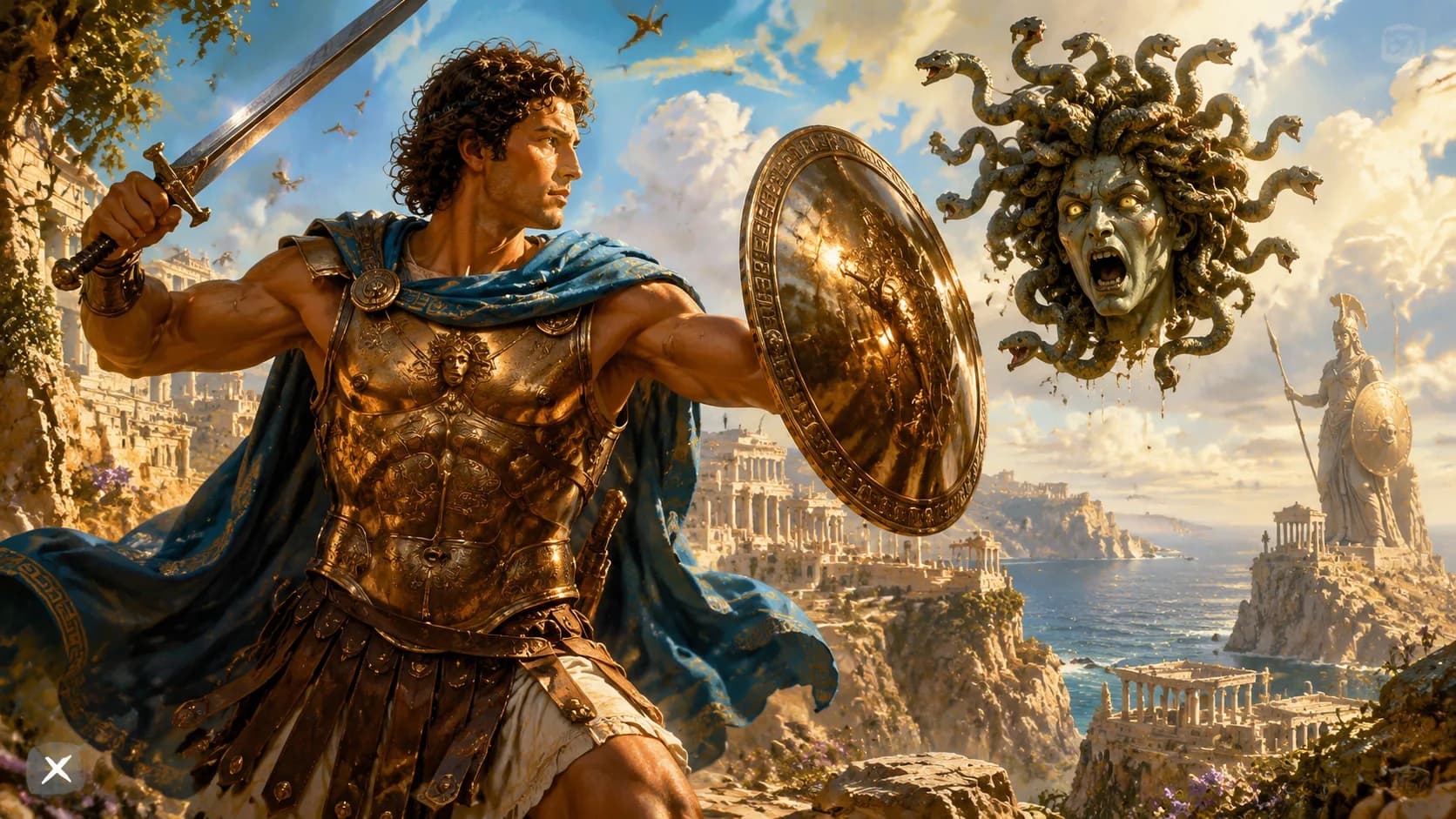
The legend of Perseus and the Gorgon is a foundational Greek myth recounting the hero Perseus's quest to obtain Medusa's head a challenge requiring divine assistance, clever strategy, and unwavering courage. Unlike tales of brute strength, this narrative celebrates wisdom, guidance from mentors (the gods Athena and Hermes), and the power of seeing truth through reflection rather than direct confrontation. It represents the archetypal hero's journey of transformation through adversity.
This comprehensive guide explores every facet of the Perseus myth from his divine origins and the gifts that aided his quest to the deeper symbolism that makes this story relevant for modern meditation and personal growth practices. You'll discover why this ancient tale continues to resonate across millennia, how it connects to mythic storytelling in meditation, and how you can experience this legendary journey through interactive audio experiences.
"Perseus proved that the best way to face your fears isn't always head on sometimes a mirror does the trick. Ancient Greeks: 1, Direct confrontation: 0."
Key Facts About Perseus
- •• Divine Lineage: Son of Zeus and mortal princess Danaë
- •• Birthplace: Argos, later raised on island of Seriphos
- •• Famous For: Facing Medusa and rescuing Andromeda from sea creature
- •• Divine Patrons: Guided by Athena (wisdom) and Hermes (guidance)
- •• Sacred Tools: Mirrored shield, winged sandals, cap of invisibility, adamantine sword
- •• Legacy: Became constellation Perseus in night sky, founder of Mycenae
- •• Heroic Qualities: Wisdom over force, accepting divine guidance, courage with strategy
Quick Answer
Discover the timeless legend of Perseus and his quest to face Medusa the Gorgon. Explore themes of courage, divine guidance, and heroic transformation through this foundational Greek myth that continues to inspire personal growth and meditation journeys.
The Perseus Story: Origins and Quest
Perseus's story begins with prophecy and divine intervention. His grandfather, King Acrisius of Argos, received a troubling prophecy that his daughter Danaë's son would eventually cause his transformation. Attempting to prevent this fate, Acrisius imprisoned Danaë in a bronze chamber. But Zeus, king of the gods on Mount Olympus, visited her as golden rain, and Perseus was conceived.
Did You Know?
The relentless drive to understand the world was seen not just as an academic pursuit, but as a spiritual and healing practice by the ancients.
Upon discovering the child, Acrisius sealed both mother and infant in a wooden chest and cast them into the sea a desperate attempt to circumvent destiny while avoiding direct harm to his family. The chest drifted to the island of Seriphos, where a kind fisherman named Dictys discovered them and provided shelter. Perseus grew to adulthood on this island, raised by his mother and their humble protector.
Perseus's origin story demonstrates a core truth in mythic storytelling: heroes often emerge from challenging circumstances. His journey from abandoned infant to legendary champion mirrors our own potential for growth through adversity a theme central to transformative meditation practices.
The turning point came when King Polydectes of Seriphos, desiring to pursue Danaë without Perseus's protection, devised a scheme. He announced his intention to marry and requested wedding gifts from all the island's young men. When Perseus, poor and without resources, could offer nothing material, Polydectes demanded an extraordinary alternative: the head of Medusa the Gorgon.
This was no ordinary quest. The Gorgons were three sisters Stheno, Euryale, and Medusa whose appearance was so horrifying that anyone who gazed upon them turned instantly to stone. Medusa was the only one who experienced transformation and thus the only one who could be challenged. Her lair was surrounded by the stone forms of previous failed heroes, a grim testament to the quest's danger.
Rather than despair, Perseus accepted this seemingly impossible challenge. His courage and filial devotion caught the attention of the divine realm, specifically Athena, goddess of wisdom and strategic warfare, and Hermes, the messenger god. They recognized in Perseus the qualities of a true hero not just physical strength, but wisdom, humility, and the willingness to undertake great challenges for noble purposes.
A Roman walks into a bar, holds up two fingers, and says, 'Five beers, please.'
Divine Gifts and Sacred Tools
What distinguishes the Perseus myth from simple tales of heroic strength is its emphasis on preparation, wisdom, and divine assistance. The gods recognized that no mortal, however brave, could face the Gorgon through strength alone. Instead, they equipped Perseus with extraordinary tools, each serving a specific purpose in his quest.
Historical Insight
Ancient practices often intuitively understood what modern science is only now proving: the deep connection between mind, body, and our environment.
The goddess Athena provided Perseus with her own bronze shield, polished to a mirror finish. This gift embodied her wisdom the understanding that some challenges cannot be faced directly. By viewing Medusa's reflection rather than looking at her directly, Perseus could navigate the danger while maintaining awareness. The shield represents the power of indirect perception, seeing truth through reflection rather than dangerous direct confrontation.
Hermes, messenger of the gods, contributed his magical winged sandals (talaria). These granted Perseus divine speed and the ability to fly essential for both reaching Medusa's remote lair and escaping swiftly after completing his quest. The sandals symbolize transcendence, the ability to rise above earthly limitations when pursuing noble goals.
The myth provides an ancient template for modern therapeutic approaches.
The god Hades, ruler of the underworld, lent Perseus his cap of invisibility (the Helm of Darkness). This allowed the hero to approach unseen and escape undetected by Medusa's immortal sisters, Stheno and Euryale, who would seek vengeance for their sister. The cap represents strategic advantage knowing when to be seen and when to remain hidden, understanding that visibility isn't always strength.
Hermes also provided an adamantine sword a blade forged from the hardest mythical metal, capable of cutting through Medusa's otherwise impenetrable scales. This wasn't just any weapon, but one specifically crafted for the task ahead. It symbolizes the right tool for the right challenge, preparation that matches the specific obstacle rather than generic readiness.
Finally, Perseus received a special bag (kibisis) to safely carry Medusa's head after his quest succeeded. Even in her transformed state, the Gorgon's head retained its petrifying power. The bag ensured Perseus could transport this dangerous prize without risking harm to himself or others. It represents containment and responsibility the understanding that powerful tools, even those obtained through righteous means, require careful handling.
These divine gifts weren't meant to make the quest easy, but to make it possible. They illustrate a profound truth embedded in mythic storytelling: great challenges require both personal courage and wisdom to seek and accept help from those with greater knowledge or resources.
Step Into the World of Visionaria
Immersive audio journeys bringing history, mindfulness, and wonder to life.
Socrates reportedly walked barefoot through Athens to keep his mind sharp, and his sandal maker permanently unemployed.
Facing the Gorgon: Wisdom Over Force
Armed with divine tools and guided by celestial mentors, Perseus began his journey to the edge of the known world where the Gorgons dwelt. But even finding their lair required wisdom and persistence. He first had to locate the Graeae three ancient sisters who shared a single eye and tooth between them who alone knew the Gorgons' location.
Perseus cleverly seized the Graeae's shared eye as they passed it among themselves, refusing to return it until they revealed Medusa's whereabouts. This episode demonstrates another key heroic quality: cleverness and negotiation can be as valuable as strength. Perseus didn't harm the Graeae he simply leveraged their situation to gain the information he needed, then honored his promise by returning their eye.
Arriving at Medusa's lair, Perseus found a horrifying landscape of stone statues warriors and heroes who had attempted the quest before him and failed, forever transformed in the moment they gazed upon the Gorgon. This grim scene could have shaken his resolve, but Perseus remembered Athena's wisdom: look not directly, but through reflection.
Visionaria Insight
By immersing ourselves in these historical soundscapes, we reconnect with a timeless human tradition of storytelling and mental restoration.
Approaching while Medusa slept, Perseus moved backward, watching her reflection in Athena's shield. This counterintuitive method advancing while retreating, seeing without looking allowed him to navigate safely. With a swift stroke of the adamantine sword, he separated Medusa's head from her body. From her form sprang two unexpected beings: Pegasus (the divine winged horse) and Chrysaor (a golden giant) children of Poseidon born from Medusa's transformation.
The Perseus narrative provides a powerful framework for story meditation practices focused on confronting fears indirectly. Rather than forcing yourself to "face your anxiety head on," Perseus teaches observation, strategic awareness, and the value of seeing challenges through different perspectives techniques that reduce psychological resistance and create genuine transformation.
Medusa's immortal sisters, Stheno and Euryale, awakened immediately and pursued Perseus with fierce determination. But wearing Hades' cap of invisibility and flying with Hermes' winged sandals, Perseus escaped their vengeance. He had accomplished the impossible not through overwhelming power, but through wisdom, divine assistance, and the courage to trust in both.
Read more: How Visualization Strengthens Neural Pathways
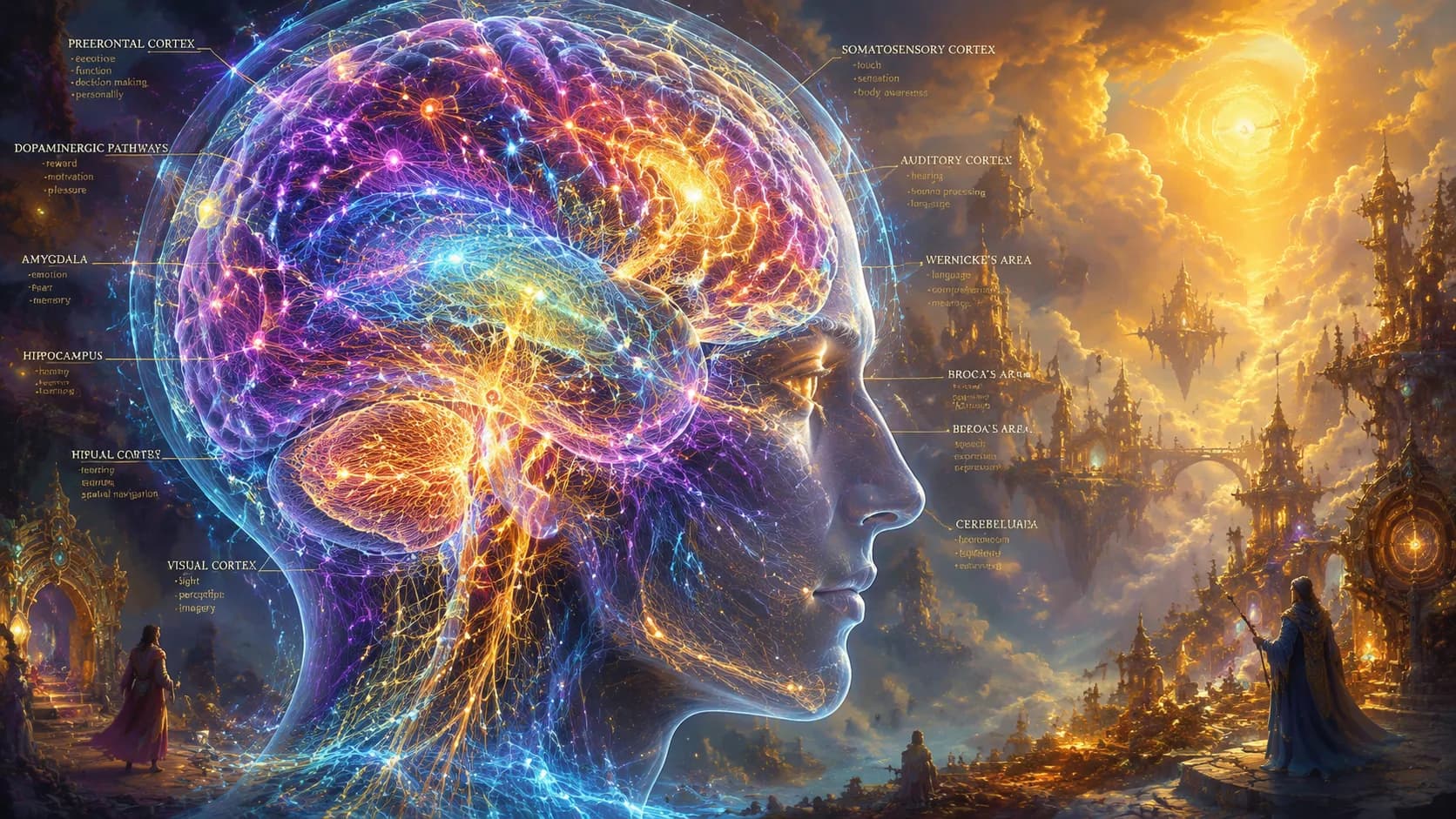
The success of Perseus's quest demonstrates a truth central to both ancient wisdom and modern cinematic meditation: the most profound challenges we face require not just bravery, but strategy, the humility to accept help, and the wisdom to approach obstacles indirectly when direct confrontation would lead to our transformation into something we don't wish to become.
Why did the historian break up with the archaeologist? Because her career was literally in ruins.
Themes of Transformation and Personal Growth
The Perseus myth resonates across centuries because it explores universal themes that transcend its ancient Greek origins. These timeless patterns of transformation and growth make it exceptionally powerful for modern meditation and personal development practices.
From Ordinary to Extraordinary
Perseus begins as a fisherman's adopted son on a remote island humble circumstances that would suggest an unremarkable life. Yet when faced with an impossible challenge, he discovers extraordinary potential within himself. This transformation from ordinary to heroic mirrors our own capacity for growth when confronted with significant challenges. The myth suggests that heroic qualities lie dormant within us, awakened not by comfort but by adversity that demands we become more than we were.
Perseus doesn't succeed alone he actively seeks and accepts help from Athena, Hermes, and other divine beings. In psychological terms, this represents the importance of mentorship, guidance from those with greater wisdom or experience, and the humility to recognize we needn't face challenges entirely independently. Modern applications include seeking therapy, joining meditation communities like Visionaria's guided journeys, or working with life coaches our contemporary equivalents of divine guidance.
Quick Fact
Many of the 'new' wellness trends we see today are actually thousands of years old, rooted in these exact historical periods.
Seeing Truth Through Reflection
The central mechanism of Perseus's success viewing Medusa through Athena's shield rather than directly offers profound wisdom for modern life. Some truths, some challenges, some aspects of ourselves are too overwhelming to face directly. Reflection, meditation, and indirect observation allow us to process difficult realities without being paralyzed by them. This is why interactive audio journeys that use narrative and metaphor can address psychological challenges more effectively than direct confrontation.
Transformation Through Challenge
Medusa herself embodies transformation she wasn't born a Gorgon but transformed into one through divine circumstances. This meta layer of the myth reminds us that transformation is universal and continuous. Perseus's quest isn't about eliminating transformation, but about navigating it with wisdom. Similarly, meditation practices don't eliminate life's challenges but teach us to navigate them with greater awareness, skill, and inner peace.
Before facing Medusa, Perseus spent time gathering tools, seeking knowledge from the Graeae, and understanding his challenge. This preparation phase is often overlooked in favor of the dramatic confrontation, but it's essential to his success. Modern parallels include the importance of establishing a consistent meditation practice before facing major life transitions, or developing coping skills before crisis moments arrive. Perseus teaches that preparation isn't cowardice it's wisdom.
A philosopher walked into a wall. His students asked if it hurt. He replied, 'The wall is an illusion, but my headache is quite real.'
The Hero's Journey Pattern
The Perseus myth follows what mythologist Joseph Campbell termed the Hero's Journey a universal narrative pattern found across cultures and throughout history. Understanding this structure reveals why the story resonates so deeply and how it can guide personal transformation through story-based meditation.
Perseus's call comes through King Polydectes's challenge an impossible task that disrupts his ordinary life on Seriphos. Initially, this seems like misfortune, but it's actually the catalyst for his transformation into a legendary hero. In our lives, calls to adventure often arrive as unwanted challenges, career changes, or personal crises that force us beyond comfortable boundaries. Meditation practices help us recognize these moments as opportunities rather than mere obstacles.
Once Perseus commits to the quest, divine assistance appears in the form of Athena and Hermes. This stage represents the resources, mentors, and support that emerge when we fully commit to growth. Whether it's discovering guided meditation apps, finding a supportive community, or encountering the right book at the right time, help often appears when we're truly ready to receive it.
When Perseus leaves Seriphos to seek the Gorgon, he crosses from the known world into the realm of myth and danger. This threshold moment leaving comfort zones behind is essential to all growth processes. Interactive journeys recreate this threshold crossing in safe, meditative contexts, allowing you to practice the psychological experience of venturing beyond familiar boundaries.
Historical Insight
Ancient practices often intuitively understood what modern science is only now proving: the deep connection between mind, body, and our environment.
Step 1: Identify your "Gorgon" a challenge that seems overwhelming. Step 2: Seek your "divine tools" resources, skills, or support systems. Step 3: Practice "shield seeing" observe the challenge through mindfulness techniques rather than anxious direct focus. Step 4: Take strategic action when prepared, not impulsively. This framework transforms abstract myth into actionable personal development.
Perseus's encounter with the Graeae and his journey to find Medusa represent the tests every hero faces. These aren't the final challenge but preparation for it building skills, gathering knowledge, and proving worthiness. Modern equivalents might include therapy sessions, daily meditation practice, or small acts of courage that build capacity for larger challenges ahead.
Facing Medusa represents the climactic challenge where everything Perseus has learned converges. Success requires all his tools, all his wisdom, and total commitment. In personal development, these are the moments when we face our deepest fears, make difficult decisions, or implement major life changes. Courage-focused meditations prepare us for these pivotal moments.
Perseus doesn't keep his victory private he returns transformed, bringing back Medusa's head (which becomes a powerful tool for protecting others) and eventually using his abilities to help more people, including rescuing Andromeda. True heroic journeys aren't just about personal achievement but about bringing back wisdom to serve others. In meditation practice, this translates to sharing insights, helping others discover transformative journeys, or simply embodying greater peace in daily life.
Why did the inventor of the wheel win an award? Because his idea really got things rolling.
Symbolism in the Perseus Myth
The richness of the Perseus legend lies not just in its narrative but in layers of symbolism that speak to universal human experiences. Understanding these symbolic elements deepens appreciation for why this myth continues to inform modern storytelling and archetypal meditation practices.
In Jungian psychology, Medusa represents the shadow the aspects of ourselves we find too frightening or overwhelming to acknowledge directly. Her petrifying gaze symbolizes how confronting our shadow without preparation can paralyze us psychologically. Perseus's use of the mirrored shield demonstrates the therapeutic technique of witnessing without identification observing difficult emotions or memories through the reflective distance of mindfulness rather than becoming overwhelmed by them.
The Mirrored Shield: Mindful Observation
The Big Picture
History proves that human resilience and the search for well-being are universal across all eras and cultures.
Athena's shield isn't just a defensive tool its reflective quality represents mindful awareness. Just as Perseus could observe Medusa's reflection without petrification, meditation teaches us to observe thoughts and emotions without being consumed by them. The shield symbolizes the observing self that part of consciousness that can witness experience without being overwhelmed by it.
Winged Sandals: Transcendence and Perspective
Hermes' gift of flight represents the ability to rise above immediate circumstances, to gain perspective. In anxiety management, this corresponds to cognitive reframing the ability to see situations from different vantage points rather than remaining trapped in ground level panic. Flight symbolizes mental flexibility and freedom from limiting perspectives.
The Cap of Invisibility: Strategic Withdrawal
Hades' cap teaches an underappreciated skill: knowing when to be invisible, when to withdraw rather than engage. Not all challenges require direct confrontation. Sometimes wisdom lies in strategic retreat, in choosing our battles carefully. This resonates with modern mindfulness teachings about letting go and recognizing that we needn't respond to every provocation or engage with every difficult thought.
Pegasus: Beauty from Adversity
The birth of Pegasus the magnificent winged horse from Medusa's transformation represents a profound truth: beauty and potential can emerge from our most challenging experiences. What seems purely destructive (facing our fears, processing trauma, confronting difficulty) can give birth to new capabilities and perspectives. This symbol appears throughout therapeutic practices, reminding us that growth often emerges from adversity.
Interactive Perseus journeys use these symbols deliberately the shield as mindfulness, the sandals as perspective taking, the cap as strategic non engagement. By experiencing the myth narratively through spatial audio, listeners internalize these psychological skills without didactic instruction, making them more effective than abstract meditation techniques alone.
The Graeae: Gatekeepers of Knowledge
The three sisters who share one eye represent how knowledge is sometimes hidden and requires cleverness to access. Perseus's negotiation with them symbolizes the importance of resourcefulness in seeking wisdom. In modern terms, this might represent researching solutions, consulting experts, or exploring ancient wisdom teachings to find answers not immediately apparent.
A time traveler went back to antiquity to teach them about 'holistic health.' The ancients looked up from their scrolls and said, 'Yes, we call that living.'
Timeless Lessons for Modern Life
The Perseus myth offers practical wisdom applicable to contemporary challenges, personal development, and meditation practices for modern life. These lessons transcend their ancient origins to provide guidance for anyone facing seemingly impossible obstacles.
Lesson 1: Preparation Precedes Success
Perseus didn't rush directly to face Medusa. He gathered tools, sought knowledge, and prepared thoroughly. This contrasts with modern culture's emphasis on immediate action and quick results. The myth teaches that thoughtful preparation isn't procrastination it's wisdom. Whether you're facing career transitions, relationship challenges, or personal growth goals, investing time in preparation (through therapy, meditation practice, skill building, or strategic planning) dramatically increases success probability.
Lesson 2: Seek Guidance from the Wise
Historical Insight
Ancient practices often intuitively understood what modern science is only now proving: the deep connection between mind, body, and our environment.
Perseus actively sought help from Athena and Hermes. Pride or false independence didn't prevent him from accepting divine assistance. Modern applications include seeking therapy, joining meditation communities, hiring coaches, or simply asking for help from those with relevant experience. The myth validates that accepting guidance is strength, not weakness.
Lesson 3: Indirect Approaches Can Be More Effective
The shield strategy facing Medusa through reflection rather than directly applies broadly. Some problems worsen with direct confrontation but resolve through indirect approaches. Anxious thoughts intensify when we try to suppress them directly but diminish when observed mindfully through mindfulness techniques. Relationship conflicts sometimes resolve better through understanding underlying needs than through direct argument. Perseus teaches strategic thinking over brute force.
The indirect "Perseus shield" method can feel more manageable than direct confrontation for some psychological challenges.
Lesson 4: Use the Right Tool for Each Challenge
Perseus received specific tools for specific purposes the shield for seeing, sandals for mobility, cap for invisibility, sword for action. He didn't try to use one tool for all situations. Similarly, life requires diverse strategies and skills. Different meditation techniques serve different purposes mindfulness for present moment awareness, visualization for goal setting, compassion practices for relationship challenges. Developing a varied toolkit increases adaptive capacity.
Lesson 5: Transformation Requires Courage
Despite all his divine assistance, Perseus still had to enter Medusa's lair himself. No god could face the Gorgon for him. The myth acknowledges that external support doesn't eliminate the need for personal courage. Therapists can guide, meditation apps like Visionaria can provide frameworks, communities can encourage but ultimately, we must do our own inner work. Perseus validates both the need for help and personal responsibility.
Lesson 6: Success Creates Responsibility
After defeating Medusa, Perseus didn't simply return home to comfort. He used his victory (and Medusa's head) to help others, rescuing Andromeda and protecting those threatened by injustice. The myth teaches that growth and capability create responsibility to serve. When we overcome challenges through meditation and personal development, we gain wisdom worth sharing, inspiring others through our example.
Lesson 7: Beauty Emerges from Adversity
Pegasus the magnificent winged horse was born from Medusa's transformation, symbolizing how new possibilities emerge from challenging experiences. Post-traumatic growth, resilience developed through difficulty, and wisdom gained from hardship all reflect this principle. Meditation practices help us recognize and cultivate the "Pegasus" that emerges from our own Gorgon encounters.
Why did the inventor of the wheel win an award? Because his idea really got things rolling.
Perseus in Meditation Practice
The Perseus legend provides an exceptionally rich framework for story-based meditation and personal transformation practices. Its narrative structure, symbolic depth, and emphasis on wisdom over force make it ideal for guided visualization journeys that promote psychological growth and emotional resilience.
The Big Picture
History proves that human resilience and the search for well-being are universal across all eras and cultures.
Narrative as Meditation Vehicle
Unlike abstract meditation instructions ("focus on your breath," "observe your thoughts"), narrative meditation uses story to guide consciousness. When experiencing a Perseus journey through interactive audio, your mind naturally follows the hero's path encountering challenges, seeking wisdom, discovering inner resources. This story structure provides the meditative framework, making the practice accessible even to those who find traditional meditation difficult.
The Shield as Mindfulness Technique
Perseus's use of Athena's shield translates directly into mindfulness practice. In meditation, you learn to observe thoughts and emotions through the "mirror" of awareness rather than becoming identified with them. Just as Perseus watched Medusa's reflection without turning to stone, mindfulness teaches witnessing without absorption. The myth provides a memorable, emotionally resonant metaphor for this essential skill.
Divine Tools as Inner Resources
The gifts Perseus receives from Athena, Hermes, and Hades symbolize inner resources everyone possesses but must consciously activate. In resource-focused meditation, practitioners visualize accessing these qualities wisdom (shield), perspective (sandals), strategic withdrawal (cap), decisive action (sword). The myth makes abstract psychological concepts tangible and memorable.
Users of Perseus meditation journeys report that the myth's framework makes complex psychological techniques feel natural and intuitive. Rather than memorizing meditation instructions, they remember Perseus's story and the techniques come automatically. This is the power of experiential learning through narrative.
Spatial Audio Enhances Immersion
Spatial 3D audio technology dramatically enhances Perseus meditation experiences. When you hear Athena's voice offering wisdom from your right, Medusa's lair sounds ahead in the darkness, and Hermes' guidance whispers from above, your brain processes these as real spatial events. This sensory richness creates genuine presence, making the journey feel real enough to produce psychological transformation while maintaining meditative awareness.
The Journey Structure Promotes Flow States
Perseus's quest follows a clear narrative arc with beginning, challenges, climax, and resolution. This structure naturally promotes flow states that optimal zone where you're completely absorbed yet deeply relaxed. Unlike open ended meditation that can feel directionless to beginners, narrative provides natural momentum, carrying listeners through the complete arc of transformation.
Applicable to Diverse Life Challenges

The Perseus framework adapts to various personal challenges. Facing career uncertainty? Perseus teaches strategic preparation and seeking guidance. Processing difficult emotions? The shield technique offers healthy distance. Feeling overwhelmed? The cap of invisibility validates strategic withdrawal. Making important decisions? Perseus demonstrates gathering knowledge before action. This versatility makes the myth universally relevant, which is why it is worth returning to in your own reflection or meditation practice.
Why did the historian break up with the archaeologist? Because her career was literally in ruins.
Perseus's Other Legendary Adventures
While facing Medusa represents Perseus's most famous achievement, his heroic journey continued with additional adventures that further demonstrate his character and the myth's deeper wisdom. These subsequent tales show how completing one challenge prepares us for others a pattern relevant to continuous personal growth through progressive meditation practices.
During his return journey, Perseus discovered Princess Andromeda chained to a rock, offered as tribute to a sea creature sent by Poseidon. Her mother, Queen Cassiopeia, had boasted that Andromeda's beauty surpassed the Nereids (sea nymphs), causing divine displeasure. Perseus used Medusa's head to transform the sea creature to stone, freeing Andromeda.
Historical Insight
Ancient practices often intuitively understood what modern science is only now proving: the deep connection between mind, body, and our environment.
This episode illustrates an important principle: tools gained from one challenge become resources for helping others. The very thing that seemed purely dangerous (Medusa's petrifying power) became an instrument of rescue. In personal development, skills and wisdom gained through our own struggles become our greatest assets for supporting others a core concept in compassion-focused meditation.
At his wedding to Andromeda, Perseus faced Phineus Andromeda's previous suitor who arrived with armed warriors to reclaim her. Despite being outnumbered, Perseus revealed Medusa's head, transforming his attackers to stone. This story shows how having boundaries and defending rightful relationships sometimes requires decisive action, not endless negotiation. It validates that wisdom includes knowing when gentleness ends and firmness begins.
Atlas and the Weight of the World
During his travels, Perseus encountered Atlas the titan condemned to hold up the heavens. When Atlas refused Perseus hospitality, the hero used Medusa's head to transform Atlas into stone, creating the Atlas Mountains of North Africa. This tale, while harsh in its resolution, addresses themes of boundaries and self-care recognizing when others' burdens aren't ours to carry, a crucial lesson for those prone to over functioning explored in boundary setting meditation practices.
Perseus finally returned to Seriphos where his mother Danaë had sought refuge in a temple to escape King Polydectes's unwanted advances. Perseus confronted Polydectes, who had never expected him to survive the Gorgon quest. When Polydectes refused to honor Perseus's success, the hero revealed Medusa's head, transforming the corrupt king to stone. He then made Dictys (the kind fisherman who had rescued him as an infant) the new king of Seriphos.
This conclusion demonstrates justice and gratitude Perseus used his power not for personal gain but to protect his mother, punish corruption, and reward kindness. The myth teaches that true heroism includes standing against injustice and honoring those who helped us, themes explored in Greek hero meditation journeys.
Perseus eventually returned to Argos to reconcile with his grandfather Acrisius, who had tried to prevent the prophecy of his transformation through Perseus. Ironically, during athletic games, Perseus accidentally struck Acrisius with a discus, fulfilling the prophecy despite everyone's attempts to avoid it. This bittersweet ending teaches that some patterns complete themselves regardless of our efforts to prevent them a profound meditation on fate, acceptance, and the limits of control explored in acceptance-based practices.
Read more: The Mythological World of Zeus Explained: Origins, Symbols, Legacy & the King of the Greek Gods

Perseus, grief stricken at accidentally causing his grandfather's transformation, refused to rule Argos and instead founded the great city of Mycenae. His lineage became legendary, including descendants like Heracles (Hercules), connecting him to Greece's greatest heroic traditions.
An Epicurean, a Stoic, and a Cynic walk into a garden. The bartender says, 'Is this some kind of philosophical joke?'
Cultural Impact Through the Ages
The Perseus legend's influence extends far beyond ancient Greece. Its themes, images, and narrative patterns have shaped art, literature, psychology, and modern storytelling for over two millennia, demonstrating the myth's universal resonance and continued relevance to human experience.
Ancient Greek and Roman artists frequently depicted Perseus, with the moment of facing Medusa proving especially popular. The famous sculpture "Perseus with the Head of Medusa" by Benvenuto Cellini (1545-1554) stands in Florence's Piazza della Signoria, capturing the hero's triumph with dramatic intensity. These artistic interpretations kept the myth alive through visual culture, ensuring each generation encountered Perseus's wisdom through beauty.
Renaissance and Baroque Interpretations
Artists like Caravaggio ("Medusa," 1597) and Peter Paul Rubens explored the myth's psychological depth, focusing on transformation, horror, and heroic courage. These works influenced European culture's understanding of heroism as requiring both physical and psychological strength themes that resonate with modern psychological resilience training.
Writers from Ovid's "Metamorphoses" to modern fantasy authors have retold and reinterpreted Perseus's story. Each retelling emphasizes different aspects some focus on adventure, others on the relationship between heroes and gods, still others on the psychological journey. This literary evolution shows how timeless myths adapt to each era's needs while maintaining core wisdom, much like how meditation practices evolve while preserving essential techniques.
Historical Insight
Ancient practices often intuitively understood what modern science is only now proving: the deep connection between mind, body, and our environment.
Psychological and Therapeutic Applications
Carl Jung and subsequent depth psychologists recognized Perseus as an archetypal hero representing consciousness confronting the shadow (Medusa). The shield technique became a metaphor for shadow work exploring difficult aspects of self through reflection rather than direct confrontation. Modern therapy frequently uses Perseus derived metaphors for trauma processing, anxiety management, and personal transformation.
Modern Media and Popular Culture
Films like "Clash of the Titans" (1981, 2010) introduced Perseus to new generations, though often emphasizing action over the myth's deeper wisdom. Video games, novels, and comics continue exploring Perseus's journey, demonstrating the narrative's adaptability to contemporary formats. This ongoing cultural presence ensures the myth remains accessible, providing entry points for discovering its meditation applications.
Scientific and Astronomical Legacy
Perseus became a constellation visible in the northern sky, ensuring his legend literally shines above us each night. The Perseus meteor shower occurs annually in August, connecting the ancient hero to modern astronomical observation. This celestial immortalization reflects the Greeks' recognition that certain stories deserve eternal commemoration they guide us like stars guide navigation.
Over 2,500 years after its origin, the Perseus myth appears in an average of 12 new creative works annually books, films, games, and now interactive audio meditation experiences. This cultural longevity proves its psychological relevance transcends historical periods, making it ideal for timeless wisdom practices.
Meditation and Mindfulness Applications
The most recent evolution brings Perseus into meditation and mindfulness practices. Apps like Visionaria use the myth's narrative structure, symbolic depth, and psychological wisdom to create immersive journeys that promote personal growth. This application honors the myth's original purpose not entertainment, but transformation through story while leveraging modern technology like spatial audio to enhance immersion.
Why did the inventor of the wheel win an award? Because his idea really got things rolling.
Experience the Legend Yourself
Reading about Perseus provides intellectual understanding, but experiencing his journey creates transformation. Interactive audio meditation brings the myth to life through first person narrative, spatial 3D sound, and guided visualization, allowing you to walk in Perseus's footsteps and internalize his wisdom through direct experience.
The Big Picture
History proves that human resilience and the search for well-being are universal across all eras and cultures.
How Interactive Mythology Works
Unlike passive listening, interactive Perseus journeys place you directly in the narrative. You don the mirrored shield, feel the winged sandals lifting you skyward, navigate Medusa's lair using reflection rather than sight. Your imagination completes the experience, making it uniquely personal while following the archetypal pattern. This active participation creates psychological engagement that passive observation cannot achieve.
Spatial Audio Creates Presence
Spatial audio technology positions sounds in three-dimensional space around you. Athena's wisdom comes from your right, Hermes' guidance from above, Medusa's lair sounds ahead in darkness. Your brain processes these spatial cues as real environmental features, triggering genuine presence the feeling of actually being there. This sensory immersion produces meditative states naturally, without requiring years of practice.
Guided Visualization Strengthens Imagination
The narrative prompts you to visualize specific details the gleam of Athena's bronze shield, the weight of the adamantine sword, the landscape of statues surrounding Medusa's lair. This guided visualization exercises your imagination systematically, strengthening your capacity for mental imagery a skill linked to creativity, problem solving, and emotional regulation.
Integration with Daily Practice
Perseus journeys work best when integrated into regular meditation practice. You might try Perseus content two or three times a week, giving the myth's ideas time to settle in gradually. Between immersive sessions, brief "shield technique" practices (5 minutes of mindful observation) reinforce the core teaching. Thisblended approach combines deep narrative immersion with practical daily techniques.
Complementary Greek Mythology Journeys
Perseus's story connects to broader Greek mythology experiences. After completing Perseus journeys, many users explore related content:
This interconnected approach mirrors how ancient Greeks experienced their myths not as isolated stories but as a rich tapestry of interrelated wisdom teachings, each illuminating different facets of human experience and supporting holistic personal growth.
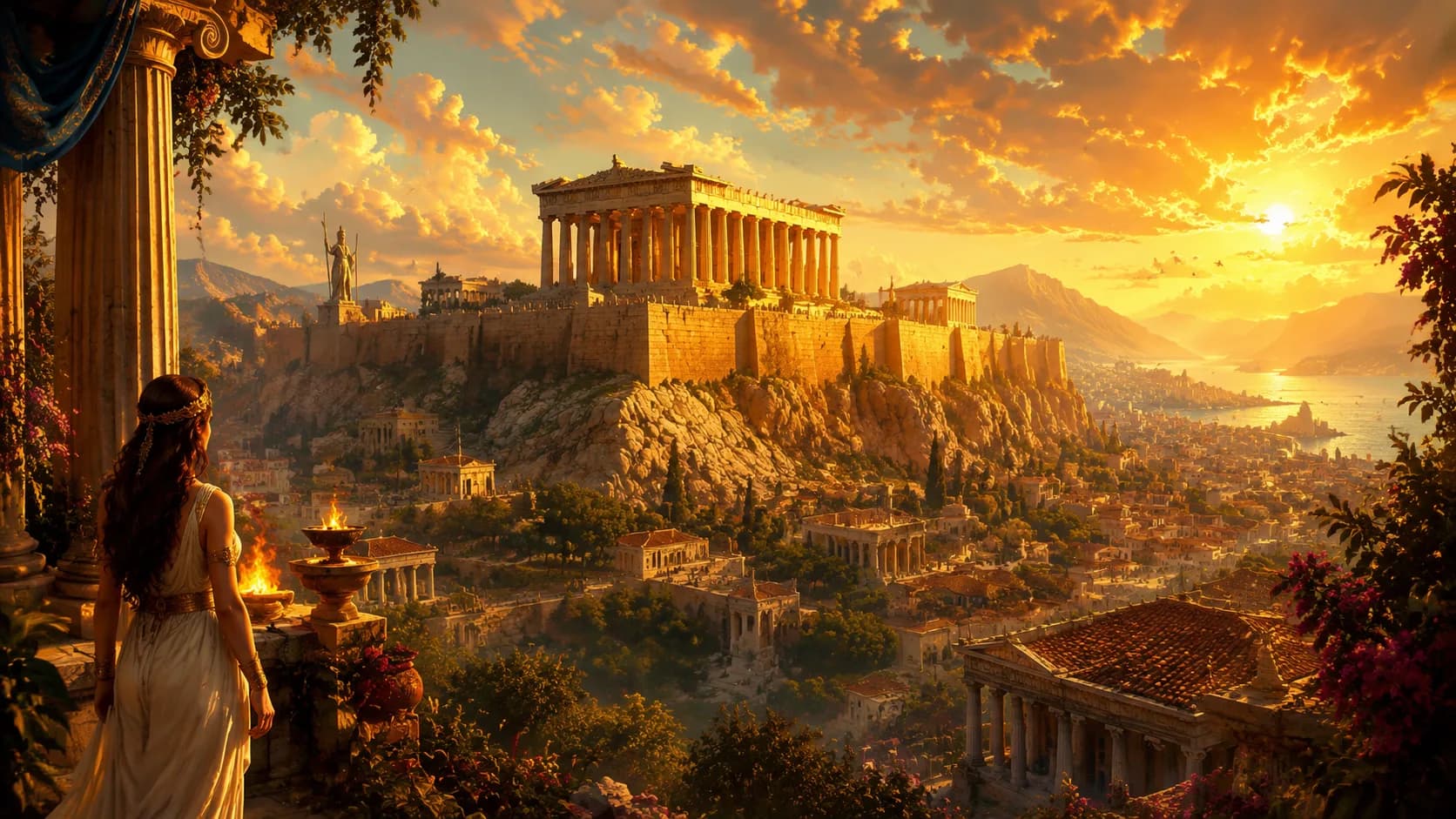
Walking Through Ancient Athens in Your Mind: How Imaginative Journeys Through the Acropolis, Agora & Plato's Academy Rebuild Focus & Deepen Calm
Discover how walking through ancient Athens in your mind (from the Parthenon and Agora to the Theatre of Dionysus and Plato's Academy) uses spatial audio meditation to rebuild focus, deepen calm, and expand historical u...
A philosopher walked into a wall. His students asked if it hurt. He replied, 'The wall is an illusion, but my headache is quite real.'
The Bottom Line
You've learned about the legend of Perseus and the Gorgon an ancient Greek myth that teaches timeless wisdom about facing fears through wisdom rather than force, using divine gifts (Athena's mirrored shield, Hermes' winged sandals, Hades' cap of invisibility) to overcome seemingly impossible challenges, and the transformative power of indirect observation.
This article covered the three pillars of Perseus's quest (divine guidance, strategic tools, and indirect confrontation), the psychological symbolism of the shield technique as a mindfulness practice, the benefits ranging from stress reduction to enhanced self-awareness, and how this ancient wisdom applies to modern meditation practice.
Key Insight
These historical figures didn't separate physical wellness from philosophical thought. To them, it was all one continuous practice of living well.
To experience the Perseus legend yourself, download the Visionaria app and start with Perseus: Quest for Medusa's Head. Popular related journeys include Athens: The Parthenon, Athena's Sanctuary, and Greek Mythology Collection.
"Remember: Ancient Greeks didn't have smartphones, but we're pretty sure they'd approve of using one to visit ancient Greece."
Experience More with Visionaria
Download the app to explore guided historical and wellness journeys.
An Epicurean, a Stoic, and a Cynic walk into a garden. The bartender says, 'Is this some kind of philosophical joke?'
This article is for educational and informational purposes only. Historical details are based on available research and may evolve as new evidence emerges.
Visionaria journeys are designed for relaxation, guided imagination, and personal enrichment. They are not a substitute for medical, mental health, legal, or professional advice.