
Launch special: Visionaria Premium is free—all cinematic journeys with spatial 3D audio.
🇺🇦 Support Ukrainian creators on Patreon — help us make a difference
Launch special: Visionaria Premium is free—all cinematic journeys with spatial 3D audio.
🇺🇦 Support Ukrainian creators on Patreon — help us make a difference
"Conquered the known world by age 32. Final resting place: mysteriously vanished. Alexander's legacy: infinite. His tomb's location: zero."
The Tomb of Alexander the Great (Greek: Σῆμα Ἀλεξάνδρου, Sēma Alexándrou) was the burial site of Alexander III of Macedon (356-323 BCE), located in Alexandria, Egypt, the city he founded in 331 BCE. According to ancient historians including Strabo, Plutarch, and Pausanias, Alexander's body was originally interred in a gold sarcophagus, later replaced by glass or crystal by Ptolemy IX (c. 89 BCE), and displayed in a magnificent mausoleum called the Soma ("Body") in Alexandria's royal quarter. The tomb became a pilgrimage site for rulers including Julius Caesar, Augustus Caesar, and Caligula, who visited to pay homage to history's greatest military genius. Despite extensive ancient documentation of its location and visits, the tomb mysteriously disappeared sometime between the 4th-10th centuries CE, and despite numerous archaeological expeditions and theories, its exact location remains one of archaeology's greatest unsolved mysteries.
⚔️ What is Alexander's Tomb experience?
A 14-minute Intermediate spatial audio meditation exploring Alexander the Great's legendary tomb. Stand before the crystal sarcophagus in Alexandria's Royal District, witness Julius Caesar and other rulers' pilgrimages, and contemplate profound themes of legacy, mortality, greatness, and the mystery of how even the most famous monument vanished without trace.
Approach Alexander's tomb through Alexandria's streets, stand before the crystal sarcophagus containing the greatest conqueror, witness ancient rulers paying respects, and contemplate the profound mystery of how this most famous monument vanished, leaving only legend.
Free to download • No subscription required
"Intermediate contemplation: profound. Archaeological searches for tomb: ongoing for 2,000 years and counting."
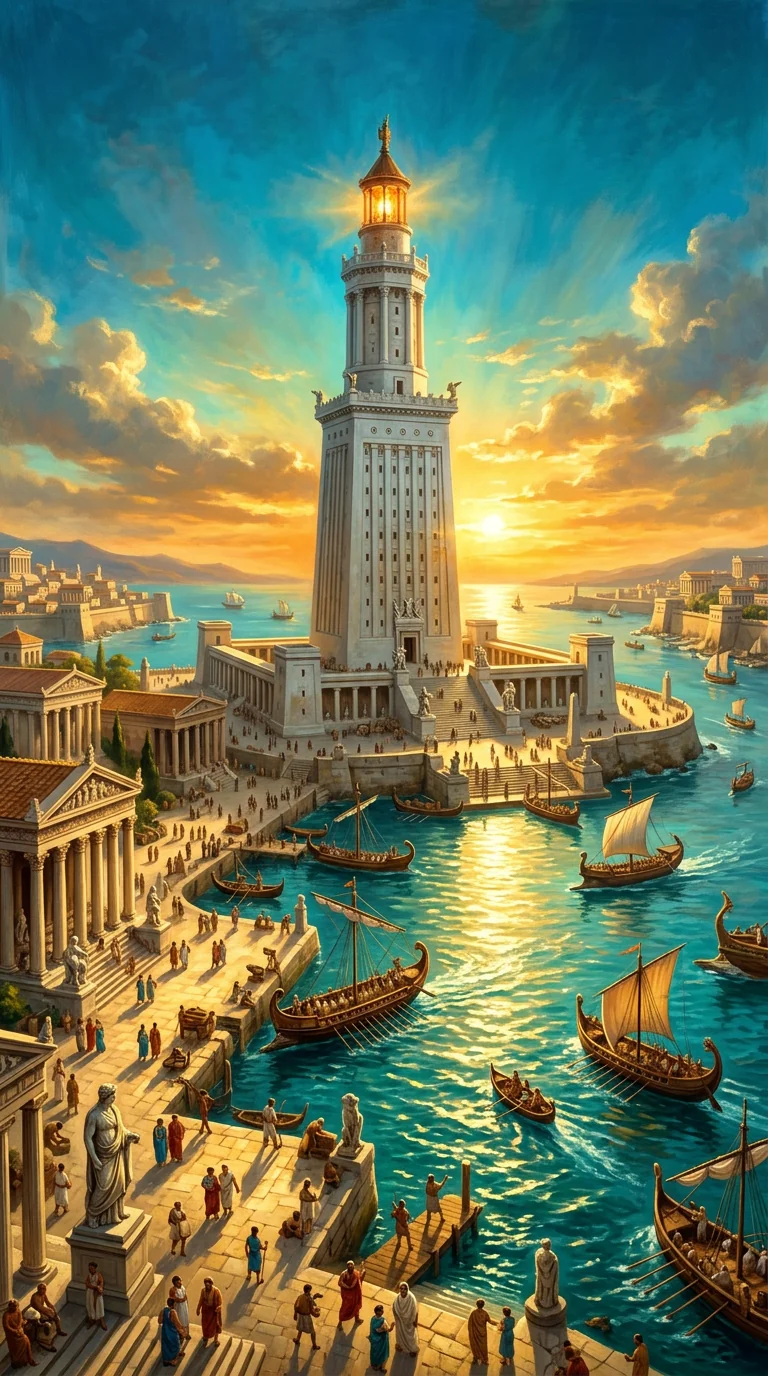
Whether you're fascinated by Alexander the Great and ancient conquest, contemplating themes of legacy and mortality, drawn to archaeological mysteries and lost monuments, interested in how greatness is remembered across millennia, exploring what endures beyond death, or experiencing the profound mystery of how even the most famous tomb vanished without trace—
This Intermediate journey offers sophisticated exploration of ambition, memory, and the passage of time perfect for those ready to contemplate history's deepest questions.
Experience standing before history's greatest conqueror's resting place. Perfect for those fascinated by Alexander's unprecedented achievements - never lost a battle, conquered three continents by age 32, spread Greek culture across the ancient world - and how his legend transcended mortality to inspire rulers and leaders for over 2,300 years. Discover the man who became myth.
Find contemplation of life's meaning through Alexander's example. Though he died young, his impact shaped civilizations for millennia. What legacy do I want? What makes achievement meaningful? How will I be remembered? Perfect for those asking these timeless questions about what truly matters in the time we have.
Explore one of archaeology's greatest unsolved mysteries. Alexander's tomb - once the most famous monument in the ancient world, visited and documented by emperors - vanished without trace. Where is it? Why did it disappear? How can something so prominent be lost completely? Experience the profound mystery.
Explore Intermediate themes of mortality, ambition, and what survives us. Alexander conquered the world but couldn't escape death at 32. His empire fragmented immediately, yet his legend endures. What does this teach about achievement, mortality, memory, and what truly lasts beyond our lives?
Connect to history's ultimate story of ambition fulfilled. Alexander never lost a battle, conquered three continents, founded cities, spread culture, and became legend within his lifetime. Perfect for contemplating your own ambitions, what success means, and whether greatness requires conquest or can be measured by impact.
Experience the sacred pilgrimage ancient rulers made to greatness itself. Julius Caesar wept at the tomb. Augustus accidentally broke Alexander's nose. Each visitor sought connection to ultimate achievement. This journey recreates that reverent experience of standing before genius, contemplating what it means to encounter greatness.
"Six perfect audiences. Actual invitation to meet Alexander: would require time travel and extraordinary military credentials."
This 14-minute Intermediate cinematic meditation transports you to Alexander the Great's tomb during its peak around 100 BCE, when it served as sacred pilgrimage site for rulers across the ancient world.
Through advanced 3D spatial audio technology, you'll experience the tomb as ancient pilgrims did. Hear your footsteps echoing through Alexandria's streets as you approach the monument in the Royal District, drawing closer to history's most legendary resting place. The spatial acoustics create the weight and reverence of approaching sacred ground where the greatest conqueror lies.
Experience the tomb precinct through layered soundscapes: other pilgrims whispering from different positions as they approach - Roman senators from one direction, foreign dignitaries from another, common visitors expressing reverence from various spots.
"Drawing closer to history's most legendary resting place, where genius itself lies in eternal rest"
Hear priests maintaining rituals from specific chamber locations, guards stationed at precise doorways protecting the sacred space, the profound silence around the crystal sarcophagus containing Alexander's preserved body. Each sound spatially positioned to create the atmosphere of pilgrimage to greatness itself, where rulers from across centuries came to stand before genius.
Alexander's tomb became the supreme political monument of the Hellenistic world, eclipsing earlier hero shrines like the Tomb of Leonidas in Sparta (where the Thermopylae hero symbolized martial valor) and the Tomb of Theseus in Athens (where Athens' founder represented democratic ideals)—demonstrating how hero cults evolved from civic shrines into instruments of imperial power, where possessing a legendary conqueror's body conveyed divine legitimacy to successor rulers competing for Alexander's vast empire.
Historical moments layered throughout - Julius Caesar's visit and tears, Augustus breaking Alexander's nose while leaning too close, Caligula taking the breastplate. Every detail creates immersion in standing before the man who conquered the world and became legend transcending mortality.
The monument's grandeur in Alexandria's heart, marble columns rising toward heaven
Incense mixing with Mediterranean air, cool marble beneath your feet as you enter
Alexander's presence emanating from the sarcophagus, the profound silence of reverence
Every element in this journey is grounded in ancient sources documenting Alexander's tomb for centuries. After Alexander died in Babylon in 323 BCE at age 32, Ptolemy I Soter (one of his generals) hijacked the funeral cortege and brought the body to Egypt - a political masterstroke claiming Alexander's legacy for his dynasty. Initially placed in Memphis, the tomb was later moved to Alexandria and positioned prominently in the Royal District (called the Soma or Sema, meaning 'body' or 'tomb').
Julius Caesar visited around 48 BCE and reportedly wept, realizing Alexander had conquered the world by Caesar's current age while Caesar had achieved comparatively little. Augustus visited in 30 BCE and accidentally broke Alexander's nose while leaning too close to examine the body.
Then the tomb vanished. The last confirmed visit was around 215 CE. By the 5th century, it had disappeared completely - possibly destroyed during religious conflicts, buried by earthquakes, or deliberately hidden. Despite two millennia of searching, its exact location remains unknown.
This makes Alexander's final resting place as mysterious as it is legendary - a monument so famous it was documented for 600 years, yet now so lost that even its precise location is debated. The journey authentically recreates the tomb's atmosphere while honoring the profound mystery of its disappearance.
"Sacred pilgrimage atmosphere: historically verified. Modern tourist maps to tomb location: unavailable for 1,800 years and counting."
Alexander's tomb embodies profound themes about legacy, memory, and greatness. The mysteries of time erase even the most famous monuments, while legends endure forever—a paradox that defines Alexander's enduring impact on civilization.
Born 356 BCE in Macedon, tutored by Aristotle, Alexander became king at 20 after his father Philip II's assassination. In just 13 years, he conquered the largest empire yet known - defeating the Persian Empire (which had ruled for 200 years), reaching India, founding cities across three continents including Alexandria, and spreading Greek culture throughout the ancient Near East. He never lost a battle despite often being dramatically outnumbered. His military tactics are still studied today.
What made Alexander legendary wasn't just conquest but vision. He married Persian women, adopted Persian customs, encouraged cultural fusion, and imagined unified world civilization transcending traditional boundaries. His early death in Babylon at 32 (possibly illness, possibly poisoning - another mystery) shocked the ancient world. His empire immediately fragmented among his generals (the Diadochi), but his cultural impact - Hellenization - shaped Mediterranean and Near Eastern civilization for centuries. He remains history's most famous military commander and symbol of ambition fulfilled.
Visiting Alexander's tomb became political and spiritual act. Rulers sought connection to ultimate achievement - associating themselves with history's greatest conqueror legitimized their own power. Julius Caesar's documented tears at the tomb reveal profound psychology: here was Caesar, already accomplished, confronting the reality that Alexander had conquered the world by Caesar's current age. The tomb became mirror reflecting one's own ambitions and achievements against ultimate standard.
But beyond politics, the pilgrimage was reverent encounter with greatness itself. Standing before Alexander's body - preserved first in honey, then housed in gold sarcophagus, later transferred to crystal or glass - visitors confronted mortality and legend simultaneously. Here lay the man who had achieved what no one before or since has matched, yet death had claimed him at 32. The tomb embodied profound truth: even the greatest cannot escape mortality, yet their impact can transcend death entirely. This made it sacred space, shrine to ambition, genius, and the complex relationship between achievement and mortality.
How does the most famous tomb in the ancient world - visited and documented by emperors for 600 years - vanish without trace? This mystery haunts archaeology. The tomb's location was prominent, well-known, repeatedly described in ancient sources. Yet by the 5th century CE, it had disappeared completely. Theories abound: destroyed during Christian-pagan conflicts (early Christians may have dismantled pagan monuments), buried by earthquakes (Alexandria sits on seismically active zone and multiple quakes reshaped the city), lost during Alexandria's gradual decline, deliberately hidden to protect it from looters.
Modern searches have found nothing conclusive despite sophisticated technology. Some claim to have located it beneath mosques, under modern buildings, in unexpected locations - but none have proven definitive. The mystery adds poignant dimension to Alexander's legacy: his cultural impact endures (we still call conquered people naming cities after themselves "Alexandrian"), his legend inspires, his tactics are studied - yet his physical tomb, once the most visited monument in the ancient world, is lost. It reminds us that even the most prominent physical things vanish while ideas, achievements, and legends transcend material limitations.
Alexander's tomb vanished, yet his legend endures - offering profound lesson about legacy. Physical monuments crumble, tombs disappear, even empires fall. Alexander's vast empire fragmented within months of his death, divided among generals who immediately warred for pieces. By that measure, his achievement was temporary. Yet over 2,300 years later, we still know his name, study his tactics, marvel at his conquests, contemplate his vision of unified world civilization.
This suggests legacy isn't measured in monuments, territory, or physical remains but in impact on human thought and culture. Alexander spread Greek language, philosophy, and culture across three continents, creating Hellenistic civilization that influenced Roman Empire and shaped Western civilization. He demonstrated that different cultures could unite. He inspired countless leaders while teaching cautionary lessons about ambition, mortality, and empire's fragility. The tomb's mysterious disappearance paradoxically strengthens the legend - even as physical monument vanished, Alexander's name became more legendary. The journey invites contemplation: What legacy do we want? What truly endures? What matters more - monuments or impact?
"Legacy themes: profound. Number of conquerors matching Alexander's achievements: zero in 2,300 years and counting."
Cutting-edge spatial audio and cinematic storytelling combine to create an unforgettable pilgrimage to history's greatest tomb
Proprietary positioning technology
Our proprietary spatial audio technology positions you on sacred pilgrimage. Hear your footsteps approaching through Alexandria's streets from your perspective, other pilgrims whispering from various positions expressing reverence, priests performing rituals from specific chamber locations, guards stationed at precise doorways.
Experience the profound silence around Alexander's sarcophagus, atmospheric sounds creating weight of standing before greatness - all in full 360-degree spatial audio creating unparalleled immersion in history's most legendary pilgrimage site.
Every sound positioned with archaeological precision
From footsteps echoing through marble corridors to the hushed reverence of ancient visitors
Verified Sources
Every detail drawn from ancient documentation and modern scholarship
Every detail - tomb location in Royal District, documented visits by emperors, Alexander's preserved body, monument's prominence - is drawn from ancient sources and modern scholarship.
Experience the tomb as historical documentation describes it: sacred pilgrimage site, Julius Caesar's tears, Augustus breaking the nose, Caligula taking the breastplate. Authenticity grounded in decades of research on Alexander's legacy and the profound archaeological mystery of the tomb's disappearance.
Deeper philosophical contemplation
Unlike Beginner journeys focusing on sensory immersion, this Intermediate experience invites deeper contemplation:
What makes a legacy endure?
How is greatness remembered across millennia?
Why do we seek physical connection to the great through monuments?
The vivid historical setting serves as foundation for philosophical reflection on mortality, ambition, memory, and what truly survives us.
Designed to honor sacred pilgrimage to greatness. Standing where ancient rulers stood before history's greatest conqueror creates contemplation of achievement, ambition, mortality, and how we measure success.
Perfect for those contemplating their own legacy, seeking inspiration from ultimate achievement, or experiencing emotional connection to the profound mystery of how even the most famous monuments vanish while legends endure forever.
Multiple audio layers create unprecedented monument immersion: approaching through Alexandria's streets, other pilgrims' reverent conversations, priests maintaining sacred space, guards protecting the tomb, Julius Caesar's emotional visit, Augustus' accidental nose-breaking, the profound silence around the sarcophagus, Alexander's preserved presence. Every element meticulously researched and spatially positioned for maximum historical and emotional connection.
Beyond historical education, this journey explores universal concepts: ambition and achievement, mortality's inevitability even for the greatest, how memory outlasts monuments, the profound mystery of what endures and what vanishes.
Legacy measured not in territory or tombs but in cultural impact. Perfect for contemplating your own life's meaning, what you want to leave behind, or experiencing the poignant truth that even Alexander's tomb vanished while his legend lives forever.
"Six immersive features. Complete ancient pilgrimage protocol: would require reverent silence and impressive achievement credentials."
Explore more of ancient Alexandria's legendary wonders with these related cinematic meditation experiences
Continue your journey through ancient Alexandria
Continue your journey through ancient Alexandria
Continue your journey through ancient Alexandria
"Three featured journeys. Complete Alexandria collection: six legendary locations including one more awaiting discovery."
Everything you need to know about this journey
"Questions about Alexander's tomb? Our answers are more findable than the tomb itself - which, admittedly, isn't saying much."
Download Visionaria and start your journey today.
"Where conqueror became legend, monuments vanished but memory endures, and greatness transcended even death."