Launch special: Visionaria Premium is free—all cinematic journeys with spatial 3D audio.
🇺🇦 Support Ukrainian creators on Patreon — help us make a difference
Launch special: Visionaria Premium is free—all cinematic journeys with spatial 3D audio.
🇺🇦 Support Ukrainian creators on Patreon — help us make a difference
Love, music, and devotion that transcends all boundaries
Experience the legendary love of Orpheus & Eurydice, where music's transcendent power and devotion's courage created mythology's most beautiful celebration of eternal love.
🎵 What is the Orpheus & Eurydice experience?
A 19-minute Intermediate spatial audio meditation that transports you to ancient Greece to experience music's legendary power and love's transcendent courage. Hear Orpheus's lyre move all of nature, witness his devotion-inspired journey to the underworld, and explore eternal themes through immersive 3D soundscapes.
"Warning: May cause sudden appreciation for classical music, desire to learn ancient instruments, and wondering if your Spotify playlist has mystical powers. (Trees not guaranteed to respond.)"
"Side effects include evaluating modern music's ability to charm nature, sudden interest in Greek mythology, and wondering what your love would inspire you to brave. (Underworld journey optional.)"
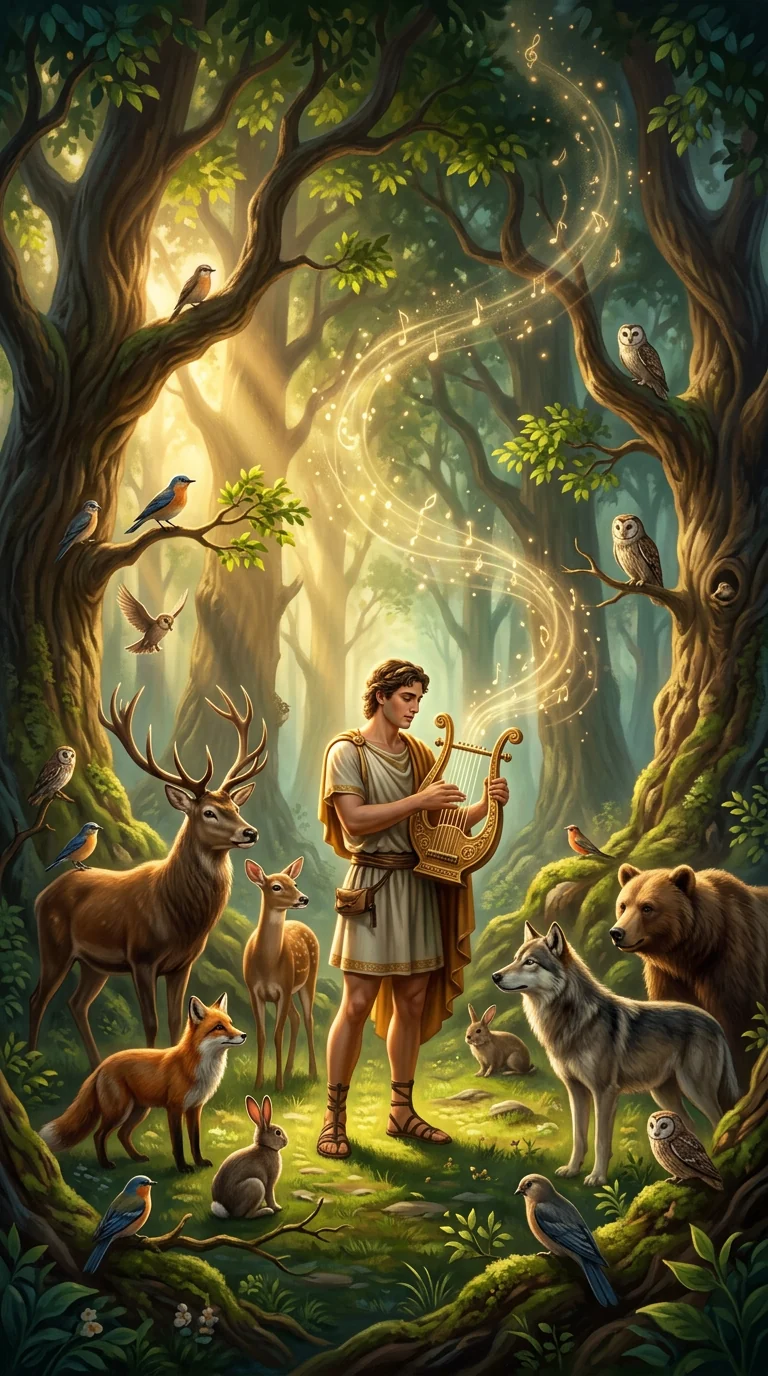
Orpheus and Eurydice represent one of ancient Greek mythology's most profound explorations of love's transcendent power and music's spiritual dimension. Orpheus, legendary musician and poet, was the son of the Muse Calliope (or according to some sources, Apollo himself), whose lyre-playing possessed such extraordinary beauty it could charm all living things—ancient sources describe how trees bent to hear him, rivers changed course to flow nearer, wild animals grew tame in his presence, and even stones were moved to tears by his melodies. Eurydice, a beautiful nymph or dryad (tree spirit), became his beloved wife in a union celebrated by all of nature. When Eurydice journeys to the underworld early in their marriage, Orpheus undertakes an unprecedented quest—becoming the only living person to willingly descend to the realm of Hades and Persephone, armed only with his lyre and his profound devotion. The story appears in numerous ancient sources including Ovid's Metamorphoses (8 CE), Virgil's Georgics (29 BCE), and Apollonius Rhodius's Argonautica (3rd century BCE), with variations emphasizing different aspects of the tale. Orpheus's journey demonstrates music's power to transcend all boundaries—his playing moves even the hardest hearts in the underworld, proving that beauty and love possess strength beyond physical force. The myth explores profound themes: art as spiritual practice connecting mortal and divine realms, devotion that inspires courage to venture into unknown territories, music as universal language transcending verbal expression, and love as eternal force creating bonds beyond physical presence. Orpheus's lyre, often depicted as seven-stringed instrument representing the seven planets and cosmic harmony, symbolizes how artistic expression can create order from chaos and beauty from sorrow. The underworld journey represents the artist's descent into deep emotion and unconscious realms to bring forth beauty—a metaphor understood by creators across centuries. Their story has inspired countless artistic works from Monteverdi's opera L'Orfeo (1607, often considered the first great opera) to Gluck's Orfeo ed Euridice (1762) to modern films, ballets, and literature, proving that these themes remain eternally relevant. The tale celebrates music's transformative power, devotion strong enough to brave any realm, hope as eternal companion of love, and beauty's ability to move all hearts. Orpheus and Eurydice endure not because of dramatic endings but because they illuminate timeless truths: certain loves inspire impossible courage, art possesses spiritual power, and devotion creates meaning that transcends temporary circumstances.
Orpheus's musical gift transcended ordinary artistry—ancient sources describe his lyre-playing as possessing almost supernatural power. When he played, trees uprooted themselves to draw nearer, their branches swaying in harmony with his melodies. Rivers changed course to flow closer to his music. Wild animals—fierce lions, timid deer, soaring eagles—grew calm and gathered peacefully around him. Even stones, according to myth, wept at the beauty of his songs. This wasn't mere poetic exaggeration but mythology's way of expressing a profound truth: truly exceptional art possesses power to move all hearts, to create harmony from discord, to touch something universal in all beings.
His seven-stringed lyre represented cosmic harmony itself—each string corresponding to one of the seven known planets, his music literally expressing the "music of the spheres" that ancient philosophers believed governed celestial motion. When Orpheus played, he wasn't just creating pleasant sounds but tapping into fundamental patterns of existence, expressing through art the underlying harmony of creation. This concept—that music connects human expression with cosmic order—influenced Western philosophy and artistic theory for millennia.
"His lyre had seven strings and moved all of nature. (Your guitar has six and mostly annoys neighbors. Close enough.)"
The love between Orpheus and Eurydice was celebrated by all of nature—birds sang sweeter melodies, flowers bloomed more beautifully, even the seasons seemed more gentle during their time together. Mythology portrays their union as perfect harmony between art and nature, masculine and feminine, human and divine. Eurydice, as nymph or dryad, embodied natural beauty, while Orpheus represented artistic expression—their love symbolizing the beautiful connection between natural world and human creativity.
When Eurydice journeys to the underworld, Orpheus's response demonstrates devotion's extraordinary courage. The underworld—realm of Hades and Persephone—was a place no living person entered willingly. Yet Orpheus, armed only with his lyre, makes this unprecedented descent. His choice reveals profound truth: certain loves inspire impossible bravery, make us capable of journeys we'd never otherwise attempt, give us courage to venture into darkness guided by nothing but devotion. His was not reckless foolishness but love so profound it transformed fear into determination.
His journey to the underworld represents the artist's path—descending into deep emotion, confronting sorrow and loss, journeying through darkness to bring forth beauty. Every artist who creates from pain, every musician who transforms sorrow into song, every writer who explores difficult truths follows in Orpheus's footsteps. The myth validates artistic practice as spiritual journey, suggesting that creating beauty from challenging circumstances is among humanity's most noble callings.
His music transcended all barriers—moving gods and mortals, animals and stones, expressing what words could never reach.
Love inspired him to journey where no living person dared—proving that devotion makes us capable of extraordinary bravery.
His descent symbolizes how artists journey through darkness to create beauty—transforming sorrow into sacred expression.
"His relationship status: 'Willing to descend to the underworld for love.' (Sets high bar for romantic gestures.)"
Experience Orpheus's world through cutting-edge 3D audio that brings mythology to vivid life
Your journey begins in ancient Thrace—the sun-drenched meadows and forests of northern Greece where Orpheus first demonstrates his extraordinary gift. The spatial audio captures this magical atmosphere: birdsong falling silent as his lyre begins, leaves rustling as trees sway toward his music, the gentle flow of streams changing rhythm to match his melodies, wild animals gathering peacefully from all directions, and beneath it all, the haunting beauty of his seven-stringed lyre creating harmonies that seem to express cosmic order itself.
You witness his profound love for Eurydice through spatial soundscapes: their voices in harmony like two melodies perfectly intertwined, nature celebrating their union with unprecedented beauty, the sense of completion and joy that perfect love brings. Then, as Eurydice journeys to the underworld, you experience the silence that follows—his lyre falling quiet, nature holding its breath, the terrible absence where harmony once reigned. This silence makes his decision to journey after her even more powerful.
The descent to the underworld unfolds through transforming soundscapes: the warm sounds of Thrace fading, air growing cooler and stiller, echoes becoming hollow and strange, the vast acoustics of underground chambers, ghostly whispers from multiple directions, and eventually his lyre beginning again—but now echoing through spaces never meant for living music, its beauty seeming even more precious in realm of shadows. The spatial audio makes this journey visceral and immediate.
"Our sound designers studied ancient Greek musical modes to accurately recreate period harmonies. (The Dorian mode hits different at 3 AM.)"
In the halls of Hades and Persephone, you experience the myth's most powerful moment: Orpheus playing for the rulers of the underworld themselves. The spatial audio positions you perfectly to feel this scene's dramatic weight—his lone lyre echoing through vast throne room, the silence of countless souls listening, Hades and Persephone's presence palpable, and gradually, impossibly, the softening of hearts that have witnessed eons of sorrow. His music proves so moving it touches even immortal beings who thought themselves beyond emotion.
The journey explores Intermediate themes accessible yet profound: What would you brave for love? How does music communicate beyond words? Can beauty move any heart? Does devotion create eternal bonds? These questions emerge naturally through experiencing his journey rather than being abstractly stated. The mythological framework provides emotional distance while themes remain immediately relevant to modern hearts contemplating love, art, and courage.
Background soundscapes enhance meaning: when exploring music's power, you hear nature's multi-directional response. When contemplating devotion's courage, you hear the underworld's vastness emphasizing his solitary bravery. When examining art's spiritual dimension, you hear his lyre's harmonies creating order in chaos. The 3D audio makes abstract concepts viscerally felt rather than intellectually explained.
The journey concludes with reflection on eternal themes—their story has inspired artists for over two millennia because it captures essential truths about love and creativity. Devotion inspires impossible courage. Music expresses what words cannot reach. Beauty possesses power beyond physical force. Certain connections create bonds that transcend temporary circumstances. You leave carrying insights about love's transformative power and art's spiritual dimension.
Experience his seven-stringed instrument creating harmonies that move all creation
Witness love so profound it inspires unprecedented courage and impossible journeys
Journey to mysterious realm through ethereal spatial soundscapes
Sun-drenched meadows where nature responds to music's beauty
"We considered including actual ancient Greek lyrics but settled for orchestral beauty. (Translation of 'Eurydice, I miss you' less poetic than expected.)"
Themes from Orpheus and Eurydice that remain relevant across millennia
Orpheus's lyre moved trees, tamed wild animals, and ultimately touched even the hardest hearts in the underworld—demonstrating that beauty and art possess power beyond physical force. His music transcended all boundaries: between mortal and divine, living and beyond, conscious and unconscious, rational and emotional. This reveals profound truth about artistic expression: it reaches parts of us that logic cannot access, communicates what words cannot express, and creates connections that transcend ordinary barriers.
The lesson: Art is universal language of the soul. When we're moved by music, painting, poetry, or any creative expression, we're experiencing what Orpheus's myth describes—art's power to bypass our defenses, touch our deepest feelings, and connect us with something larger than ourselves. Musicians, artists, and creators of all kinds are Orpheus's descendants, using beauty to move hearts, express the inexpressible, and create harmony from discord. Trust art's power. Create from your depths. Let beauty be your bridge between realms.
Orpheus's descent to the underworld represents devotion making us capable of journeys we'd never otherwise attempt. The underworld was realm no living person entered willingly—a place of shadows, silence, and finality. Yet love gave Orpheus courage to venture there armed only with his lyre and hope. This wasn't reckless foolishness but profound devotion transforming fear into determination, making the impossible feel necessary, turning what seems beyond reach into path that must be walked.
The lesson: True love makes us braver than we knew possible. When we love deeply, we discover courage we didn't know we possessed. We speak truths we once feared expressing. We take risks we previously avoided. We journey into unknown territories guided by devotion. Orpheus reminds us that this courage isn't weakness or madness but love revealing our truest strength. What journey is your love calling you to take? What courage is devotion asking you to summon? The myth validates that following love into darkness requires not foolishness but profound bravery.
Orpheus's journey represents the artist's path of descending into difficult emotions to create beauty. He literally descends to the underworld—metaphor for exploring grief, confronting loss, journeying through darkness that most people avoid. But he doesn't go empty-handed; he brings his lyre, his art, his creative practice. And through this art, he transforms the underworld itself—bringing beauty to realm of shadows, creating music where silence reigned, offering hope in place of finality.
The lesson: Creative expression is spiritual practice that transforms suffering. Every artist who creates from pain, every musician who transforms sorrow into song, every writer who explores darkness to illuminate truth follows Orpheus's path. The myth validates artistic practice not as escapism but as profound engagement with life's fullness—including its challenges. When you create beauty from difficult experiences, you're not avoiding reality but transforming it, not denying pain but transfiguring it into something that helps others navigate their own darkness. This is sacred work Orpheus models.
The enduring power of Orpheus and Eurydice's story demonstrates that some connections transcend physical presence and create meaning beyond temporary circumstances. Their love story has inspired art for over two thousand years not because of dramatic endings but because it captures something essential about devotion's eternal nature. Certain loves change us permanently, become part of who we are, continue influencing us regardless of circumstances. These bonds exist beyond physical togetherness.
The lesson: Love's meaning isn't determined by duration or outcome. Modern culture often judges relationships by how long they last or how they end, but Orpheus and Eurydice remind us that love's significance comes from its depth, its transformative power, the beauty it creates, and the person it makes us become. A profound connection that changes who you are matters more than superficial relationship that lasts decades. The question isn't "how long did it last?" but "how deeply did it touch you? What courage did it inspire? What beauty did it create?" Their eternal story celebrates love's power to transcend all limitations.
"Their love advice book would be titled: 'Music, Mythology, and Moving Mountains—A Practical Guide.' (Lyre-playing skills recommended but not required.)"
Those who understand music's power beyond entertainment, artists exploring creativity as spiritual practice, musicians seeking inspiration before performances, and anyone who experiences art as connecting mortal and divine. Orpheus represents the artist archetype at its highest expression.
People experiencing or remembering profound love, those contemplating what they would brave for devotion, anyone who understands that certain connections transcend ordinary boundaries. Perfect for exploring love as transformative spiritual force rather than mere emotion.
Those drawn to ancient wisdom and archetypal stories, students of Greek mythology seeking experiential understanding, anyone interested in how timeless tales illuminate modern psychological and spiritual truths through symbolic narrative.
Writers, composers, painters, and creators who transform difficult experiences into beauty, those exploring artistic expression as healing practice, anyone seeking to understand how creativity can be both personal and transcendent, individual and universal.
Those exploring the connection between love, art, and spirituality, people interested in how creativity serves as bridge between ordinary and sacred, anyone drawn to meditation that honors both aesthetic beauty and emotional depth.
Fans of Monteverdi, Gluck, or other Orpheus-inspired works seeking deeper connection to the myth's themes, classical music enthusiasts exploring stories behind great compositions, and anyone drawn to art that explores timeless human experiences.
"Also perfect for anyone who's ever used music to express feelings words couldn't capture. (Orpheus understands. The trees are still listening.)"
Everything you need to know about this journey with Orpheus & Eurydice
"We consulted classical scholars and musicians for accuracy. They debated whether ancient lyres had six or seven strings. (We went with seven for cosmic harmony.)"
Explore more legendary romances and timeless tales
Download Visionaria and witness love and art transcending all boundaries.
"The only app where ancient lyres meet modern spatial audio technology. (Orpheus would approve of the upgrade.)"