Launch special: Visionaria Premium is free—all cinematic journeys with spatial 3D audio.
🇺🇦 Support Ukrainian creators on Patreon — help us make a difference
Launch special: Visionaria Premium is free—all cinematic journeys with spatial 3D audio.
🇺🇦 Support Ukrainian creators on Patreon — help us make a difference
Enter the studio of history's ultimate polymath—experiencing Leonardo's integrated mastery of art, science, and engineering that defined the Renaissance ideal of universal mind.
"Leonardo: the man who proved you can paint the Mona Lisa, design flying machines, and study anatomy all before lunch. Show-off."
"Leonardo mastered painting, sculpture, architecture, science, math, engineering, anatomy, geology, astronomy, botany, writing, and music. Renaissance over-achiever."
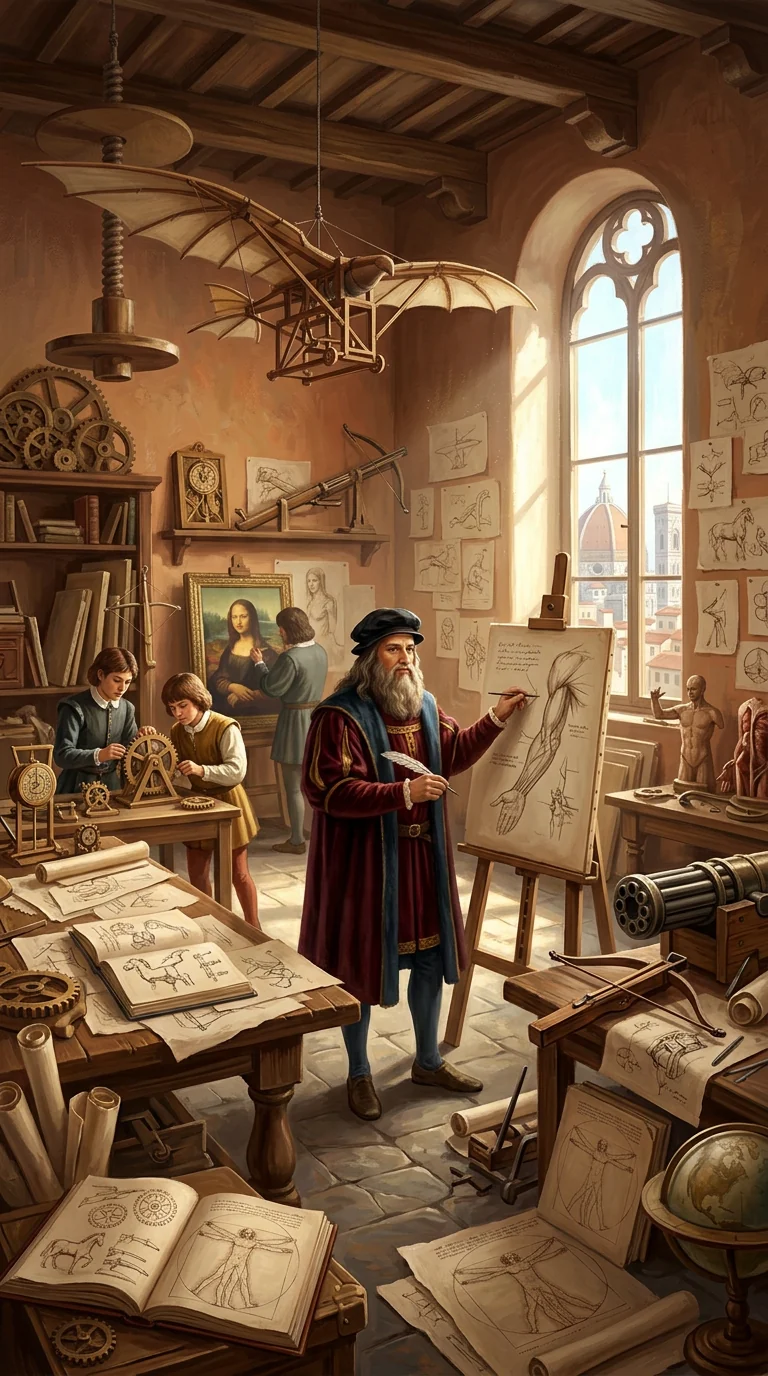
Leonardo meditation is an intermediate immersive mindfulness practice that uses 3D spatial audio technology to create encounters with Leonardo da Vinci's Renaissance studio and universal mind where integrated genius mastered art, science, and engineering simultaneously, including Mona Lisa painting, anatomical dissections, flying machine designs, and 13,000+ notebook pages of observations spanning painting techniques, human anatomy, water dynamics, bird flight, geology, optics, botany, mathematics, architecture. This innovative approach combines historical inspiration with interactive meditation, allowing practitioners to engage with integrative thinking that transcended disciplinary boundaries—Leonardo teaching that art requires scientific understanding (anatomy for accurate figures, optics for perspective, geology for landscapes) while science benefits from artistic vision (observation skills, visual thinking, creative synthesis), Mona Lisa demonstrating how anatomical knowledge, optical science, geological awareness create masterpiece, anatomical studies showing how aesthetic sensibility elevates scientific observation, engineering designs revealing how understanding nature (bird flight, water flow) informs innovation, embodying profound truth that specialization limits while integration expands, that curiosity about everything enriches understanding of anything, that greatest creativity comes from minds refusing to accept boundaries between disciplines instead discovering how each illuminates others. Unlike traditional meditation focused on quieting diverse thoughts, these sessions position Leonardo's studio activities through spatial audio, creating tangible presence where you hear painting in progress from positioned easel, anatomical studies from laboratory area, engineering designs from drafting table, nature observations from positioned locations, Leonardo's movement between disciplines traced through spatial transitions, creating sense of being present within Renaissance workshop where art, science, engineering coexisted productively through insatiable curiosity seeing connections everywhere. Each encounter embodies archetypal forces of integrative thinking, productive curiosity, creative synthesis, and refusal of artificial boundaries that characterized Leonardo's approach—painter who studied anatomy to render figures accurately, scientist using visual thinking and artistic observation for discoveries, engineer applying understanding of natural principles to innovations, representing psychological and spiritual truth that knowledge forms unified whole waiting to be discovered, that studying seemingly unrelated fields creates unexpected breakthroughs, that Renaissance ideal of universal mind isn't scattered dilettantism but profound integration recognizing unity underlying apparent diversity. The practice appeals to creatives seeking to enrich art with scientific thinking, scientists wanting to develop visual and aesthetic dimensions, anyone feeling limited by over-specialization, lifelong learners cultivating broad curiosity across diverse interests, and those discovering that deepest insights come from minds exploring beyond single discipline, that studying anatomy truly makes you better painter, that artistic vision genuinely improves engineering, that curiosity about everything illuminates understanding of anything—engaging with Renaissance polymath whose integrated genius demonstrates power of universal mind transcending specialist boundaries, teaching through spatial encounter with studio where impossible breadth of mastery became possible through seeing connections between fields others kept rigidly separate, understanding that boundaries between art and science are artificial constructs waiting to be dissolved through insatiable curiosity and creative exploration guided by recognition that all knowledge ultimately forms coherent whole.
What are Leonardo meditations?
Leonardo meditations are intermediate immersive 3D spatial audio experiences where you enter da Vinci's Renaissance studio through interactive meditation, witnessing integrated mastery of painting, anatomy, engineering, nature studies. Each encounter offers integrative inspiration—Leonardo teaches that art requires scientific understanding, science benefits from artistic vision, curiosity about everything enriches understanding of anything, transforming how you approach creativity, knowledge, and connections between disciplines.
The power of Leonardo meditation lies in his role as archetypal universal mind offering framework for integrative thinking that transcends disciplinary boundaries. Leonardo wasn't just artist who also sketched inventions—he embodied truth that art and science illuminate each other, that studying anatomy makes you better painter, that understanding optics improves perspective, that observing geology enriches landscapes.
His notebooks jumping from painting techniques to anatomical studies to engineering designs to nature observations reveal mind seeing connections everywhere. His Mona Lisa demonstrates anatomical knowledge, optical science, geological awareness—art enriched by scientific understanding. His anatomical drawings show aesthetic beauty—science elevated by artistic vision. Teaching that boundaries between disciplines are artificial constructs limiting potential.
"Leonardo mastered painting, science, engineering, anatomy—not by choosing one but by discovering how each discipline illuminates others, teaching that curiosity about everything enriches understanding of anything."
— Renaissance Universal Mind
"Leonardo: painted masterpieces, designed flying machines, studied anatomy, observed nature, all while being left-handed and writing backwards. Multitasking legend."
Walk Renaissance studio hearing painting, anatomy, engineering positioned in 3D space
Learn how art and science enrich each other through Leonardo's universal mind
Cultivate productive exploration across disciplines finding unexpected connections
Contemplative engagement with Renaissance polymath, inspiring integrative transformation
Interactive meditation with Leonardo through 3D spatial audio creates unprecedented immersion in integrative creative environment. Instead of just reading about his achievements or studying his works, you experience presence within his Renaissance studio through spatial soundscapes—hearing painting brushstrokes from positioned easel, anatomical dissections from laboratory area, engineering sketches from drafting table, nature observations positioned around you, Leonardo's movement between disciplines traced through spatial transitions creating tangible sense of universal mind at work. This offers genuine transformation: integrative thinking seeing connections specialists miss, productive curiosity exploring broadly while developing depth, creative synthesis applying insights from one field to another, understanding that boundaries between disciplines are artificial—creating experience where engaging with Renaissance polymath becomes path to accessing universal mind, integrative capacity, and productive curiosity within yourself. Just as Nikola Tesla offers focused innovation and Abraham Lincoln provides principled leadership, Leonardo complements with universal mind integration, together creating balanced approach to transformative contribution through encounters that feel both historically grounded and personally applicable to contemporary creative challenges requiring integration across diverse knowledge domains.
Whether you're feeling limited by specialization, seeking to integrate diverse interests productively, wondering if curiosity about everything prevents mastery of anything, enriching art with scientific thinking or science with aesthetic vision, or learning that greatest insights come from minds seeing connections between fields through intermediate meditation with Leonardo's Renaissance spirit—this journey offers contemplative framework for developing universal mind transcending disciplinary boundaries.
Enter Leonardo's workshop hearing painting, anatomy, engineering spaces positioned around you, sense atmosphere where art and science coexisted productively, feel inspiration of environment transcending disciplinary boundaries.
Witness Mona Lisa creation positioned in space, experience anatomical studies from laboratory area, hear engineering designs from drafting table, absorb philosophy that each discipline enriches others through connections.
Absorb integrative thinking capacity, feel permission to explore diverse interests, carry Renaissance spirit back to your own creative work, knowing universal mind remains accessible whenever curiosity calls.
"Seventeen minutes with Leonardo. He spent 67 years exploring everything. You're getting the Renaissance highlight reel without the decades of obsessive curiosity."
Our proprietary 3D spatial audio technology positions Leonardo's Renaissance studio around you in three-dimensional space. You'll hear painting in progress from positioned easel—brushstrokes on canvas, palette mixing, sfumato technique creating mysterious depth—creating sense of standing beside master as Mona Lisa takes form.
The diverse activities themselves unfold from different spatial locations—anatomical studies from laboratory area with dissection sounds and sketch scratching, engineering designs from drafting table with compass drawing circles and mechanical models clicking, nature observations positioned around workshop as Leonardo examines water flow, bird flight, plant structures creating immersive sense of universal mind moving fluidly between disciplines.
Leonardo's integrative thinking manifests through positioned transitions between activities—movement from painting to anatomy to engineering traced spatially, his voice explaining connections from positioned presence, contemplative moments emphasizing how each field enriches others. This transcends typical meditation audio to become genuine encounter with Renaissance universal mind that refused disciplinary boundaries.
Painting, anatomy, engineering, nature studies positioned in 3D creating tangible studio presence
Experience integrated mastery through spatial progression—art, science, engineering all positioned around you
3D spatial positioning requires stereo headphones—speakers cannot recreate immersive studio experience
"Spatial audio Renaissance studio: all the universal mind inspiration, integrated genius, creative synthesis. None of the actual paint fumes or dissection smells. Modern convenience."
Leonardo understood that great painting requires scientific knowledge. To render human figures accurately, he studied anatomy through dissections, learning muscle structure, bone articulation, proportions. To create convincing perspective, he studied optics and mathematics. To paint landscapes, he examined geology understanding rock formations, water erosion, mountain building. His Mona Lisa demonstrates anatomical knowledge (accurate facial structure), optical science (sfumato creating atmospheric depth), geological awareness (background landscape). This wasn't just technique—it was philosophy that art divorced from scientific understanding remains superficial. Teaching: if you want to create art depicting reality, you must understand reality's underlying principles through scientific observation and study. Curiosity about anatomy, optics, geology doesn't distract from art—it enriches art by grounding imagination in deeper understanding of how world actually works.
Conversely, Leonardo's scientific work benefited from artistic skills. His anatomical drawings are masterpieces—not just accurate but beautiful, revealing structure through aesthetic composition, light, shadow. His visual thinking allowed seeing patterns in nature others missed—observing bird flight, he drew wing mechanics with clarity illuminating principles. His engineering designs combined functional understanding with elegant visual expression. Where purely analytical minds might document observations verbally, Leonardo's artistic vision produced drawings that communicated understanding more powerfully than words alone. Teaching: scientific observation benefits from aesthetic sensibility, visual thinking, artistic ability to see and communicate patterns. Studying art doesn't distract from science—it develops observational capacity, visual reasoning, ability to recognize and communicate patterns that makes scientific discovery possible and comprehensible.
Leonardo's notebooks jump chaotically from painting techniques to water flow to bird anatomy to architectural designs to mathematical puzzles—revealing mind that couldn't resist exploring whatever captured curiosity. Modern specialists might see this as scattered, unfocused. Leonardo saw it as productive—understanding water dynamics informed painting (depicting flowing hair, cascading drapery), studying bird flight inspired flying machines, examining plant structures enriched both botanical drawings and decorative art. His insatiable curiosity wasn't distraction from mastery but path to it—breadth of knowledge creating unexpected connections producing insights impossible within single discipline. Teaching: cultivating curiosity about everything doesn't prevent mastering anything—it enriches mastery by providing diverse perspectives, unexpected analogies, creative combinations that specialists trapped in narrow expertise never discover.
Leonardo trusted direct observation over received wisdom. When authorities claimed heart had four chambers, he dissected, observed, discovered truth. When studying bird flight, he observed actual birds rather than accepting Aristotelian theories. When painting landscapes, he examined real geology rather than following artistic conventions. This empirical approach—looking at actual world rather than accepting what books said—was revolutionary. It required patience (observing nature closely), humility (admitting authorities could be wrong), courage (challenging established knowledge), curiosity (wanting to understand rather than just accept). Teaching: true understanding comes from observing reality directly, questioning assumptions, trusting your own careful observation over conventional wisdom. Whether art, science, or any field, looking closely at actual phenomena reveals truths authorities miss, creates knowledge grounded in reality rather than tradition.
"Leonardo: painted Mona Lisa, studied human anatomy, designed flying machines, observed everything. Some people just can't stay in their lane. Thank goodness."
Artists seeking to enrich work with scientific understanding, scientists developing aesthetic and visual dimensions
Those feeling pressure to specialize, learning that breadth and depth strengthen each other through integration
Anyone seeking breakthroughs through combining insights from multiple fields in unexpected ways
Cultivating productive curiosity across diverse interests, understanding that studying everything enriches anything
Those aspiring to universal mind ideal, refusing to accept artificial boundaries between disciplines
Finding unexpected links between seemingly unrelated fields, seeing unity underlying apparent diversity
"Feeling limited by specialization? Leonardo. Diverse interests seem scattered? Leonardo who made them productive. Want to integrate art and science? Leonardo literally invented that."
Expand your experience with other transformative minds offering complementary wisdom
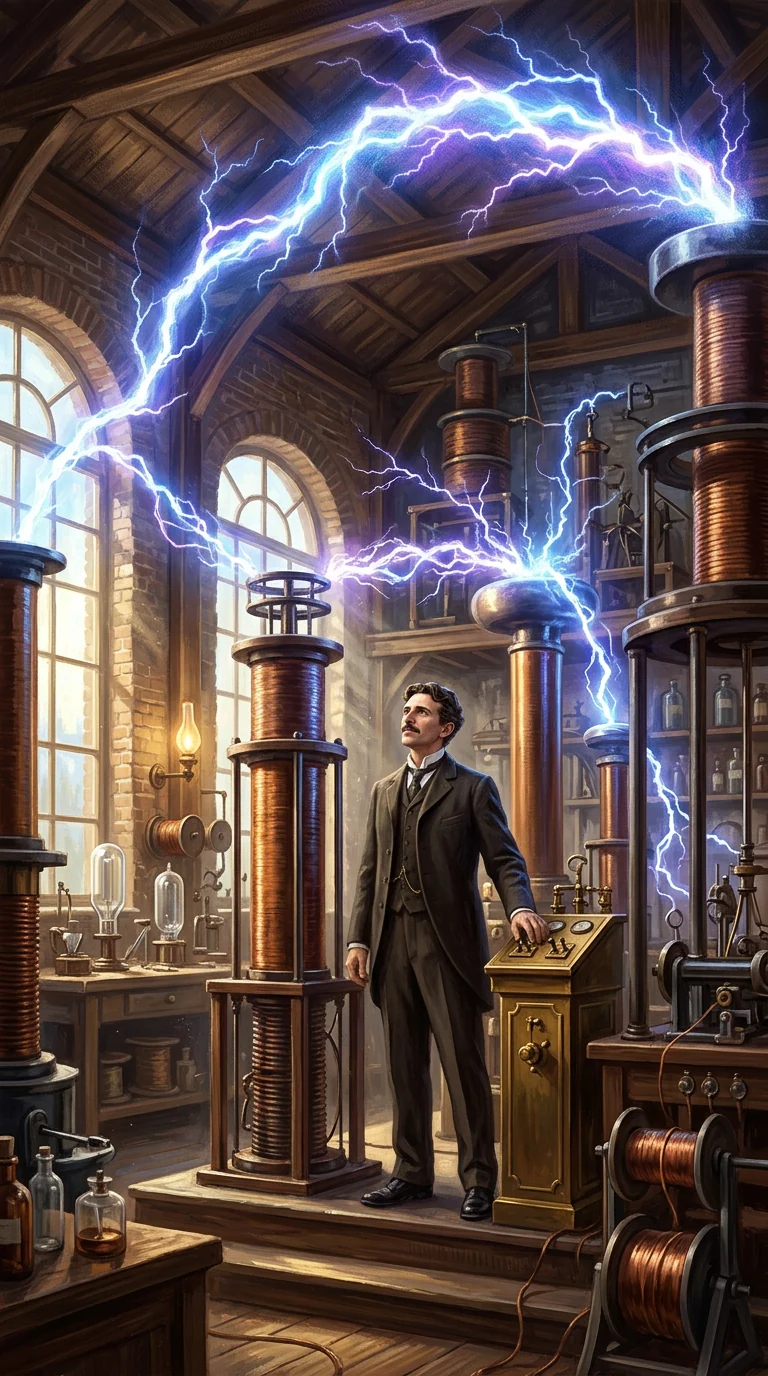

"Leonardo for universal mind. Tesla for innovation. Lincoln for leadership. It's a masterclass in 'ways to be historically significant while making everyone else look underqualified.'"
Everything you need to know about Leonardo universal mind meditation
"FAQ: Questions about meditating with the polymath who painted Mona Lisa, designed flying machines, and studied everything. Renaissance over-achiever support group."
Download Visionaria and explore Leonardo's Renaissance today.
"Leonardo's studio isn't in Renaissance Italy anymore. It's in the app, which is more accessible and requires no time travel or knowledge of mirror writing."