
Battlefield at
Thermopylae
"Where 300 Spartans taught the world that numbers aren't everything."
The Battle of Thermopylae was a pivotal military engagement fought in August 480 BCE at the narrow coastal pass of Thermopylae in central Greece, where King Leonidas I of Sparta led an alliance of approximately 7,000 Greek warriors (including his famous 300 Spartans) against the massive Persian invasion force of King Xerxes I (estimated at 100,000-150,000 soldiers). Over three days, the Greeks held the strategic "Hot Gates" pass, inflicting heavy casualties on the Persians before being outflanked via a mountain trail. Leonidas' last stand with his 300 Spartans became one of history's most celebrated examples of courage against overwhelming odds, buying time for Greek city-states to prepare defenses that ultimately defeated Persia at Salamis and Plataea.
Key Facts About Thermopylae
- Date: August 480 BCE (three days)
- Location: Thermopylae pass, central Greece
- Forces: ~7,000 Greeks (300 Spartans) vs. ~100,000-150,000 Persians
- Leaders: King Leonidas I (Sparta) vs. King Xerxes I (Persia)
- Sources: Herodotus' Histories, ancient inscriptions
⚔️ What is the Thermopylae experience?
A spatial audio meditation of about 16 minutes that takes you to the pass of Thermopylae, where 300 Spartans held the line against Xerxes' Persian army in 480 BCE. Walk past the steaming hot springs to Simonides' stone and connect with themes of courage and duty through immersive 3D soundscapes.
What You'll Experience
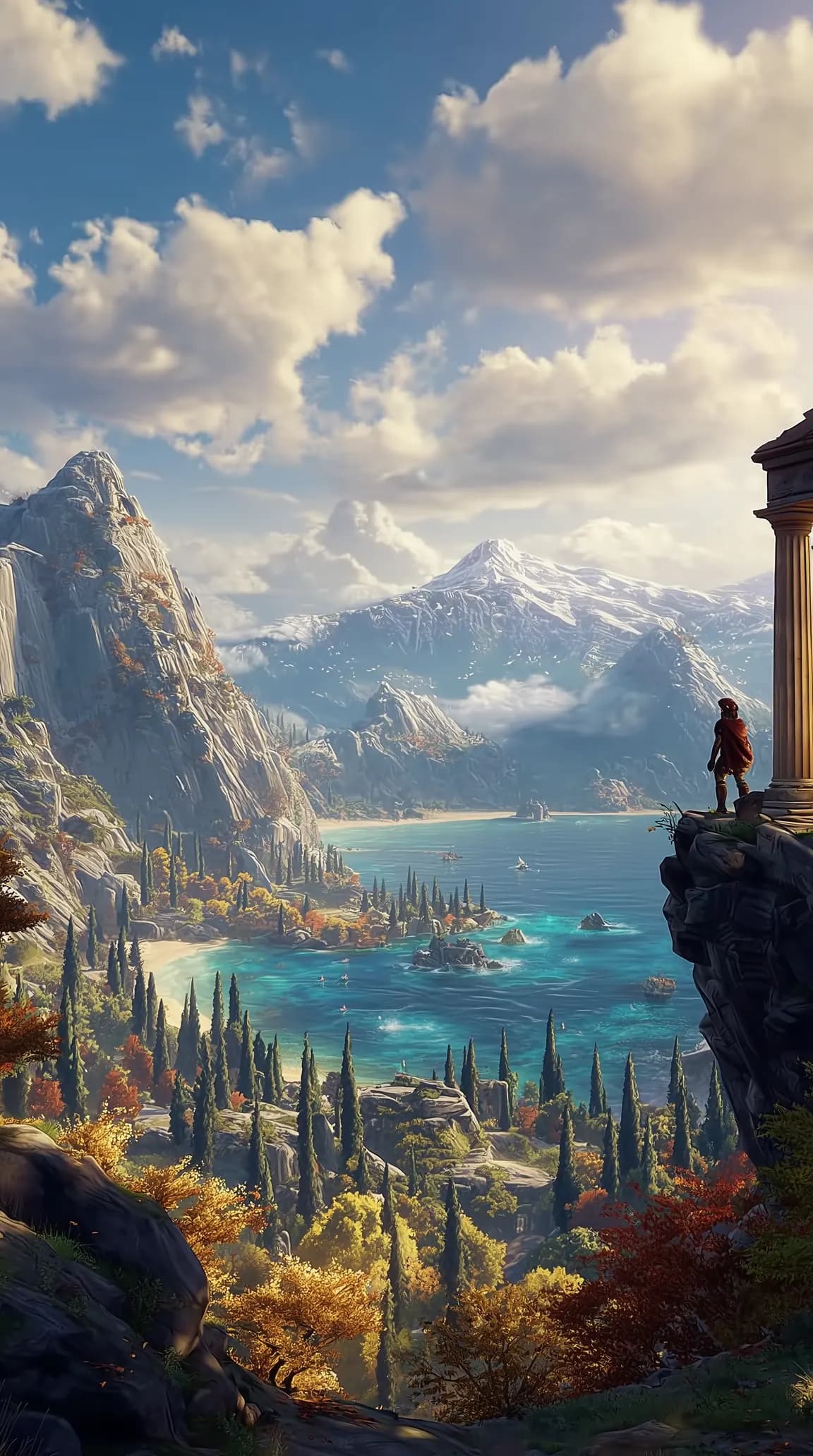
Approach the narrow coastal pass called the Hot Gates. Walk past the steaming hot springs and the cliffs said to bear Zeus's thunderbolt, reach Simonides' stone, and understand the courage it took the 300 to face overwhelming odds.
⚔️ "Spartans never retreat. They just advance in a different direction (backwards)."
The Real History Behind Your Journey
What archaeology and ancient sources tell us about the battle
⚔️ "Herodotus covered this battle: ancient Greece's first war correspondent."
480 BCE
Archaeological Evidence
The Battle of Thermopylae took place in August 480 BCE at a narrow coastal pass in central Greece called the "Hot Gates" (Thermopylae means "hot gates" due to nearby sulfur springs). The pass was only 15 meters wide at its narrowest point, allowing a small force to hold against a massive army. Modern archaeology has located the battlefield, though coastal sedimentation has moved the shoreline several kilometers inland since ancient times.
Battle Facts:
- • 300 Spartans + 700 Thespians (last stand)
- • 3-day battle holding the pass
- • Betrayal via mountain path (Anopaea)
- • King Leonidas I killed in battle
Primary Sources
Ancient Writers
The Battle of Thermopylae and Spartan military culture are extensively documented by ancient Greek and Roman historians who described the three-day stand and the legendary courage of the 300.
Herodotus (484-425 BCE)
Primary historian of the Persian Wars
Plutarch (46-120 CE)
Biographer of Spartan heroes
Diodorus Siculus (1st century BCE)
Greek historian of universal history
📜 "Herodotus might have exaggerated the Persian numbers, but 300 vs. many is still impressive."
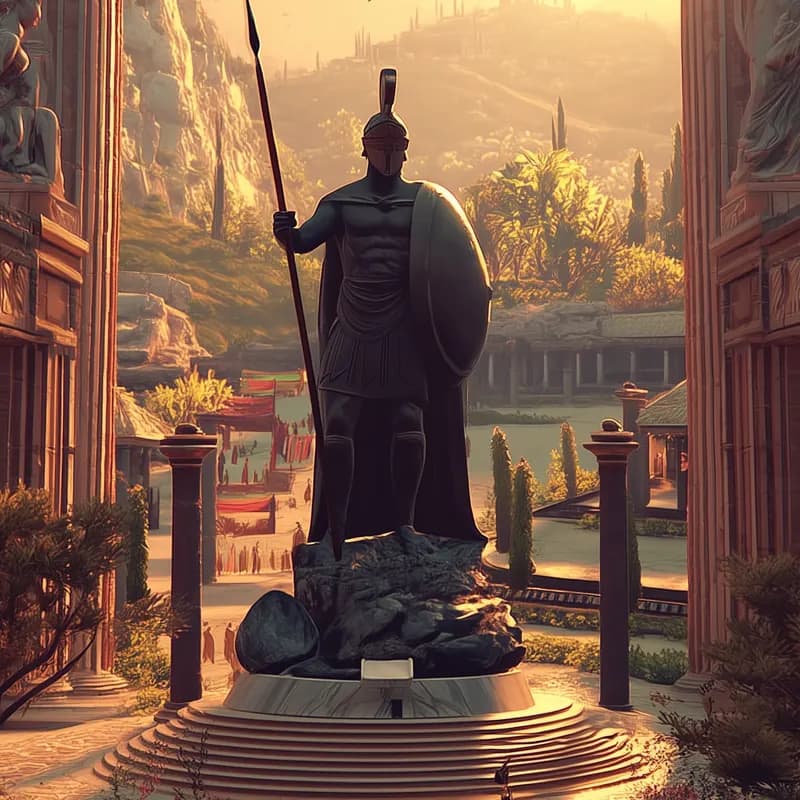
King Leonidas I of Sparta led the Greek defensive force at Thermopylae, chosen because of his direct Heraclean lineage and his willingness to fulfill the oracle's prophecy that a Spartan king must die to save Greece. The 300 Spartans were all spartiates (full Spartan citizens) who had living sons to continue their bloodlines, a requirement ensuring Sparta's genetic future even if they died. These were not young recruits but experienced warriors in their 30s and 40s, veterans of previous battles who understood exactly what they were volunteering for.
The famous quote "Molon Labe" (Μολὼν λαβέ, "Come and take them") was Leonidas' response when Xerxes demanded the Greeks surrender their weapons. This two-word defiance became one of history's most iconic expressions of resistance against tyranny. Similarly, when told that Persian arrows would blot out the sun, the Spartan warrior Dienekes allegedly replied, "Good, then we'll fight in the shade." These weren't just brave words. They reflected the genuine Spartan attitude toward death in battle as the highest honor.
The tactical genius of the Thermopylae defense lay in the narrow pass geography. The 15-meter-wide passage negated Persia's numerical advantage and cavalry superiority. The Greek phalanx formation (heavily armored hoplites with overlapping shields and long spears) was perfectly suited for this terrain. For two days, the Greeks slaughtered wave after wave of Persian troops, including Xerxes' elite Immortals. The Persians couldn't flank, couldn't use cavalry, and couldn't bring their superior numbers to bear. Geography transformed 300 into an army.
The battle's turning point came through betrayal by Ephialtes, a local Greek who showed the Persians a mountain path (the Anopaea trail) that bypassed the main pass. On the third day, realizing he would be surrounded, Leonidas dismissed most of the Greek forces but kept his 300 Spartans and 700 Thespians for the final stand. Spartan law forbade retreat, and these men knew they were fighting to buy time for Greece to prepare its defenses. They died to the last man, but their sacrifice allowed the Greek fleet to escape and ultimately win the naval battle at Salamis, saving Western civilization.
Thermopylae was one of three decisive battles that shaped the ancient Greek world against eastern empires: alongside the Battle of Marathon (where outnumbered Athenians defeated the first Persian invasion in 490 BCE) and the Siege of Troy (where Greek coalition forces fought for ten years), these legendary conflicts demonstrated that disciplined Greek warfare could overcome numerically superior eastern armies, establishing military tactics and strategic principles that influenced warfare for millennia.
The monument at Thermopylae bears the famous epitaph by poet Simonides: "Go tell the Spartans, stranger passing by, that here obedient to their laws we lie." This captures the Spartan ethos perfectly: they didn't die for glory or personal fame, but for duty and obedience to their city's laws. The battle became the ultimate symbol of courage against impossible odds, inspiring countless military forces throughout history. From the Texans at the Alamo to modern special forces, warriors have looked to Thermopylae as the archetype of determined resistance.
What You'll Experience
An immersive journey of about 16 minutes through the pass of history's most legendary last stand
Immersive Setting
Through 3D spatial audio, you'll stand at the narrow coastal pass of Thermopylae. You'll hear the waves on one side, the mountain cliffs on the other, and the hot springs that gave the Hot Gates their name. The soundscape carries the memory of the 300: betrayal, defiance, and an eerie silence that speaks louder than glory.
The narration walks you through the pass as a place that still holds the memory of King Leonidas and his 300 from August 480 BCE. You'll pass the steaming springs, stand beneath cliffs said to bear the mark of Zeus's thunderbolt, and reach the stone of Simonides with its famous words for the Spartans. The spatial audio makes you feel the narrow pass and the unshakeable Spartan resolve.
Technology & Production
Spatial audio places the sounds of the pass around you: the sea on one side, the cliffs on the other, the springs steaming nearby. The narrow pass shapes how every sound carries: echoing off cliff walls, the peculiar way voices carry in confined spaces.
The journey is paced as a vigil rather than a battle scene. It moves from the hot springs to the cliffs to Simonides' stone, building from memory to meaning as you reflect on a fight that was hopeless but necessary. This isn't just storytelling. It's a moment to reflect on facing your own impossible challenges with Spartan courage.
🎧 "Experience the pass in surround sound. Spartans would've loved spatial audio."
The journey follows the pass itself: the steaming hot springs, the cliffs said to bear Zeus's thunderbolt, and Simonides' stone with its words for the Spartans. Its mood moves through betrayal, defiance and silence, building emotional intensity while maintaining meditative focus, allowing you both to feel the place viscerally and to reflect on its themes philosophically.
Unlike generic motivational content, this experience connects courage to duty. The Spartans didn't fight for personal glory or reckless bravery. They fought because their society demanded it, because their families needed them to, because civilization itself hung in the balance. This grounds the meditation in a deeper truth: real courage isn't fearlessness, it's doing what must be done despite fear. When you face your own challenges (difficult conversations, career risks, health battles, personal struggles), you'll remember that you don't need to feel brave, you just need to stand your ground.
💭 "If 300 can hold off thousands, you can definitely handle that thing you've been avoiding."
More Than Traditional Mindfulness
While traditional meditation promotes calm acceptance, this journey builds active courage to face overwhelming challenges
Courage Cultivation
Rather than seeking inner peace, you're building inner strength. By connecting to the Spartans' courage at Thermopylae, you internalize the mindset of facing impossible odds without flinching. It is a story to return to when you face your own difficult moments.
Pre-Challenge Ritual
You can use this journey as a pre-performance ritual before intimidating situations. The roughly 16-minute format gives you time to settle and focus. When you need to do something difficult, this journey puts you in the Spartan mindset.
Duty & Purpose
The Spartans fought not from anger but from duty to their people. This journey helps you connect your challenges to larger purposes: your family, your team, your values. When you understand the "why" behind difficult tasks, they become bearable. This is meditation for meaning, not just relaxation.
Historical Anchoring
This isn't abstract philosophy. It's proven courage from 480 BCE. The 300 actually did this. Whenever you face overwhelming odds, you can think "Thermopylae" and access this mental state. It is an image you can call to mind when you need fortitude.
⚔️ "Spartans didn't have headphones. They had Thermopylae. Now you can have both."
Traditional meditation apps offer valuable stress reduction, but Visionaria's approach recognizes that some life situations don't call for acceptance; they call for defiance. When facing job loss, health crises, difficult confrontations, or major life challenges, you don't need to be calm, you need to be courageous. The Thermopylae journey aims at exactly this: a meditative state that builds resolve instead of removing it, that channels anxiety into determination.
The journey aims for more than a moment of motivation. It reframes your challenges in perspective: if Spartans could face certain death with composure, you can handle your difficult conversation, career risk, or personal confrontation. It's not that your challenges are small, it's that courage is universal.
✨ "Side effects may include standing your ground and muttering 'Molon Labe' at inconvenient times."
Perfect For Warriors
Whether facing challenges, standing your ground, or needing courage for difficult moments, this Spartan journey provides unwavering resolve
Anyone Facing Adversity
Listen before difficult confrontations, career risks, or any moment when you must stand your ground against overwhelming pressure. The Spartans held the line. So can you.
Athletes & Competitors
Perfect pre-competition ritual for getting into the warrior mindset. Experience the same unbreakable resolve that made Spartans history's most feared warriors before battles and competitions.
Leaders & Protectors
Those responsible for others: parents, managers, first responders, military personnel. Understand the Spartan mindset of duty and sacrifice when you must protect what matters most.
History Enthusiasts
Experience the Battle of Thermopylae beyond movies and textbooks. Feel the real geography and Spartan mindset through immersive storytelling rooted in Herodotus and modern archaeology.
Anyone Building Resilience
Those recovering from setbacks who need reminding that holding the line matters more than winning. Spartans lost the battle but saved Greece. Sometimes standing your ground is victory enough.
Those Needing Duty & Purpose
When facing tasks that feel overwhelming, connect to larger purposes like the Spartans did. They didn't fight for themselves. They fought for their families and civilization. Find your "why."
⚔️ "Warning: May cause excessive stoicism and tendency to say 'Molon labe' at random moments."
⚔️ "One legendary battle down, more journeys to conquer. Leonidas would approve."
Your Questions Answered
Everything you need to know about this journey
Start Your Journey Free Today
Experience Thermopylae and other cinematic meditations. Download Visionaria now and stand with the 300, perfect for whenever you need courage to face impossible odds or strength to hold your ground.
"Shields optional, Spartan resolve included."