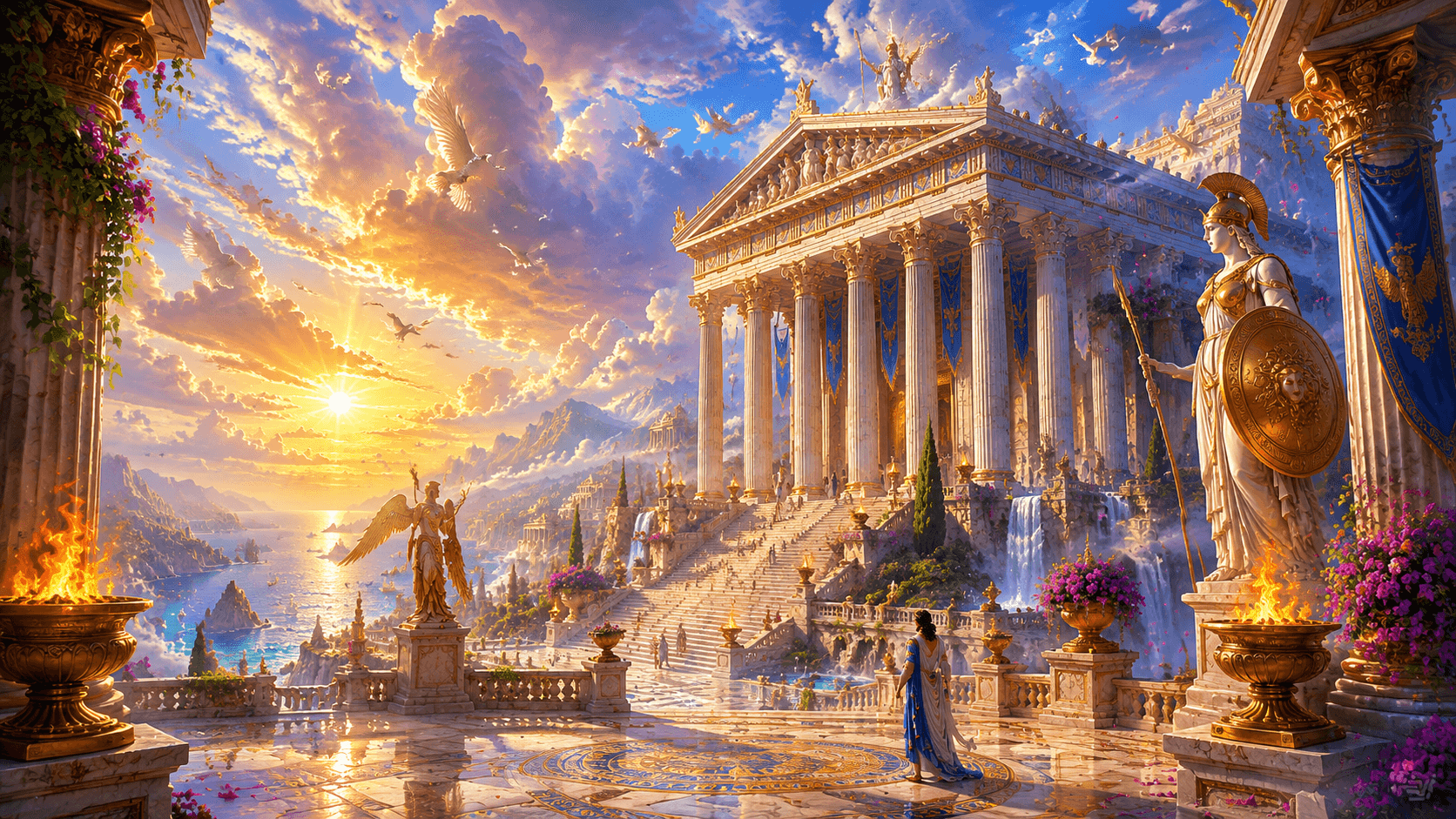
The Mythological World of Zeus Explained: Origins, Symbols, Legacy & the King of the Greek Gods
💡 Fun fact: Zeus's thunderbolt was forged by the Cyclopes as a gift of gratitude—making it arguably the most powerful "thank you" present in all of mythology. Imagine what they would have made for a birthday.
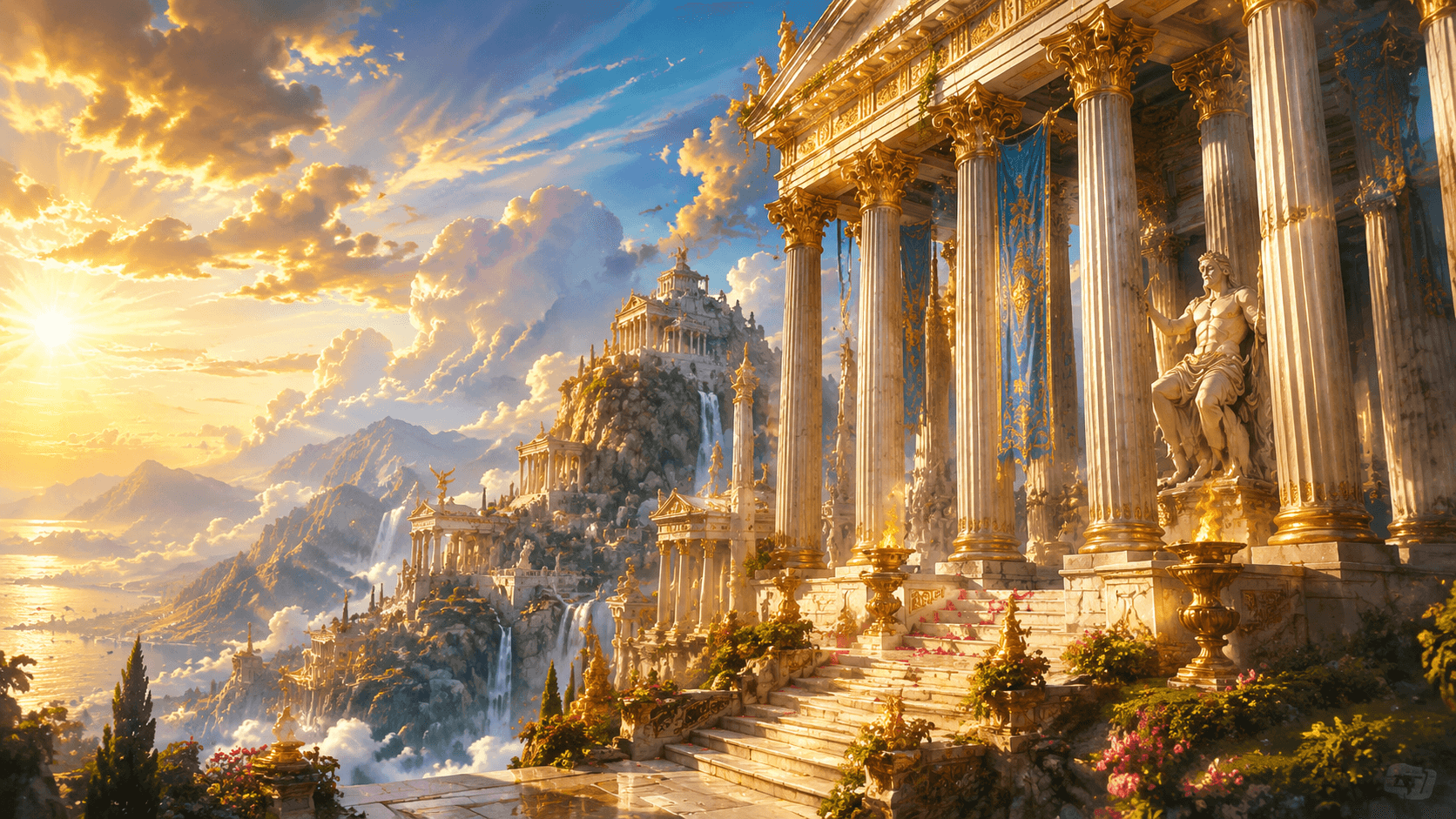
He sat upon a golden throne above the clouds, thunderbolt in hand, eagle at his side, and the fate of gods and mortals alike balanced on every word he spoke. For more than two thousand years, Zeus was the most powerful figure in the Western religious imagination the king of the gods, the lord of the sky, the guarantor of cosmic order, and the embodiment of both divine authority and the complex, deeply human drama of power. His name echoes from the marble temples of Athens to the stadiums of Olympia, from Homer's magnificent epics to the very language we speak today (the word "jovial," meaning cheerful and generous, derives from Jove the Roman name for Zeus).
Zeus (Ancient Greek: Ζεύς, also known as Jupiter in Roman mythology) is the king of the Olympian gods and the supreme deity of the ancient Greek religious tradition. Ruler of the sky, thunder, lightning, law, order, and justice, Zeus presided over the divine council on Mount Olympus and served as the ultimate arbiter of cosmic and human affairs. His name derives from the Proto Indo European root *dyeu- meaning "bright sky" or "daylight," connecting him to a lineage of sky father deities stretching back more than 5,000 years including the Vedic Dyaus Pita, the Roman Jupiter, and the Norse Týr. Far more than a weather god, Zeus embodied the Greek understanding of divine governance, natural law, sacred hospitality (xenia), the sanctity of oaths, and the profound, often challenging relationship between mortal aspiration and divine will.
In this comprehensive guide, you'll discover Zeus's origins in Titan succession mythology, the sacred geography of Mount Olympus and its ritual significance, his symbols and sacred animals, his many divine roles, his portrayal in Homer's great epics, the extraordinary lineage of his children, his connections to sky father deities across world cultures, the magnificent temples built in his honour, his enduring presence in art and sculpture, the psychology of divine authority, and how modern immersive storytelling and spatial audio technology are bringing the mythological world of Zeus to vivid, three dimensional life.
"Zeus had the power to hurl lightning bolts, command the weather, and decide the fate of nations. And yet, according to Homer, he still couldn't get his family to agree on anything at dinner. Some things never change."
Key Facts About Zeus
- ••Domain: King of the Olympian gods; ruler of the sky, thunder, lightning, law, order, justice, hospitality (xenia), and oaths
- ••Parents: Kronos (Titan of time) and Rhea (Titan of fertility and motherhood)
- ••Symbols: Thunderbolt, eagle, oak tree, sceptre, and the aegis (divine shield)
- ••Sacred Site: Olympia in the Peloponnese, home to the Olympic Games and Phidias's colossal chryselephantine statue—one of the Seven Wonders of the Ancient World
- ••Etymology: From Proto-Indo-European *dyeu- ("bright sky/daylight"), connecting Zeus to a 5,000+ year lineage of Indo-European sky-father deities
- ••Notable Children: Athena, Apollo, Artemis, Hermes, Dionysus, Hercules, Perseus, Helen of Troy, and the Muses
- ••Cultural Legacy: Roman Jupiter, Vedic Dyaus Pita, Norse Týr; root of English words "deity," "divine," and "jovial"
Quick Answer
💡 Fun fact: Zeus's thunderbolt was forged by the Cyclopes as a gift of gratitude—making it arguably the most powerful "thank you" present in all of mythology. Imagine what they would have made for a birthday.
Who Is Zeus? A Complete Definition of the King of the Gods
To understand Zeus is to understand the central organising principle of ancient Greek religion and culture. Unlike modern conceptions of a distant, abstract deity, Zeus was vividly personal present in every thunderstorm, invoked at every meal, honoured at every athletic competition, and feared by every person who broke an oath or violated the sacred laws of hospitality. He was simultaneously the most powerful being in the cosmos and a deeply relatable figure: a father struggling to manage an unruly family, a ruler balancing competing interests, a judge whose decisions were final but not always simple. The Greeks did not worship Zeus because he was perfect; they worshipped him because he represented the awesome, complicated reality of ultimate authority the understanding that someone, somewhere, holds the cosmos together, and that responsibility comes with both grandeur and burden.
Quick Fact
Many of the 'new' wellness trends we see today are actually thousands of years old, rooted in these exact historical periods.
Zeus's authority extended across three essential domains. As Zeus Olympios ("Zeus of Olympus"), he presided over the divine council of the Twelve Olympians, settling disputes among gods and maintaining the cosmic hierarchy established after the Titans' era. As Zeus Xenios ("Zeus of Strangers"), he protected travellers and guests, making hospitality (xenia) a sacred religious obligation a concept so fundamental to Greek civilisation that violating it was considered among the gravest of offences. As Zeus Horkios ("Zeus of Oaths"), he guaranteed the sanctity of every sworn promise, making him the divine foundation of law, treaties, and the social contracts that held Greek society together.
This multifaceted nature is what makes Zeus so endlessly fascinating to scholars, psychologists, and storytellers alike. He is not merely a character in ancient myths he is a mirror of humanity's deepest questions about power, justice, responsibility, and the nature of authority. Every culture that has grappled with the question of what it means to lead, to judge, to bear ultimate responsibility for the wellbeing of others, has created a figure remarkably similar to Zeus. Understanding his mythology means understanding something universal about human psychology the same inner worlds that immersive storytelling allows us to explore today.
Read more: Why the Brain Experiences Stories as Reality: The Neuroscience of Narrative Immersion
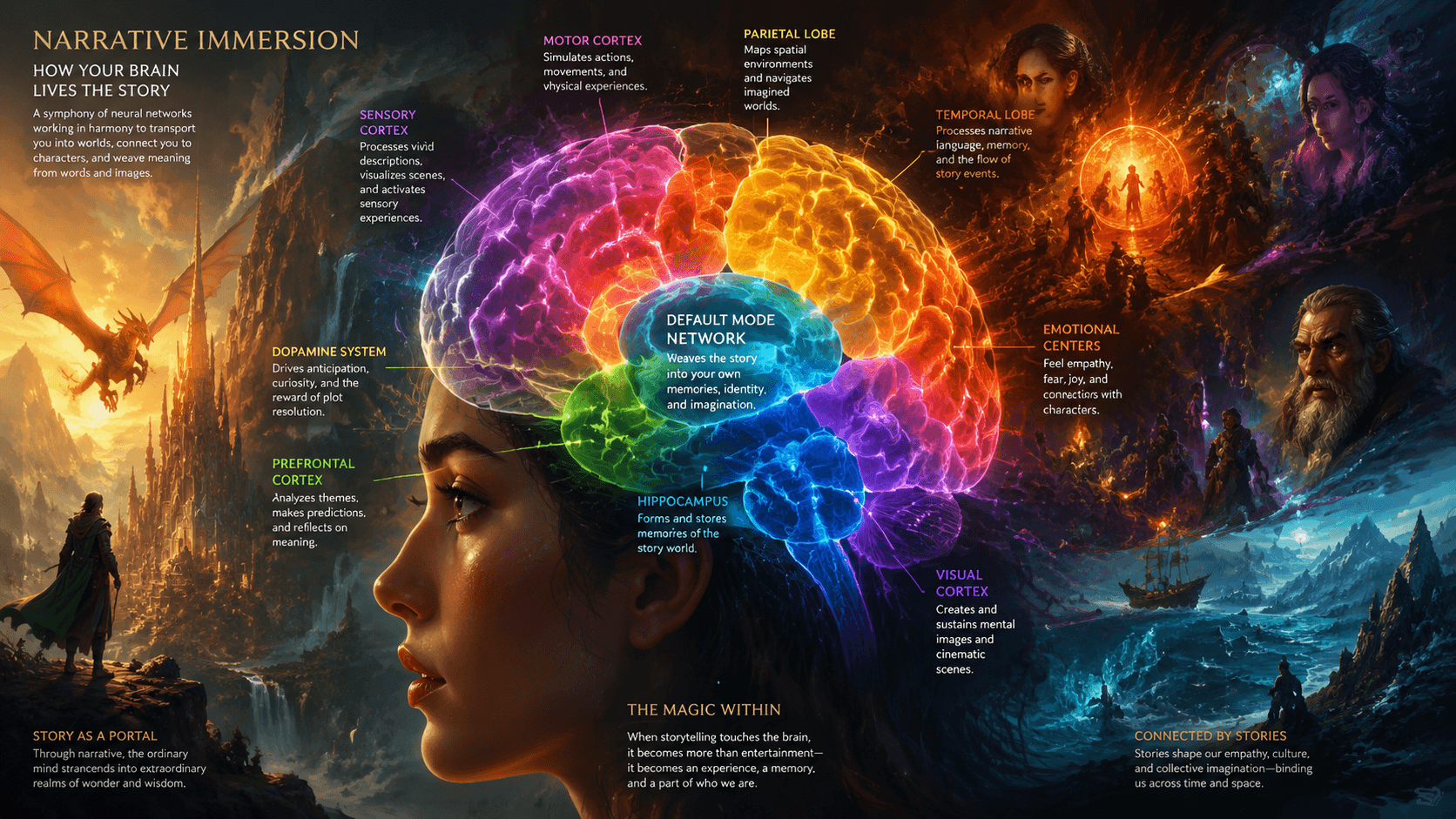
"Zeus was king of the gods, lord of the sky, and protector of hospitality laws. Basically, he was the world's first Airbnb host with significantly more thunderbolts."
An Epicurean, a Stoic, and a Cynic walk into a garden. The bartender says, 'Is this some kind of philosophical joke?'
The Origins of Zeus: From Titan Succession to Olympian Rule
The story of Zeus's rise to power is one of the most dramatic narratives in all of mythology a tale of cosmic transformation, cunning strategy, and the establishment of a new world order. According to Hesiod's Theogony (composed around 700 BCE), Zeus was the youngest son of the Titans Kronos and Rhea. Kronos, who had himself risen to supremacy by overthrowing his father Ouranos (Sky), lived in dread of a prophecy declaring that one of his own children would surpass him. To prevent this, Kronos swallowed each of his children Hestia, Demeter, Hera, Hades, and Poseidon the moment they were born. It was an act born not of cruelty but of existential fear: the terror of being surpassed by the next generation, a psychological motif that resonates across cultures and centuries.
Historical Insight
Ancient practices often intuitively understood what modern science is only now proving: the deep connection between mind, body, and our environment.
When Rhea was expecting her sixth child, she devised an extraordinary plan. She travelled to the island of Crete to a cave on Mount Ida (or Mount Dicte, depending on the tradition) and there gave birth to Zeus in secret. In place of the infant, she wrapped a stone in swaddling clothes and presented it to Kronos, who swallowed it without suspicion. The baby Zeus was raised in hiding, nurtured by the divine goat Amaltheia (whose horn became the legendary cornucopia, or "horn of plenty") and guarded by the Kouretes young warriors who clashed their shields and danced to mask the infant's cries. This image the future king of the gods, hidden in a cave, growing in secret strength while the old order remained unaware is one of mythology's most powerful archetypes: the hidden hero whose true nature will be revealed at the moment of greatest need.
When Zeus reached maturity, he returned to confront Kronos not with brute force but with strategic brilliance. With the help of the Titaness Metis (whose name literally means "cunning intelligence"), Zeus administered a potion that caused Kronos to release all the children he had swallowed. Reunited, the six siblings along with the Cyclopes and Hundred Handed Ones (Hecatoncheires) whom Zeus freed from imprisonment launched the Titanomachy, a cosmic engagement that lasted ten years. The Cyclopes forged Zeus's thunderbolt, Poseidon's trident, and Hades's helm of invisibility. With these divine instruments, the Olympians prevailed. Zeus cast the Titans into Tartarus (the deepest region of the cosmos) and established the new Olympian order dividing the cosmos with his brothers: Zeus received the sky, Poseidon the sea, and Hades the underworld, while the earth and Olympus were shared among all.
Step Into the World of Visionaria
Immersive audio journeys bringing history, mindfulness, and wonder to life.
Why did the historian break up with the archaeologist? Because her career was literally in ruins.
Mount Olympus: The Sacred Home of Zeus and the Gods
Mount Olympus the tallest mountain in Greece at 2,917 metres was both a real geographical landmark and a mythological concept of extraordinary power. For the ancient Greeks, the snow capped peak that rose above the clouds in Thessaly was quite literally the home of the gods: a place where the earthly and divine realms intersected, where mortal vision ended and divine reality began. Homer describes Olympus not merely as a mountain but as a realm beyond weather a place where "neither winds shake nor rain wets nor snow falls, but the air is spread clear and cloudless, and over it hovers a radiant whiteness" (Odyssey 6.42 46). This vision of serene, luminous perfection above the storms of ordinary existence made Olympus the ultimate symbol of transcendence a realm accessible not through physical climbing but through the expansion of consciousness.
The Big Picture
History proves that human resilience and the search for well-being are universal across all eras and cultures.
Zeus's palace on Olympus was imagined as the centre of cosmic governance a great hall where the Twelve Olympians gathered to debate, celebrate, and determine the course of events in the mortal world below. The divine feasts described in Homer's epics are vivid and sensory: ambrosia and nectar (the food and drink of immortality), Apollo's lyre providing music, the Muses singing of great deeds and cosmic history, and the gods reclining on golden couches as they discussed the fates of heroes and nations. These scenes served a profound cultural function: they presented the divine realm as a perfected version of the Greek aristocratic symposium the communal gathering where mortals shared food, music, poetry, and philosophical conversation. By imagining the gods engaged in similar activities, the Greeks elevated their own social rituals to cosmic significance.
The concept of Zeus's Olympian court has had an enduring impact on Western imagination. The idea of a divine council presided over by a supreme ruler appears in Roman religion, medieval Christian angelology, Renaissance painting, and modern fantasy literature. The image of clouds parting to reveal a realm of golden light and divine beings gathered in council is one of the most persistent motifs in human visual imagination and it's precisely the kind of vivid, architecturally rich scene that spatial audio technology excels at bringing to immersive life, surrounding the listener with the acoustic environment of Olympus itself.
"Mount Olympus was essentially the world's most exclusive gated community. No mortals allowed, divine catering included, and the homeowners' association meetings were conducted by thunderbolt."
An Epicurean, a Stoic, and a Cynic walk into a garden. The bartender says, 'Is this some kind of philosophical joke?'
Zeus's Symbols and Sacred Animals: Thunderbolt, Eagle, and Oak
Every deity in the Greek pantheon was identified by a distinctive set of symbols, sacred animals, and ritual objects a visual and symbolic language that communicated divine nature more immediately than any text. Zeus's symbols are among the most recognisable in all of mythology, and each carries layers of meaning that illuminate his character and cosmic function. The thunderbolt (keraunos) was Zeus's primary weapon and most iconic attribute forged by the Cyclopes during the Titanomachy as an expression of gratitude for their liberation. It represented not merely electrical power but divine authority itself: the capacity to enforce cosmic order, to deliver instantaneous judgment, and to bridge the gap between sky and earth with a single, brilliant flash.
Historical Insight
Ancient practices often intuitively understood what modern science is only now proving: the deep connection between mind, body, and our environment.
The eagle was Zeus's sacred animal the king of birds serving the king of gods. In Greek art and literature, the eagle appears as Zeus's messenger, companion, and embodiment. The most famous eagle myth involves Ganymede, the beautiful Trojan prince whom Zeus's eagle carried to Olympus to serve as cupbearer to the gods. Beyond this narrative, the eagle symbolised sovereignty, far sightedness, and the capacity to soar above the limitations of earthly perspective qualities the Greeks associated with Zeus's all seeing nature. The image of the eagle remains one of the most powerful symbols of authority in Western civilization: it appears on the standards of the Roman legions, the seals of European monarchies, and the emblems of modern nations, all tracing their symbolic lineage to Zeus's sacred bird.
The oak tree was Zeus's sacred plant, associated particularly with his oracle at Dodona in northwestern Greece one of the oldest oracular sites in the Greek world. At Dodona, priests and priestesses interpreted Zeus's will by listening to the rustling of oak leaves in the wind, the cooing of sacred doves, and the ringing of bronze cauldrons. This practice reflects a profound understanding of the natural world as a medium of divine communication the idea that Zeus spoke not only through thunder but through the gentle, constant voice of the living forest. The oak itself symbolised endurance, strength, and rootedness qualities that complemented the thunderbolt's dramatic power with a quieter, more sustained form of divine presence. For modern practitioners of nature based meditation, the image of Zeus's sacred grove at Dodona where divine wisdom whispered through ancient trees resonates powerfully with the experience of finding stillness and insight in natural environments.
Why did the historian break up with the archaeologist? Because her career was literally in ruins.
The Many Roles of Zeus: Sky Father, Lawgiver, and Protector
One of the most remarkable aspects of Zeus's mythology is the sheer breadth of his divine portfolio. Unlike many deities who govern a single domain, Zeus held dozens of specific titles (epithets), each reflecting a distinct aspect of his authority. As Zeus Pater ("Zeus the Father"), he was the patriarch of gods and mortals the cosmic father figure whose authority legitimised all other forms of governance. As Zeus Soter ("Zeus the Saviour"), he was the protector who could be called upon in moments of supreme crisis. As Zeus Ktesios ("Zeus of the Household"), he guarded the storeroom and provisions bringing divine protection to the most intimate space of daily life. These epithets weren't merely ceremonial; they reflected a sophisticated theological understanding of how divine power permeates every level of existence, from cosmic governance to the grain stored in a family's pantry.
Perhaps Zeus's most culturally significant role was as Zeus Xenios the protector of guests, travellers, and the sacred institution of hospitality. In the ancient Greek world, xenia (guest friendship) was not merely polite behaviour but a religious obligation enforced by the king of the gods himself. When a stranger arrived at your door, you were obligated to offer food, shelter, and gifts before even asking their name because that stranger might be Zeus in disguise, or at the very least under his divine protection. This concept shaped every aspect of Greek social life, from diplomatic relations between city states to the treatment of pilgrims at sacred sanctuaries. The violation of xenia was considered one of the gravest possible offences and much of Greek mythology's most dramatic narratives revolve around the consequences of breaking hospitality laws.
Did You Know?
The relentless drive to understand the world was seen not just as an academic pursuit, but as a spiritual and healing practice by the ancients.
Zeus's role as lawgiver and oath guardian was equally foundational. Every treaty, every sworn promise, every legal proceeding in the Greek world was conducted under Zeus's watchful authority. To swear falsely by Zeus was to invite divine retribution not as arbitrary punishment but as the natural consequence of violating the cosmic order that Zeus embodied. This connection between the supreme deity and the rule of law has profoundly influenced Western civilisation: the concept of "natural law" (laws inherent in the structure of reality rather than imposed by human authority) traces its philosophical lineage directly to the Greek understanding of Zeus as the divine guarantor of justice and order.
"Zeus had so many titles that his business card would have needed to be a scroll. 'King of Gods, Lord of Sky, Protector of Guests, Guardian of Oaths, Saviour, Father, and Part Time Eagle Enthusiast.'"
A philosopher walked into a wall. His students asked if it hurt. He replied, 'The wall is an illusion, but my headache is quite real.'
Zeus in Homer's Iliad and Odyssey: Divine Authority in Action
Homer's two great epics the Iliad and the Odyssey provide the most vivid and psychologically complex portraits of Zeus in all of ancient literature. In the Iliad, composed around 750 700 BCE, Zeus occupies a fascinating position: he is the supreme god, capable of overruling any other deity, yet he is also bound by fate (moira) and deeply affected by the unfolding of events. Homer's Zeus is not an all controlling puppet master but a cosmic administrator someone who must balance competing interests, honour prior commitments, and navigate the passionate demands of gods who each champion their own mortal favourites during the legendary engagement at Troy.
Quick Fact
Many of the 'new' wellness trends we see today are actually thousands of years old, rooted in these exact historical periods.
One of the Iliad's most powerful scenes occurs in Book 8, when Zeus forbids the other gods from intervening in mortal affairs and demonstrates the gulf between his power and theirs by declaring that if all the gods pulled one end of a golden chain and he pulled the other, he would drag them all, along with the earth and sea, up to Olympus. This image known as the "Golden Chain of Zeus" became one of antiquity's most discussed metaphors, inspiring philosophical interpretations from Plato to the Neoplatonists. It represents the idea that everything in the cosmos is ultimately connected to and sustained by a single divine source a concept that resonates with modern understandings of interconnection explored in contemplative practice.
In the Odyssey, Zeus plays a different but equally crucial role. He is the deity who ultimately ensures Odysseus's return home to Ithaca not through direct intervention but by maintaining the cosmic order within which Odysseus's intelligence, perseverance, and Athena's patronage can operate. Zeus's role in the Odyssey is more subtle, more structural: he is the background guarantee that justice will eventually prevail, that hospitality laws will be upheld, and that those who persist with courage and legendary determination will ultimately reach their destination. This quieter portrait of divine authority power exercised through cosmic structure rather than dramatic intervention has deeply influenced subsequent Western theology and philosophy.
A Roman walks into a bar, holds up two fingers, and says, 'Five beers, please.'
The Children of Zeus: Heroes, Gods, and Legendary Figures
Zeus's children constitute a who's who of Greek mythology a constellation of gods, heroes, and legendary figures whose stories have shaped Western culture for nearly three millennia. Among his divine children, Athena holds a unique position: born fully grown and armoured from Zeus's own head after he had absorbed her mother Metis, Athena embodied wisdom, strategic thinking, and craftsmanship essentially, the intellectual and practical dimensions of Zeus's own authority. Apollo (god of music, prophecy, healing, and light) and Artemis (goddess of the hunt, wilderness, and the moon) were twins born to the Titaness Leto. Hermes, the messenger god born to the nymph Maia, served as the divine intermediary between worlds carrying Zeus's commands between Olympus, the mortal realm, and the underworld.
Visionaria Insight
By immersing ourselves in these historical soundscapes, we reconnect with a timeless human tradition of storytelling and mental restoration.
Dionysus, the god of wine, theatre, ecstasy, and transformation, was perhaps Zeus's most culturally revolutionary child. Born to the mortal princess Semele, Dionysus represented the dissolution of boundaries between mortal and divine, between self and community, between the rational and the ecstatic. The Muses nine goddesses of artistic and intellectual inspiration were daughters of Zeus and the Titaness Mnemosyne (Memory), embodying the Greek understanding that creative inspiration flows from the intersection of divine authority and the power of remembrance. Every poem, every song, every philosophical insight was understood as a gift channelled through the Muses from Zeus's cosmic order.
Among Zeus's mortal born children, Hercules (Heracles) stands supreme the greatest hero of Greek mythology, whose Twelve Labours represent the ultimate expression of mortal courage and endurance elevated by divine parentage. Perseus, who triumphed over Medusa through cleverness and divine gifts, demonstrated the trickster hero archetype. Helen of Troy, whose extraordinary beauty set the events of the Iliad in motion, represented the profound and sometimes challenging consequences of divine heritage in the mortal world. Each of Zeus's children can be understood as an expression of a specific aspect of his boundless divine nature wisdom, art, heroism, ecstasy, communication, beauty distributed across individual figures who embody those qualities with focused intensity.
"Zeus had so many children that Olympus essentially functioned as the world's first overcrowded school. Parent teacher conferences must have been absolutely extraordinary."
A philosopher walked into a wall. His students asked if it hurt. He replied, 'The wall is an illusion, but my headache is quite real.'
Zeus Across Cultures: Jupiter, Dyaus Pita, and the Indo-European Sky God
One of the most fascinating aspects of Zeus's mythology is that he is not uniquely Greek he is the Greek expression of an Indo European sky father deity whose roots stretch back more than 5,000 years to the shared ancestors of Greek, Roman, Vedic, Norse, Celtic, and Baltic cultures. The name "Zeus" derives from the Proto Indo European root *dyeu , meaning "bright sky" or "daylight." This same root produced the Vedic Dyaus Pita ("Sky Father") in ancient India, the Roman Jupiter (from Diēspiter, literally "Sky Father"), the Norse Týr (originally the supreme sky god before being superseded by Odin), and the Baltic Dievas. The linguistic connection is direct and unambiguous: all of these figures descend from a single Proto Indo European deity worshipped on the Central Asian steppes roughly five millennia ago.
Did You Know?
The relentless drive to understand the world was seen not just as an academic pursuit, but as a spiritual and healing practice by the ancients.
The Roman Jupiter is Zeus's closest cultural parallel essentially the same deity translated into Roman religious practice. Jupiter Optimus Maximus ("Jupiter Best and Greatest") presided over the Roman state from his great temple on the Capitoline Hill in Rome, just as Zeus presided from Olympus. The Roman identification of Jupiter with Zeus was so complete that by the Hellenistic period, the two were virtually interchangeable in art, literature, and worship. The English word "jovial" (meaning cheerful and generous) derives from Jovialis "of or relating to Jupiter/Jove" preserving the ancient association of the sky father with benevolent authority and expansive good nature.
In Vedic India, Dyaus Pita appears in the Rigveda as a cosmic father figure paired with Prithvi Mata (Earth Mother) the divine couple representing the union of sky and earth that sustains all life. While Dyaus Pita's role diminished in later Hindu tradition (where Indra, Vishnu, and Shiva assumed greater prominence), his existence confirms the extraordinary antiquity of the sky father concept that Zeus represents. This cross cultural perspective reveals that when the ancient Greeks looked up at a thunderstorm and saw Zeus, they were participating in a tradition of sky worship that connects them to peoples across the entire Indo European world a tradition that comparative mythology continues to illuminate, and that immersive audio experiences can now bring to vivid, emotionally resonant life.
Why did the ancient physician prescribe a long walk? Because he was tired of listening to the patient complain in his office.
The Temples and Sanctuaries of Zeus: Olympia and Beyond
Zeus was worshipped across the entire Greek world, but his most magnificent sanctuary stood at Olympia in the western Peloponnese site of the Olympic Games, which were held every four years for over a thousand years (776 BCE to 393 CE) in Zeus's honour. The sanctuary at Olympia was one of the most sacred spaces in the ancient Mediterranean, attracting pilgrims, athletes, and diplomats from across the Greek speaking world. At its centre stood the great Temple of Zeus, completed around 457 BCE a massive Doric structure that housed the legendary chryselephantine (gold and ivory) statue of Zeus by Phidias, one of the Seven Wonders of the Ancient World. Ancient writers describe the statue as so overwhelmingly magnificent that seeing it was considered one of life's supreme experiences a moment of direct encounter with divine grandeur.
Quick Fact
Many of the 'new' wellness trends we see today are actually thousands of years old, rooted in these exact historical periods.
The Olympic Games themselves were far more than athletic competitions they were a religious festival dedicated to Zeus, beginning and ending with elaborate sacrificial rituals, processions, and prayers. Athletes swore oaths to Zeus before competing, promising to abide by the sacred rules. A truce (ekecheiria) was declared across the Greek world during the Games, suspending all conflicts so that competitors and spectators could travel safely another expression of Zeus's role as guarantor of sacred law and peaceful assembly. The Games included not only athletic events but also artistic competitions in music, poetry, and rhetoric, reflecting the Greek understanding that physical excellence and cultural achievement were equally sacred offerings to the king of the gods. These ancient ritual practices reveal a civilisation that understood competition, art, and worship as interconnected expressions of human aspiration.
Beyond Olympia, Zeus was honoured at sanctuaries throughout the Greek world. The oracle at Dodona in Epirus was among the oldest religious sites in Greece, where Zeus's will was divined through the rustling of sacred oak leaves. The Temple of Olympian Zeus (Olympieion) in Athens was the largest temple in Greece, begun in the 6th century BCE but not completed until the Roman emperor Hadrian finished it in 131 CE a construction period spanning over 600 years that testifies to the enduring importance of Zeus worship. On Crete, caves associated with Zeus's birth (the Idaean Cave and the Dictaean Cave) were pilgrimage sites for centuries, connecting the island's Bronze Age Minoan heritage with later Greek religion.
A time traveler went back to antiquity to teach them about 'holistic health.' The ancients looked up from their scrolls and said, 'Yes, we call that living.'
Zeus in Art and Sculpture: From Phidias to the Modern Imagination
The visual representation of Zeus is one of the most enduring and influential artistic traditions in Western civilization. From the earliest Greek vase paintings to Renaissance masterpieces to modern film and digital art, Zeus has been depicted with remarkable consistency: a mature, powerfully built figure with a full beard, commanding gaze, and the thunderbolt in his right hand. This iconic image was codified primarily by the great Athenian sculptor Phidias in the 5th century BCE, whose colossal chryselephantine (gold and ivory) statue of Zeus at Olympia defined the god's appearance for all subsequent art. The statue depicted Zeus seated on an elaborate throne, holding a figure of Nike (Victory) in his right hand and a sceptre topped with an eagle in his left an image of divine authority, victory, and benevolent power that became the standard model for depicting supreme deities and rulers for the next two millennia.
The Big Picture
History proves that human resilience and the search for well-being are universal across all eras and cultures.
The Greek artistic tradition of representing Zeus evolved through distinct phases. Archaic period (800 500 BCE) depictions on pottery show a more stylised, schematic Zeus often in the act of hurling his thunderbolt, emphasising dynamic power over serene authority. Classical period (500 323 BCE) sculptors like Phidias and the creators of the magnificent Artemision Bronze (a 5th century BCE bronze statue depicting either Zeus or Poseidon in the act of throwing, now in the National Archaeological Museum in Athens) achieved a balance of physical power and intellectual dignity that defined the Greek ideal of divine nature. Hellenistic period (323 31 BCE) representations added emotional intensity, dramatic lighting effects, and psychological complexity culminating in the Pergamon Altar's breathtaking relief of Zeus in cosmic engagement, one of the masterpieces of ancient sculpture.
Zeus's visual legacy extends far beyond ancient Greece. The Roman tradition adopted Greek representations wholesale, making Jupiter/Zeus the model for imperial portraiture Roman emperors were frequently depicted in Zeus like poses to associate their earthly authority with divine power. Renaissance artists Michelangelo, Raphael, Rubens returned to Greek models with renewed passion, depicting Zeus/Jupiter in ceiling frescoes, oil paintings, and marble sculptures that decorated the palaces and churches of Europe. The image of Zeus even influenced the visual conception of the Christian God the Father the bearded, enthroned, powerful figure who appears in countless Western religious artworks owes much of his iconography to the Greek tradition of depicting Zeus. Understanding this artistic lineage reveals how deeply mythological imagery shapes even our contemporary visual imagination.
Read more: What Is Experiential Meditation? Complete Guide to Immersive Mindfulness

"Phidias made Zeus twelve metres tall, covered in gold and ivory, seated on a jewelled throne. Today we consider a life size cardboard cutout impressive. Standards have drifted somewhat."
What's an ancient intellectual's favorite exercise? Jumping to conclusions.
The Psychology of Zeus: What the King of the Gods Teaches Us
Beyond his religious and cultural significance, Zeus offers a profound psychological portrait of authority, responsibility, and the complexities of leadership. The psychologist Jean Shinoda Bolen, in her influential work on Greek mythology and psychology, identifies the "Zeus archetype" as a pattern of personality characterised by expansive vision, natural authority, the desire to create order from chaos, and the capacity to hold together competing forces. People who embody this archetype tend to be leaders, organisers, and institution builders individuals who naturally assume responsibility for the wellbeing of others and who derive their sense of identity from their role within a larger system.
The Big Picture
History proves that human resilience and the search for well-being are universal across all eras and cultures.
Zeus's mythology also offers powerful insights into the shadow side of authority the ways in which power can become complicated, contradictory, and morally ambiguous. Homer's Zeus is not a paragon of simple virtue; he is a complex figure who must balance justice with mercy, cosmic destiny with personal attachment, and the needs of the many with the struggles of the individual. This portrait of imperfect authority powerful but not omniscient, just but not always gentle, commanding but not always in control resonates with modern psychological understandings of leadership as an inherently paradoxical position. The Greeks understood something that modern leadership theory is only now articulating: that the best leaders are not those who possess perfect clarity but those who can hold complexity, tolerate ambiguity, and make difficult choices under conditions of uncertainty.
For modern practitioners of story world meditation and imagination training, the Zeus archetype offers a rich resource for exploring one's own relationship with authority, responsibility, and personal power. Imaginatively inhabiting Zeus's perspective sitting on the Olympian throne, feeling the weight of cosmic responsibility, experiencing the view from the highest vantage point in the universe activates neural networks associated with executive function, perspective taking, and emotional regulation. This is the power of mythological engagement: not merely learning about Zeus but experiencing the archetype from within, discovering which aspects of his nature resonate with your own psychology and which offer growth opportunities for expanding your inner capacity for leadership, wisdom, and compassionate authority.
Why did the historian break up with the archaeologist? Because her career was literally in ruins.
Experiencing Zeus's World: Immersive Audio Journeys Through Olympus
The mythological world of Zeus with its cloud wrapped mountain palaces, thundering skies, golden throned divine councils, and the vast sweep of cosmic drama is ideally suited to the emerging medium of immersive audio storytelling. For thousands of years, Zeus's myths were experienced through oral performance: poets like Homer chanted the Iliad and Odyssey to audiences who heard the thunder of Zeus's voice, felt the tension of divine debate, and imagined Olympus materialising in the air around them. Modern spatial audio technology returns to this tradition with extraordinary precision placing the listener inside the myth itself, surrounded by the acoustic environment of the ancient world in three dimensional space.
Imagine hearing the gates of Olympus opening around you massive bronze doors swinging wide with a sound that resonates from left to right through your headphones. Apollo's lyre plays in the distance, growing closer as you approach the divine hall. Zeus's voice deep, resonant, authoritative addresses the assembled gods from a throne that seems to tower above you. The wind howls outside, carrying the scent of storms. Lightning crackles in the distance not as a flat sound effect but as a three dimensional acoustic event that rolls across the soundscape from one direction to another, just as real thunder does. This is what immersive mythological experiences offer: not merely stories about the ancient world but the sensation of being inside it, experiencing the grandeur, the power, and the wonder that captivated ancient audiences.
Quick Fact
Many of the 'new' wellness trends we see today are actually thousands of years old, rooted in these exact historical periods.
Applications like Visionaria are pioneering this approach, combining scholarly accuracy with artistic excellence and meditation science to create experiences that are simultaneously educational, emotionally moving, and therapeutically beneficial. The same neural pathways that activate during traditional visualisation meditation the default mode network, the emotional processing centres, the sensory cortices light up during immersive narrative experiences, producing states of deep relaxation, expanded awareness, and emotional processing that ancient Greeks achieved through ritual and modern meditators achieve through practice. Zeus's world ancient, magnificent, and endlessly rich is waiting to be experienced from the inside. The thunderbolt has become three dimensional, and Olympus has never been closer.
"We spent three thousand years reading about Zeus. Now you can put on headphones and hear him clear his throat before addressing the divine council. Technology has done some impressive things, but making Zeus's thunder surround sound might be the peak."

The Temples of Ancient Sparta: Sacred Architecture, Ritual Practices & How Immersive Audio Meditation Brings Spartan Sanctuaries to Life
Explore the temples of ancient Sparta—from the Sanctuary of Artemis Orthia and the Temple of Athena Chalkioikos to the Menelaion and the Amyklaion—discover Spartan sacred architecture, ritual practices, and how spatia...
A philosopher walked into a wall. His students asked if it hurt. He replied, 'The wall is an illusion, but my headache is quite real.'
The Bottom Line
Zeus is far more than a character in ancient myths he is the central figure of the Western world's oldest and most influential religious tradition, a deity whose mythology encodes profound insights about authority, justice, cosmic order, and the relationship between human and divine. From his 5,000 year old Indo European origins as a sky father deity to his magnificent temples at Olympia, from Homer's psychologically complex portrait to his enduring influence on Western art and philosophy, Zeus's world is vast, rich, and endlessly rewarding to explore.
Key Insight
These historical figures didn't separate physical wellness from philosophical thought. To them, it was all one continuous practice of living well.
This guide explored Zeus's complete mythology: his origins in Titan succession, Mount Olympus as sacred geography, his symbols and sacred animals, his many divine roles, his portrayal in Homer's epics, the extraordinary lineage of his children, his connections to Indo European sky father deities worldwide, the temples and sanctuaries built in his honour, his unparalleled influence on Western art, the psychological insights his archetype offers, and how modern immersive audio technology is bringing the experience of Olympus to life.
"After 5,000 years, Zeus remains the most famous father figure in Western civilisation. He governed the cosmos, judged the living, commanded the weather, and still found time to attend every Olympic Games. Modern dads can barely manage a weekend barbecue."
Experience More with Visionaria
Download the app to explore 150+ guided historical and wellness journeys.
Why did the ancient physician prescribe a long walk? Because he was tired of listening to the patient complain in his office.