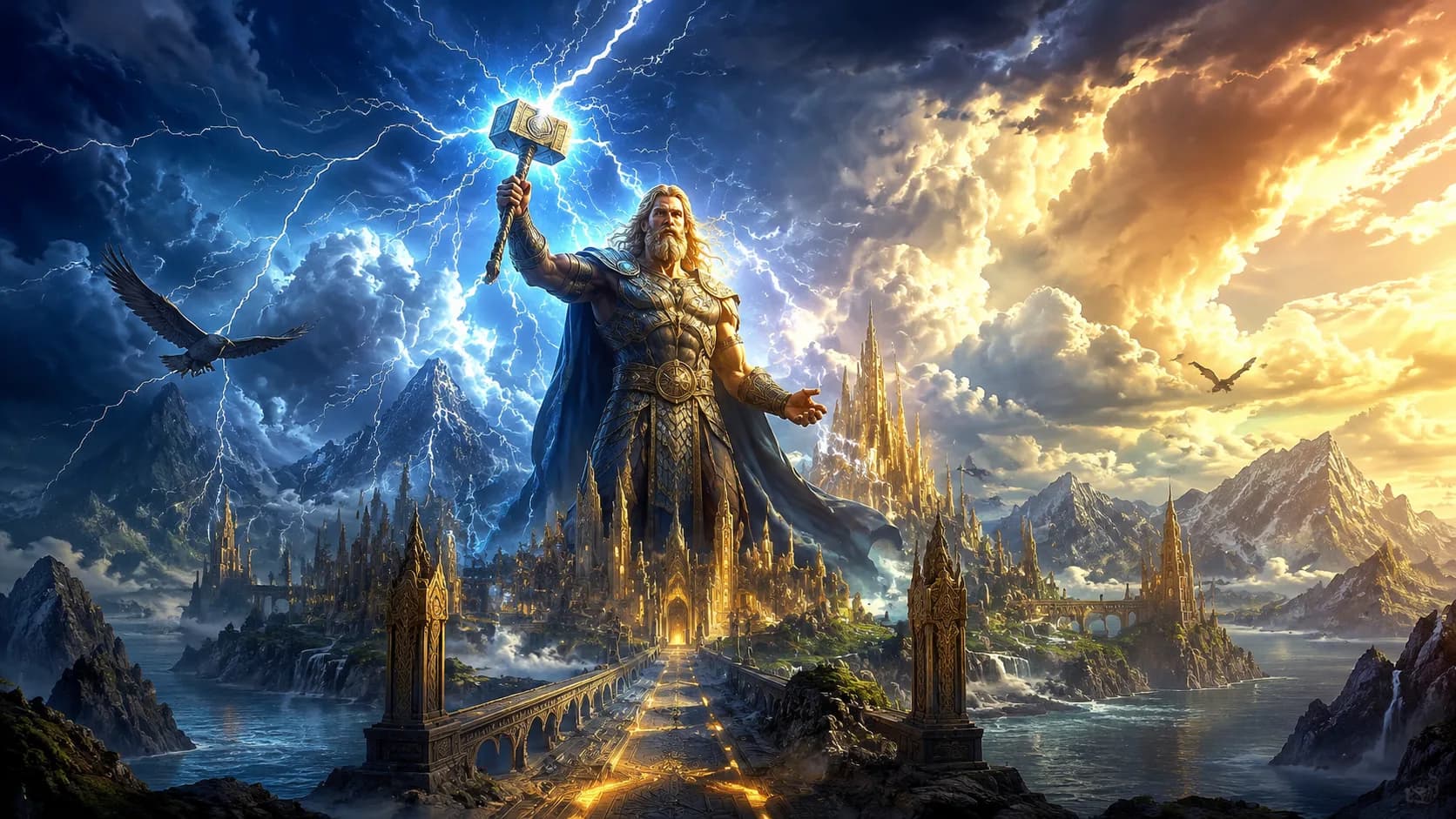
Odin and the Search for Knowledge: Norse Mythology Explored
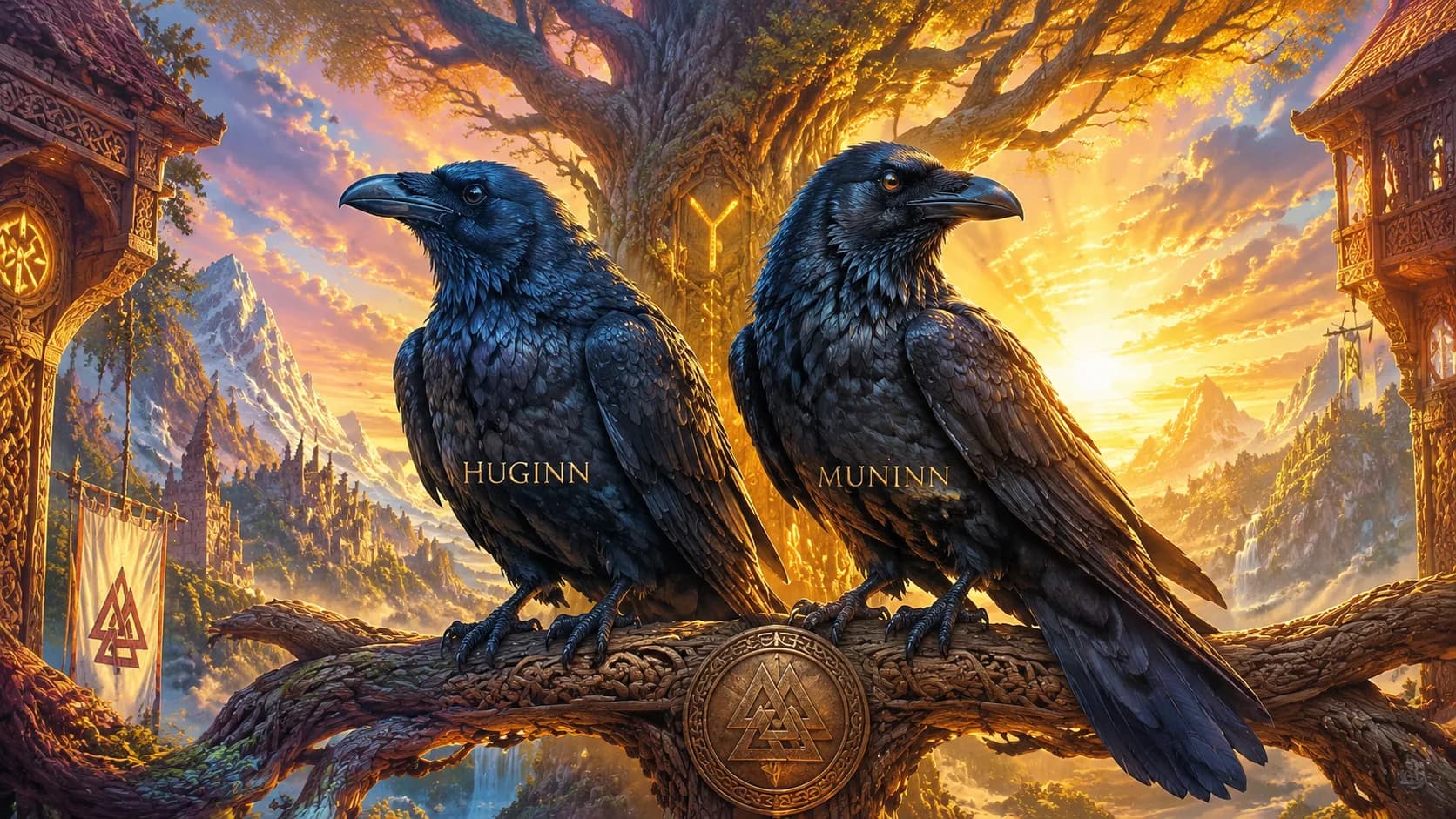
💡 Fun fact: Odin had two ravens named Huginn (thought) and Muninn (memory) who flew across the world daily to bring him news. Basically, the All-Father invented social media algorithms 2,000 years before Twitter.
- Who Is Odin?
- The Sacrifice at Mimir's Well
- The Nine Nights on Yggdrasil
- The Power of the Runes
- Huginn, Muninn, and the Wolves
- The Mead of Poetry
- Valhalla and the Einherjar
- Odin the Shapeshifter and Wanderer
- The Prophecy of Ragnarök
- Odin's Legacy: Wisdom Over Strength
- Modern Relevance of Odin's Quest
- Experience Odin's Journey Through Audio
- The Bottom Line
- Frequently Asked Questions
In the frozen halls of Asgard, one god stands apart from all others not for his strength in combat, but for his relentless quest to understand the cosmos. Odin, the All Father, sacrificed his eye, endured nine agonizing nights hanging from the World Tree Yggdrasil, and wandered the Nine Realms disguised as a mortal all in pursuit of knowledge.
Odin is the chief deity in Norse mythology, ruler of Asgard and god of wisdom, poetry, and strategic thinking. Unlike warrior gods who prize physical power, Odin values intellectual understanding above all else, willingly enduring transformative challenges from self-sacrifice to shape shifting to gain deeper insight into fate, magic, and the mysteries of existence. His two ravens, Huginn (thought) and Muninn (memory), symbolize his endless pursuit of knowledge across all worlds.
This comprehensive guide explores Odin's legendary quest for wisdom, from the Well of Mimir to the discovery of the runes. You'll discover how his sacrifices shaped Norse mythology, why Vikings revered him as a god of both scholars and strategists, and how modern seekers can experience his journey through immersive audio storytelling.
"Odin hung from a tree for nine nights to learn the alphabet. And you thought your last all nighter was tough."
Key Facts About Odin
- •• Names: All-Father, Grímnir, Hár, Fjölnir, and over 200 others
- •• Realm: Asgard (realm of the Aesir gods)
- •• Domains: Wisdom, knowledge, poetry, tactics, runes, and leadership
- •• Companions: Ravens Huginn and Muninn, wolves Geri and Freki, horse Sleipnir
- •• Weapon: Gungnir, the spear that never misses
- •• Major Sacrifices: His eye for wisdom, nine nights hanging for runes
- •• Historical Worship: Primary deity among Viking Age Scandinavians (8th-11th centuries CE)
Quick Answer
Explore Odin's legendary quest for wisdom in Norse mythology, from sacrificing his eye at Mimir's Well to hanging from Yggdrasil for nine nights. Discover how the All-Father's relentless pursuit of knowledge shaped Viking culture and continues to inspire modern seekers through immersive audio storytelling.
Who Is Odin?
Odin is the All Father of Norse mythology, chief among the Aesir gods who dwell in the gleaming realm of Asgard. While other gods embody singular traits Thor wields strength, Loki cunning, Freya beauty Odin represents something more complex: the transformative power of wisdom gained through personal challenge.
Known by many names Grímnir (the masked one), Hár (the high one), Fjölnir (the wise) Odin appears in the Poetic Edda and Prose Edda as a paradoxical figure. He's a god of war who seeks to prevent the final conflict of Ragnarök. A king of gods who wanders Midgard (Earth) disguised as a humble traveler. A seeker of truth who knows his own tragic fate.
Odin's character reflects the Viking value system: knowledge and wisdom trump brute strength. Vikings believed a clever strategy born from deep understanding could overcome any physical advantage a philosophy embodied in their god king.
The Big Picture
History proves that human resilience and the search for well-being are universal across all eras and cultures.
Physically, Odin is depicted as a tall, one eyed figure (more on that eye later) with a long beard, often wearing a wide brimmed hat to shadow his missing eye. His iconic spear, Gungnir, never misses its mark a weapon forged by dwarven craftsmen that represents his strategic precision. He rides Sleipnir, an eight-legged horse capable of galloping between realms, reflecting Odin's role as a god who crosses boundaries both physical and metaphysical.
Odin's Domain and Responsibilities
As ruler of Asgard, Odin presides over Valhalla, the great hall where honored warriors who perish in service join the Einherjar heroes who will stand beside the gods during the final confrontation of Ragnarök. But unlike warrior deities in other mythologies who simply celebrate victory, Odin selects which heroes enter Valhalla through his Valkyries, choosing based on strategic value for the coming conflict.
This forward thinking approach reveals Odin's true nature: he's a god who plans for inevitable challenges rather than reacting to them. Every decision, every sacrifice, every quest for knowledge serves a larger strategy even if that strategy cannot ultimately prevent his own transformation at Ragnarök.
Read more: The Mystery of Hidden Monk Temples Around the World

"If Odin had a LinkedIn profile, his headline would be: 'Chief Executive All Father | 2000+ years experience in strategic knowledge acquisition | Willing to sacrifice for insights.'"
A philosopher walked into a wall. His students asked if it hurt. He replied, 'The wall is an illusion, but my headache is quite real.'
The Sacrifice at Mimir's Well
Perhaps no tale better captures Odin's philosophy than his journey to Mímisbrunnr the Well of Wisdom located beneath one of Yggdrasil's three great roots. This spring, guarded by the wise being Mímir, contained water of such profound knowledge that a single sip would grant understanding of past, present, and future events across all Nine Realms.
Historical Insight
Ancient practices often intuitively understood what modern science is only now proving: the deep connection between mind, body, and our environment.
When Odin approached Mímir and requested a drink, the guardian set a price that would make any other god recoil: one of Odin's eyes. Not a temporary loan or symbolic gesture, but a permanent, physical sacrifice. The well demanded something irreplaceable in exchange for its irreplaceable wisdom.
According to the Völuspá, Odin didn't hesitate. He plucked out his eye and dropped it into the well, where it remains to this day, allowing him to "see" hidden truths others cannot perceive. The physical eye sees the material world; the spiritual insight sees underlying patterns and future possibilities.
What knowledge did Odin gain from this transformative moment? The sources don't provide specifics, but the implications are clear: he learned of Ragnarök the twilight of the gods, the prophesied final conflict where even he would meet his fate at the jaws of the great wolf Fenrir. Rather than despair, this knowledge shaped his entire strategy: gathering the Einherjar in Valhalla, seeking the runes to master magic, walking among mortals to understand human resilience.
The Symbolism of the Eye Sacrifice
In Norse culture, Odin's eye sacrifice carried profound meaning. Vision was power Vikings navigated by stars, identified threats at sea, and read omens in natural phenomena. For their chief god to voluntarily limit his physical sight demonstrated that inner vision (wisdom, foresight, strategic thinking) surpassed outer vision.
The missing eye also became Odin's defining characteristic, marking him as someone who paid the price for knowledge. When he wandered Midgard in disguise, clever observers might recognize the one eyed stranger as something more a god walking among them, testing their hospitality and wisdom. This visible marker of sacrifice communicated a core Viking value: true wisdom requires personal cost.
Archaeological evidence shows that Viking Age pendants and amulets frequently depicted one eyed figures, likely representing Odin. These weren't just religious symbols they served as reminders that wisdom requires sacrifice, resonating with Vikings facing dangerous sea voyages and uncertain futures.
"Odin gave up an eye for ultimate wisdom. Meanwhile, I still can't find my car keys."

Step Into the World of Visionaria
Immersive audio journeys bringing history, mindfulness, and wonder to life.
What's an ancient intellectual's favorite exercise? Jumping to conclusions.
The Nine Nights on Yggdrasil
If sacrificing an eye wasn't enough, Odin's second great trial for knowledge pushed the boundaries of what even a god could endure. The tale comes from Hávamál (Sayings of the High One), where Odin himself recounts hanging from Yggdrasil the immense World Tree connecting all Nine Realms for nine nights, pierced by his own spear, with no food or water.
This wasn't punishment or capture. It was self-imposed ordeal, a transformative challenge designed to push Odin beyond normal consciousness into a state where he could perceive the runes ancient symbols of power and meaning that underlie reality itself. The poem describes his desperate cry as wisdom finally breaks through:
The number nine carries deep significance in Norse mythology nine realms, nine nights, nine mothers of Heimdall. It represents completion and transformation, a full cycle that brings the seeker to a new state of being. Odin didn't just learn the runes during this ordeal; he became the master of them, understanding their power to shape fate, heal, protect, and transform.
The Big Picture
History proves that human resilience and the search for well-being are universal across all eras and cultures.
Yggdrasil isn't merely a tree it's the axis of existence, the connective tissue between realms, the living structure that holds reality together. Its branches reach into the heavens while its roots extend into primordial wells of knowledge, including the Well of Urd (fate) and Mímir's Well (wisdom).
By hanging from Yggdrasil, Odin placed himself at the center of cosmic knowledge, suspended between life and transformation, between the physical and the mystical. The self-inflicted wound from Gungnir created an initiatory challenge "I gave myself to myself," he says in Hávamál, acknowledging that true wisdom requires offering your current self to discover your deeper self.
Odin's ordeal teaches that profound knowledge doesn't come from comfort or ease. Breakthroughs emerge from voluntary challenge placing yourself in situations that force growth and new perspectives. Modern seekers apply this principle through meditation retreats, intensive learning experiences, and deliberate challenges that push beyond current limits.
The Parallel to Shamanic Initiation
Scholars of comparative mythology note striking similarities between Odin's ordeal and shamanic initiation practices across cultures. Siberian shamans, Native American vision questers, and other spiritual practitioners undergo periods of isolation, endurance, and physical challenge to access alternate states of consciousness where deeper truths become visible.
Odin's nine night vigil mirrors these practices: voluntary suffering, connection to a sacred tree (axis mundi), transformation through ordeal, and emergence with new powers. This suggests that Norse mythology preserved ancient shamanic traditions, with Odin embodying the archetypal seeker who crosses the boundary between ordinary and extraordinary knowledge.
"Odin's nine night tree hang makes your worst camping trip look like a luxury resort."
A time traveler went back to antiquity to teach them about 'holistic health.' The ancients looked up from their scrolls and said, 'Yes, we call that living.'
The Power of the Runes
The runes Odin discovered weren't simply an alphabet for writing they were fundamental symbols carrying magical and philosophical power. The Elder Futhark, the oldest runic alphabet with 24 characters, served multiple purposes: practical writing, divination, magical inscription, and spiritual meditation.
Each rune represents a concept, a force, or a principle. Fehu (ᚠ) embodies wealth and cattle, the foundation of Viking prosperity. Uruz (ᚢ) channels the strength of the auroch (wild ox). Ansuz (ᚨ) connects to Odin himself and divine inspiration. Raidho (ᚱ) governs journeys and quests particularly relevant to Odin's wandering nature.
By mastering the runes through his nine night ordeal, Odin gained the ability to shape reality through symbolic language. He could inscribe runes to heal, protect warriors, calm storms, bind enemies, or sharpen his own mind. This wasn't superstition to the Norse it was practical magic, as real as metalworking or navigation.
Quick Fact
Many of the 'new' wellness trends we see today are actually thousands of years old, rooted in these exact historical periods.
Vikings carved runes on weapons to increase their effectiveness, on ships to ensure safe passage, on memorial stones to honor the transformed, and on everyday objects to invoke blessings. Runestones throughout Scandinavia still stand today, testifying to the importance of these symbols in Norse society.
The practice of runic divination casting rune stones to gain insight into questions or future events directly mirrors Odin's use of the symbols. Practitioners would draw runes, meditate on their meanings, and interpret patterns to guide decisions. This wasn't fortune telling in the modern sense; it was a method for accessing deeper wisdom about situations, much as Odin accessed cosmic knowledge.
Modern seekers can connect with runic wisdom through study and meditation. Begin with one rune at a time, researching its historical meaning, pondering its symbolic implications, and reflecting on how its principle applies to your life. This mirrors Odin's patient accumulation of understanding one symbol, one insight at a time.
Odin as Keeper of Poetic Wisdom
The connection between runes and poetry reveals another layer of Odin's domain. In Norse culture, skalds (poets) held honored positions because they could shape reality through carefully crafted words. The Mead of Poetry, which Odin stole from giants through cunning and transformation, granted the gift of eloquent expression another form of knowledge that transcends mere information.
This link between magical symbols (runes), poetic language (skaldic verse), and strategic wisdom (Odin's counsel) shows how Norse culture integrated different forms of knowledge into a unified worldview. To master one aspect was to understand its connections to others a holistic approach Odin embodied perfectly.
"If Wi-Fi passwords were carved in runes on runestones, Vikings would have the world's most secure networks."
Why did the ancient physician prescribe a long walk? Because he was tired of listening to the patient complain in his office.
Huginn, Muninn, and the Wolves
Odin's search for knowledge extended beyond personal challenges to building a network of intelligence across the Nine Realms. His two ravens, Huginn (thought) and Muninn (memory), fly out each dawn to observe events throughout the worlds, returning at dusk to whisper everything they witnessed into Odin's ears as he sits on his high throne, Hlidskjalf.
Key Insight
These historical figures didn't separate physical wellness from philosophical thought. To them, it was all one continuous practice of living well.
This imagery resonates deeply with Odin's character: a leader who values information gathering as much as direct action. While other gods might intervene personally in mortal affairs, Odin prefers comprehensive understanding seeing the full picture before making strategic moves. The ravens symbolize the cognitive tools that support wisdom: active thinking (Huginn) and accumulated knowledge (Muninn).
Interestingly, Norse sources hint that Odin worries more about losing Muninn than Huginn. This suggests that memory the retention and integration of past experiences matters more than immediate thought. Without memory, one cannot learn from history, apply past lessons, or build strategic understanding across time. Odin's concern reflects his role as a god who thinks in terms of centuries and cosmic cycles.
Geri and Freki: The Companion Wolves
Flanking Odin's throne sit two wolves, Geri and Freki (both names mean "greedy" or "ravenous"). While warriors feast in Valhalla, Odin himself consumes only wine, giving all his food to these loyal companions. This detail reveals another dimension of Odin: he sustains himself on wisdom and inspiration (represented by wine, linked to poetry) while physical nourishment goes to those who serve him.
Wolves held complex symbolism in Norse culture dangerous predators, yes, but also intelligent pack hunters who strategize and cooperate. Geri and Freki represent the fierce, primal aspects of knowledge: the hunger for understanding, the predatory focus on truth, the willingness to pursue wisdom relentlessly regardless of obstacles.
"Odin's ravens browse the internet (all Nine Realms of it) while his wolves handle the subscriptions."
A Roman walks into a bar, holds up two fingers, and says, 'Five beers, please.'
The Mead of Poetry
One of Odin's most cunning quests involved acquiring the Mead of Poetry a magical drink that grants the gift of poetic inspiration and eloquence to whoever tastes it. This wasn't another self-sacrificial ordeal but a clever heist involving deception, seduction, and shape shifting.
The mead's origin story is complex: it was created from the essence of Kvasir, the wisest being ever created, whose knowledge was distilled into liquid form after his transformation. Giants eventually possessed this treasure, keeping it locked away. Odin, disguised as a mortal named Bölverk, infiltrated the giants' realm, performed labors to gain trust, and eventually seduced the giant woman Gunnlöð who guarded the mead.
Did You Know?
The relentless drive to understand the world was seen not just as an academic pursuit, but as a spiritual and healing practice by the ancients.
After three nights with Gunnlöð, Odin drank the entire supply of mead in three massive gulps, transformed into an eagle, and flew back to Asgard with the precious liquid. He spit it into containers for the gods, though some drops fell to Midgard during his hurried escape these became the source of inspiration for mortal poets and artists.
Why Poetry Matters in Odin's Quest
Modern readers might wonder why a war god cares about poetry. But in Norse culture, poetry wasn't mere entertainment it was the technology for preserving and transmitting knowledge. Without widespread writing, skaldic verse encoded history, genealogy, laws, and wisdom in memorable rhythmic patterns that could survive generations of oral transmission.
A skilled poet could immortalize a king's legacy, preserve the memory of great deeds, or teach complex concepts through metaphor. Odin's theft of the mead represents acquiring the medium through which knowledge spreads not just facts, but the rhetorical and mnemonic tools that make wisdom accessible and memorable.
"Odin stole inspiration itself. Your writer's block doesn't stand a chance."
An Epicurean, a Stoic, and a Cynic walk into a garden. The bartender says, 'Is this some kind of philosophical joke?'
Valhalla and the Einherjar
Valhalla (Hall of the Slain) is Odin's great mead hall in Asgard, where warriors who demonstrate exceptional courage in service journey after their earthly transformation. But this isn't a reward for violence it's strategic recruitment. Odin selects the Einherjar (chosen heroes) to stand with the gods during Ragnarök, the prophesied final conflict.
Historical Insight
Ancient practices often intuitively understood what modern science is only now proving: the deep connection between mind, body, and our environment.
Each day, the Einherjar train through honorable combat, honing their skills. Each evening, they feast together, their challenges healed, building camaraderie and tactical understanding. This cycle continues until Heimdall's horn sounds, signaling Ragnarök's arrival. Odin's wisdom is evident: he's not gathering followers he's building an army of the most capable warriors across all generations.
The Valkyries, Odin's shield maidens, serve as his agents in this selection process. They ride across realms, choosing which heroes join Valhalla based on courage, skill, and strategic value. This demonstrates Odin's delegation of authority another mark of wise leadership trusting capable agents to make critical decisions that serve larger purposes.
The Strategic Purpose of Valhalla
Valhalla reveals Odin's core philosophy: knowledge enables preparation. Having drunk from Mímir's Well and learned of Ragnarök, he doesn't despair or accept defeat. Instead, he builds the best possible response: gathering the finest warriors, teaching them teamwork, and preparing for inevitable challenges with strategic foresight.
This forward thinking approach distinguished Odin from other mythological figures who react to crises. He anticipates them, devising multi-generational strategies that leverage accumulated knowledge. Every hero chosen, every tactical lesson taught, every bond formed in Valhalla serves the larger purpose of facing Ragnarök as well prepared as possible.
Why did the Stoic cross the road? Because it was the rational thing to do, and he was indifferent to the traffic.
Odin the Shapeshifter and Wanderer
Unlike gods in many mythologies who remain distant in their divine realms, Odin frequently walks among mortals, disguised as an old man with a wide brimmed hat, cloak, and staff. He tests hospitality, observes human nature, and sometimes intervenes in subtle ways all while gathering knowledge about Midgard (the realm of humans).
These wanderings served multiple purposes. First, they let Odin understand the people whose heroes he would recruit for Valhalla. Second, they tested whether mortals upheld the values Vikings considered sacred: hospitality to strangers, courage in challenges, and wisdom in judgment. Third, they kept Odin humble reminding even the All Father that wisdom requires continuous learning, not resting on past achievements.
Odin's shape shifting abilities extended beyond simple disguise. He could transform into animals famously becoming an eagle to escape with the Mead of Poetry allowing him to access places and perspectives impossible in his usual form. This flexibility represents another dimension of wisdom: the ability to change approach based on circumstances.
Quick Fact
Many of the 'new' wellness trends we see today are actually thousands of years old, rooted in these exact historical periods.
In Hávamál, Odin shares wisdom gained from his travels among mortals. These aren't abstract philosophical principles but practical advice: be cautious with trust, value friendship, speak truth but tactfully, observe before acting. The collection reads like field notes from a cosmic anthropologist studying human behavior.
This willingness to learn from mortals, despite being their divine king, demonstrates true wisdom. Odin doesn't assume that godhood grants complete understanding. He actively seeks diverse perspectives, recognizing that each realm, each being, each experience offers potential insights that enrich his comprehensive view of existence.
Read more: How to Practice Guided Imagination Journeys

"Odin invented 'Undercover Boss' several millennia before reality TV."
A Roman walks into a bar, holds up two fingers, and says, 'Five beers, please.'
The Prophecy of Ragnarök
Ragnarök, the prophesied transformation of the gods and the world, looms over all Norse mythology. Odin knows from his drink at Mímir's Well that he will meet his fate at the jaws of Fenrir, the great wolf. The gods will face giants and monsters in a final confrontation. The World Tree will shake. The Nine Realms will be transformed.
Yet Odin doesn't despair or try to prevent the inevitable. Instead, he prepares. Every warrior gathered in Valhalla, every rune mastered, every bit of wisdom accumulated serves to face Ragnarök with maximum effectiveness. This acceptance of fate while working to meet it with courage and capability defines the Norse worldview.
Did You Know?
The relentless drive to understand the world was seen not just as an academic pursuit, but as a spiritual and healing practice by the ancients.
The prophecy includes fascinating details: Thor will eliminate the World Serpent Jörmungandr but succumb to its poison nine steps later. Heimdall and Loki will transform each other. Odin himself will be consumed by Fenrir, only for his son Vidar to avenge him by slaying the wolf. These aren't random events they're the culmination of countless strategic decisions and preparations.
Odin's response to Ragnarök reveals perhaps his deepest wisdom: knowledge of inevitable challenges doesn't excuse inaction. Even knowing he cannot ultimately prevent his transformation, he acts to maximize every advantage, support his allies, and face destiny with full preparation. The journey and the effort matter as much as any final outcome.
This philosophy resonated deeply with Vikings, who faced constant dangers from sea voyages, conflicts, and harsh climates. Like Odin, they couldn't guarantee survival but they could face challenges with courage, strategy, and the accumulated wisdom of their culture. The All Father modeled this approach: acknowledge reality, prepare thoroughly, act with wisdom, and meet your fate with dignity.
What's an ancient intellectual's favorite exercise? Jumping to conclusions.
Odin's Legacy: Wisdom Over Strength
In a mythology filled with mighty warriors, powerful thunder gods, and fearsome giants, Odin stands out by valuing intellectual power over physical might. While he could certainly fight (he's a god of tactics and strategy, after all), his greatest achievements come through wisdom: outsmarting opponents, gathering intelligence, understanding cosmic patterns, and making strategic preparations.
This emphasis on knowledge reflected Viking culture's complex reality. Yes, Vikings were renowned warriors but they were also skilled navigators, traders, lawmakers, and poets. Success required reading stars for navigation, negotiating trade agreements, establishing legal codes, and preserving cultural knowledge through oral tradition. Odin embodied all these intellectual pursuits.
The sacrifices Odin made his eye, his ordeal on Yggdrasil, his risks while wandering taught Vikings that wisdom has costs. Profound understanding doesn't come from passive observation but through active challenge, personal risk, and willingness to change yourself to gain insight. This philosophy influenced everything from Viking Age legal assemblies to their approach to exploration.
Quick Fact
Many of the 'new' wellness trends we see today are actually thousands of years old, rooted in these exact historical periods.
Cultural Impact of the All-Father
Odin's influence extended beyond mythology into practical Viking culture. Kings and chieftains invoked his name, seeking his strategic wisdom for decisions. Poets and lawspeakers viewed themselves as channeling his gift of eloquence. Explorers and traders looked to his wandering example when venturing into unknown territories.
Even the Viking legal assembly, the Thing, reflected Odin's values: conflicts resolved through wisdom and precedent rather than pure force, laws established through collective knowledge rather than arbitrary power. While violence existed in Viking society, their judicial system prioritized resolution through negotiated settlements and community judgment a very Odinic approach.
"Odin's résumé: 'Sacrificed body parts for intellectual growth. Highly motivated self-starter.'"
A philosopher walked into a wall. His students asked if it hurt. He replied, 'The wall is an illusion, but my headache is quite real.'
Modern Relevance of Odin's Quest
Odin's relentless pursuit of knowledge resonates powerfully in our information age. Like the All Father sending ravens across the Nine Realms, modern seekers navigate vast networks of information, trying to distinguish wisdom from mere data, meaningful understanding from surface-level facts.
Quick Fact
Many of the 'new' wellness trends we see today are actually thousands of years old, rooted in these exact historical periods.
His willingness to sacrifice for learning offers a powerful counter to our culture of instant gratification. Odin didn't expect wisdom to come easily or quickly. He invested an eye, nine painful nights, countless years of wandering showing that profound understanding requires commitment, discomfort, and time. Modern learners facing challenging studies, difficult skill acquisition, or complex problems can draw inspiration from this example.
The concept of continuous learning embodied in Odin's character also feels remarkably contemporary. Despite being king of the gods, he never stopped seeking new knowledge, testing himself, or exploring different perspectives. In today's rapidly changing world, where skills become obsolete and new challenges constantly emerge, Odin's model of lifelong learning and adaptive thinking offers timeless guidance.
Applying Odinic Principles Today
Modern practitioners of personal development draw explicit parallels to Odin's methods. Deliberate practice pushing beyond comfort zones to master complex skills mirrors his willingness to endure ordeals for growth. Information gathering from diverse sources echoes his ravens' daily reconnaissance. Strategic thinking about long term goals reflects his preparation for Ragnarök.
Meditation practices that involve visualization and mental journey taking connect directly to Odin's shamanic style exploration of consciousness. Narrative-based mindfulness techniques use story structure to access deeper insights much as Odin used myths and runes to understand cosmic patterns.
A time traveler went back to antiquity to teach them about 'holistic health.' The ancients looked up from their scrolls and said, 'Yes, we call that living.'
Experience Odin's Journey Through Audio
Visionaria brings Odin's quest for knowledge to life through interactive audio journeys that combine spatial 3D audio, guided visualization, and cinematic storytelling. Instead of reading about Mímir's Well or Yggdrasil, you experience them standing at the base of the World Tree, hearing wind rustle through its cosmic branches, feeling the weight of Odin's choices.
These Norse mythology journeys aren't passive listening experiences. Like Odin's own quests, they invite active participation through imagination. Your mind completes the scenes guided by narrative prompts, creating personal connections to these ancient tales. This mirrors how Vikings themselves engaged with mythology not as distant stories but as living wisdom applicable to their lives.
The spatial audio technology creates remarkable presence: footsteps echo behind you in Valhalla's great hall, ravens' wings beat overhead as Huginn and Muninn depart, Gungnir's blade whistles past your ear. This immersive quality transforms intellectual understanding into embodied experience precisely what Odin sought through his physical ordeals rather than mere philosophical contemplation.
Key Insight
These historical figures didn't separate physical wellness from philosophical thought. To them, it was all one continuous practice of living well.
Why Audio Journeys Connect to Odin's Philosophy
There's a beautiful symmetry between Odin's quest methods and modern audio journey experiences. Odin valued poetry and spoken word as vehicles for wisdom Vikings preserved knowledge through oral tradition, not writing. Audio storytelling returns to this ancient pattern, using voice, rhythm, and narrative structure to transmit understanding.
The guided visualization component mirrors Odin's shamanic practices. By closing your eyes and following audio prompts into imagined realms, you're engaging the same cognitive faculties Odin activated during his visionary experiences. Modern neuroscience confirms that vividly imagined scenarios trigger similar brain patterns as actual experiences making these journeys genuine tools for transformation and insight.
"Odin would definitely have a premium Visionaria subscription. And probably write 5 star reviews."
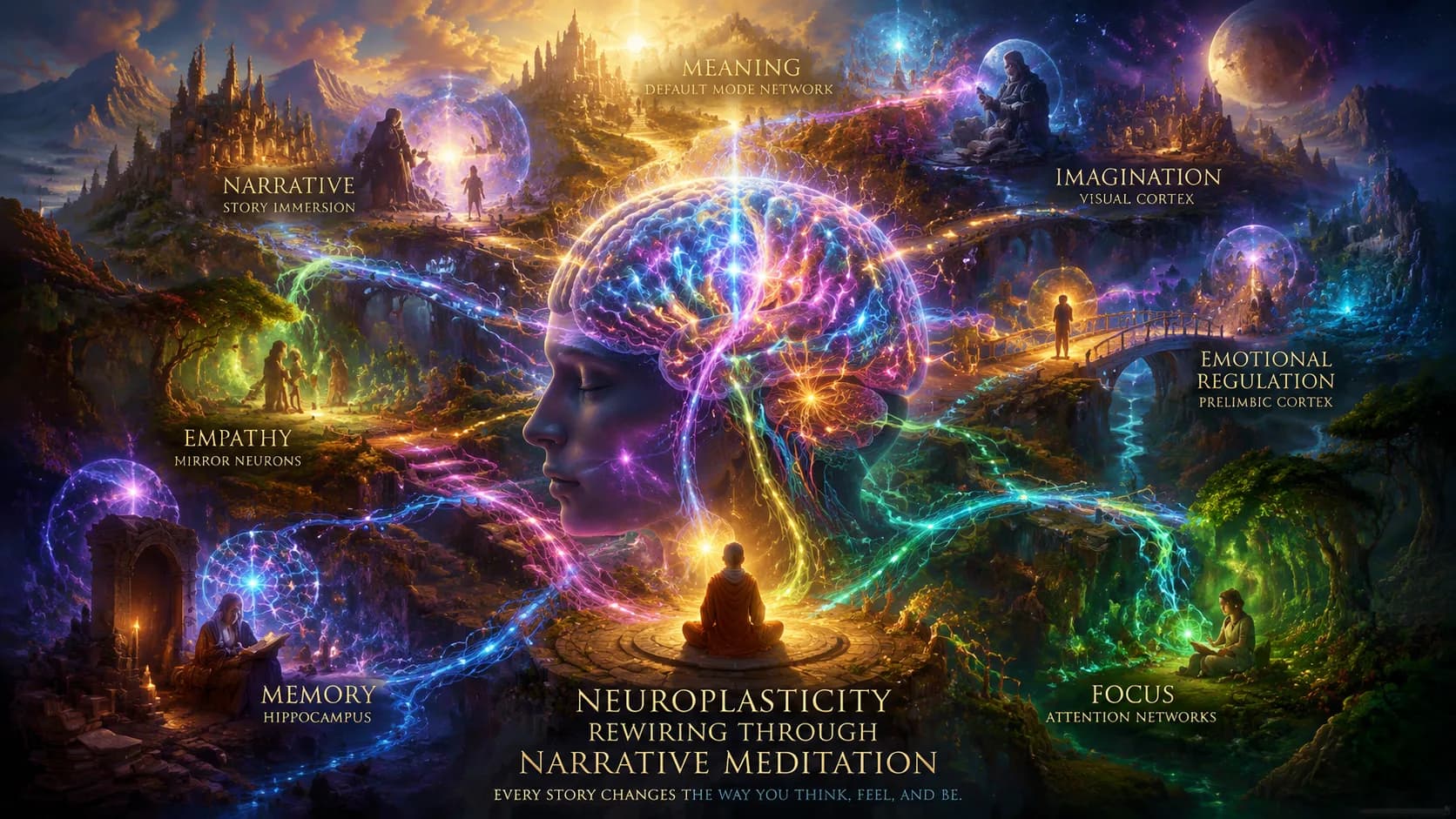
How Narrative Meditation Rewires the Brain: Neuroplasticity, Story-Based Mindfulness & Immersive Audio
Discover how narrative meditation rewires the brain, from neuroplasticity and story-driven mindfulness to default mode network restructuring, emotional regulation circuits, spatial audio immersion, and how immersive au...
Why did the ancient physician prescribe a long walk? Because he was tired of listening to the patient complain in his office.
The Bottom Line
Odin's relentless quest for knowledge defines him as Norse mythology's most complex and compelling figure. Through sacrificing his eye at Mímir's Well, enduring nine nights hanging from Yggdrasil, stealing the Mead of Poetry, and wandering Midgard in disguise, he demonstrated that true wisdom requires personal cost, voluntary challenge, and continuous learning.
Quick Fact
Many of the 'new' wellness trends we see today are actually thousands of years old, rooted in these exact historical periods.
Read more: How to Practice Story Meditation at Home

His philosophy valuing intellectual understanding over physical strength, preparing strategically for inevitable challenges, and pursuing knowledge regardless of sacrifice resonated deeply with Viking culture and continues inspiring modern seekers. Whether through traditional study of the Eddas or immersive audio experiences that bring Norse realms to life, Odin's legacy teaches that the pursuit of understanding is itself a heroic journey worth undertaking.
Experience More with Visionaria
Download the app to explore guided historical and wellness journeys.
Why did the ancient physician prescribe a long walk? Because he was tired of listening to the patient complain in his office.
This article is for educational and informational purposes only. Historical details are based on available research and may evolve as new evidence emerges.
Visionaria journeys are designed for relaxation, guided imagination, and personal enrichment. They are not a substitute for medical, mental health, legal, or professional advice.