The Most Famous Love Stories in Mythology
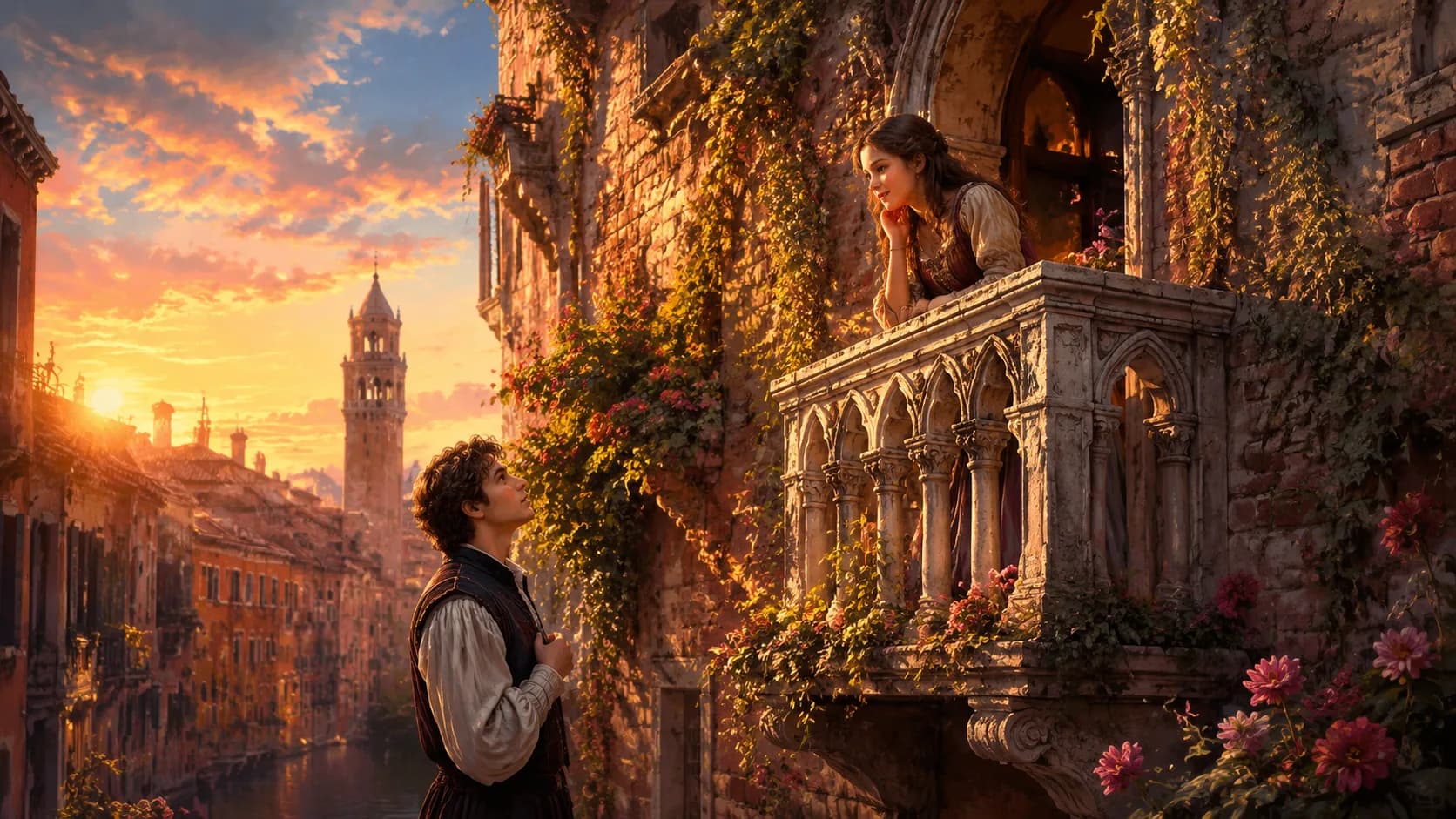
✨ Fun fact: The love stories collected in this article span approximately 4,000 years of human storytelling, from ancient Sumerian tales of Inanna and Dumuzi to Arthurian romances composed in the medieval courts of France, yet every single one explores variations of the same fundamental theme: that love transforms everyone it touches, often in ways they never anticipated. Shakespeare borrowed his plot for Romeo and Juliet from Ovid's Pyramus and Thisbe, who borrowed it from even older oral traditions, who borrowed it from the universal human experience of wanting to be with someone so much that geography, underworlds, and disapproving parents all seem like minor obstacles. Mythology's love stories prove that humans have been simultaneously brilliant at describing love and absolutely hopeless at navigating it for at least four millennia.
- Orpheus and Eurydice: Love That Crossed the Underworld
- Eros and Psyche: The Soul's Journey Toward Love
- Tristan and Iseult: The Potion That Changed Everything
- Shah Jahan and Mumtaz Mahal: Love Written in Marble
- Paris and Helen: The Face That Launched a Thousand Ships
- Radha and Krishna: Divine Love in Hindu Mythology
- Cleopatra and Mark Antony: Love Across Empires
- Pyramus and Thisbe: The Original Star-Crossed Lovers
- Lancelot and Guinevere: Love and Loyalty in Arthurian Legend
- Izanagi and Izanami: Creation Through Love in Japanese Mythology
- Why Mythological Love Stories Still Resonate Today
- Experience Legendary Love Stories Through Visionaria
- The Bottom Line
- Frequently Asked Questions
Love is the oldest story humanity has ever told and mythology is where we told it most magnificently. Long before Shakespeare penned his sonnets, long before Hollywood invented the romantic comedy, and long before dating apps reduced the most complex human emotion to a swipe, ancient civilizations were composing epics of devotion so powerful that they have survived millennia passed from voice to voice, text to text, culture to culture, each generation finding in these stories something that speaks directly to their own experience of the heart. From the sunlit temples of ancient Greece to the misty forests of Celtic Britain, from the vibrant gardens of India to the imperial courts of Egypt, mythological love stories represent humanity's most ambitious attempt to understand what happens when two people connect at a level that changes everything.
Mythological love stories are the legendary narratives of romantic devotion, longing, sacrifice, and transformation that originate in the world's great mythological and literary traditions including Greek, Roman, Hindu, Celtic, Arthurian, Japanese, Persian, and Egyptian mythology and have shaped humanity's understanding of love, partnership, and the emotional depths of the human experience for over 4,000 years. These stories matter because they are far more than entertainment they are cultural blueprints for understanding the complexities of human connection. Each love story encodes insights about devotion, trust, sacrifice, jealousy, reunion, and the transformative power of emotional bonds that modern narrative psychology recognizes as foundational to emotional development and resilience. They have directly inspired Shakespeare's greatest romances, opera's most enduring works, and modern cinema's most iconic love stories. Through immersive spatial 3D audio, these ancient romances can now be experienced with sensory depth that places listeners inside the story hearing Orpheus's lyre resonate through cavernous passages, feeling the warmth of divine gardens, and witnessing legendary moments of devotion as if standing beside the lovers themselves.
This article explores the most famous love stories in mythology from Orpheus and Eurydice's legendary descent and Eros and Psyche's transformative journey to Radha and Krishna's divine romance, Tristan and Iseult's enchanted devotion, and the legendary connections between Paris and Helen, Cleopatra and Antony, Lancelot and Guinevere, and more. Whether you're drawn to the legendary quests of world mythology, the psychology of storytelling, or the enduring beauty of love expressed through humanity's greatest narratives, this journey through mythology's romances will illuminate why these stories continue to shape how we understand the most powerful emotion in the human experience.
"Every civilization that has ever existed has produced love stories which either means that love is the most universal experience in human existence, or that every civilization has needed a way to explain why otherwise rational people occasionally do spectacularly irrational things. Mythology chose to explain it with gods, enchanted potions, and underworld journeys. Modern psychology chose to explain it with neurotransmitters and attachment theory. The mythology is more poetic, but the conclusion is the same: love makes people do extraordinary things, and we've been trying to understand why for at least four thousand years."
Key Facts About Mythological Love Stories
- ••Global Phenomenon: Love stories appear in every major mythological tradition worldwide (Greek, Roman, Hindu, Celtic, Norse, Japanese, Chinese, Persian, Egyptian, Sumerian, and Arthurian), making romantic devotion the most universally explored theme in human mythology
- ••Literary Foundation: Mythological love stories directly inspired Shakespeare (Romeo and Juliet from Pyramus and Thisbe), opera (Gluck's Orfeo ed Euridice), ballet (Swan Lake from various mythological sources), and modern cinema, making them the ancestral DNA of virtually all Western romance narratives
- ••Psychological Depth: Modern narrative psychology recognizes mythological love stories as encoding genuine insights about attachment, devotion, trust, jealousy, reunion, and transformation, making them therapeutically relevant tools for understanding relationship patterns
- ••Architectural Legacy: Mythological love inspired some of humanity's greatest architectural achievements, including the Taj Mahal (Shah Jahan and Mumtaz Mahal), countless Renaissance frescoes of Eros and Psyche, and medieval cathedral sculptures depicting Tristan and Iseult
- ••Cultural Range: The stories span approximately 4,000 years, from Sumerian tales of Inanna and Dumuzi (c. 2000 BCE) through Greek epics, Hindu devotional poetry, Celtic romances, and Arthurian legends (c. 1200 CE), demonstrating love's extraordinary narrative endurance
- ••Modern Resonance: These love stories continue to inspire contemporary adaptations in film, television, literature, music, fashion, and immersive audio experiences, with new interpretations appearing every year that find fresh meaning in ancient romantic archetypes
Quick Answer
✨ Fun fact: The love stories collected in this article span approximately 4,000 years of human storytelling, from ancient Sumerian tales of Inanna and Dumuzi to Arthurian romances composed in the medieval courts of France, yet every single one explores variations of the same fundamental theme: that love transforms everyone it touches, often in ways they never anticipated. Shakespeare borrowed his plot for Romeo and Juliet from Ovid's Pyramus and Thisbe, who borrowed it from even older oral traditions, who borrowed it from the universal human experience of wanting to be with someone so much that geography, underworlds, and disapproving parents all seem like minor obstacles. Mythology's love stories prove that humans have been simultaneously brilliant at describing love and absolutely hopeless at navigating it for at least four millennia.
Orpheus and Eurydice: Love That Crossed the Underworld
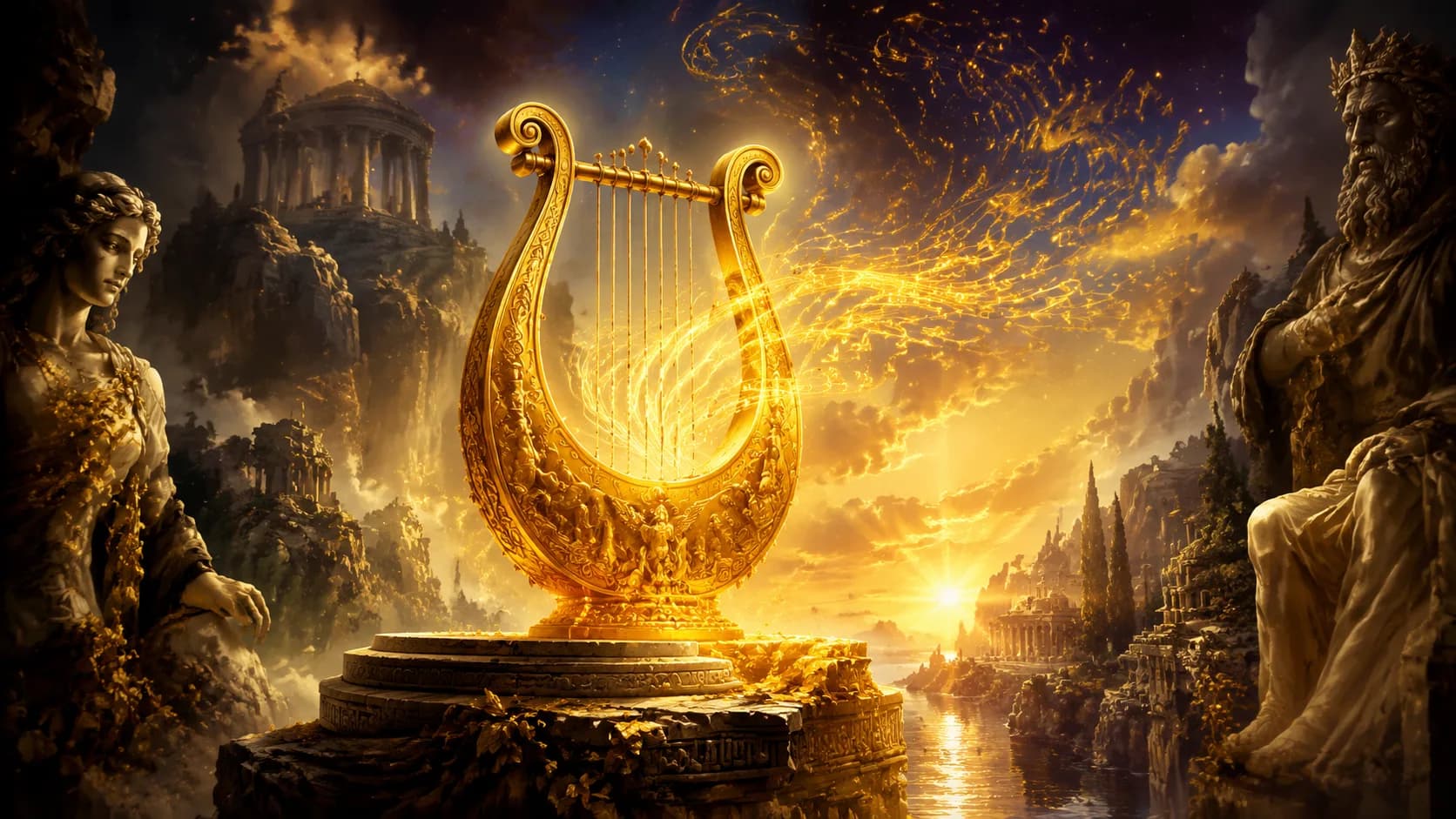
No love story in Western mythology carries the emotional weight of Orpheus and Eurydice a tale so powerful that it has inspired more operas, poems, films, and artistic interpretations than perhaps any other mythological romance. Orpheus, the greatest musician in Greek mythology, possessed a gift so extraordinary that his lyre could charm wild animals, bend trees toward his music, and even cause rivers to alter their courses. When he fell in love with the nymph Eurydice, their devotion became legendary a connection so complete that it seemed to demonstrate that love could harmonize not just two hearts but the natural world itself.
When Eurydice was lost to the Underworld taken by a serpent's sting on their wedding day Orpheus did what no mortal had ever attempted: he descended into the realm of Hades himself, armed with nothing but his lyre and the depth of his love. His music was so heartbreakingly beautiful that it moved the lord and lady of the Underworld to compassion. Hades and Persephone agreed to release Eurydice on one condition: Orpheus must walk ahead of her toward the surface and never look back until both had fully emerged into sunlight. This condition a test of trust, patience, and faith transformed a story of devotion into a profound meditation on the nature of love itself.
Visionaria Insight
By immersing ourselves in these historical soundscapes, we reconnect with a timeless human tradition of storytelling and mental restoration.
At the final threshold, with daylight visible ahead, Orpheus turned whether from doubt, from longing, or from an impulse he could not control and Eurydice faded back into the shadows. This moment, one of the most emotionally devastating in all of mythology, has resonated for millennia because it captures something universally true about love: that our deepest connections can be imperiled by the very intensity of feeling that makes them precious. The story doesn't condemn Orpheus it understands him. It acknowledges that love's greatest challenge is often not external obstacles but the internal struggle between trust and anxiety, patience and urgency, faith and fear.
Read more: Meditation for Emotional Healing Through Narrative Experiences
"Orpheus was given one instruction: don't look back. This is possibly the simplest instruction in the history of mythological quests no riddles, no labors, no enchanted objects required. Just walk forward. He couldn't do it. This has made Orpheus the patron saint of everyone who has ever been told 'just be patient' and found it physically impossible. The Underworld offered him the easiest challenge in mythology, and he proved that love makes even the simplest things extraordinarily difficult."
A time traveler went back to antiquity to teach them about 'holistic health.' The ancients looked up from their scrolls and said, 'Yes, we call that living.'
Eros and Psyche: The Soul's Journey Toward Love
The story of Eros and Psyche, preserved in Apuleius's The Golden Ass (c. 170 CE), is arguably the most psychologically sophisticated love story in classical mythology a narrative that reads like an ancient blueprint for understanding how love matures through challenge, trust, and transformation. Psyche (whose name literally means "soul" in Greek) was a mortal princess so beautiful that people began worshiping her instead of Aphrodite. The goddess of love, offended, sent her son Eros to make Psyche fall in love with the most unworthy creature on earth. Instead, Eros accidentally pricked himself with his own arrow and fell deeply in love with Psyche setting in motion one of mythology's most complex and rewarding romantic narratives.
Did You Know?
The relentless drive to understand the world was seen not just as an academic pursuit, but as a spiritual and healing practice by the ancients.
Eros brought Psyche to a magnificent palace where he visited her only in darkness, asking her never to look upon his face. This arrangement love experienced but not fully seen represents one of mythology's most profound metaphors: the early stage of love where connection is felt deeply but not yet fully understood. When Psyche's jealous sisters convinced her to light a lamp and look at her sleeping lover, she discovered not a monster but the god of love himself. A drop of hot oil from the lamp woke Eros, who fled not from anger but from the violation of the trust that had sustained their connection.
What follows is Psyche's heroic journey to win back Eros's love a series of seemingly impossible tasks set by Aphrodite, including sorting a mountain of mixed grains, gathering golden fleece from dangerous rams, collecting water from the river Styx, and descending to the Underworld to retrieve a box of divine beauty. Each task represents a stage of psychological and emotional growth, and Psyche completes them through a combination of courage, resourcefulness, and unexpected assistance. The story's resolution Zeus granting Psyche immortality so she can be with Eros forever is mythology's most eloquent statement that love, fully earned through growth and perseverance, transcends mortal limitations.

Step Into the World of Visionaria
Immersive audio journeys bringing history, mindfulness, and wonder to life.
Why did the Stoic cross the road? Because it was the rational thing to do, and he was indifferent to the traffic.
Tristan and Iseult: The Potion That Changed Everything
The medieval romance of Tristan and Iseult is the greatest love story of the Celtic and European tradition a narrative so influential that it shaped the entire concept of romantic love in Western culture. The story's origins lie in Celtic mythology, but it achieved its most famous forms in the French romances of the 12th and 13th centuries, particularly those of Béroul and Thomas of Britain. Tristan, a Cornish knight of extraordinary valor and artistic sensitivity, was sent to Ireland to escort the princess Iseult (also spelled Isolde) back to Cornwall to marry his uncle, King Mark. During the sea voyage, the two accidentally consumed a love potion intended for Iseult and Mark and their lives were forever changed.
Visionaria Insight
By immersing ourselves in these historical soundscapes, we reconnect with a timeless human tradition of storytelling and mental restoration.
The love potion in the Tristan story functions as one of mythology's most brilliant narrative devices: it removes the question of choice from the lovers' connection, presenting their devotion as a force beyond human will. This wasn't simply attraction or preference it was love as cosmic event, as irresistible as gravity and as transformative as the Phoenix's flame. The potion metaphor resonated so powerfully because it articulated something that lovers across centuries have felt: that genuine love often arrives not as a decision but as something that overtakes you, fundamentally altering who you are and what you value.
The story's exploration of love in tension with duty, honor, and social obligation made it the foundational text of courtly love the medieval concept that elevated romantic devotion to a quasi-spiritual practice. Tristan and Iseult could not be together openly without betraying King Mark, yet they could not be apart without betraying their own hearts. This impossible position love that is simultaneously the truest thing in your life and the most socially complicated became the template for virtually every star-crossed romance that followed, from Romeo and Juliet to Wuthering Heights to modern love stories that explore the tension between personal desire and external expectation.
"Tristan and Iseult's entire love story began because they drank the wrong beverage on a boat. This is essentially the medieval equivalent of accidentally picking up someone else's drink at a party, except with significantly more dramatic consequences. The lesson from Celtic mythology appears to be: always label your potions clearly, especially on sea voyages. The entire course of Cornish, Irish, and French literary history would have been different if someone had written 'LOVE POTION DO NOT DRINK' on the bottle."
Why did the ancient physician prescribe a long walk? Because he was tired of listening to the patient complain in his office.
Shah Jahan and Mumtaz Mahal: Love Written in Marble
While most mythological love stories live in literature and oral tradition, the love between Shah Jahan and Mumtaz Mahal achieved something unique in human history: it was written in marble, precious stones, and architectural perfection. The Taj Mahal widely considered the most beautiful building ever created stands as the world's most magnificent monument to romantic devotion, transforming a personal love story into a sacred architectural marvel that draws millions of visitors each year. Though Shah Jahan and Mumtaz Mahal were historical figures rather than strictly mythological characters, their love story has achieved mythological status through its sheer emotional scale and the extraordinary monument it inspired.
Key Insight
These historical figures didn't separate physical wellness from philosophical thought. To them, it was all one continuous practice of living well.
Shah Jahan, the fifth Mughal Emperor of India, met Arjumand Banu Begum (later titled Mumtaz Mahal, "Jewel of the Palace") in 1607, and their connection was immediate and profound. Historical accounts describe their 19 year partnership as one of extraordinary mutual devotion Mumtaz Mahal was not merely consort but confidante, advisor, and companion in governance. She traveled with Shah Jahan on military campaigns, he sought her counsel on matters of state, and their relationship was recognized by contemporaries as genuinely exceptional in an era when royal marriages were typically political arrangements.
When Mumtaz Mahal passed during the arrival of their fourteenth child in 1631, Shah Jahan's grief was so profound that his hair reportedly turned white within months. He channeled his devotion into commissioning the Taj Mahal a project that required 22 years, 20,000 artisans, and materials sourced from across Asia creating a building that translates the intensity of love into geometric perfection, luminous white marble, and gardens designed to represent paradise. The Taj Mahal demonstrates something remarkable about love stories: when devotion is genuine and deep, its expression can transcend the personal and become universal a gift to all of humanity.
Why did the ancient physician prescribe a long walk? Because he was tired of listening to the patient complain in his office.
Paris and Helen: The Face That Launched a Thousand Ships
The story of Paris and Helen is mythology's most consequential love story a romance that, according to Homer's epic tradition, set in motion the Trojan conflict, reshaping the ancient world and producing the foundational texts of Western literature. Paris, a prince of Troy, was asked to judge a divine beauty contest among Hera, Athena, and Aphrodite. Each goddess offered a bribe: Hera offered power, Athena offered wisdom, and Aphrodite offered the love of the most beautiful woman in the world. Paris chose Aphrodite's gift and the most beautiful woman in the world was Helen, wife of King Menelaus of Sparta.
The Judgment of Paris is one of mythology's most profound thought experiments: it asks what a person values most power, wisdom, or love and then demonstrates the consequences of that choice. Paris chose love, and his choice set in motion a ten year engagement between the Greek and Trojan civilizations, producing heroes like Achilles, Hector, and Odysseus, and stories that have shaped Western imagination for nearly 3,000 years. The narrative doesn't condemn Paris's choice indeed, it suggests that the choice itself was orchestrated by divine forces beyond mortal control but it does explore, with extraordinary nuance, the reality that love's consequences often extend far beyond the lovers themselves.
Did You Know?
The relentless drive to understand the world was seen not just as an academic pursuit, but as a spiritual and healing practice by the ancients.
Helen herself remains one of mythology's most fascinating and debated figures. Was she a willing participant who left Menelaus for Paris, or was she compelled by Aphrodite's divine power? Different ancient sources offer different answers, and this ambiguity has kept Helen's story perpetually relevant. She represents the mythological understanding that love especially love touched by divine forces cannot be simply categorized as right or wrong, voluntary or coerced. The question of Helen's agency has inspired literary and philosophical debate for millennia and continues to resonate in contemporary discussions about choice, desire, and the forces that shape human connection.
"Paris was offered unlimited power, supreme wisdom, or the love of the most beautiful person in the world. He chose love. This decision has been debated by philosophers for three thousand years, but honestly, anyone who has ever been in love understands Paris's reasoning perfectly. The real question isn't why Paris chose love over power and wisdom it's why anyone would expect a different answer from someone who had just met Aphrodite. The goddess of love was essentially running the world's first and most effective marketing campaign."
A philosopher walked into a wall. His students asked if it hurt. He replied, 'The wall is an illusion, but my headache is quite real.'
Radha and Krishna: Divine Love in Hindu Mythology
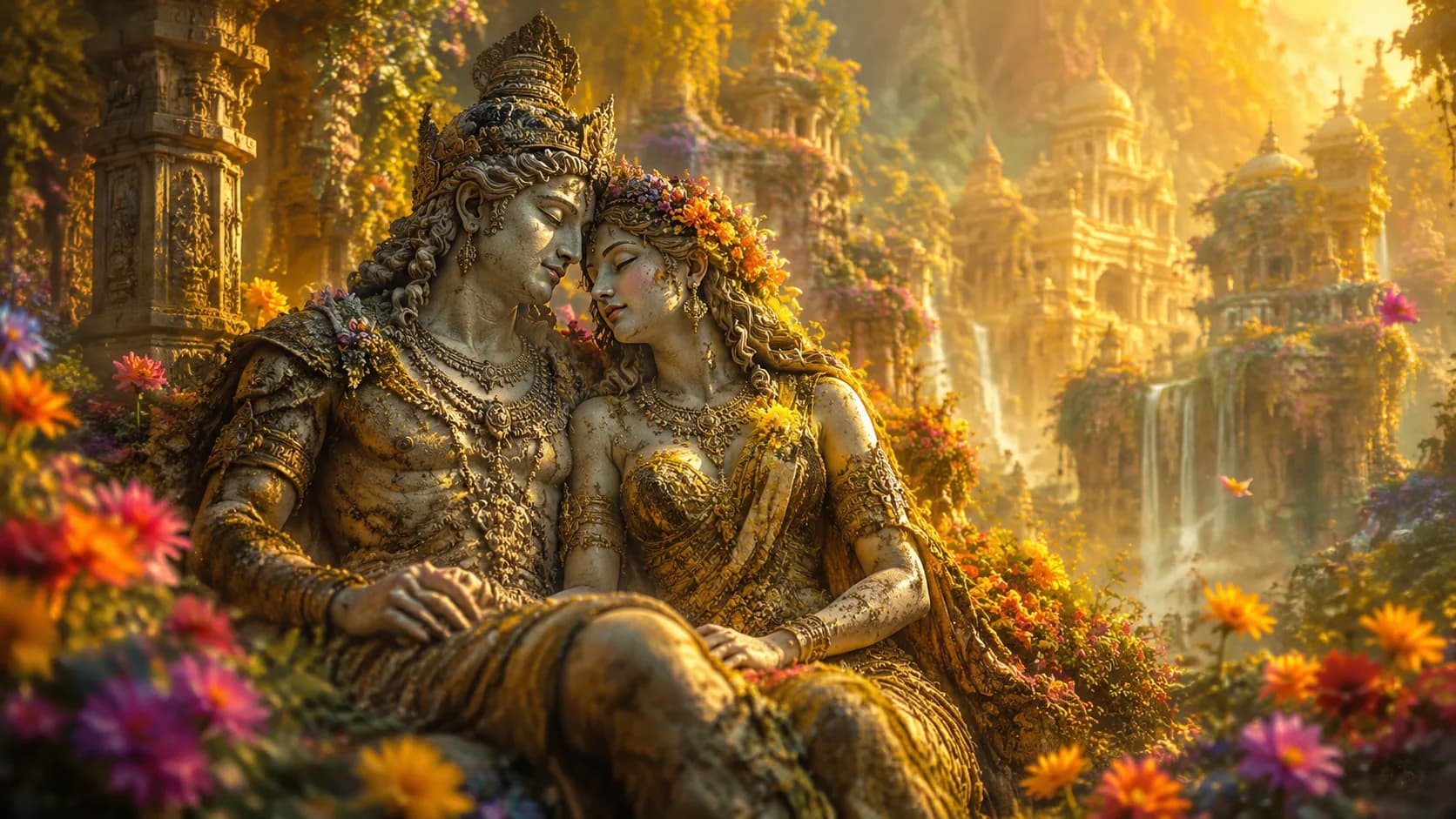
The love between Radha and Krishna is not merely the greatest love story in Hindu mythology it is one of the most philosophically profound explorations of love in any world tradition. Unlike Western mythological romances that typically focus on human emotions within mortal frameworks, the Radha Krishna narrative operates simultaneously on multiple levels of meaning: it is a story of personal devotion between two individuals, an allegory of the soul's longing for the divine, a model of bhakti (devotional love) as a spiritual practice, and a celebration of love as the fundamental creative energy of the universe.
Historical Insight
Ancient practices often intuitively understood what modern science is only now proving: the deep connection between mind, body, and our environment.
Krishna, the eighth avatar of Vishnu, spent his youth in the pastoral village of Vrindavan, where he enchanted the gopis (cowherd maidens) with his flute playing and playful nature. Among all the gopis, his connection with Radha was unique and supreme a love so complete that Hindu theology often presents them not as two separate beings but as two aspects of a single divine reality. The rasa lila (divine dance) in which Krishna danced with all the gopis while each felt she alone was his partner is one of the most beautiful images in world mythology a vision of love that is simultaneously exclusive and universal, personal and cosmic.
What makes the Radha Krishna love story exceptional is its integration of emotional and spiritual dimensions. The 12th century poet Jayadeva's Gita Govinda portrays their love with extraordinary sensual beauty while simultaneously treating it as a map of spiritual experience. Radha's longing for Krishna when he is absent, her joy when he returns, her jealousy and forgiveness all are understood as stages of the soul's relationship with the divine. This tradition influenced centuries of Indian poetry, music, painting, and dance, creating a cultural framework in which human love and divine love are not opposites but reflections of each other a perspective that offers profound insights for contemplative and meditative practice.
A philosopher walked into a wall. His students asked if it hurt. He replied, 'The wall is an illusion, but my headache is quite real.'
Cleopatra and Mark Antony: Love Across Empires
The love between Cleopatra VII of Egypt and Mark Antony of Rome is the ancient world's most politically consequential romance a connection between two of history's most powerful figures that reshaped the Mediterranean world and has fascinated storytellers from Plutarch to Shakespeare to Elizabeth Taylor. Cleopatra, the last active ruler of the Ptolemaic Kingdom of Egypt, was a brilliant linguist, skilled diplomat, and astute political strategist who recognized that alliances of the heart and alliances of state could serve the same purpose. Her earlier partnership with Julius Caesar had already demonstrated her remarkable ability to navigate the intersection of personal connection and political power.
Her relationship with Mark Antony, which began around 41 BCE, combined genuine personal devotion with shared political ambition. Ancient sources describe their partnership as characterized by extraordinary generosity, elaborate celebrations, and a mutual appreciation for each other's intelligence and charisma. Plutarch records that Cleopatra arrived to meet Antony at Tarsus aboard a golden barge with purple sails, silver oars, and attendants dressed as sea nymphs a spectacle so magnificent that it demonstrated her understanding that love and power both benefit from extraordinary presentation.
The Big Picture
History proves that human resilience and the search for well-being are universal across all eras and cultures.
The conclusion of their story following the outcome of the engagement at Actium in 30 BCE and their separate decisions to end their own lives rather than submit to Octavian has elevated their romance to mythological status. Unlike purely fictional love stories, the Cleopatra Antony narrative carries the weight of historical reality: these were real people whose love had real consequences for millions. Their story demonstrates that when love operates at the intersection of personal devotion and world historical forces, it achieves a scale that transcends ordinary romance and enters the realm of legend.
"Cleopatra reportedly spoke nine languages, governed one of the ancient world's wealthiest kingdoms, and charmed both Julius Caesar and Mark Antony two of the most powerful men in Roman history. Meanwhile, most people today struggle to maintain one relationship and manage a reasonable budget. The historical record suggests that Cleopatra would have been simultaneously the most impressive and the most intimidating person at any gathering in the ancient world, which is probably why her love stories became legendary: anyone who could impress Cleopatra was clearly doing something remarkable."
An Epicurean, a Stoic, and a Cynic walk into a garden. The bartender says, 'Is this some kind of philosophical joke?'
Pyramus and Thisbe: The Original Star-Crossed Lovers
Before Romeo met Juliet, before Tristan drank the potion, before Paris beheld Helen there were Pyramus and Thisbe, the Babylonian lovers whose story, preserved in Ovid's Metamorphoses (8 CE), became the direct template for the most famous romance in English literature. Pyramus and Thisbe were young neighbors in ancient Babylon who fell in love but were forbidden from meeting by their disapproving families. They communicated through a crack in the wall separating their houses whispering their devotion through a gap in stone, unable to touch but unwilling to be silent.
Did You Know?
The relentless drive to understand the world was seen not just as an academic pursuit, but as a spiritual and healing practice by the ancients.
This image lovers separated by a wall, communicating through the narrowest of openings is one of mythology's most enduring romantic symbols. It captures the universal experience of love constrained by external forces: the devotion that persists despite obstacles, finding any channel, however small, to express itself. When Pyramus and Thisbe arranged to meet secretly at a mulberry tree outside the city, a chain of misunderstandings led each to believe the other had perished. The resulting sequence Pyramus taking his own life in grief, Thisbe discovering him and choosing to follow established the "double misunderstanding" plot structure that Shakespeare would adapt fifteen centuries later for Romeo and Juliet.
Read more: Thor and the Thunder Gods of Norse Mythology
Ovid adds a beautiful natural detail: the mulberry tree, splashed with Pyramus's lifeblood, permanently changed the color of its berries from white to deep crimson an etiological myth explaining a natural phenomenon through a love story. This detail reveals something important about how mythology uses love: romantic devotion is presented not merely as a human experience but as a force capable of permanently altering the natural world. The lovers' connection was so powerful that it left a visible mark on creation itself, transforming white berries to red as a perpetual memorial to love's intensity. This story's influence on Shakespeare's greatest romance makes it one of the most consequential love stories ever told.
Why did the inventor of the wheel win an award? Because his idea really got things rolling.
Lancelot and Guinevere: Love and Loyalty in Arthurian Legend
The love between Sir Lancelot du Lac and Queen Guinevere is the emotional heart of the Arthurian legend a romance that simultaneously represents the highest expression of courtly love and the internal tension that ultimately challenges the fellowship of the Round Table. Lancelot, introduced to Arthurian romance by Chrétien de Troyes in the 12th century, was the greatest knight in the world: unmatched in courage, skill, and chivalric virtue. Yet his love for Guinevere, the wife of his king and closest friend Arthur, placed him in an impossible position where his deepest personal truth directly conflicted with his highest public duty.
What makes the Lancelot Guinevere story so narratively powerful is its refusal to offer simple moral judgments. Neither lover is presented as simply good or simply wrong. Their connection is genuine, deep, and portrayed with sympathetic understanding yet its consequences for Camelot are profound. The story explores a question that remains one of the most difficult in human experience: what happens when the love you feel most deeply is also the love that threatens the community you serve? This tension between personal devotion and communal responsibility gives the Arthurian romance its extraordinary depth and ensures its continued relevance in any era where people must navigate the intersection of private feelings and public obligations.
Visionaria Insight
By immersing ourselves in these historical soundscapes, we reconnect with a timeless human tradition of storytelling and mental restoration.
The resolution of the Lancelot Guinevere story in which their love becomes known, the Round Table fragments, and both lovers eventually withdraw into contemplative religious life offers not condemnation but a mature acknowledgment of love's complexity. Guinevere becomes a nun and Lancelot a hermit, each transforming their earthly devotion into spiritual practice. This resolution suggests that love, even love that creates challenging circumstances, ultimately leads toward growth and transformation rather than mere regret. It is mythology's most nuanced statement that love can be simultaneously the truest and the most complicated thing in a life and that both truths deserve acknowledgment.
Read more: What Are Interactive Audio Journeys? A Complete Guide
"Lancelot was the greatest knight in the world he could defeat any opponent, survive any quest, and complete any challenge. Except the challenge of simply not falling in love with his best friend's wife. This has made Lancelot the eternal proof that being excellent at everything else in life provides absolutely no protection against being completely helpless in matters of the heart. The Round Table had the most capable knights in literary history, and their civilization was ultimately undone not by a dragon or an enchantress, but by an emotion. Love: 1, Chivalry: 0."
Why did the Stoic cross the road? Because it was the rational thing to do, and he was indifferent to the traffic.
Izanagi and Izanami: Creation Through Love in Japanese Mythology
In Japanese mythology, the love story of Izanagi and Izanami is not merely a romance it is the origin story of Japan itself. According to the Kojiki (Record of Ancient Matters, 712 CE) and the Nihon Shoki (Chronicles of Japan, 720 CE), these two divine beings were tasked with creating the physical world. Standing on the Floating Bridge of Heaven, they stirred the primordial ocean with a jeweled spear, and the drops that fell from its tip formed the first island of Japan. Their marriage ceremony circling the Pillar of Heaven and speaking words of love to each other became the mythological template for Japanese wedding traditions that persist in modified forms to this day.
Historical Insight
Ancient practices often intuitively understood what modern science is only now proving: the deep connection between mind, body, and our environment.
Their love was generative in the most literal sense: through their union, Izanagi and Izanami created the Japanese islands, the mountains, the rivers, the wind, the trees, and the seasons. In the Izanagi Izanami narrative, love is not a private emotion but a cosmic creative force the energy through which the world comes into existence. This perspective, shared to varying degrees across many mythological traditions, suggests that the ancients understood something that modern physics would later confirm in its own language: that the fundamental forces that hold the universe together operate through attraction, connection, and the joining of complementary elements.
When Izanami passed while giving form to the fire deity Kagutsuchi, Izanagi like Orpheus before him in a different mythological tradition journeyed to Yomi, the land of the departed, to bring her back. Also like Orpheus, he was warned not to look, and also like Orpheus, he could not resist. What he saw Izanami transformed beyond recognition led to their permanent separation and the establishment of the boundary between the realms of the living and departed. This parallel with the Orpheus Eurydice narrative, developed independently across vastly different cultures, suggests that the love journey loss boundary pattern is a fundamental human narrative archetype not a cultural borrowing but a universal expression of how we understand love's encounter with life's ultimate limitations.
Why did the Stoic cross the road? Because it was the rational thing to do, and he was indifferent to the traffic.
Why Mythological Love Stories Still Resonate Today
The extraordinary durability of mythological love stories their ability to remain emotionally compelling across millennia of cultural change reveals something profound about both the stories themselves and the nature of love. Modern neuroscience has demonstrated that romantic love activates the brain's most ancient reward circuits the same neural pathways that evolved to ensure survival and social bonding. When we experience love, our brains release a cascade of dopamine, oxytocin, and serotonin that creates states of euphoria, attachment, and longing that are biochemically identical to those experienced by our ancestors thousands of years ago. The myths endure because the experience they describe endures.
Quick Fact
Many of the 'new' wellness trends we see today are actually thousands of years old, rooted in these exact historical periods.
Narrative psychology provides additional insight into why these stories maintain their power. Research by psychologists like Dan McAdams has shown that humans construct their sense of identity through stories we understand ourselves not through abstract self-analysis but through narratives that give shape and meaning to our experiences. Mythological love stories provide what psychologists call "narrative templates" pre-existing story structures that help us interpret and process our own romantic experiences. When someone says "I felt like Orpheus, turning back at the last moment," they're using mythology as a psychological tool for understanding their own emotional reality.
Perhaps most importantly, mythological love stories resonate because they honor the full complexity of love they don't reduce it to simplistic happy endings or dismiss it when circumstances become challenging. Orpheus's love is no less real for ending in loss. Tristan and Iseult's devotion is no less genuine for being complicated by duty. Radha and Krishna's love is no less beautiful for operating on cosmic scales. These stories tell us that love is simultaneously the most wonderful and the most challenging experience available to human beings and that acknowledging both truths, rather than pretending love is only one or the other, is the beginning of emotional wisdom. This balanced perspective makes them invaluable tools for modern mindfulness and emotional well-being practices.
"Modern dating involves algorithms, compatibility percentages, and carefully curated profile photos. Ancient mythological dating involved enchanted potions, divine interventions, journeys through the Underworld, and the occasional transformation into a constellation. On the one hand, modern dating is more efficient. On the other hand, no one has ever written a 3,000 year old epic poem about matching with someone on an app. The mythological lovers may have had more dramatic courtships, but they definitely made better stories out of them."
Why did the ancient physician prescribe a long walk? Because he was tired of listening to the patient complain in his office.
Experience Legendary Love Stories Through Visionaria
Everything this article has explored the underworld journey of Orpheus, the psychological trials of Psyche, the enchanted devotion of Tristan and Iseult, the divine romance of Radha and Krishna, the architectural love of Shah Jahan, the world changing passion of Paris and Helen, and the impossible devotion of Lancelot and Guinevere converges in Visionaria's immersive love story journeys. Each experience draws on the mythological traditions and emotional frameworks that have given these romances their extraordinary power across cultures and centuries, presented through spatial 3D audio that transforms listening into living.
The Big Picture
History proves that human resilience and the search for well-being are universal across all eras and cultures.
Feel the echoing stone of the Underworld passageway as Orpheus plays his lyre. Sense the warmth of ancient temple gardens where divine lovers met. Hear the whisper through the wall that carries Pyramus's words to Thisbe. With immersive journeys spanning legendary creatures, ancient symbols, ancient cities, and transformative romances, Visionaria continues the tradition that ancient storytellers began: using the power of narrative voice to transport listeners into the emotional heart of humanity's greatest love stories.
"For four thousand years, humanity has been telling love stories and for four thousand years, those stories have followed a remarkably consistent pattern: two people connect, obstacles emerge, extraordinary things happen, and the story becomes so good that people are still talking about it millennia later. The technology for experiencing these stories has evolved from campfires to manuscripts to theater to cinema to spatial 3D audio but the stories themselves haven't needed updating, because the fundamental experience of love hasn't changed since the Sumerians first wrote about Inanna and Dumuzi. Visionaria doesn't improve on these stories; it simply gives them the immersive treatment they've deserved all along."

The Mystery of Hidden Monk Temples Around the World
Discover the mystery of hidden monk temples around the world, from cave sanctuaries and cliff-side monasteries to forest temples and mountain-top retreats.
A time traveler went back to antiquity to teach them about 'holistic health.' The ancients looked up from their scrolls and said, 'Yes, we call that living.'
The Bottom Line
Mythology's greatest love stories from Orpheus and Eurydice's journey through the Underworld to Radha and Krishna's divine romance, from Tristan and Iseult's enchanted devotion to the face that launched a thousand ships represent humanity's deepest, most enduring exploration of love's transformative power. These narratives have survived for millennia not because they are merely entertaining, but because they address universal emotional experiences that remain as relevant today as when they were first told around ancient fires.
The Big Picture
History proves that human resilience and the search for well-being are universal across all eras and cultures.
For those seeking to experience the emotional power of these legendary romances firsthand, Visionaria offers immersive spatial 3D audio journeys that bring mythology's love stories to life. Continue exploring: discover The Phoenix and the Symbol of Eternal Rebirth, explore The Trojan War Stories That Shaped Greek Mythology, or learn about Romeo and Juliet: The Story That Defined Love.
Experience More with Visionaria
Download the app to explore guided historical and wellness journeys.
What's an ancient intellectual's favorite exercise? Jumping to conclusions.
This article is for educational and informational purposes only. Historical details are based on available research and may evolve as new evidence emerges.
Visionaria journeys are designed for relaxation, guided imagination, and personal enrichment. They are not a substitute for medical, mental health, legal, or professional advice.