The Search for the Fountain of Youth
✨ Fun fact: The quest for eternal youth is literally the oldest story ever written. The Epic of Gilgamesh, composed nearly 4,000 years ago in ancient Mesopotamia, centres on a king's search for the plant of immortality. Gilgamesh actually finds the plant at the bottom of the sea, only to have it taken by a serpent while he sleeps. The lesson is clear: the universe has been reminding humans about the importance of staying awake during important moments for approximately four millennia. What's truly remarkable is that every civilisation since has told essentially the same story, from Alexander the Great's legendary quest for the Water of Life to Ponce de León's expedition to Florida to modern Silicon Valley billionaires investing billions in longevity research. The details change, the technology improves, but the fundamental human desire remains identical: wouldn't it be wonderful if getting older were optional? It's the one quest where nobody has succeeded, everybody keeps trying, and the journey itself keeps producing extraordinary stories. Which, if you think about it, might be the real point.
- What Is the Fountain of Youth?
- Ancient Origins: The Waters of Immortality in Early Mythology
- Alexander the Great and the Water of Life
- Ponce de León and the New World Legend
- The Fountain of Youth in World Mythology
- Alchemy, Elixirs, and the Quest for Eternal Youth
- The Science Behind the Legend: Longevity Research Today
- The Fountain of Youth in Literature and Popular Culture
- The Psychology of Seeking Eternal Youth
- How Spatial Audio Recreates Legendary Quest Experiences
- Why the Fountain of Youth Still Captivates Us
- Experiencing the Quest Through Immersive Meditation
- The Bottom Line
- Frequently Asked Questions
Of all the quests that have driven human exploration, none has been pursued more persistently or across more cultures than the search for the Fountain of Youth. For at least four thousand years from the clay tablets of ancient Mesopotamia to the laboratories of 21st century biotechnology humans have sought a way to reverse the effects of ageing, restore the vitality of youth, and transcend what appears to be the one truly non-negotiable condition of existence. The legendary quests inspired by this desire have shaped the course of history, launched expeditions that discovered new continents, founded entire branches of science, and produced some of the most enduring stories in world mythology and literature.
The Fountain of Youth is a legendary spring, river, pool, or body of water believed to possess the miraculous power to restore youth and vitality to anyone who drinks from it or bathes in its waters. The concept encompasses the Epic of Gilgamesh's plant of immortality (the oldest known literary quest, c. 2100 BCE), Alexander the Great's legendary search for the Water of Life (the Al-Khidr tradition in Islamic and Christian mythology), Ponce de León's 16th century expedition to Florida (the most famous Western version of the legend), the Hindu Amrita (the nectar of immortality churned from the cosmic ocean), the Chinese Peaches of Immortality (guarded by the goddess Xi Wangmu), the Norse Iðunn's golden apples (which preserved the eternal youth of the gods), alchemical elixirs of life (sought across medieval Europe, the Islamic world, and China), and modern longevity science (from telomere research to senolytics to NAD+ therapy). Together, these traditions reveal that the Fountain of Youth is not merely a geographical legend but a universal human archetype representing the desire to preserve vitality, maintain wonder, and transcend the apparent limitations of time.
This article is your comprehensive guide to the search for the Fountain of Youth from the earliest mythological origins and Alexander the Great's legendary quest to Ponce de León's famous expedition, from the hidden realms where these waters were believed to flow to the psychology of why eternal youth fascinates us, and from mythological traditions across every culture to understanding how spatial 3D audio can transport you into legendary quest experiences with extraordinary immersive realism.
"The Fountain of Youth is perhaps the only quest in human history where the target audience is literally everyone. Other legendary quests have somewhat niche appeal not everyone wants the Holy Grail, not everyone needs a Golden Fleece, and the average person has very little use for a Ring of Power. But the Fountain of Youth? Every single human being who has ever noticed a new wrinkle, felt a knee creak on a staircase, or forgotten why they walked into a room has thought, even briefly: 'Yes, I would quite like some of that, please.' It's the one mythological concept that requires absolutely no cultural context to understand. You could explain the Fountain of Youth to someone from any era, any civilisation, any background, and they would immediately grasp the appeal. Which is precisely why the quest has been running for four thousand years and shows absolutely no sign of stopping."
Key Facts: The Fountain of Youth Across History
- ••Oldest Quest: The search for rejuvenating waters appears in the Epic of Gilgamesh (c. 2100 BCE), making it the oldest known quest narrative in recorded literature, predating Homer's Odyssey by over 1,300 years
- ••Universal Legend: The concept of life-restoring waters appears independently in Mesopotamian, Greek, Roman, Hindu, Chinese, Norse, Celtic, Islamic, Native American, Ethiopian, and Japanese mythology, one of the most universal themes in human storytelling
- ••Historical Expeditions: Ponce de León's 1513 expedition to Florida, often attributed to the Fountain of Youth search, actually led to the European discovery of the Florida peninsula, demonstrating how mythological quests have produced real geographical discoveries
- ••Alchemical Legacy: The search for the Elixir of Life occupied some of history's greatest minds, including Roger Bacon, Paracelsus, and Isaac Newton, and directly contributed to the development of modern chemistry and pharmacology
- ••Modern Continuation: The global anti-ageing industry is valued at over $60 billion annually, and longevity research (including telomere therapy, senolytics, NAD+ supplementation, and AI-driven drug discovery) represents the modern continuation of the ancient Fountain of Youth quest
- ••Immersive Potential: Quest narratives are among the most psychologically engaging structures for meditation, because the journey-toward-a-goal format naturally focuses attention, sustains motivation, and creates a sense of meaningful progression that enhances both relaxation and imaginative depth
Quick Answer
✨ Fun fact: The quest for eternal youth is literally the oldest story ever written. The Epic of Gilgamesh, composed nearly 4,000 years ago in ancient Mesopotamia, centres on a king's search for the plant of immortality. Gilgamesh actually finds the plant at the bottom of the sea, only to have it taken by a serpent while he sleeps. The lesson is clear: the universe has been reminding humans about the importance of staying awake during important moments for approximately four millennia. What's truly remarkable is that every civilisation since has told essentially the same story, from Alexander the Great's legendary quest for the Water of Life to Ponce de León's expedition to Florida to modern Silicon Valley billionaires investing billions in longevity research. The details change, the technology improves, but the fundamental human desire remains identical: wouldn't it be wonderful if getting older were optional? It's the one quest where nobody has succeeded, everybody keeps trying, and the journey itself keeps producing extraordinary stories. Which, if you think about it, might be the real point.
What Is the Fountain of Youth?
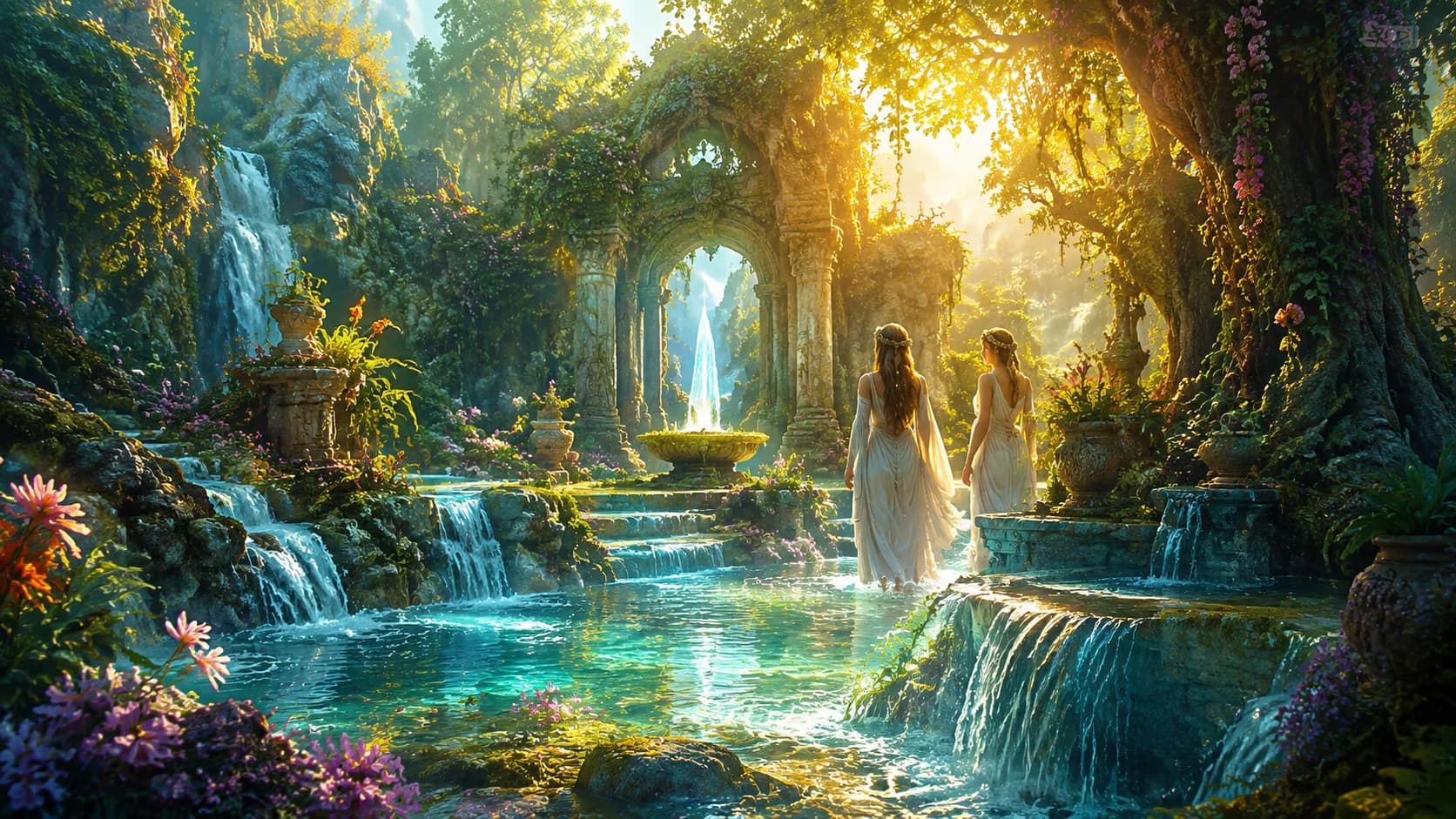
The Fountain of Youth, at its simplest, is the legend of a miraculous body of water that can reverse ageing and restore youth. But this simple description vastly understates the concept's depth, universality, and cultural significance. The Fountain of Youth is not one legend but a constellation of legends appearing independently across dozens of cultures spanning thousands of years that together form one of the most persistent and powerful mythological themes in human history. The waters of rejuvenation have been imagined as springs bubbling from sacred mountains, as rivers flowing through underground realms, as pools hidden in enchanted gardens, and as oceans churned by gods but the core promise remains constant: somewhere, there exists water that can undo the passage of time.
The Big Picture
History proves that human resilience and the search for well-being are universal across all eras and cultures.
What makes this legend so remarkable is not just its persistence but its extraordinary productive power. The search for rejuvenating waters has launched real expeditions that discovered new lands, inspired alchemical research that contributed to the birth of modern chemistry, motivated medical investigations that advanced our understanding of ageing, and generated an artistic and literary tradition that spans from the oldest known poem to the latest Hollywood blockbuster. Few legends can claim to have shaped human civilisation as broadly and as durably as the Fountain of Youth.
The legend also functions on multiple levels simultaneously. On the literal level, it is a geographical quest the search for a specific place where miraculous waters flow. On the metaphorical level, it represents the desire to preserve what is most vital and alive within us wonder, curiosity, openness, energy qualities we associate with youth regardless of chronological age. On the spiritual level, it symbolises the possibility of renewal and transformation the belief that it is possible to be reborn, to begin again, to shed the accumulated weight of experience and rediscover the freshness of encountering the world as though for the first time.
Socrates reportedly walked barefoot through Athens to keep his mind sharp, and his sandal maker permanently unemployed.
Ancient Origins: The Waters of Immortality in Early Mythology
The earliest known version of the Fountain of Youth legend appears in the Epic of Gilgamesh, composed in ancient Mesopotamia around 2100 BCE. After the passing of his beloved companion Enkidu, the great king Gilgamesh embarks on a quest to find Utnapishtim the one human who was granted eternal life by the gods hoping to learn the secret of immortality. Utnapishtim reveals that a plant grows at the bottom of the sea that can restore youth to anyone who consumes it. Gilgamesh dives to the ocean floor, retrieves the plant, and begins his journey home only to have the plant taken by a serpent while he rests beside a pool of cool water. The serpent sheds its skin and is renewed; Gilgamesh returns home empty-handed but wiser.
This ancient narrative establishes the pattern that would recur across every subsequent Fountain of Youth legend: the quest is undertaken, the prize is nearly grasped, and it ultimately eludes permanent possession. The Gilgamesh story also introduces the profound philosophical subtext that runs through all Fountain of Youth mythology the suggestion that the true value of the quest lies not in achieving immortality but in what the seeker learns along the way. Gilgamesh returns to Uruk not with eternal youth but with greater wisdom, deeper compassion, and a richer understanding of what makes a life meaningful qualities that arguably matter more than the number of years one spends acquiring them.
Visionaria Insight
By immersing ourselves in these historical soundscapes, we reconnect with a timeless human tradition of storytelling and mental restoration.
In ancient Greek mythology, the concept of rejuvenating waters appeared in multiple forms. The goddess Hebe (whose name literally means "youth") served as cupbearer to the Olympian gods, pouring the nectar that maintained their eternal vitality. The river Lethe in the underworld erased memories a form of renewal through forgetting. The mythical land of Hyperborea, located beyond the North Wind, was described as a paradise where inhabitants lived for a thousand years in perpetual youth, sustained by a climate of eternal spring and waters of extraordinary purity.
"The Epic of Gilgamesh established what might be called the 'Fountain of Youth Paradox' you can only find eternal youth by undertaking a quest so demanding that by the time you succeed, you've gained something more valuable than youth: wisdom. Gilgamesh literally had the rejuvenation plant in his hands and lost it to a snake, which is either a profound metaphor for the inevitability of nature's cycles or the earliest recorded instance of someone having a really, really bad day at a swimming pool. The snake, for its part, gained the ability to shed its skin and be renewed which means that the real winner of humanity's first quest narrative was a reptile. This sets a precedent that subsequent seekers have been trying to overturn for four thousand years with, it must be said, limited success."

Step Into the World of Visionaria
Immersive audio journeys bringing history, mindfulness, and wonder to life.
Why did the Stoic cross the road? Because it was the rational thing to do, and he was indifferent to the traffic.
Alexander the Great and the Water of Life
One of the most influential versions of the Fountain of Youth legend is the story of Alexander the Great's search for the Water of Life a narrative that appears not in ancient Greek sources but in the medieval Alexander Romance tradition and, most prominently, in Islamic and Judeo Christian folklore. In these traditions, Alexander (known as Iskandar or Dhul Qarnayn in Islamic literature) journeys to the "Land of Darkness" a region beyond the known world searching for a spring whose waters grant eternal life. He is accompanied by his cook, Andreas (or Al-Khidr in the Islamic version), who inadvertently discovers the spring when a dried fish he is preparing suddenly comes back to life upon contact with the water.
Did You Know?
The relentless drive to understand the world was seen not just as an academic pursuit, but as a spiritual and healing practice by the ancients.
The figure of Al-Khidr ("the Green One") in Islamic tradition became one of the most fascinating characters in all of Fountain of Youth mythology. Having drunk from the Water of Life, Al-Khidr was believed to have achieved immortality and in Sufi mysticism, he became a symbol of divine knowledge, spiritual guidance, and the eternal wisdom that transcends ordinary human understanding. He appears throughout Islamic literature as a mysterious guide who appears to travellers at crucial moments, offering wisdom that only someone who has transcended the limitations of mortal existence could possess. The Quran itself references his encounter with Moses (Surah 18:60-82), establishing him as one of the most significant figures in Islamic spirituality.
The Alexander Al-Khidr tradition profoundly influenced the European Grail quest tradition and established a pattern that echoes through all subsequent Fountain of Youth narratives: the greatest seeker in the world searches for immortality and fails, while a humble companion discovers it accidentally. This pattern suggests something deeply important about the nature of the quest that the waters of renewal cannot be seized through ambition and conquest but are discovered through presence, humility, and attention to the miraculous in the everyday. Alexander, who had achieved everything possible through will and strategy, could not achieve this final prize while a cook preparing a simple meal stumbled upon it without trying.
What's an ancient intellectual's favorite exercise? Jumping to conclusions.
Ponce de León and the New World Legend
Juan Ponce de León's 1513 expedition to Florida is the most famous Western Fountain of Youth story and one of the most instructive examples of how mythological quests become entangled with historical events. The popular version of the story is straightforward: Ponce de León, a Spanish explorer and the first governor of Puerto Rico, sailed to Florida specifically to find the Fountain of Youth, drawn by tales from the indigenous Taíno people of a rejuvenating spring on an island called Bimini. The reality, as with most legends that collide with history, is considerably more complex and arguably more interesting.
Historical records suggest that Ponce de León's primary motivations for the 1513 expedition were territorial expansion, resource acquisition, and political advancement rather than a magical fountain. The Fountain of Youth connection was largely popularised by later chroniclers, particularly Gonzalo Fernández de Oviedo in 1535, who attributed the quest to Ponce de León decades after the expedition possibly to ridicule the explorer or to provide a more romantic explanation for the voyage than mundane colonial ambition. The legend became firmly attached to Ponce de León's name through centuries of retelling, transforming a standard colonial expedition into one of history's most romantic quest narratives.
Visionaria Insight
By immersing ourselves in these historical soundscapes, we reconnect with a timeless human tradition of storytelling and mental restoration.
What is genuinely remarkable about the Ponce de León story, however, is that it demonstrates the extraordinary power of the Fountain of Youth legend to transform how we remember history. The historical Ponce de León was a competent but unremarkable colonial administrator. The legendary Ponce de León is one of the most recognisable figures in the Age of Exploration not because of what he actually did but because of what he was said to have been seeking. The Fountain of Youth legend literally rewrote his legacy, elevating him from a footnote to a protagonist. This is the power of the quest narrative: it doesn't matter whether the fountain was real; the search for it creates a story that resonates across centuries.
"There is a delicious irony in the Ponce de León story that deserves appreciation. A man sets sail in search of the Fountain of Youth a spring that will make him live forever and instead discovers Florida, a place that would eventually become the retirement capital of the United States and home to more people aged 65+ than almost anywhere else on Earth. Ponce de León was looking for a place where nobody grows old and instead found a place where a remarkable number of people go specifically to be old. If the universe has a sense of humour and the evidence increasingly suggests that it does this is surely one of its better efforts. It's as if someone searched the entire world for the finest restaurant and accidentally discovered the world's largest buffet. Not exactly what you were looking for, but you have to admit: the universe understood the assignment in its own way."
Why did the inventor of the wheel win an award? Because his idea really got things rolling.
The Fountain of Youth in World Mythology
The universality of the Fountain of Youth legend becomes truly apparent when you examine how the concept appears across cultures that had no contact with one another. In Hindu mythology, the Amrita (nectar of immortality) was produced during the Samudra Manthana the great churning of the cosmic ocean by gods and asuras together. This nectar was so precious that its distribution became the central conflict of the narrative, with Lord Vishnu assuming the form of Mohini (the enchantress) to ensure only the gods received the divine elixir. The story connects youth restoration not to a geographical location but to a cosmic process the idea that immortality emerges from the creative tension between opposing forces working together.
Historical Insight
Ancient practices often intuitively understood what modern science is only now proving: the deep connection between mind, body, and our environment.
In Chinese mythology, the Peaches of Immortality grown in the garden of Xi Wangmu (the Queen Mother of the West) served a similar function to rejuvenating waters. These sacred fruits ripened only once every three thousand years and were served at a grand banquet to which the gods were invited. The legendary Monkey King, Sun Wukong, famously consumed the peaches along with Laozi's pills of immortality and the Jade Emperor's celestial wine in one of literature's most spectacularly ambitious acts of self-preservation. Chinese alchemical traditions also pursued the elixir of life (the dān) for centuries, and this research while never producing immortality contributed significantly to the development of Chinese medicine, metallurgy, and early chemistry.
In Norse mythology, the goddess Iðunn kept the golden apples that preserved the eternal youth of the Aesir gods. When Iðunn was lured from Asgard by the trickery of Loki (acting under duress from the giant Þjazi), the gods began to age rapidly their hair silvering, their strength fading, their vigour diminishing. Only Iðunn's rescue and the restoration of her apples reversed the process. This myth is particularly significant because it frames eternal youth not as a permanent achievement but as a continuous practice a gift that must be regularly renewed, actively maintained, and carefully protected from those who would take it away. Among mythological traditions worldwide, the Norse Iðunn narrative offers perhaps the most psychologically realistic version of the Fountain of Youth concept.
Why did the Stoic cross the road? Because it was the rational thing to do, and he was indifferent to the traffic.
Alchemy, Elixirs, and the Quest for Eternal Youth
The alchemical quest for the Elixir of Life represents perhaps the most sustained and systematic attempt to make the Fountain of Youth legend a reality. For over two thousand years from the Hellenistic period through the medieval era and into the Renaissance alchemists across Europe, the Islamic world, and China devoted their lives to discovering a substance that could extend life indefinitely. This was not merely a mystical pursuit; it involved genuine experimental methodology, careful observation of chemical reactions, and the development of laboratory techniques that would eventually become the foundation of modern chemistry and pharmacology.
Roger Bacon (c. 1214-1292), the English Franciscan friar and proto scientist, believed that alchemical research could produce substances capable of extending the human lifespan significantly. Paracelsus (1493-1541), the Swiss physician alchemist, developed the concept of the alkahest (universal solvent) and conducted experiments with mineral-based medicines that, while not producing immortality, advanced pharmaceutical science considerably. Even Isaac Newton the father of classical physics spent decades studying alchemical texts and conducting experiments in his private laboratory, searching for the Philosopher's Stone, which was believed to produce both the transmutation of metals and the Elixir of Life.
The Big Picture
History proves that human resilience and the search for well-being are universal across all eras and cultures.
The alchemical Fountain of Youth quest produced an extraordinary legacy. While no alchemist ever discovered the Elixir of Life, their centuries of experimental work contributed to the development of distillation, metallurgy, pharmacology, the understanding of chemical elements, and the experimental method itself. The quest for eternal youth, pursued with passion and rigour across cultures and centuries, helped create the scientific infrastructure that would eventually make modern medicine possible. In this sense, the Fountain of Youth quest has actually extended human life not through a magical elixir but through the scientific knowledge generated by the search itself.
"The alchemists spent centuries searching for the Elixir of Life and, in the process, accidentally invented modern chemistry. This is rather like someone spending their entire career searching for a unicorn and inadvertently discovering the horse not exactly what they were looking for, but considerably more useful in the long run. Isaac Newton, arguably the greatest scientific mind in history, spent more time on alchemy than he did on physics or mathematics. He wrote over a million words on alchemical subjects more than he wrote on all his other work combined. When people say that the search for the Fountain of Youth has been 'unproductive,' it's worth pointing out that it helped give us the periodic table, pharmaceutical science, and the scientific method. Not bad for a quest that technically failed."
Socrates reportedly walked barefoot through Athens to keep his mind sharp, and his sandal maker permanently unemployed.
The Science Behind the Legend: Longevity Research Today
Modern longevity science represents the latest chapter in humanity's four thousand year quest for the Fountain of Youth except that today's seekers work in laboratories rather than explore uncharted territories, and their "rejuvenating waters" come in the form of telomere therapy, senolytic drugs, NAD+ supplementation, rapamycin analogues, and gene editing technologies. The science is real, the progress is significant, and the fundamental motivation is identical to that of Gilgamesh, Alexander, and Ponce de León: the desire to push back the boundaries of human ageing and extend the period of healthy, vital life.
Did You Know?
The relentless drive to understand the world was seen not just as an academic pursuit, but as a spiritual and healing practice by the ancients.
Telomere research pioneered by Elizabeth Blackburn, Carol Greider, and Jack Szostak (who shared the 2009 Nobel Prize for their work) revealed that the protective caps on the ends of chromosomes shorten with each cell division, and that this shortening is closely linked to the ageing process. The enzyme telomerase can rebuild these caps, potentially slowing or reversing aspects of cellular ageing. Senolytic drugs target and eliminate senescent (damaged, non dividing) cells that accumulate with age and drive inflammation and tissue decline. NAD+ supplementation addresses the decline of nicotinamide adenine dinucleotide, a molecule essential for cellular energy production that decreases significantly as we age.
What makes modern longevity science remarkable from a mythological perspective is how closely it mirrors the structure and psychology of the ancient Fountain of Youth quest. Today's researchers, like the seekers of old, are pursuing a prize that remains just beyond grasp each breakthrough suggesting that the solution is closer than ever, each discovery revealing new complexity that pushes the goal further into the future. The emotional arc is identical: hope, effort, tantalising proximity, and the humbling recognition that the mystery is deeper than anticipated. Whether this generation's "quest" will succeed where all previous ones have fallen short remains to be seen but what is certain is that the human imagination, once again, is driving scientific progress forward.
A Roman walks into a bar, holds up two fingers, and says, 'Five beers, please.'
The Fountain of Youth in Literature and Popular Culture
The Fountain of Youth has proven to be one of the most endlessly adaptable concepts in literature and popular culture. Nathaniel Hawthorne's short story "Dr. Heidegger's Experiment" (1837) explored the moral dimensions of the legend when four elderly guests are given water from the Fountain of Youth, they immediately revert to the foolish behaviours of their younger years, suggesting that restored youth without accumulated wisdom produces only repeated mistakes. Oscar Wilde's The Picture of Dorian Gray (1890) reimagined the concept as a Faustian bargain eternal youth preserved at the cost of one's moral and spiritual integrity.
In modern cinema, the Fountain of Youth has appeared in numerous forms: adventure films in which a sacred vessel grants eternal life to those who drink from it, pirate adventures that blend Ponce de León's historical expedition with invented rituals, and quieter stories about a family who drank from a rejuvenating spring and discovered that eternal life without the possibility of change creates a form of beautiful stasis rather than true vitality.
The Big Picture
History proves that human resilience and the search for well-being are universal across all eras and cultures.
Television, video games, and comic books have embraced the Fountain of Youth with equal enthusiasm. The legend appears in science-fiction and fairy-tale series, paranormal dramas, and dozens of other shows, and adventure video games have used Fountain of Youth quests as central narrative engines. What unites all these interpretations is a consistent thematic concern: the cost of eternal youth. Almost every modern retelling suggests that achieving immortality comes with a price isolation, moral compromise, the loss of what makes life meaningful. The deeper literary tradition consistently frames the Fountain of Youth not as a straightforward prize but as a philosophical question: would you really want it, and at what cost?
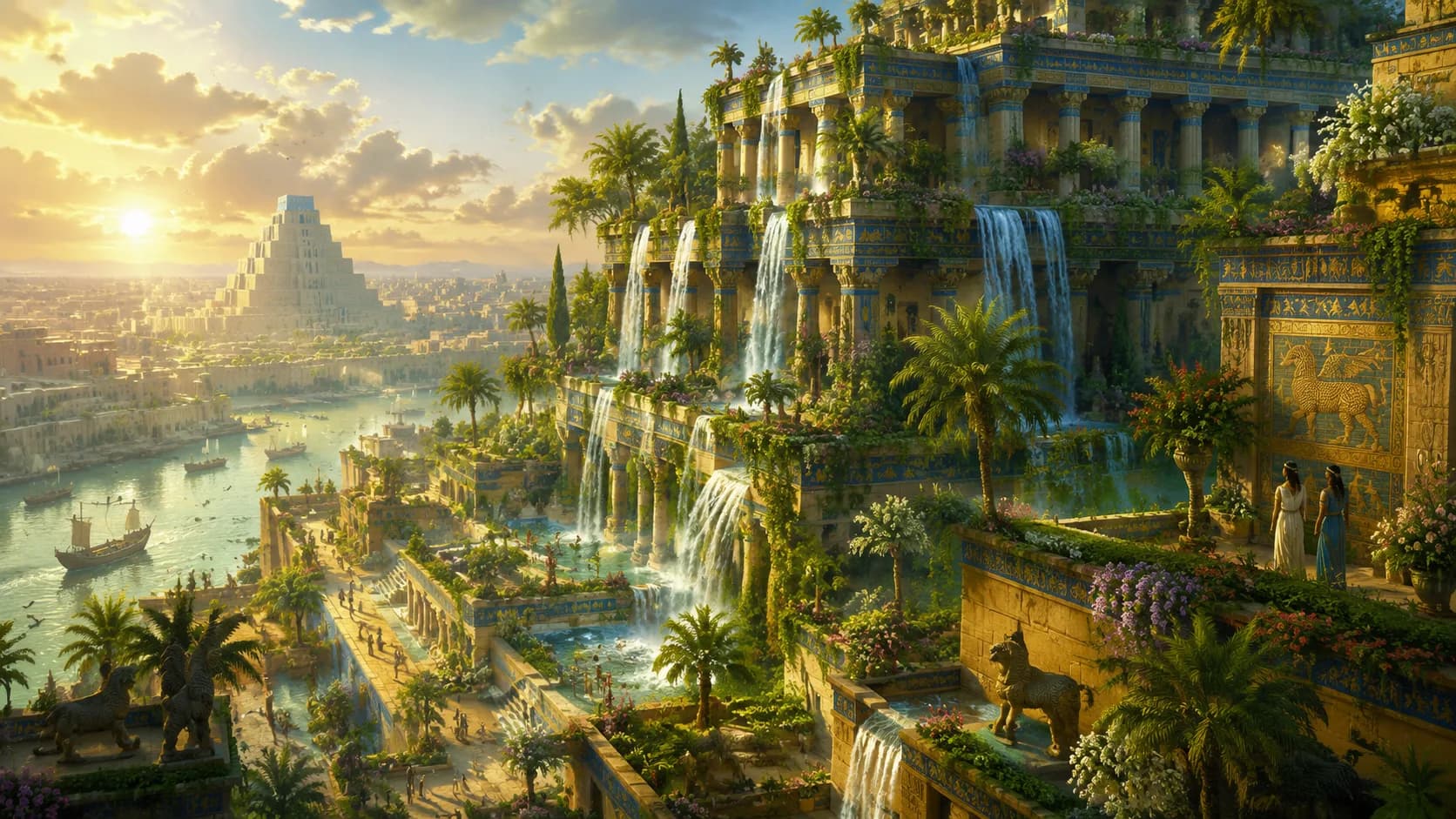
Read more: The Story Behind the Hanging Gardens of Babylon: Complete Guide to the Ancient Wonder
"The Fountain of Youth has appeared in so many films, novels, television shows, and video games that it has essentially become the 'Swiss Army knife' of plot devices versatile, reliable, and applicable to almost any narrative situation. Need to explain why a character looks young despite being 500 years old? Fountain of Youth. Need a reason for heroes to go on a quest? Fountain of Youth. Need to create a moral dilemma about the nature of existence? Fountain of Youth. The concept is so flexible that it has been successfully deployed in romance, comedy, horror, science fiction, fantasy, historical drama and even comedy sketches. I suspect that if you left a room full of screenwriters alone for long enough, eventually someone would pitch 'The Fountain of Youth... IN SPACE,' and honestly, I would watch that."
What's an ancient intellectual's favorite exercise? Jumping to conclusions.
The Psychology of Seeking Eternal Youth
The universal appeal of the Fountain of Youth legend reveals something profound about human psychology and the structure of human desire. From an evolutionary perspective, the quest makes perfect sense: organisms that are driven to maintain health, vitality, and reproductive capacity have a survival advantage. The Fountain of Youth legend is essentially the mythological expression of an evolutionary imperative the deep biological drive to preserve the conditions of optimal functioning for as long as possible.
Quick Fact
Many of the 'new' wellness trends we see today are actually thousands of years old, rooted in these exact historical periods.
From a psychological perspective, the Fountain of Youth quest connects to what psychologist Erik Erikson called the crisis of "generativity versus stagnation" the midlife struggle between continued growth and the fear of decline. Carl Jung saw the quest for eternal youth as a manifestation of the puer aeternus archetype the "eternal child" within the psyche that resists the passage into maturity. When the puer archetype is in balance, it preserves wonder, spontaneity, and creative openness; when it is unbalanced, it becomes a refusal to accept the natural rhythms of growth, change, and renewal. The psychological wisdom embedded in Fountain of Youth legends consistently suggests that the goal is not to eliminate ageing but to preserve what is most alive within us regardless of age.
Read more: The Psychology of Experiencing Stories in Meditation
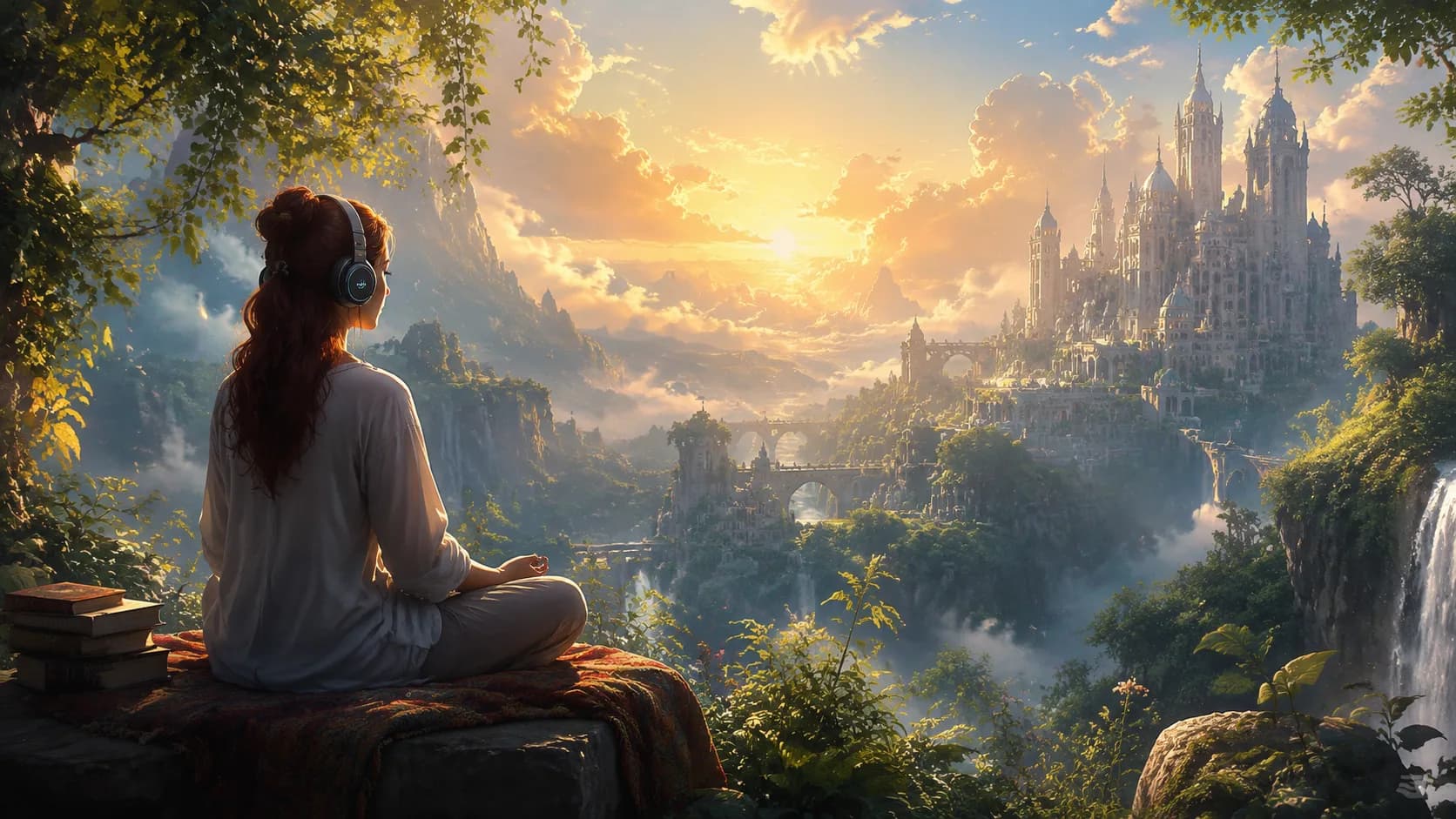
Modern positive psychology research has identified qualities associated with what might be called "psychological youthfulness" curiosity, openness to experience, capacity for wonder, playfulness, and willingness to learn and found that these qualities are not age-dependent. People who maintain these qualities throughout life report higher levels of wellbeing, stronger relationships, and greater life satisfaction regardless of chronological age. In this sense, the "Fountain of Youth" may not be a literal spring but a set of psychological practices and attitudes that preserve the qualities we most associate with youth. The ancient legends, viewed through this lens, are not just magical thinking they are poetic descriptions of a genuinely achievable goal.
A Roman walks into a bar, holds up two fingers, and says, 'Five beers, please.'
How Spatial Audio Recreates Legendary Quest Experiences
Quest narratives the journey toward a specific, meaningful goal are among the most psychologically engaging structures for immersive meditation. The brain responds to quest narratives with heightened attention, sustained motivation, and a sense of purposeful progression that transforms passive relaxation into active, imaginative engagement. Spatial 3D audio amplifies this engagement by creating a genuine sense of physical presence within the quest environment you don't just hear about the journey; you experience being on the journey, surrounded by the sounds of the landscape, the whisper of ancient forests, the rush of hidden rivers, and the tantalising sound of waters that might just might be the legendary spring you've been seeking.
Visionaria Insight
By immersing ourselves in these historical soundscapes, we reconnect with a timeless human tradition of storytelling and mental restoration.
When Visionaria's spatial audio journeys recreate quest experiences, they position hundreds of individual sound elements in three-dimensional space: footsteps on ancient paths beneath your feet, birdsong from the canopy above, wind moving through the trees from left to right, water flowing from a specific direction ahead. Your brain processes these directional cues through the same spatial awareness systems it uses in real environments, automatically constructing a three-dimensional mental model of the quest landscape. The result is an experience that feels not like listening to a story but like genuinely being inside one walking through mythological landscapes with the same sense of presence and discovery that the original seekers must have felt.
For Fountain of Youth quest meditation specifically, the acoustic design centres on water the element at the heart of the legend. The sound of water is one of the most psychologically calming and imaginatively evocative sounds in the human auditory experience. Spatial audio can position different water sounds in different locations a stream flowing to your left, rainfall overhead, a distant waterfall ahead creating a landscape built around the element that the quest is seeking. As you progress through the meditation, the water sounds change: from ordinary to extraordinary, from familiar to otherworldly, until the "fountain" itself is heard a sound so crystalline, resonant, and unlike ordinary water that your imagination recognises it immediately as something miraculous. This is the power of cinematic meditation using sound design to create genuine moments of wonder within the meditative experience.
"Designing spatial audio for a Fountain of Youth meditation journey presents a unique creative challenge: how do you make water sound 'magical'? Ordinary water is already one of the most pleasant sounds on Earth streams, waterfalls, rain, ocean waves so to create a fountain that sounds genuinely miraculous, you have to go beyond ordinary. The answer, it turns out, involves layering: crystalline frequencies that shimmer at the edge of hearing, harmonic overtones that no natural water source produces, a resonance that suggests depth beyond physical possibility, and a clarity so extraordinary that the brain registers it as fundamentally different from any water it has encountered before. When it works when a listener puts on headphones and the 'fountain' appears in the soundscape the reaction is always the same: a slight intake of breath, a widening of attention, and a thought that feels very much like: 'Oh. There it is.' Four thousand years of human longing, captured in a sound."
Why did the inventor of the wheel win an award? Because his idea really got things rolling.
Why the Fountain of Youth Still Captivates Us
The Fountain of Youth remains compelling after four thousand years because it addresses not just a physical desire but a philosophical one. The legend is not simply about looking young or living longer it is about the possibility that the most vital, alive, wonder filled version of ourselves is not permanently lost to time but potentially recoverable. This is an extraordinarily hopeful idea, and hope is the most durable fuel for human imagination. As long as humans experience the contrast between how alive they felt at their most vital and how different they feel as time passes, the Fountain of Youth will remain relevant.
Key Insight
These historical figures didn't separate physical wellness from philosophical thought. To them, it was all one continuous practice of living well.
The legend also captivates because it embodies the perfect quest structure. The goal is clear and universally desirable. The journey is arduous but meaningful. The destination is always tantalisingly close but never quite reached. And the search itself transforms the seeker Gilgamesh gains wisdom, Alexander's companion gains immortality through humility, Ponce de León discovers a new world, and alchemists create modern chemistry. The Fountain of Youth quest consistently demonstrates that the most valuable thing about a quest is not achieving the goal but becoming the person the quest requires you to become. This insight that the journey matters more than the destination is the legend's deepest and most enduring teaching.
For meditation practice, the Fountain of Youth archetype offers a particularly powerful framework. The imaginative quest for rejuvenating waters naturally creates a state of hopeful anticipation, focused attention, and openness to wonder precisely the psychological conditions that produce the deepest and most restorative meditation experiences. When you imaginatively embark on a quest for the Fountain of Youth, you are not just engaging with a pleasant fantasy you are activating the same psychological systems that have driven human exploration and creativity for millennia, channelling four thousand years of accumulated longing and hope into a deeply personal inner experience.
A Roman walks into a bar, holds up two fingers, and says, 'Five beers, please.'
Experiencing the Quest Through Immersive Meditation
Immersive meditation transforms the Fountain of Youth from an intellectual concept into a lived experience one you can feel, hear, and inhabit with the same presence and engagement that the greatest seekers brought to their quests. Unlike reading about the legend or watching it depicted on screen, spatial audio meditation places you inside the quest itself walking through ancient forests, crossing misty mountain passes, descending into hidden underground chambers, and ultimately encountering the legendary waters with a sense of genuine discovery and wonder.
Visionaria's quest meditation journeys use spatial 3D audio to create these experiences with extraordinary environmental fidelity the crack of twigs beneath your steps, the call of exotic birds in distant canopy, the change in air temperature as you enter a cave, and the growing sound of water drawing you forward toward the source. Each journey is designed as a complete narrative arc: departure from the familiar, passage through challenges and wonders, arrival at the sacred place, and return transformed. This structure mirrors not only the Fountain of Youth legends but the fundamental pattern of all meaningful human experience the hero's journey that Joseph Campbell identified as the universal story underlying all mythology.
Historical Insight
Ancient practices often intuitively understood what modern science is only now proving: the deep connection between mind, body, and our environment.
For those new to quest meditation, the Fountain of Youth is an ideal entry point because the goal is universally understood, the imagery is naturally beautiful, and the emotional resonance is immediate. You don't need to know the scholarly details of the Gilgamesh epic or the historical context of Ponce de León's expedition to feel the pull of the quest you simply need to close your eyes, put on headphones, and follow the sound of water into a landscape where something miraculous is possible. The experience typically produces a distinctive quality of attention alert, curious, hopeful, and deeply present that many meditators find uniquely refreshing and restorative. Which, when you think about it, means the Fountain of Youth meditation achieves something rather remarkable: it makes you feel renewed, refreshed, and more alive. The fountain, in a sense, works not through magic but through the extraordinary power of immersive imagination.
"Here is the final and perhaps most satisfying joke about the Fountain of Youth: the legend says that drinking from its waters will make you feel young, vital, energised, and filled with wonder. Meditation, particularly immersive quest meditation with spatial 3D audio, can help many people feel calmer, more present, and more engaged with life. In other words, meditation actually does what the Fountain of Youth was supposed to do. The ancient seekers travelled to the ends of the Earth looking for rejuvenating waters. Modern science suggests that the most reliable path to feeling renewed, refreshed, and more alive involves closing your eyes, putting on a good pair of headphones, and going on an imaginative journey. The Fountain of Youth existed all along it just turned out to be located not at the bottom of the ocean or in a hidden spring in Florida, but approximately six inches behind your forehead. Which, frankly, is a much more convenient location."
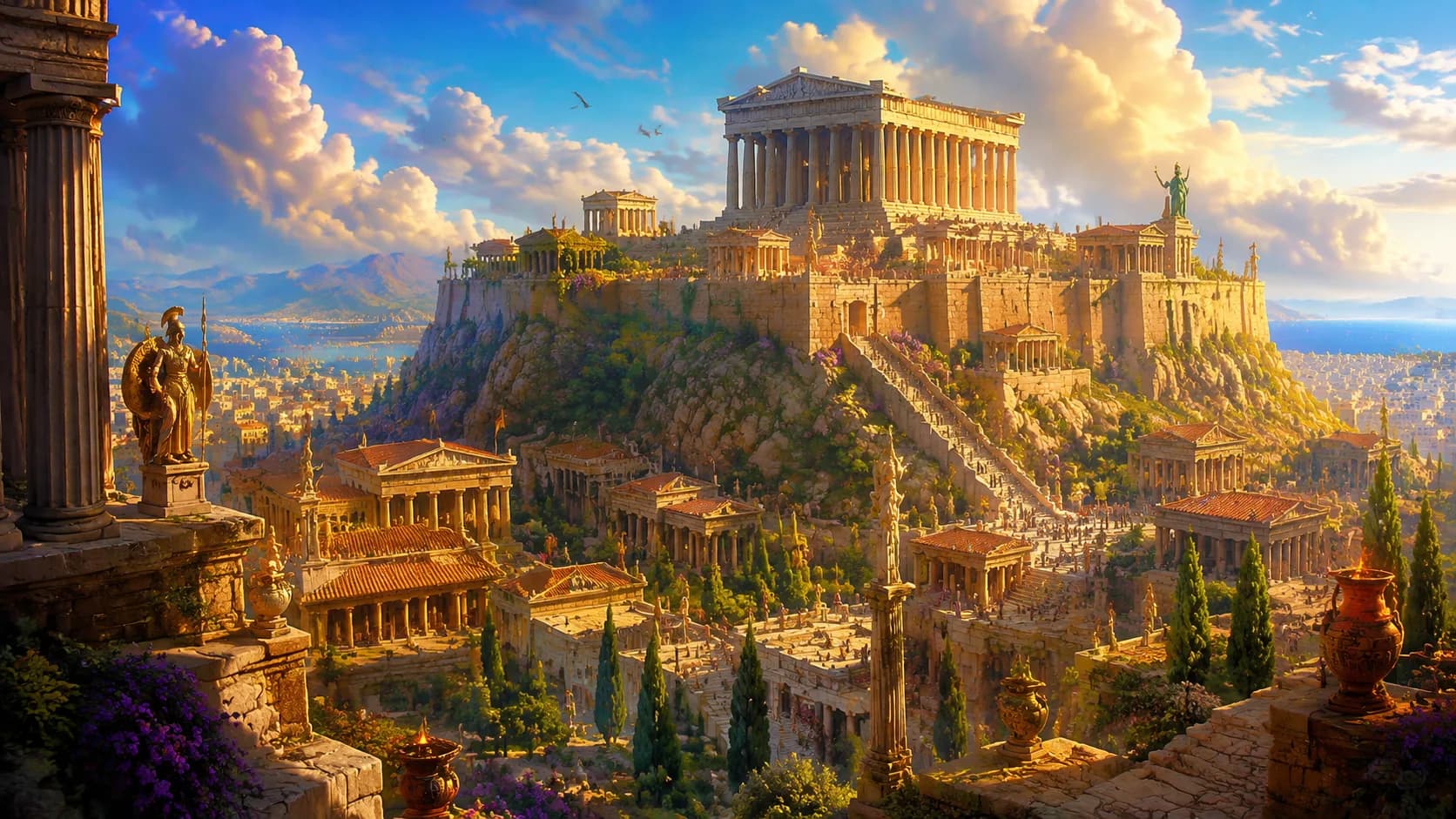
The Architecture of the Acropolis Explained
Discover the architecture of the Acropolis explained, from the Parthenon and Propylaea to the Erechtheion, Caryatid Porch, Temple of Athena Nike, Doric and Ionic columns, optical refinements, sacred geometry, ancient c...
Why did the inventor of the wheel win an award? Because his idea really got things rolling.
The Bottom Line
The Fountain of Youth is one of humanity's oldest, most universal, and most enduring legends a quest that has driven exploration, inspired science, and produced extraordinary art for over four thousand years. From Gilgamesh's plant of immortality to Alexander's Water of Life, from Ponce de León's Florida expedition to modern telomere research, the search for eternal youth has consistently transformed the seekers more profoundly than any fountain ever could. The legend endures because it addresses something fundamental in human nature: the desire to preserve vitality, wonder, and the full richness of being alive.
Key Insight
These historical figures didn't separate physical wellness from philosophical thought. To them, it was all one continuous practice of living well.
For those ready to experience legendary quests through immersive meditation, Visionaria offers spatial 3D audio journeys through mythological realms, ancient civilisations, and enchanted worlds free to download on iOS and Android. Continue exploring: discover Underground Worlds and the Center of the Earth, explore The Quest for the Holy Grail Explained, or learn about The Phoenix and the Symbol of Eternal Rebirth.
Experience More with Visionaria
Download the app to explore guided historical and wellness journeys.
A time traveler went back to antiquity to teach them about 'holistic health.' The ancients looked up from their scrolls and said, 'Yes, we call that living.'
This article is for educational and informational purposes only. Historical details are based on available research and may evolve as new evidence emerges.
Visionaria journeys are designed for relaxation, guided imagination, and personal enrichment. They are not a substitute for medical, mental health, legal, or professional advice.