The Mystery of Hidden Monk Temples Around the World
🏔️ Fun fact: The Tiger's Nest Monastery in Bhutan clings to a cliff face 3,120 meters above sea level, and according to legend, Guru Rinpoche flew there on the back of a tigress in the 8th century. Modern visitors must hike for four to five hours to reach it. So your options for getting to one of the world's most sacred hidden temples are: (a) ride a flying tiger, or (b) bring very comfortable shoes. The monks chose option (a). The rest of us are stuck with (b).

In the most remote and inaccessible corners of the world carved into cliff faces, concealed within mountain caves, perched on volcanic pinnacles, hidden beneath forest canopies, and isolated on storm swept islands stand some of humanity's most extraordinary sacred structures. These are the hidden monk temples: sanctuaries deliberately placed beyond the reach of ordinary life, where monastic communities devoted themselves to prayer, meditation, and the preservation of sacred knowledge. From the mist shrouded peaks of the Himalayas to the cave networks of central China, from the sea battered rocks of the North Atlantic to the emerald jungles of Southeast Asia, these temples represent a universal human instinct: the drive to create spaces where the boundary between the material and the spiritual grows thin enough to cross.
The mystery of hidden monk temples around the world encompasses the remarkable diversity of monastic architecture built in concealed or remote locations across multiple religious traditions including Buddhist cave temples, Christian cliff monasteries, Hindu mountain sanctuaries, and forest meditation retreats. What unites these vastly different structures across continents and centuries is their shared purpose: creating environments where isolation, natural beauty, and architectural intention combine to transform consciousness. Modern research on environmental psychology and immersive experience is revealing that these ancient builders understood something profound about how physical space shapes mental states a principle that immersive spatial 3D audio now employs to transport listeners into the heart of these sanctuaries, experiencing the chanting, the stillness, and the acoustic architecture that monks designed to facilitate awakening.
This article takes you on an extraordinary journey through the world's most remarkable hidden monk temples exploring why monks chose such challenging locations, what daily life looked like within these remote communities, how their meditation practices shaped modern mindfulness, and how modern archaeology continues to reveal temples that were lost for centuries. Whether you are drawn to ancient sacred sites, legendary journeys, or the intersection of history and personal transformation, these hidden sanctuaries will change how you understand the relationship between place, practice, and inner growth.
"Monks across every tradition independently arrived at the same real estate strategy: the harder a place is to reach, the more sacred it becomes. This is either a profound spiritual insight or the world's most extreme response to wanting peace and quiet. Having experienced a modern open plan office, the monks may have been onto something. Building a monastery on a cliff suddenly seems perfectly reasonable."
Key Facts About Hidden Monk Temples
- ••Global Phenomenon: Hidden monk temples exist on every inhabited continent, spanning Buddhist, Christian, Hindu, Jain, and Taoist traditions—demonstrating a universal human impulse toward sacred seclusion that transcends any single religion or culture
- ••Extreme Locations: These temples occupy some of the most challenging environments on Earth—from the Mogao Caves (carved into desert cliffs in China's Gobi region) to Skellig Michael (a rocky island 12 km off the Irish coast) to Meteora (perched atop 400-meter sandstone pillars in Greece)
- ••Centuries of Continuous Use: Many hidden temples have been in continuous religious use for over 1,500 years, with some sites like the Ajanta Caves dating back to the 2nd century BCE—making them among the longest-functioning religious institutions in human history
- ••Knowledge Preservation: Hidden temples served as repositories of sacred texts, artistic traditions, and philosophical knowledge during periods of upheaval—the Mogao Caves alone preserved over 50,000 manuscripts and paintings that revolutionized our understanding of medieval Asian civilization
- ••Meditation Origins: Many fundamental meditation techniques practiced worldwide today—including vipassana, zazen, lectio divina, and mantra meditation—were developed and refined in hidden monastic communities before spreading to mainstream culture
- ••Acoustic Design: Research reveals that monks deliberately shaped cave and temple acoustics to enhance chanting and meditation—creating natural reverberations that modern spatial audio technology recreates for immersive listening experiences
Quick Answer
🏔️ Fun fact: The Tiger's Nest Monastery in Bhutan clings to a cliff face 3,120 meters above sea level, and according to legend, Guru Rinpoche flew there on the back of a tigress in the 8th century. Modern visitors must hike for four to five hours to reach it. So your options for getting to one of the world's most sacred hidden temples are: (a) ride a flying tiger, or (b) bring very comfortable shoes. The monks chose option (a). The rest of us are stuck with (b).
The Cave Temples of Asia: Underground Sanctuaries of Devotion
Among the most extraordinary hidden monk temples are the cave sanctuaries carved into cliff faces and mountainsides across Asia some of the most labor intensive and artistically magnificent religious structures ever created. The Mogao Caves near Dunhuang, China, represent perhaps the supreme achievement of cave temple architecture: 492 grottoes carved into a cliff stretching nearly two kilometers, decorated with over 45,000 square meters of murals and containing more than 2,000 painted sculptures. Work on the Mogao complex began in 366 CE and continued for over a thousand years, with successive generations of monks adding new caves, paintings, and sculptures in an ever expanding monument to devotion.
The Ajanta Caves in Maharashtra, India, offer an equally breathtaking example of hidden Buddhist temple architecture. Carved into a horseshoe shaped cliff overlooking a gorge in the Western Ghats, these 30 rock cut caves include both viharas (monasteries where monks lived and meditated) and chaitya grihas (prayer halls with exquisitely carved pillars and domed ceilings). Dating from the 2nd century BCE to approximately 480 CE, the Ajanta Caves were abandoned and gradually reclaimed by jungle until a British officer stumbled upon them during a tiger hunt in 1819 a rediscovery that revealed some of the finest examples of ancient Indian painting and sculpture preserved anywhere in the world, and demonstrated how effectively hidden locations could protect sacred art across millennia.
Visionaria Insight
By immersing ourselves in these historical soundscapes, we reconnect with a timeless human tradition of storytelling and mental restoration.
What makes cave temples particularly fascinating from a psychological perspective is their unique sensory environment. Inside a cave temple, the outside world effectively ceases to exist natural light fades to darkness, external sounds are replaced by the cave's own acoustic signature, temperature stabilizes, and the air takes on the mineral scent of stone and earth. Monks understood intuitively what modern sensory deprivation research confirms: reducing external stimulation allows the mind to enter deeper states of focused awareness. The cave's natural acoustics also amplified and transformed the sound of chanting, creating reverberations that seemed to emanate from the rock itself an effect that spatial 3D audio technology can now recreate with remarkable fidelity, allowing listeners to experience the cave temple's unique sonic environment.
"The monks who carved the Mogao Caves spent over a thousand years creating 492 grottoes decorated with 45,000 square meters of paintings. That's roughly equivalent to painting nine football fields' worth of murals by candlelight, on a cliff face, in the middle of a desert. And you thought redecorating your living room was ambitious. These monks would have had strong opinions about your choice of accent wall."

Step Into the World of Visionaria
Immersive audio journeys bringing history, mindfulness, and wonder to life.
A Roman walks into a bar, holds up two fingers, and says, 'Five beers, please.'
Cliff-Side Monasteries: Between Earth and Sky
If cave temples represent the impulse to go inward, cliff side monasteries embody the desire to reach upward to position oneself as close to the heavens as architecture and engineering allow. The Hanging Monastery (Xuankong Si) in China's Shanxi Province is perhaps the most dramatic example: a complex of 40 halls and pavilions suspended on the sheer face of a cliff at Heng Mountain, supported by slender wooden beams inserted into holes carved into the rock face. Built over 1,500 years ago, the monastery appears to defy gravity and its engineering remains a source of wonder for modern architects who study how its builders distributed weight across a seemingly impossible vertical surface.
Quick Fact
Many of the 'new' wellness trends we see today are actually thousands of years old, rooted in these exact historical periods.
In Greece, the Meteora monasteries take cliff side construction to equally extraordinary heights. Built atop massive natural sandstone pillars that rise up to 400 meters above the Thessalian plain, these monasteries were deliberately made almost impossible to access for centuries, the only way to reach them was by being hauled up in a net suspended from a rope and windlass. According to monastic tradition, when visitors asked how often the ropes were replaced, the answer was: "When the Lord lets them break." The extreme inaccessibility was the point it created a physical separation from the world below that mirrored the spiritual separation monks sought in their contemplative practice, embodying the same principle of sacred isolation that characterized ancient Greek sacred sites like Delphi.
Bhutan's Tiger's Nest Monastery (Paro Taktsang) may be the most visually stunning cliff monastery on Earth. Clinging to a sheer cliff face 900 meters above the Paro Valley floor, the white and gold temple complex appears to grow directly from the rock as if the mountain itself had decided to create a place of worship. The monastery's founding legend says that Guru Rinpoche (Padmasambhava), the saint who brought Buddhism to Bhutan, flew to the cliff on the back of a tigress and meditated in a cave there for three years, three months, three weeks, three days, and three hours. The subsequent monastery was built around that cave, transforming a place of individual spiritual achievement into an enduring community of practice that continues to draw seekers on profound journeys today.
Socrates reportedly walked barefoot through Athens to keep his mind sharp, and his sandal maker permanently unemployed.
Island Temples: Sacred Retreats Surrounded by Water
Water has served as the ultimate natural boundary between the sacred and the secular, and island monk temples exploit this boundary to its fullest extent. Skellig Michael a jagged, pyramid shaped rock rising from the Atlantic Ocean 12 kilometers off the southwest coast of Ireland is home to one of the most remarkable monastic settlements ever created. Between the 6th and 8th centuries, a small community of Christian monks built beehive shaped stone huts (clochans), oratories, and terraced gardens on a series of narrow ledges carved into the island's steep slopes. They lived here year round, enduring ferocious Atlantic storms, surviving on fish, seabird eggs, and whatever they could grow in their tiny garden plots all in pursuit of what the Celtic monastic tradition called "white martyrdom": the voluntary exile from everything familiar as an offering to God.
In Southeast Asia, island temples took dramatically different but equally evocative forms. The temple complexes of Bali, including the sea temple of Tanah Lot perched on a rocky offshore islet, represent the Hindu Buddhist tradition of placing temples at the boundary between land and ocean the meeting point of the earthly and the infinite. Japan's Itsukushima Shrine on Miyajima Island, with its famous "floating" torii gate standing in the tidal waters, embodies the Shinto understanding that certain natural locations are inherently sacred that the island itself is a temple, and the human built structures simply mark and honor what was already divine. These island sanctuaries created a sense of crossing over that began with the physical journey across water and deepened as the visitor entered the temple's sacred precincts.
Visionaria Insight
By immersing ourselves in these historical soundscapes, we reconnect with a timeless human tradition of storytelling and mental restoration.
The monastic republic of Mount Athos in Greece represents perhaps the most extreme and enduring expression of island like monastic seclusion. Although technically a peninsula rather than an island, Mount Athos has functioned as an isolated monastic community for over a thousand years, home to twenty active monasteries that preserve unbroken traditions of Orthodox Christian prayer and contemplation. Access remains strictly controlled women are entirely prohibited, and male visitors require special permits. The result is a place where ancient contemplative practices continue in an environment almost unchanged from medieval times, offering a living window into how hidden monk communities functioned at their most vibrant.
Read more: How to Practice Story Meditation at Home

"The monks of Skellig Michael voluntarily moved to a pyramid shaped rock in the North Atlantic where the nearest neighbors were puffins, the commute involved climbing 618 stone steps, and the weather was described as 'character building' on the best days. Modern remote workers who complain about their home office Wi Fi might want to recalibrate their expectations. The monks didn't even have Wi Fi. They had seagulls, rain, and enlightenment. Priorities."
An Epicurean, a Stoic, and a Cynic walk into a garden. The bartender says, 'Is this some kind of philosophical joke?'
Forest Monasteries: Where Nature Becomes the Temple
Not all hidden monk temples are carved from rock or perched on cliffs some are woven into the living fabric of the forest itself. The Thai Forest Tradition (Kammatthana), one of the most influential Buddhist reform movements of the 20th century, deliberately rejected elaborate temple architecture in favor of simple platforms, walking paths, and meditation huts scattered through dense tropical forest. Monks like Ajahn Mun Bhuridatto and his students established practice communities in remote wilderness areas where the forest itself became the primary teacher its sounds, rhythms, and vastness providing the ideal environment for the development of deep concentration and insight.
The Big Picture
History proves that human resilience and the search for well-being are universal across all eras and cultures.
In Japan, the Shingon Buddhist tradition created some of the most atmospheric forest temple complexes in the world. Mount Koya (Koyasan), founded by the monk Kukai in 816 CE, is an entire monastic city concealed within a bowl shaped valley surrounded by eight mountain peaks a natural formation that Kukai interpreted as a lotus flower, making the entire landscape a living mandala. The Okunoin cemetery and temple, the spiritual heart of Koyasan, is reached by a two kilometer path winding through ancient cedar forests past over 200,000 moss covered stone monuments. Walking this path especially at dawn or dusk, when mist moves through the trees and lanterns glow along the trail is one of the most profoundly contemplative experiences available in the modern world.
The forest monastery tradition reveals something essential about the relationship between natural environments and contemplative practice. Unlike the dramatic engineering of cliff monasteries or the artistic elaboration of cave temples, forest monasteries work with nature rather than against it accepting impermanence, embracing simplicity, and finding the sacred not in what humans build but in what already exists. This approach resonates powerfully with contemporary mindfulness and meditation practices that emphasize present moment awareness and connection to the natural world. The forest monks discovered that the most profound temple of all might be no building at all just a cushion beneath a tree, a mind trained in attention, and the infinite classroom of the living world.
Why did the Stoic cross the road? Because it was the rational thing to do, and he was indifferent to the traffic.
Mountain-Top Sanctuaries: Reaching Toward the Divine
Mountains have been associated with the divine in virtually every culture on Earth, and monastic communities have been building temples at altitude for millennia. The Tibetan Buddhist tradition is particularly rich in mountain top sanctuaries, from the great monasteries of Lhasa including the iconic Potala Palace, rising thirteen stories above the city at an altitude of 3,700 meters to the remote hermitages scattered through the Himalayan ranges where individual practitioners spend years in solitary meditation. The extreme altitude of these Tibetan monasteries was not merely a geographical accident; it reflected the Buddhist cosmological understanding that higher physical elevation corresponds to higher spiritual attainment, with the mountain peak serving as a natural symbol of enlightenment.
Did You Know?
The relentless drive to understand the world was seen not just as an academic pursuit, but as a spiritual and healing practice by the ancients.
In the Christian tradition, Mount Sinai's St. Catherine's Monastery stands as one of the world's oldest continuously functioning monastic communities. Built in the 6th century at the foot of the peak where Moses is said to have received the Ten Commandments, St. Catherine's houses one of the greatest libraries of ancient manuscripts in existence including the Codex Sinaiticus, one of the oldest known complete copies of the Christian New Testament. The monastery's extreme desert mountain location provided both spiritual significance and practical protection, preserving its collection through over fifteen centuries of regional change demonstrating how mountain sanctuaries served as fortresses of knowledge as well as places of worship.
The Jain tradition created some of the most architecturally stunning mountain top temples, including the Dilwara Temples on Mount Abu in Rajasthan, India. Carved from white marble with a level of detail that seems almost impossible with ceilings so intricately worked that they resemble lacework rather than stone these temples represent the Jain principle that devotional art should aspire to perfection as an offering to the divine. The journey up the mountain to reach them was itself considered an act of spiritual purification, with each step symbolizing the soul's ascent toward liberation. This integration of journey and destination mirrors the philosophy behind guided imagination journeys that use structured narrative to guide listeners through transformative inner landscapes.
"Building a monastery at 3,700 meters altitude presented certain logistical challenges namely, carrying every stone, every beam, and every scroll up a mountain where the air contains 40% less oxygen than sea level. The monks essentially completed history's most demanding moving day, then decided to stay permanently. Modern real estate agents would describe the location as 'featuring unparalleled views and an intimate, low traffic neighborhood.' They would not mention the altitude sickness."
What's an ancient intellectual's favorite exercise? Jumping to conclusions.
The Daily Rituals Inside Hidden Monk Temples
Life within a hidden monk temple followed rhythms that were simultaneously rigorous and deeply peaceful structured around cycles of meditation, chanting, physical labor, study, and communal life that varied by tradition but shared a common core of contemplative discipline. In a typical Theravada Buddhist forest monastery, monks rose before dawn (usually around 3:00 or 4:00 AM) for the first meditation session, sitting in stillness as the forest awakened around them. This pre dawn practice was considered especially powerful the mind, fresh from sleep and not yet engaged with daily concerns, was believed to be most receptive to deep concentration and insight.
Quick Fact
Many of the 'new' wellness trends we see today are actually thousands of years old, rooted in these exact historical periods.
Chanting formed a central pillar of daily life in virtually all monastic traditions, and the acoustic properties of hidden temples played a crucial role in this practice. In cave temples, the natural reverberation of stone amplified and extended each syllable, creating overtones that seemed to multiply the voices of even a small group of chanters into a vast chorus. In cliff monasteries, sound carried across valleys and canyons, transforming individual prayer into something that felt cosmic in scale. In forest monasteries, chanting merged with the sounds of nature birdsong, wind, water creating an integrated soundscape that dissolved the boundary between human devotion and the natural world. These acoustic experiences were not incidental; they were central to the contemplative effect of the practice, a principle that modern spatial audio design deliberately recreates.
Physical labor was equally important. Monks maintained their temples, cultivated gardens on impossibly steep terraces, carried water from distant springs, and performed the endless repair work that remote locations demanded. This labor was not considered separate from spiritual practice it was practice itself. The Zen tradition explicitly teaches that chopping wood and carrying water are acts of meditation when performed with full attention and presence. The integration of physical work with contemplative awareness created a holistic approach to mindful living that modern wellness science increasingly validates showing that combining movement with meditative awareness produces better outcomes for both physical and psychological well being than either practice alone.
"A typical day for a mountain monk: wake at 3 AM, meditate until dawn, chant for an hour, carry water up 200 steps, tend the garden on a 45 degree slope, study ancient texts, meditate again, and repeat. A typical day for a modern wellness influencer: wake at 7 AM, photograph a smoothie bowl, post about mindfulness, skip actual meditation. The monks did it better. They also had better views."
Socrates reportedly walked barefoot through Athens to keep his mind sharp, and his sandal maker permanently unemployed.
How Hidden Temples Shaped Meditation and Mindfulness
The meditation and mindfulness practices that millions of people around the world now use for stress reduction, emotional regulation, and personal growth were developed and refined over centuries within hidden monastic communities. The vipassana meditation tradition now one of the most widely practiced forms of mindfulness was preserved and transmitted through networks of forest monasteries in Myanmar, Thailand, and Sri Lanka, where monks spent decades perfecting techniques of sustained attention and insight before sharing them with lay practitioners. Without the protected, isolated environments that hidden temples provided, these contemplative traditions might never have survived to reach the modern world.
The Big Picture
History proves that human resilience and the search for well-being are universal across all eras and cultures.
The Japanese Zen tradition offers an especially vivid example of how architecture and environment shaped meditation practice itself. The Zen meditation hall (zendo) was designed as a stripped down, perfectly proportioned space where nothing competed for attention an architectural expression of the Zen principle of emptiness. The positioning of windows, the quality of light, the proportions of the room, and even the texture of the wooden floor beneath the meditation cushion were all carefully considered as elements of the practice environment. Monks discovered that a well designed space could make the difference between scattered and concentrated attention an insight that informs both modern meditation app design and the cinematic approach to immersive meditation that uses sensory rich environments to deepen the contemplative experience.
The Christian contemplative tradition, developed in hidden monasteries from the Egyptian desert to the Celtic islands, produced its own distinctive meditation methods. Lectio divina (sacred reading), the Jesus Prayer, and the hesychast practice of inner stillness were all refined in monastic seclusion before eventually influencing mainstream Christian spirituality. The Desert Fathers and Mothers 4th century monks who retreated into the Egyptian and Syrian wilderness developed a tradition of psychological self observation that modern therapists recognize as remarkably similar to cognitive behavioral techniques. Their writings on managing difficult emotions, recognizing mental patterns, and cultivating emotional resilience through disciplined practice read like proto psychology texts created in cave hermitages over fifteen centuries before modern psychology existed.
Why did the historian break up with the archaeologist? Because her career was literally in ruins.
Rediscovering Lost Temples: Modern Archaeological Revelations
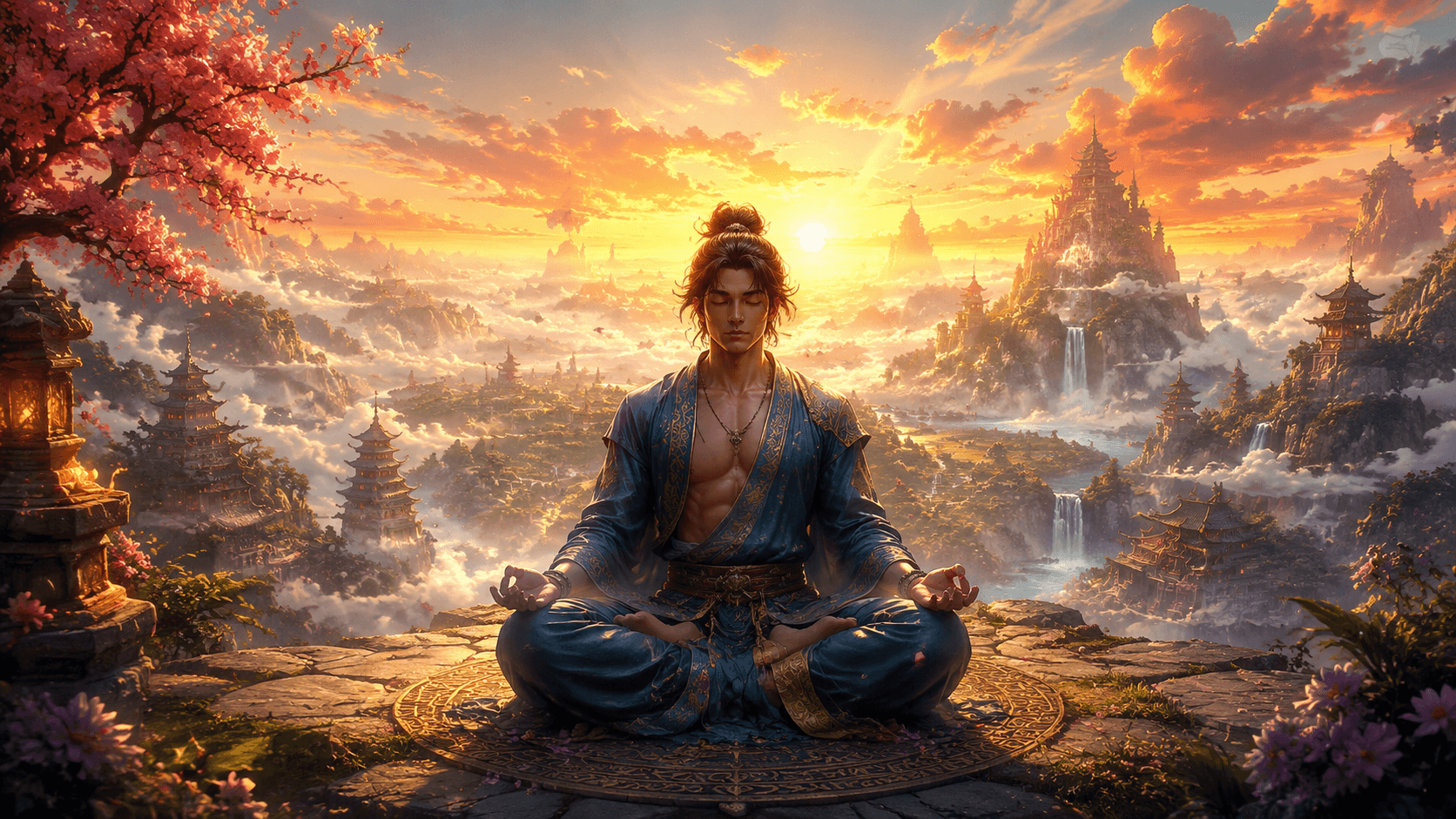
One of the most thrilling aspects of hidden monk temples is that many remain undiscovered or only partially explored and new findings continue to emerge from jungles, caves, and mountains around the world. In 2013, LiDAR (Light Detection and Ranging) technology revealed an enormous medieval city hidden beneath dense Cambodian jungle surrounding the temples of Angkor Wat demonstrating that the famous temple complex was merely the ceremonial center of an urban area far larger than previously imagined. The discovery transformed our understanding of Khmer civilization and suggested that many more monastic sites remain concealed beneath Southeast Asian forest cover, waiting to be found.
Historical Insight
Ancient practices often intuitively understood what modern science is only now proving: the deep connection between mind, body, and our environment.
China's Mogao Caves provided one of the most dramatic archaeological revelations in history when, in 1900, a Taoist monk named Wang Yuanlu accidentally discovered a sealed cave chamber containing over 50,000 manuscripts, paintings, and textiles dating from the 4th to the 11th centuries. This "Library Cave" had been sealed around 1002 CE possibly to protect its contents during a period of political uncertainty and its contents revolutionized the study of medieval Asian history, art, religion, and commerce. The documents included Buddhist sutras, Confucian classics, Taoist texts, medical treatises, musical scores, and commercial contracts in multiple languages, providing an unparalleled window into the cosmopolitan world of Silk Road ancient trade routes.
Modern technology continues to reveal hidden monastic sites that were lost for centuries. Ground penetrating radar, satellite imagery, and drone surveys are identifying previously unknown cave complexes, buried temple foundations, and concealed monastery ruins in locations from the Himalayas to the Scottish Highlands. In 2019, archaeologists using thermal imaging discovered a network of previously unknown cave chambers beneath an already famous Buddhist temple in Afghanistan chambers that may contain manuscripts and artworks sealed away for over a millennium. Each discovery reinforces the extraordinary ambition and ingenuity of monastic builders, and reminds us that the world still holds sacred secrets waiting to be found a theme that resonates with the human fascination for hidden magical worlds and the timeless appeal of quests for concealed treasures.
"Archaeologists keep discovering massive hidden temple complexes that nobody knew existed, usually right under places where people have been living for centuries. Imagine finding out your neighborhood was built on top of a thousand year old monastery. It puts your HOA disputes into perspective. 'The monks had 50,000 manuscripts in their library cave. We can't even agree on recycling bin placement.'"
Why did the inventor of the wheel win an award? Because his idea really got things rolling.
How Immersive Audio Brings Hidden Monk Temples to Life
Hidden monk temples are, by their very nature, extraordinarily difficult to visit in person many are located in remote wilderness areas, protected archaeological zones, or active monastic communities that limit access. This is precisely what makes immersive spatial 3D audio such a powerful medium for experiencing them. Sound was always the most important sensory dimension of monastic life: the chanting that filled cave temples with resonant overtones, the bells that marked the hours of prayer, the silence between sounds that monks cultivated as carefully as the sounds themselves, and the natural soundscapes wind, water, birdsong, distant thunder that formed the acoustic backdrop of contemplative life.
Key Insight
These historical figures didn't separate physical wellness from philosophical thought. To them, it was all one continuous practice of living well.
Visionaria's spatial audio technology recreates these acoustic environments with three dimensional precision, placing sounds in exact positions around the listener. For a cave temple journey, this means hearing your footsteps echo off stone walls, the drip of water from a distant stalactite positioned above and behind you, the gradual swell of monastic chanting growing louder as you approach the inner sanctum, and the extraordinary acoustic transformation that occurs when you step from a narrow passage into a vast carved chamber. Research on narrative transportation shows that spatial audio increases the brain's sense of presence by 35 40% compared to conventional stereo, making the difference between hearing about a hidden temple and feeling as though you're standing inside one.
Read more: How to Train Your Imagination With Meditation

The meditative benefits of experiencing hidden monk temples through immersive audio extend beyond simple engagement. The same acoustic principles that monks used to deepen their practice resonant chanting, environmental stillness, the integration of natural and human made sounds produce measurable effects on brain states when reproduced through high quality spatial audio. Studies on binaural and spatial sound show increased alpha and theta brainwave activity (associated with relaxation and meditative states), reduced cortisol levels, and enhanced feelings of awe and transcendence. By recreating the acoustic environment of a cave temple or mountain monastery, immersive audio meditation allows listeners to access some of the same psychological and physiological states that monks spent lifetimes cultivating making ancient wisdom traditions genuinely accessible to modern practitioners.
A philosopher walked into a wall. His students asked if it hurt. He replied, 'The wall is an illusion, but my headache is quite real.'
Experience Hidden Monk Temples Through Visionaria
Everything this article has explored the cave sanctuaries, cliff monasteries, island hermitages, forest temples, and mountain retreats that monks built across the world converges in Visionaria's immersive audio journeys. Each journey is crafted to activate the same principles of environmental immersion, narrative transportation, and contemplative depth that made these hidden temples so transformative for the monks who inhabited them. You don't need to hike for five hours, climb a cliff, or cross an ocean you need headphones, a quiet space, and the willingness to be transported.
With 150+ immersive journeys spanning the entire spectrum of human sacred experience from the sacred temples of Egypt and the Oracle of Delphi to encounters with history's most fascinating minds and explorations of mythological realms Visionaria transforms ancient wisdom from distant history into living, accessible experience. The hidden monk temples of the world were built on the understanding that the right environment can awaken something extraordinary in the human mind. Through spatial 3D audio, that understanding becomes your experience.
Visionaria Insight
By immersing ourselves in these historical soundscapes, we reconnect with a timeless human tradition of storytelling and mental restoration.
The monks who built these extraordinary sanctuaries understood a truth that transcends any single tradition: the journey inward requires a doorway, and the right space can become that doorway. For twelve centuries, that doorway required a cave, a cliff, a mountain, or an island. Today, it requires Visionaria and the ancient spaces that shaped humanity's deepest contemplative traditions are as close as your headphones.
"For centuries, accessing hidden monk temples required months of travel, extreme physical fitness, and occasionally a flying tiger. Visionaria requires an app download and a pair of headphones. The monks would argue that the physical journey was part of the spiritual practice. Your couch would argue that comfort is also a valid spiritual choice. Visionaria respectfully sides with the couch while delivering the temple experience."

Best Meditation Apps for Story Lovers: Immersive Narrative Mindfulness
Discover the best meditation apps for story lovers in 2026—from spatial audio fairy tales to immersive mythology journeys.
Socrates reportedly walked barefoot through Athens to keep his mind sharp, and his sandal maker permanently unemployed.
The Bottom Line
The hidden monk temples of the world represent one of humanity's most extraordinary achievements sacred spaces created in impossible locations by communities devoted to spiritual practice, knowledge preservation, and the development of meditation traditions that millions now use daily. From the Mogao Caves' 50,000 manuscripts to the forest monasteries where vipassana was refined, from the cliff sanctuaries of Bhutan to the island hermitages of Ireland, these temples shaped the contemplative practices, philosophical traditions, and artistic heritage that continue to enrich human life today.
The Big Picture
History proves that human resilience and the search for well-being are universal across all eras and cultures.
For those seeking to experience these hidden sanctuaries firsthand, Visionaria offers immersive spatial 3D audio journeys that bring ancient sacred sites to life. Continue exploring: discover The Mysteries of Delphi and the Oracle Experience, explore The Sacred Temples of Ancient Egypt, or learn about Meditation and Expanding Inner Worlds.
Experience More with Visionaria
Download the app to explore 150+ guided historical and wellness journeys.
What's an ancient intellectual's favorite exercise? Jumping to conclusions.